
[Cet essai est actuellement en cours d’édition et de mise à jour. Veuillez vous abstenir de le lire pour éviter toute interprétation erronée due à son état incomplet…]
[This essay is currently being edited and updated. Please refrain from reading to prevent misinterpretation from incompleteness…]
Mis à jour le Dimanche, 6 Août 2023
Prejudice and discrimination are usually classified as behavioural attitudes towards a certain group or individual based on a multitude of reasons [according to different psychological theories]. The main reasons for prejudice are believed to be rooted in individual psychological processes related to groups, social influence and/or upbringing.
Authoritarian Personality
One plausible explanation for prejudice is the authoritarian personality, which suggests that those belonging in the category are concerned with status and upholding conventions, are very conformist and tend to be obsequious to those they see as holding a higher status – while treating those ‘below’ with contemp. Authoritarian personality is believed to be the result of strict and punitive upbringing which later leads to hostility being directed towards disliked [justified or unjustified] groups through the process of “displacement”. Adorno et al (1950) found strong and positive correlations between respondents’ scores on the F-Scale and scores on other measures intended to assess anti-semitism (AS scale) and ethnocentrism (E scale). However, the PEC-scale (Political and economic conservatism) was not strongly related, which only led to the conclusion of how people who are anti-Semitic are also “likely” to be hostile towards most “out-groups”.
The Adorno et al (1950) test only consisted of agreement that could only be geared towards anti-Semitism, ethnocentrism and fascism, which might have led to the problem of acquiescent response. The fact that the interviewer knew the interviewee’s F-score might have also led to experimenter bias; and the theory also falls short in the explanation of mass changes in behaviour: “Antisemitism in Nazi Germany grew during a decade or so, which is much too short a time for a whole generation of German families to have adopted new forms of child-rearing practices giving rise to authoritarian and prejudiced children (Brown, 1988)” [not plausible]. The reality is that anti-Semitism may have been the result of a more sinister social and economic problem caused, inflicted by or related to the jews powerful Zionist business associations on the German economy at a time where the country was suffering [people, heritage, identity, economy…].
Stereotyping
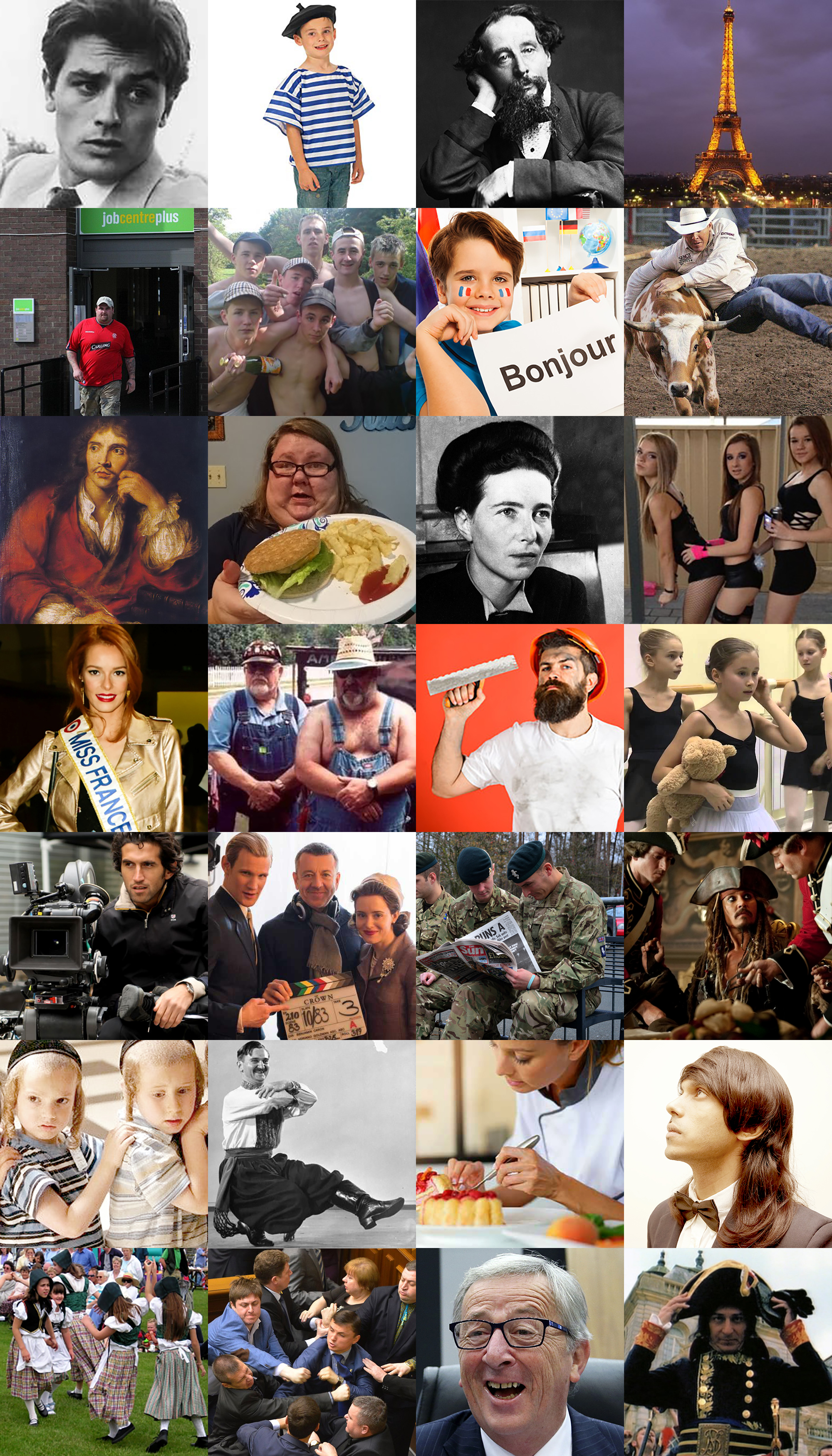
Individual identity differs according to heritage, education, language(s), individual choices, profession and social roles
Another form of prejudice is stereotyping, which plays a major part in the process of inter-cultural [note: culture may refer to groups defined by language, geography, religion, and other common similarities] prejudice where the root of its cause has proven to be fairly ambiguous in explanation.
Groups founded and united based on the behavioural patterns of a particular geography [usually] tend to stereotype others negatively [i.e. out-group(s): the other group(s) with petty differences in the way they go by their daily activities as all human primates on this planet – as the chart below suggests].

Where Do We Buy What? (Source: Statista)
It is believed that the process of stereotyping is the result of minimising mental effort, reminiscent of Carl Jung‘s quote:
“Thinking is difficult, that is why most people judge.”
Stereotyping is linked to psychological processes within the individual and is assumed to be connected to environmental influences that lead to a prejudiced mind; where out-groups and there members are defined unrealistically by single characteristics (negative usually). Stereotyping can sometimes [at least when dealing with members of the public who may not be deemed as “intelligent or smart”, even bordering on plain “stupid”] play a role in the legitimisation of prejudiced and discriminatory treatment of other individuals who simply [consciously or unconsciously] made the choice to live by different modes of group-oriented behavioural patterns (culture).
Rational reasoning and the humane ability to understand each group’s choices while also respecting each group’s boundaries [geographical, social, economic, psychosocial, linguistic, etc] are surprisingly never considered by individuals and authorities in the quest to correct the mistakes of a world designed on outdated ideologies [e.g. the scientifically poor logic of global communism] to design a new one based on creative scientific reasoning, evolutionary logic, design & progressive innovation.

Another reason why some individuals resort to stereotyping others may be insecurity. That is, some individuals may be frustrated by their inability to conquer and/or influence other(s) who are superior to them in terms of abilities and intellect, and may stereotype other individuals with the potential to do so; such irrational behaviour compensates for the lack of abilities and feeling of inferiority when faced with these individuals who are more talented than them. Arguably, it may also be that these petty common brains who stereotype, simply fear that their competitors may be able to excel and deliver a similar or even superior performance/output than them if not distracted and slowed by insignificant and childish acts of stereotyped behaviour.

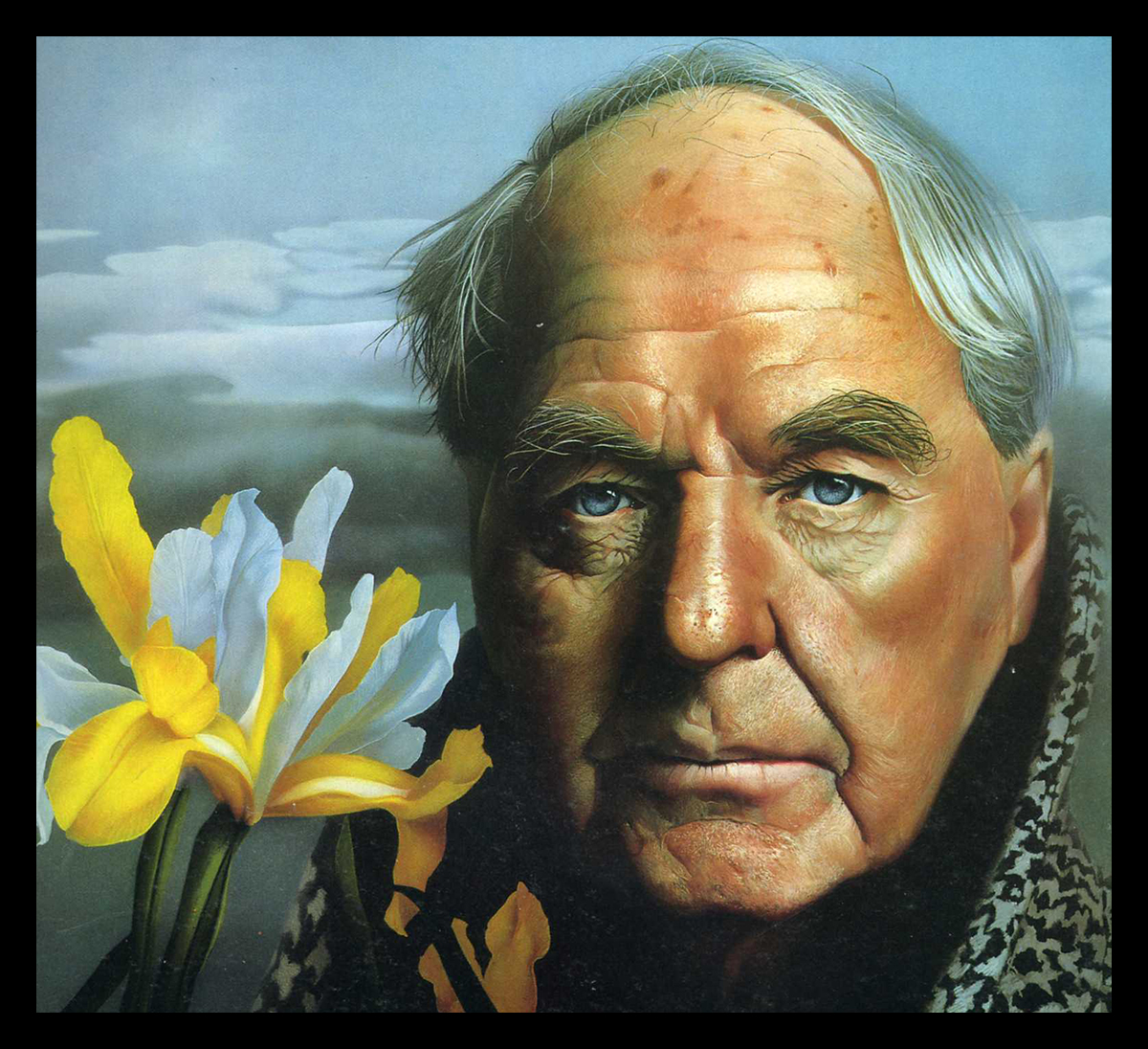
Traduction(EN): “Thinking is difficult, that is why most people judge.” -Carl G. Jung
Prejudice as an Illusionary Cure to Low Self-Esteem/Insecurity
The Social Learning Theory, on the other hand, assumes prejudice as the result of maintaining self-esteem of both the individual and the in-group (individuals with the same behavioural patterns as the individual/tribe) members – where one tends to be biased towards glorifying their own group whilst only paying particular attention to criteria that make the group look better and remaining blind to all negative traits and behaviour. This is related to the individuals’ sense of identity being determined by the groups they belong to and thus tend to be biased towards favouring them.
Tajfel et al (1982) showed how schoolboys chose the strategy to allocate more points to their own group at the expense of getting least overall – showing bias in the absence of competition. The two main problems however are the fact that [1] the tendency for favouritism might be group-oriented and not universal (Wetherall, 1982), and also how [2] most studies show bias towards in-group (which could not only be prejudice but stereotyping or other influences).
Unrealistic Conflict? Competition for the same Resource(s) while presuming in-group members to be “unconditional benefactors”
Finally, the realistic conflict theory suggests that prejudice arises when two or more groups compete for the same resource which in turn leads to a tendency to favour in-group members, while being hostile and denying resources to out-groups. This was proven in Sherif et al (1961) where the artificially stimulated competitive conflict lead to negative stereotyping towards out-group which persisted even after the competition. However, the validity was questioned over the artificiality of the situation and the samples (US American boys only?); as Tyerman & Spencer also showed how competition does not always cause prejudice – where UK scouts co-operated instead. Furthermore, individuals with different upbringing and philosophical orientations had not been considered, which in turn affects the ecological validity of the finding where inferences from generalisation would likely lack precision – in a world in constant social evolution with more psychological research being constantly published to guide society towards a more harmonious design and behaviour.

Relocation, Adaptation, Design & the concept of Assimilation à la Française
Together, the theories seem to offer a plausible explanation for prejudice but cannot be ranked; as they compensate each other’s weak points. A sensible application of each theory – depending on the situation – seems like the rational method forward, since factors such as group-based behavioural patterns (culture), present situation/environment and norms/values remain vital considerations when researching about prejudice, its causes & a more direct approach to solutions.
Furthermore, the world has made such leap socially with the technological era, and people have been inclined towards knowledge, discoveries and innovation with social media contributing towards a more educated humanity [i.e. a civilisation with its different societies that come with their own values, philosophy, feelings and behavioural and communicative patterns, that are the main separators and organising factors in each group’s identity].
Relocation
A new and strong global inclination towards a realistic synchronised unity [where the world’s population can live harmoniously in their own geographical location with their chosen units, values and lifestyle], may shape intellectual thought in the decades to come now that the experience learnt from psychosocial disasters due to badly managed and abrupt mass population shifts especially from under-developed countries [that turned out to be disruptive to Western European nations] could be considered in future policies. [Visit the website of the Banque Mondiale for more precise population statistics].
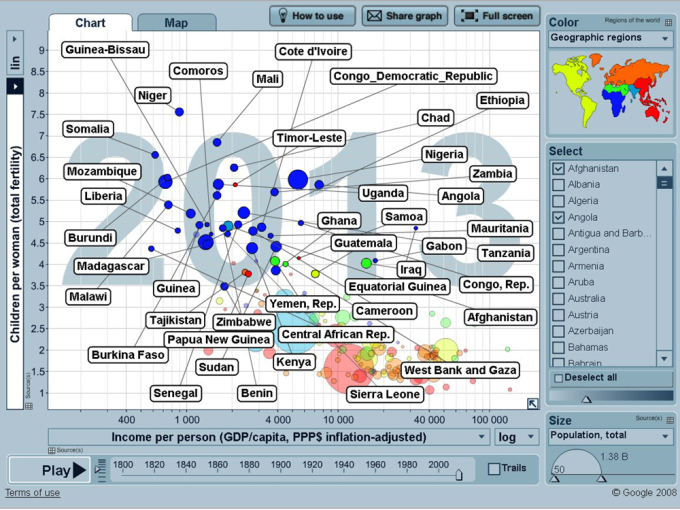
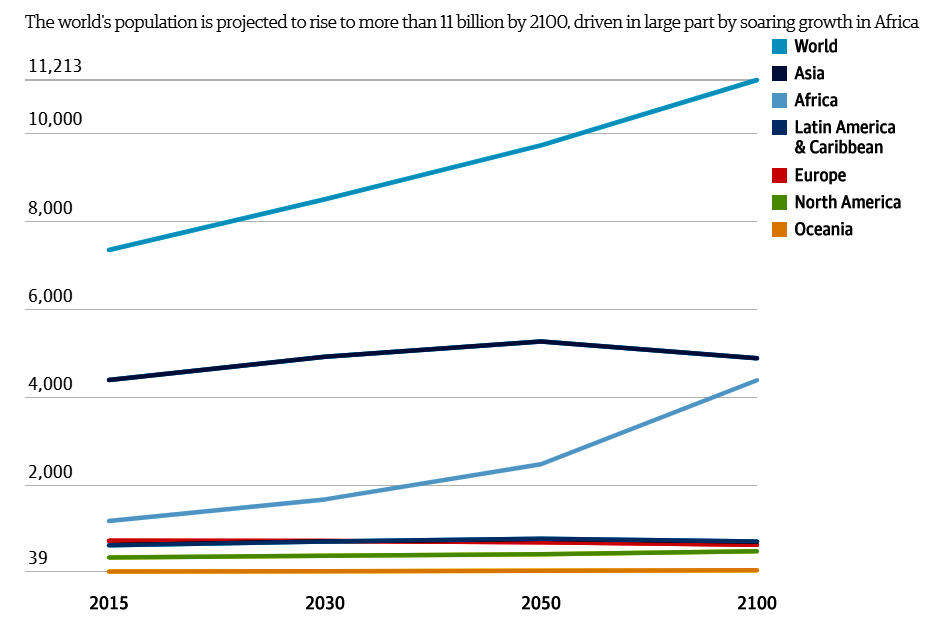
Source: UN via The Guardian
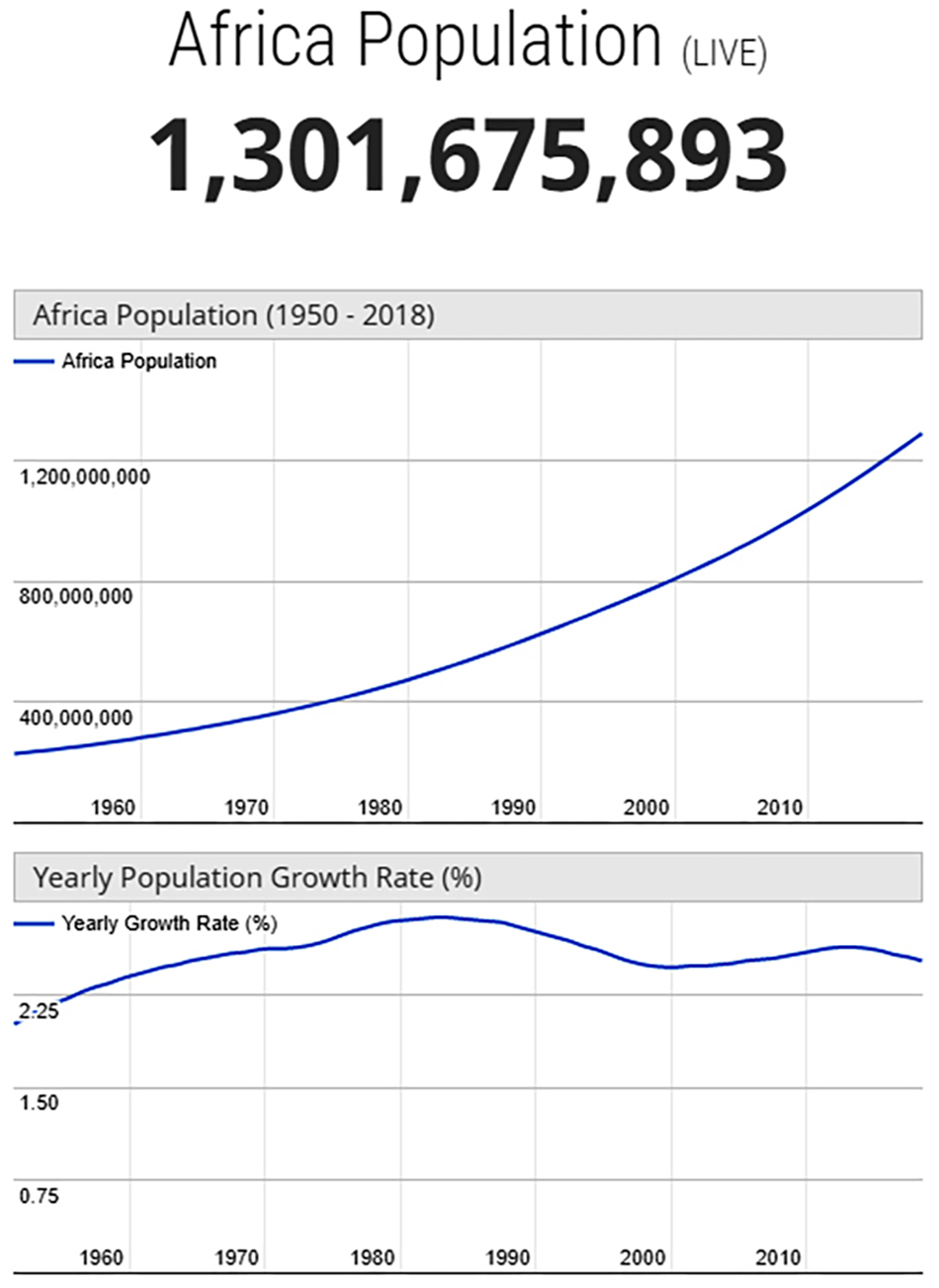
The current population of Africa is 1,300,976,080 as of Wednesday, December 5, 2018, based on the latest United Nations estimates. / Source: Worldometers (Click to see a live count of the majorly negro population of Africa)
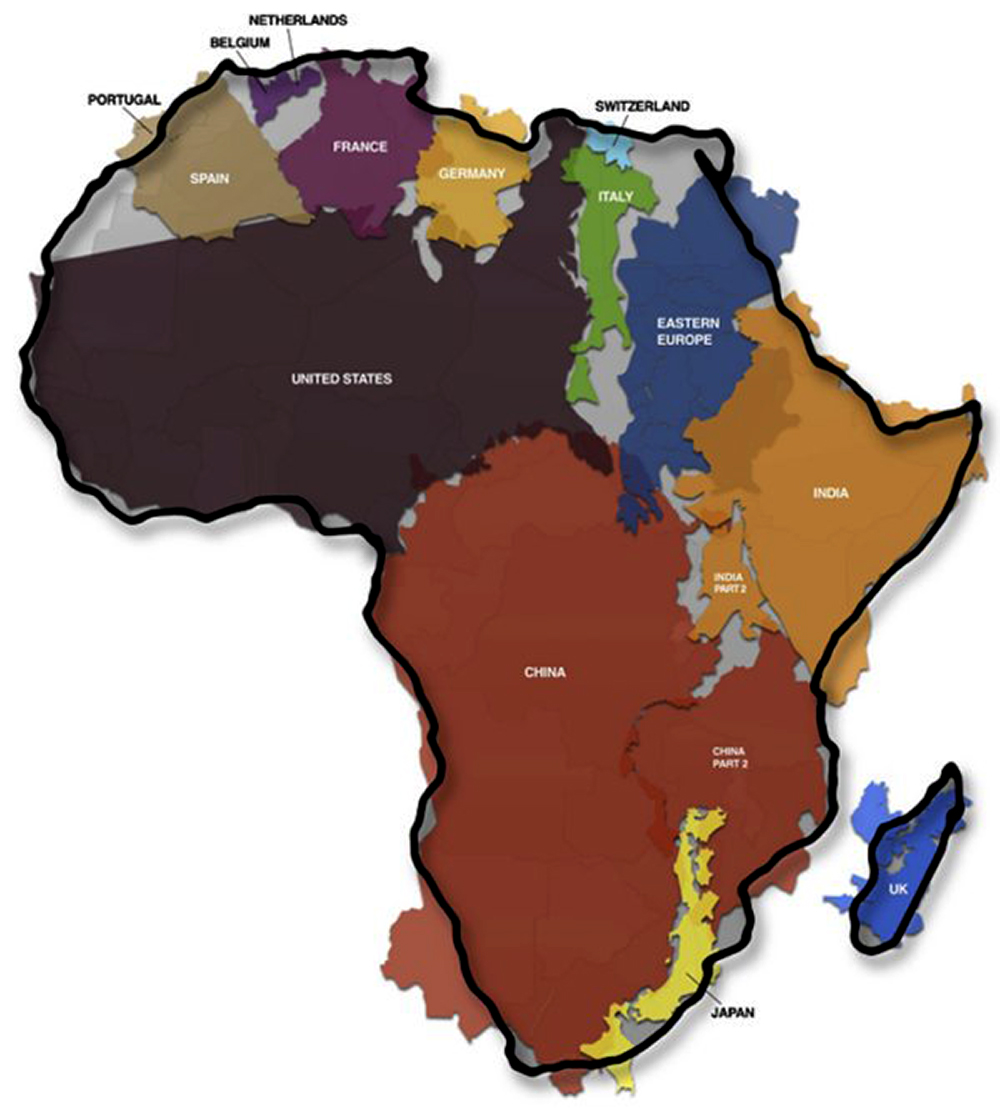
The Size of the African Continent: With the speed of progress and the development brought by the digital era, an increasing number of Negro people nowadays, with their global population rising at a rate faster than any other group, are considering a relocation to their homelands in Africa
Organisms who do not want to/cannot assimilate, should consider a relocation to an environment that is adjusted and more suited to their evolutionary needs, as this seems like the most rational solution, such as the growing number of sensible Negro people nowadays who are gradually shifting back to their homelands in Africa to help it grow economically and culturally with the world developing at a speed never seen before in this era partly accelerated with modern technology.
If in the 1950s a person had made the statement that negroes are an inferior race and heritage, people around may have said that the man is biased and racist. Yet, this is not implying that every single negro is inadequate or unskilled, of course we do have some great negroes who excel in mostly physical disciplines such as sports and a couple of others, and who have become professors in specific fields. But what is generally implied through the statement that “negroes are an inferior race” seems to suggest that on average, meaning that if we took the whole population of people classified as negroes and averaged their achievements and compared it to all other civilisations, we will come to the fact that they are lagging behind in everything, hence the term “inferior”.
Nowadays, if we look at all the statistics globally concerning the negro people, we will see that indeed they are behind all other civilisations. Yet, every time this topic surfaces, we suddenly see all the mainly Jewish owned media, suddenly throwing all the singular negros in the United States that have made money; we see basketball players, rappers will grills in their mouth, and all the other negroes that have succeeded financially through the Jewish-owned media industries of the United States. Hence it is once again, not the point, because it would be unjust to say that all negroes are inferior, we are simply pointing to the fact that on “average” the negro civilisation is inferior in terms of civilisational achievements compared to all other civilisations on planet Earth, who throughout modern history have been helping the population of Africa bridge the gap through various charities.
In 2016, Dorcas Dienda, a candidate at the Miss Congo contest, who is herself of African origin, declared on a television show: « Nous le savons, ce n’est pas un sujet tabou : l’homme blanc est plus intelligent que l’homme noir » [French for: “We know, it is not a taboo subject: the white man is more intelligent than the black man“]. Her comments quickly led to indignant reactions coming both in the press and on social networks: on her Facebook page, a Congolese musician, Alesh, denounced her remark as racist and called for her elimination from the contest. However, Dorcas Dienda would go on to be crowned Miss Africa in 2018.

A great example of environmental and socio-psychological synchronisation is India, with 94% of Hindus being the native Hindi-speaking population of India who also live there, although Hinduism and its various branches of philosophy [explored by one of the most influential Western philosopher, Arthur Schopenhauer, and also many others such as Aldous Huxley, Alfred North Whitehead, Arnold Toynbee, François Voltaire, Rudolf Steiner, Wilhelm von Humbolt & Will Durant] – as other major religious cultures such as Christianity – also spread in influence globally.
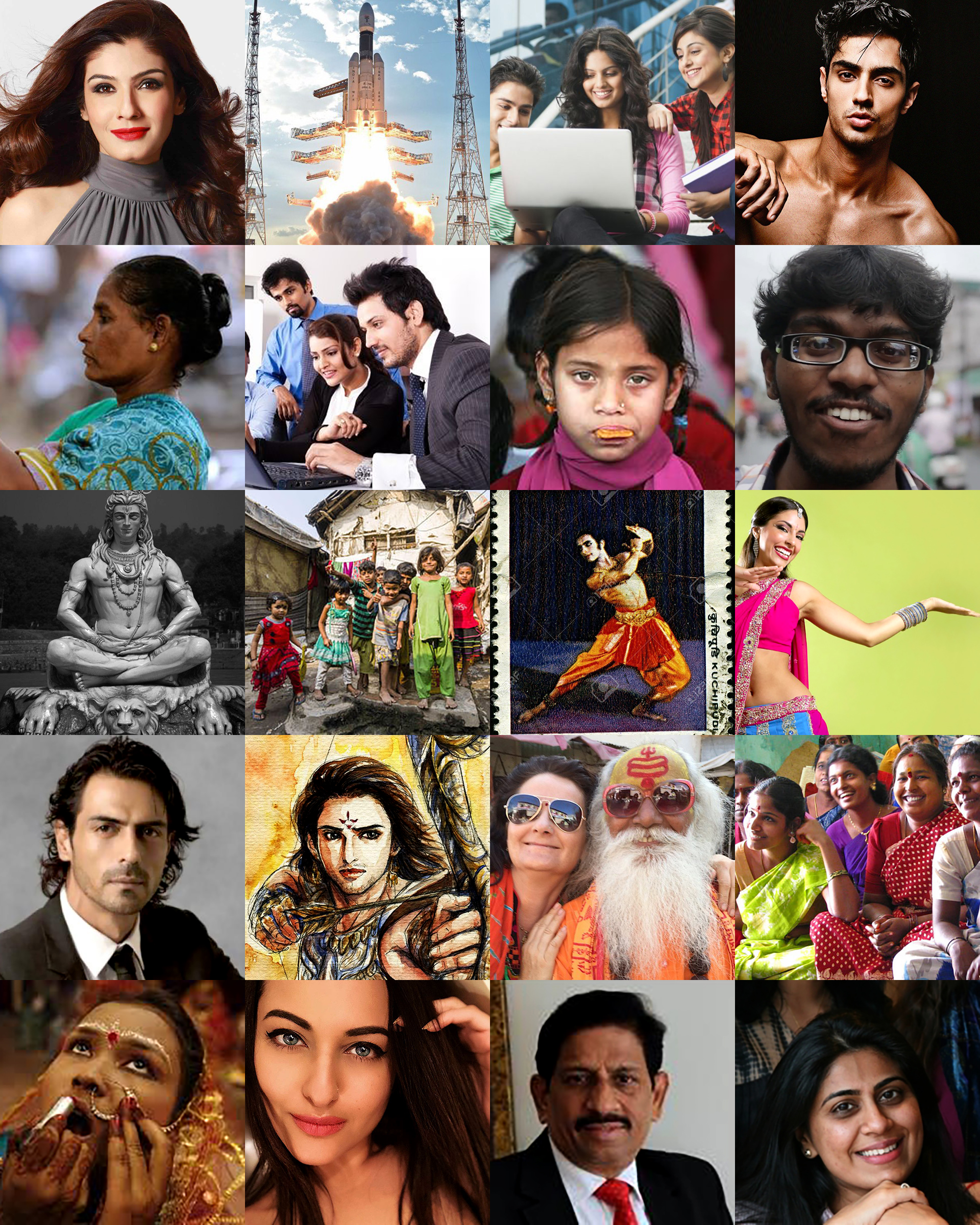

Like Christianity & the other major religions, Hinduism and its philosophy also gradually spread in influence across the globe. However, 94% of people who practice Hinduism are the native Hindi-speaking population of India
The Climate Collapse disaster has also made Civilization aware of the importance of “synchronised unity” in matters of global human advancement – future research surrounding prejudice and discrimination would likely benefit the human world more if applied in intra-group scenarios – should the world’s population be managed and geographically engineered according to each group’s evolutionary logic [to fit their respective psycholinguistic, cultural and organic environments to further refine group evolution and guide society towards a harmonious pattern of living] for each group by their respective identities, collective beliefs, values & vision.

A Visual History of Global Poverty from 1820 – 2015 / Source: Our World In Data

Infant Mortality, 1950 to 2015 / Source: Our World in Data

Global Income Inequality is falling, 1820 – 2000
World poverty is down, solving matters of the 3rd world on location along with a systematic and diplomatic relocation of culturally alien migrant crowds seems rational. Progress & development globally means relocation should be considered in the future if human beings are realistic about world peace, and the understanding of evolutionary science and its application to humanity.

Charitable giving by country / Source: Guardian DataBlog
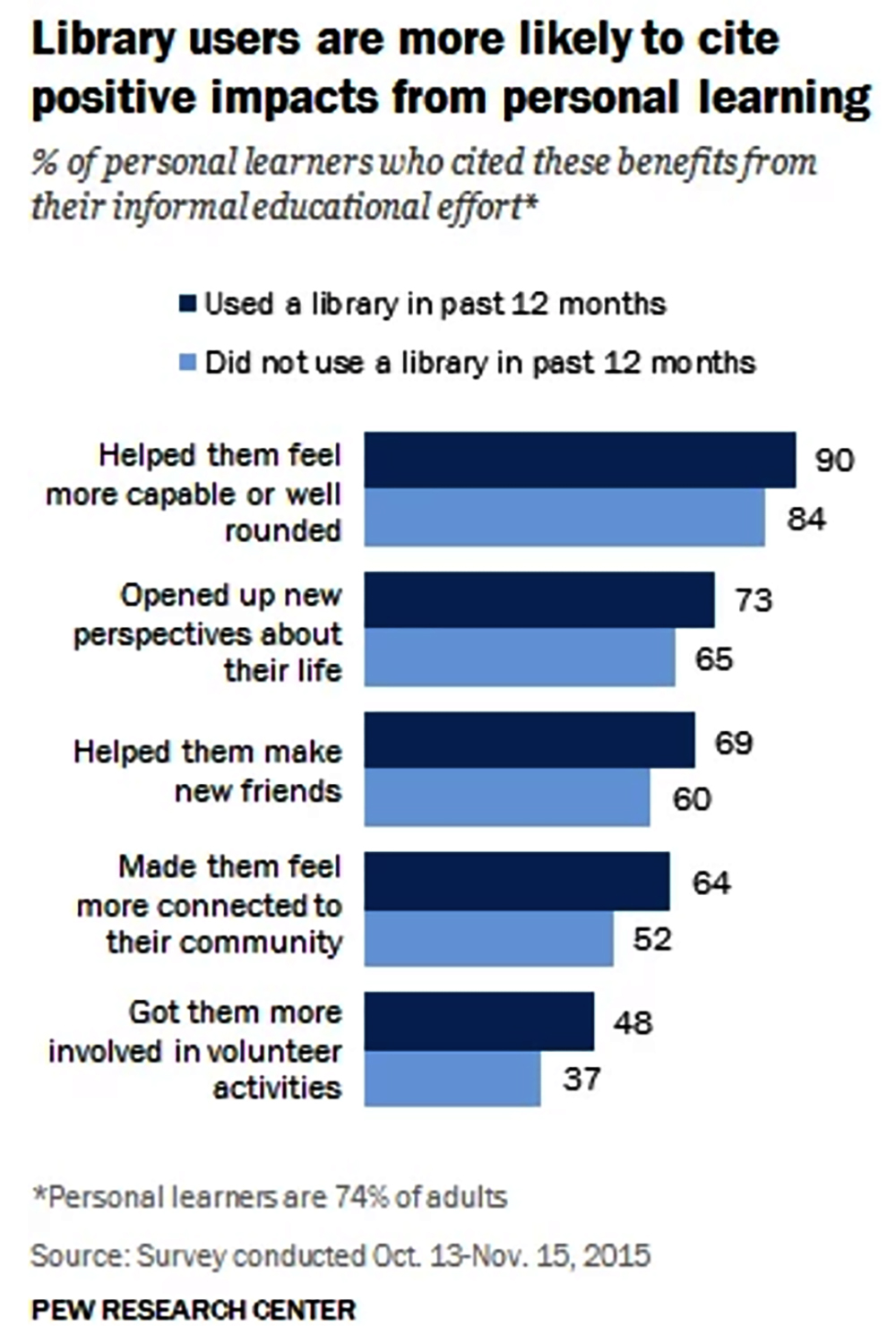
Library users and Learning / Source: Pew Research Centre (Internet & Technology)
In the 21st century, there are associations in the UK affiliated to the Indian, Chinese and Muslim communities that have started working in collaboration with the Home Office and are offering members of their respective communities an easy voluntary return to their country of origin without any use of force along with a financial help of about £ 3000 to find a job or start a business in their home country, this service is also open to the Jewish and Negro communities and all other unassimilated individuals. In France, many unassimilated Jews have begun to move back to their communities in Israel and in doing so are setting a positive example and encouraging the rest; the government of Israel is also supporting the return of Jews to their homeland and helping them adjust to their language and community.
Video: Quitter La France Pour Israel : Le Défi De l’Intégration des Juifs
We, as Western Europeans should consider a diplomatic process for relocating incompatible populations [who struggle to and/or cannot adjust to assimilate] according to their respective societies and cultural identity for peace; with links and cooperation in business and education if necessary to support the sophistication and the continuous linguistic and cultural development of human societies on Planet Earth.
Geographical management towards synchronisation and stability by exploring the logic of the « Organismic Theory » involves prioritizing one’s “own organisms” [i.e. organisms that are part of or have become part of one’s own society through complete assimilation] for psycholinguistic, cultural, social & genetic chemistry, evolution and enhancement.

Using my own example as someone with a Franco-British linguistic and intellectual heritage who assimilated to France and England, if I was a retrograde and atavistic burden to the psycho-social sphere of those countries because of my religious beliefs, maladaptive needs, biased obsession about a particular type of organic composition (i.e. skin tone & craniofacial morphology), intelligence [lack of], fitness/health, psycholinguistic abilities, education, philosophical traditions, and civic concern, then I would change geographical location to one that is more suited to myself to be able to live much more comfortably. But since, I am of 100% Franco-British heritage and would not feel at “home” in a different environment other than those two regions of Western Europe, I have fully assimilated and live here, thus, the concept of « Geographical Management », which is simply the process of keeping together organisms sharing similar behavioural and perceptive patterns (i.e. philosophy, artistic and aesthetic tastes, perception, language(s) and sense of identity) for group chemistry, stability and mutual understanding: a synchronised and functional society founded on modern evolutionary science & humanistic philosophy.
We need to understand the identity of a society in terms of linguistic, cultural [mostly behavioural and perceptive patterns], and genetic authenticity but also consider and follow the progressive course of evolution as modern and sophisticated beings to include evolved organisms that assimilate, enhance, stabilise, and strengthen the group with superior or gifted genes that also care about, have a sense of belonging, take pride, interact, speak for and identify with the native group.
All humans are similar, but not equal; human organisms across the globe are similar physiologically [i.e. blood, bones, organs, etc] but their intellectual, philosophical and linguistic heritage are not equal, because those differentiate them and also equip them respectively with assets and skills compatible to be connected to wider systems with an organisation and management that is also not universally equal in regards to the potential for individual development and growth that those wider systems offer due to the quality of their management and organisation [for e.g. accessibility to quality educational systems, progressive, humane and universal philosophical values, sense of civic unity and concern for the wellbeing and protection of all citizens, respect for individual rights, accessibility to different layers of individual development and growth throughout life, accessibility to free high quality healthcare, linguistic finesse and sophistication, artistic, aesthetic and architectural heritage, higher average IQ, opennness to change to adapt to continuous evolution at every level of life, etc].

Hence to foster evolution in a stable society that is also progressive, we should aim to create the consent of the masses as Walter Lippmann suggested in his theoretical essays; by all forms of communication possible [as a therapeutic form of expression to save ourselves as a species and learn to develop a sophisticated outlook of our planet] because scientifically there is no such thing as a pure race [all of us human primates on earth are the product of migration, breeding and evolution].
A recent study confirmed the fact that the current human form is a mixture of Homo sapiens and Neanderthals who interbread much earlier than previously thought. An international team sequenced the DNA of the oldest modern human fossil from the European region which came from 3 skulls from the Bacho Kiro cave in Bulgaria. Those 3 individuals lived in the cave between 46,000 and 42,500 years ago, when Neanderthals had not yet diseappeared from the earth. The European settlement of Homo Sapiens [i.e. the current human form] is believed to have taken place around 45,000 years go, while Neanderthals had already occupied the area for 200,000 years. Hence, the genome of our ancestors reveals details about the first Europeans and their relationship with Neanderthals; these 3 homo sapiens used in the study all have 3 to 3.5% Neanderthal DNA, which are also large stretches of DNA, indicating that those individuals had a fairly recent Neanderthal ancestry [that only appeared 5 to 7 generations in their lineage]. This study indicates that the entry of Neanderthal genes into the modern human lineage is therefore much older than previously thought. The results also suggest that mating between Neanderthals and Homo sapiens was much more common than thought (Hajdinjak et al., 2021).
Darwin’s theory of evolution revealed, there is no eternal essence, and any idea of an exceptionally pure entity that would be beyond evolution does not exist because everything is in a constant state of flux – evolution (change) is eternal [so from a scientific, evolutionary and organic standpoint, racism is a totally archaic absurdity since we are all simply organic matter on a small blue planet in the vast universe being recycled, recreated and reshaped in a continuous process].
When talking evolution, the evolution and fitness of everyone should be taken into consideration, because all Homo Sapiens are evolving together on this tiny planet called Earth so rapidly that the textbooks cannot hope to match and explain – hence the importance of resourcefulness and creativity from avant-garde thinkers gifted with fluid intelligence. Science and data have their limit and only provide us with results, but we need philosophical orientation to make sense of those results in order to apply them in the direction that fosters human progress at a civilizational level that takes into consideration the long-term future of the human race on Earth, and not lead us to our own extinction. This is the spirit of the enlightenment passed down to us by the rational thinkers that helped to move civilisation from the dark ages of irrationality and obscurantism.
Adaptation
For cases of exceptional organisms who have moved to a new locations [geography] to create themselves and build their lives, it would certainly be helpful for them to see themselves as individual with the power to reshape their whole being if they intend to be able to live a life that is not restrictive and is in complete synchronisation with the new society and people they choose to be a part of; thus assimilation seems to be the only reasonable and humane option.
John Berry and his colleagues distinguished between integration (individuals maintain ethnic culture and relate to dominant culture), assimilation (individuals give up their ethnic culture and wholeheartedly embrace the dominant culture), separation (individuals maintain their ethnic culture and isolate themselves from the dominant culture) and marginalisation (individuals give up their ethnic culture and fail to relate properly to the dominant culture (Berry, Trimble and Olmedo, 1986).
The most effective forms of adjustments that completely benefit a system remain “native citizens” [in terms of creating organisms equipped to be part of an inherited system from the lower to the upper scale of society], along with assimilation [i.e the culturally & educationally worthwhile & proficient organisms that manage to adjust themselves and become fully part of the dominant culture], the remaining could simply be qualified as burden to most systems, for example, unassimilated children deriving from labour and 3rd world migration who are born in mass due to the higher fertility culture from their parents’ traditional origins, and who seem to want native-like treatment and consideration, which seem to be illogical demands and expectations if they are unable to interact, communicate, adjust their perspective and perception to orient and group themselves with native-like proficiency in order to fully identify with the dominant culture [i.e. cultural belonging and identity], find their place in the society and contribute like all the citizens to the development and continuity of the dominant civilisation. This unassimilated and ‘nomadic‘ generation whose parents initially moved from land to land simply for financial gains from a larger economy may unfortunately [at the exception of some mediocre college-educated extreme-leftist activists] be a scenario fit to be described metaphorically as “parasitic“, while to others [e.g. another segment of the same crowd of mediocre college-educated extreme-leftist activists], this could be what they describe as “cultural-enrichment”.
It is fundamental for all to understand that geographical groups have evolved and have gained and maintained a structured organisation because each region on planet Earth and its respective organisms [of a particular type of organic composition – what some refer to as “race”] have created societies, behavioural patterns and a heritage that led to a group with some form of synchronisation and organisation.
Documentaire: HUMAN (2015) est une œuvre engagée de Yann Arthus-Bertrand qui nous permet d’embrasser la condition humaine et de réfléchir au sens même de notre existence. Watch the English version by clicking HERE!
Part of being a rational human being is knowing that change is constant, since nothing is stuck in time and eternal; this points to the fact that we are all constantly changing and there is no such thing as a perfect model to follow that is ultimate, final and resistant to change. As individuals, we are all unique just like our fingerprints, blood type and craniofacial morphology, but we somehow share some similar characteristics that allow us to function as a group when required.
In a modern and evolving civilisation it is vital to consider that from the perspective of the universality of life on Planet Earth, any human organism of whatsoever type of organic composition [i.e. “race”] can procreate with one another. This simple but fundamental scientific observation means that if the laws of evolution and nature that contain and govern all life on this planet had different intentions, then organisms of different organic compositions would not be able to create new life.

The scientific fact that all humans have evolved together and can create life together does not mean that countries should be encouraging uncontrolled and savage communist mass invasion policies in terms of migration to disrupt their own stability, since preserving a sense of synchronisation and organisation for all groups involves promoting agendas with organisms that have evolved in their environment and have the characteristics to support the continuity and productivity of their group, heritage & society.
However, we have to firmly understand that when Charles Darwin formulated his groundbreaking theory of evolution he changed life forever as we knew it – perhaps this is why he built the reputation of a rockstar of science and biology – because he cancelled this once believed fallacy of the stable and permanent concept, but revealed that everything continues to evolve from here on.
It is of vital and fundamental importance for all groups [around the world] to consider the never-ending and ongoing process of evolution and natural selection, a process that affects all organisms on planet Earth similarly and also the singular adaptive evolution of some superior and genetically gifted organisms [See: [I] Psychology: The Concept of Self, [II] How our Neurons work, [III] The Temporal Lobes: Vision, Sound & Awareness and [IV] The 3 Major Theories of Childhood Development]
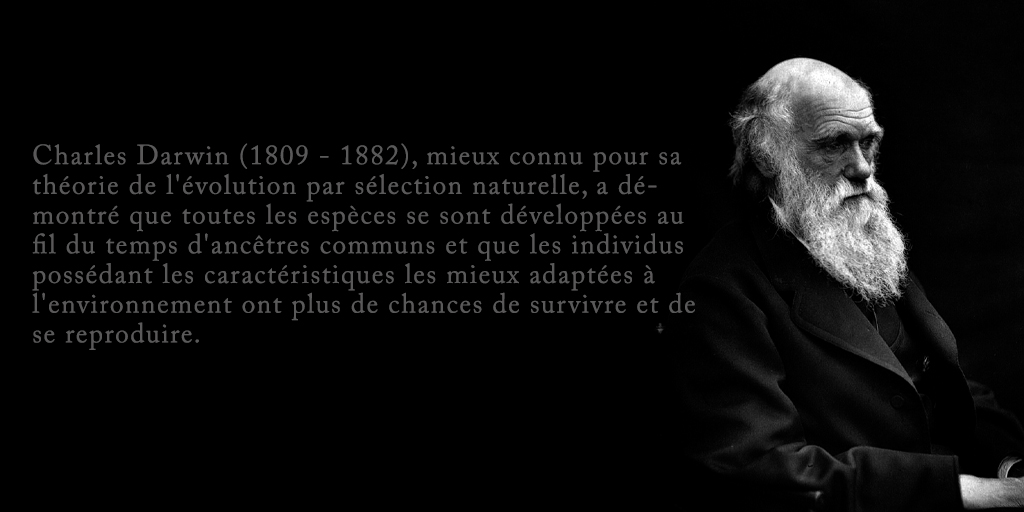
Traduction(EN): Charles Darwin (1809 – 1882), best known for his theory on evolution by natural selection, demonstrated that all species have developed over time from common ancestors and that individuals with characteristics most suited to the environment are more likely to survive and reproduce.

Design
The observation of animals in nature or in laboratories tends to guide the reasoning of many empirical scientists who are simplistic and biologically oriented, it is important to ask a few questions. For example, which animals to focus on as models to be inspired by? In nature, we have many animals who mate for life and are monogamous [e.g. albatrosses, bald eagles, barn owls, penguins, beavers, shingleback skinks, gibbons (primates), wolves, swans & french angelfish]. On the other hand, we also have other animals such as common pheasants, lions, gorillas, tigers, red deers, elks, and hamadryas baboons (primates) who have a different mating system, where the fittest male mates with multiple females to ensure the constant enhancement and fitness of future generations; and hence are polygamous.

Image: Degenerates / Some controversial doctors under the Third Reich proposed that the curse of diseased genes destroy entire families, and that degenerates can only give birth to their similars. It lead to sterilisation that was supposed to prevent them from spreading their misery to innocent children [as the aim was a strong and genetically healthy people], and also the “Aktion T4” program which was mass involuntary euthanasia. Certain German physicians were authorised to select patients “deemed incurably sick, after most critical medical examination” and then administer to them a “mercy death” (Gnadentod). From September 1939 until the end of the war in 1945; from 275,000 to 300,000 people were euthanised in psychiatric hospitals in Germany and Austria, occupied Poland and the Protectorate of Bohemia and Moravia (now the Czech Republic). The Holy See announced on 2 December 1940 that the policy was contrary to the natural and positive Divine law and that “the direct killing of an innocent person because of mental or physical defects is not allowed” but the declaration was not upheld by some Catholic authorities in Germany. In the summer of 1941, protests were led in Germany by the Bishop of Münster, Clemens von Galen, whose intervention led to “the strongest, most explicit and most widespread protest movement against any policy since the beginning of the Third Reich”, according to historian Richard J. Evans.
Hence, this poses questions to the simplistic biological perspective of adaptation: should humans follow the latter polygamous animal model and select the fittest and smartest males through physical and intelligence tests and use their sperm to inseminate all women on earth desiring to have children [or vice-versa or in combination with the eggs of the fittest and smartest females to help couples conceive]; could this reduce malformations and other ugly diseases?

Image: Physically healthy females exercising
Or should we follow the monogamous model of the bald eagle, penguin, barn owl, swan, wolf and French angelfish? Based on our evolutionary history, it seems that we humans are monogamous by design due to the size of our brains that allow us to build sophisticated relationships and also experience complex emotions [that animals cannot due to the limited biological architecture of their brain that is optimised for survival and hunting], and hence, humans should not follow animals blindly but use some aspects that we may learn from the study of animals in nature with great precautions to help humans live a better life [for example: giving a choice of healthy sperm and egg donors to couples who cannot conceive or fear passing down incurable and other debilitating diseases] and gradually create a genetically healthy civilisation.

Image: Baby Albino Gorilla with his friend
François Rabelais, the french doctor, writer, monk & priest seems to have phrased it well in his magnum opus, Pantagruel (1694): “Science sans conscience n’est que ruine de l’âme.” [French for: « Science without conscience is nothing but the ruin of the soul »]
We are a generation living in the 21st century and not the 1930s, when tremendous amount of research on genetics was not yet carried out and perhaps if the Nazis had access to all the latest research of the 21st century, they would have rectified their policies based on good science after understanding that evolution encompasses all human organisms on the planet and that incredible individual genes can appear from anywhere.
« there were many pseudoscientific theories about race written by authors who were thought to be legitimate, but were in fact very wrong… »
Hence, modern thinkers and writers, should perhaps stop judging Hitler and the Nazis by the time they imposed those racial laws, because in those days, there were many pseudoscientific theories about race written by authors who were thought to be legitimate, but were in fact very wrong.

A late-19th-century illustration by H. Strickland Constable shows an alleged similarity between “Irish Iberian” and “Negro” features in contrast to the higher “Anglo-Teutonic” which was also a pseudoscientific claim
For example, in 1853, Arthur de Gobineau, the French writer wrongly assumed that the human race was divided into races to a logical, permanent and indelible hierarchy and defined race as inferior to some groups and as a threat to other human groups. His erroneous and pseudoscientific theory has of course been discarded in the 21st century by modern science and intellectuals, however, in the 19th century it had fed the ideological roots of Nazism in the the 20th century and the extreme “biologisation” of anti-Semitism and racialism.
As the French researcher in the History of Science, André Pichot stated in our times: “C’est imagination, purement imagination. Gobineau n’a jamais été quelqu’un de reconnu. Quant aux gens qui se réclament de lui, vous leur demandez de leur expliquer le système de Gobineau avec ses « trois races fondamentales », la « dégénérescence »… Ils seraient incapables de vous le dire, parce que ça ne correspond absolument à rien !“ [French for: “It is imagination, pure imagination. Gobineau was never a recognized person. As for the people who claim to be his followers, you ask them to explain Gobineau’s system with its “three fundamental races”, “degeneration”… They would be unable to tell you, because it doesn’t correspond to anything!”].
Gobineau’s theory was not widely accepted in France, but found an audience in the US and in German-speaking areas, becoming the inspiration for a host of racial theories, such as those of Houston Stewart Chamberlain who arrogantly rejected Darwinism.
Patrick Tort, the French linguist, philosopher and historian of science declared: « Ce que Darwin a théorisé, c’est une fraternité qui unit tous les êtres humains de la Terre. On trouve dans l’intégralité de son œuvre anthropologique, notamment dans « La Filiation de l’homme », des passages extrêmement violents contre les « sauvages policés », c’est-à-dire les Anglais, ses contemporains et ses compatriotes qui défendent encore le principe de l’esclavage.» [French for: “What Darwin theorised was a brotherhood that unites all human beings on Earth. In the whole of his anthropological work, especially in “The Descent of Man“, one finds extremely violent passages against the “policed savages”, that is to say the English, his contemporaries and compatriots who still defend the principle of slavery.”]. Darwin reported no racial distinctions that would indicate that human races are discrete species.
Presentation: Richard Dawkins clears up the misunderstanding of Evolution that is all too common: If we descended from Chimpanzees, then why are there still Chimpanzees? Dawkins explains that we DID NOT descend from Chimpanzees—we both share a common ancestor.
Only some of Gobineau’s ideas however, were repeated by precursors of Nazism, but his principle arguments were either ignored, deformed or taken out of context in German racial thought of the times; his ideas were used in simplified form for demagogic purposes by the Nazis. Steven Kale has cautioned that Gobineau’s influence on German racism has been overstated since Gobineau was not antisemitic.
Gobineau was a legitimist and hated France’s transformation into republicanism and his 1848 book “Essai sur l’inégalité des races humaines” which came in 2 volumes, compiling his essays, was dedicated to King George V, the last king of Hanover and he thought that his theory revealed the causes of “revolutions, bloody wars and lawlessness” – showing his disgust with the new French regime. He wrote, in Vol I, Chapter 11, that ethnic differences are permanent and “Adam is the originator of our white species” and creatures not part of the white race are not part of that species, and he divided races into 3 main categories: white, black and yellow. This may cause laughter and have him seen as ridicule in the 21st century, but times were different in 1848 and we did not have the scientific rigour and technological advancement that we have today. Gobineau proposed that the biblical division into Hamites, Semites and Japhetites is a division within the white race. Gobineau was hence a supporter of the idea of monogenesis who considered the bible as a reliable source of actual history. Modern science supports the theory of monogenesis which posits a single origin of humanity, however the truth about human origins is not close to Gobineau’s ridiculous biblical interpretation, because human origins supports the “Out of Africa” hypothesis.

Illustration from Types of Mankind (1854), whose authors Josiah Clark Nott and George Robins Gliddon had wrongly implied that “Negroes” were a creational rank between “Greeks” and chimpanzees.
Gobineau even stated that the white race originally possessed the monopoly of beauty, intelligence and strength, and that any positive accomplishment or thinking of blacks and Asians were due to an admixture of whites. Gobineau believed that the different races originated in different areas, the white race had originated somewhere in Siberia, the Asians in the Americas and the blacks in Africa, which is of course completely wrong.

Sarah Baartman was a slave in Cape Town, when she was discovered by a British doctor who was intrigued by her unusually large buttocks and genitals and persuaded her to accompany him to London. Once there she was displayed as a scientific and medical curiosity which formed the bedrock of European ideas about black female sexuality. Once London was tired of her, she turned to Parisian exhibitions and once they were also tired of her, she turned to prostitution and died at the age of 25, she had been dubbed the Hottentot Venus (being a Khoikhoi woman). After her death in 1816, the Musée de l’Homme in Paris took a deathcast of her body, removed her skeleton and pickled her brain and genitals in jars. Abolitionists unsuccessfully fought a court battle to free her from her exhibitors but in 2002 she was returned to South Africa in a ceremony attended by the Khoikhoi people and now has a centre named after her. Sarah Baartman is now an icon to all women who know oppression and discrimination in their lives.
Gobineau believed that the white race was superior and said that he would not be waiting for friends of equality to show passages in books written by missionaries and sea captains, who declare that some Wolof is a fine carpenter, some Hottentot a good servant, that a Kaffir dances and plays the violin, that some Bambara knows arithmetic; Gobineau wanted to leave these which he considered as trivialities and said that we should not be comparing men [individuals] but groups [as a whole]. Hence, the only positive thing here it the fact that Gobineau at least admitted that individual talent exists universally across all groups [i.e. all variations of organic compostions (races)].
Many people like Hitler were influenced by those irrational writers, who for the time, based on the research they had done with the lack of modernisation in science and technology, had thought they were right, when in fact they were wrong because they lacked data and evidence. Besides, in those days, Western Europe was comprised of the most advanced societies on the globe compared to the rest of the world that was almost prehistoric in so many ways.
Nowadays, things have changed with standards of life rising globally, better nutrition becoming affordable, the widespread of knowledge through technology and internet, the modernisation of educational systems worldwide that altogether lead to an increase in the average IQ of human populations across the planet and the discovery of the many qualities of amazing individuals across the planet. We also have various humanitarian organisations and charities helping the poorer countries to bridge the developmental gap.
« he would not have been able to believe in the theories of his times, since they would have been torn apart by modern scientific and philosophical debates… »
Hitler was a firm patriot and a defender of the society and people he represented [not different from myself and my feelings for France and Western Europe in fact] and saw that to strengthen a country in more ways than one, the emphasis should first be on those who are part of, identify with and love the native people of the country, the latter being those who created the individual identity of the nation and those who represent the majority who drive the country and contribute to its functioning and continuation – this is a philosophy in line with the good management of a civilisation and fits perfectly with the logic derived from my own “Organismic Theory of Psychological Construction” but only in part because the complete solution also involves taking into consideration the influx of talent and the evolutionary adaptation of other skilled organisms who also contribute to the maintenance and progress of the nation and who gained their nativity through assimilation and completely identify with the nation, having become a part of it.
Hitler and his advisors exaggerated and misinterpreted the understanding of organic evolution and followed an atavistic and retrograde policy with a team who proceeded savagely, without carefully considering the fundamental logic that exist in all fields of life, which is that we have always had exceptions to the rules for exceptional cases – this applies to mathematics, arts, medicine, and science – which should also apply to any system deemed practical, modern and evolved. All organisms on this planet adapt and evolve from an organic and socio-linguistic standpoint, although not in equal measures and as mentioned earlier, if the laws of nature and evolution that contain all life on earth decided otherwise, then organisms from different organic compositions would not be able to procreate. Hitler’s team was also composed of many traitors with fairly basic education who took murderous decisions that they hid from the “Fuhrer”, resulting in his downfall and the complete annihilation of his plans and system; towards the end they all placed the blame on one man as if Hitler had drugged a whole nation and hypnotised them into mechanical puppets – which is also clearly impossible without a nation’s faith, will and desire to go into the directions of his vision. It is also quite intriguing to note that we have never found a single recording or written message from Hitler giving the green light to the extermination of any people, and what can be concluded today is that Hitler believed that all societies and its respective organisms should simply be nationalised so that all societies and their respective organic composition (i.e. “race”) could behave better and perfect themselves like the German Reich.
On the issue of mass murder, the blame today according to the available facts lead to Göring and Himmler. The latter going by ancient Aryan scriptures of Hinduism believing himself to be acting like the great warrior Arjuna who was purging his people and the whole world from evil, believing that in the future humanity would see him as the mythological hero cleaning the earth of evil, which to him were the Jews and their values being the cause of all human suffering on earth as they destroy other civilisations and bend and control the minds of the masses through their media businesses.
Hitler and his generation would have considered a more sophisticated approach to immigration if he had all the knowledge of our generation in the 21st century because he would not have been able to believe in the theories of his times, since they would have been torn apart by modern scientific and philosophical debates. The Nazis would not have been able to convince the Germans with modern science available nowadays, and would have been compelled to revise their superficial conception of organic composition (i.e. “race”) and work around assimilation policies for immigrants in a very strict and imposing manner based on their extremist conservative, jingoistic and nationalistic outlook. Going by the Nazi style of management, it seems reasonable to imagine rigid selective exams, medical checks, strict schooling systems to completely Germanise the minds of those who passed their series of tests and were selected for their Reich. Those who were deemed fit for German society may even have been given a form of classification [subtype of the German society], knowing how methodic, empirically reductionistic and mechanical the Nazi philosophy was; the new Germans could have also have been made to swear allegiance and priority to their newly found identity and people – which they would have expected to if that was where they thought they belonged, otherwise it would be best for an individual to move and live in a society compatible with their values and philosophy and with people they feel a part of.

Jeunesse hitlérienne / Hitler Youth
On that same note, it is quite refreshing to observe that in the 21st century, income inequality has gone down and the world is becoming a more equal planet along with the technological advances that make life fairly similar from one part of the world to another.
The filtration solution [i.e. selection process for well assimilated migrants] would not have been an easy procedure but can nowadays be seen as a sophisticated solution that is more apt for a civilisation that has been evolving and getting more complex decade after decade – we cannot expect easy solutions to suit a complicated civilisation as that of the human race and the human brain. Such procedure was of course not the solution the Nazi regime opted for, but instead chose the fastest and easiest route to deport all Jewish, non-German and part-Jewish people which resulted in so much unnecessary suffering and misunderstanding, when many of these people were not even religiously affiliated to any religion and considered themselves more German that anything else, such as Sigmund Freud for example who was a product of the intellectual thought of the German tradition who later influenced psychology globally and Albert Einstein, another great man of science who was also without any religious sentiments, and had to flee to the United States.
« a great amount of Germans lost their lives, not only Jews and foreigners…»
There is also the great confusion, misinterpretation and gossip media fabrication that exists regarding Hitler’s supposed desire for world conquest and obsession with the assumed superiority of the Germanic Caucasian race, especially the Nordic subtype with blond hair and blue eyes being one that should in the long run replace all the other races who are not of German descent – such as many inferior Slavic Eastern European societies with a fair amount of Jews & Muslims e.g. Poland, Bosnia, Chechen Republic and Russia, which he considered as cheap and inferior in culture, comparing them to minor animals – at least this is what the majority were told and made to believe. The policies devised by the National Socialist regime also targeted all the people who were deemed as burden and unnecessary to the progress of the German society, which also led to many Germans being euthanised for genetic and other incurable diseases that was seen as impure to a healthy society and race, along with a lot of elderly people who were thought as unfit to live. So, this shows that even a great amount of Germans lost their lives, not only Jews and foreigners trapped in deportation camps during a heavy bombardment of German soils that destroyed train lines which contributed to them being deprived of sanitation, medication and food supplies. This resulted in an outbreak of typhus within the camps that led to mass deaths. Hitler should also have realised that there was a great amount of human beings who were highly talented and had completely assimilated in German society that had to be kept and treated as citizens who gained their nativity along with a strong sense of identification with the native crowd through their own adaptation and evolution. Many Germans who happened to have some distant link to the Jewish population where treated as criminals to be deported and this lead to an irrational operation that discarded people who were perfectly fit to be part of a functional society as today’s scientific standards have proven along with a proper interpretation of the theory of evolution: that we are human organisms who can adapt and change identities to fit new environments if we make the choice and have the desire to do so.
The Nuremberg laws which defined who should be qualified as a German based on genealogy was one of the German Reich’s most irrational and stupid decisions since it was not based on any good science. It was necessary for Germans then to prove that their parents and grand-parents had no Jewish ancestry; this was hypocritical since Hitler himself could not prove that he had no Jewish genetic links because his grand-father [the father of his father] is unknown; and many have suggested that he was the illegitimate child of a rich Jewish family’s member after an adulterous relationship with Hitler’s grandmother whom the family employed as a handmaid or a cook.
It is also fair to note that during World War II, all sides committed atrocities on innocent civilians, both the Allies and the Germans, so today, when we look back at the greatest war of men of the 20th century, we realise that not a single party can proclaim to be angels because many atrocities committed by the Allies were ignored until recently revised; such as the Katyn massacre committed by Stalin which was wrongly attributed to the German Reich, not to mention the horrific amount of rapes committed on innocent women from all parties in Occupied Germany from 1944 to 1954 [English: 45,000 rapes, French: 50,000 rapes, American: 190,000 rapes and Soviet: 430,000 rapes].

Company of Allied Rapists: Estimated no. of rapes from 1944 – 1954 in Occupied Germany by the Allies / See: The Real Genocide of the German people during World War 2
« 3,500 rapes committed by American soldiers in France between June 1944 and the end of the war… »
We must also not forget the rapes during the liberation of France both during and after the advance of the United States armed forces through France. According to the American historian Robert Lilly, there were 3,500 rapes committed by American soldiers in France between June 1944 and the end of the war. The number of rapes is difficult to establish because many rape victims have never reported the facts to the police. The American troops involved committed 208 rapes and about 30 murders in the department of Manche. In June 1944 alone, in Normandy, 175 American soldiers were accused of rape [See: Viols durant la libération de la France]. Due to the large number of reported cases of rape and the deterioration of the image of American soldiers in France, the American command judged 68 cases of ordinary rape involving 75 victims between 14 June 1944 and 19 June 1945; at least 50% of the rapist soldiers were drunk at the time of their crime; of the 116 accused, 67 are sentenced to life imprisonment. Of this group, 81% are black and 19% white.
In France, 34 soldiers were executed for crimes committed against French citizens or refugees. Of these, 21 (67%) were executed for rape, and of these, 18 (86%) were black, 3 (14%) were white. In all, 49 soldiers were sentenced to death for rape, but more than half were given life sentences. Military tribunals gave African-American soldiers harsher sentences than white American soldiers. Some guilty soldiers were executed, as in the case of Clarence Whitfield, sentenced to death by hanging on 20 June 1944 at Canisy by court martial. The US army executed 29 soldiers for rape, including 25 African-Americans , and the US military authorities invited the victims to attend the hanging of the culprits. The US Army that landed in France was a segregated army. Blacks could not occupy combat positions. They were confined to services and supplies at the bases in Cherbourg, Le Havre and Caen. They therefore had more contact with the civilian population. If we compare the number of rapes committed by American soldiers in the United Kingdom before the landing and in France after the landing, the statistics are out of all proportion, and highlight a specific problem. Because of the fighting and the constant movement of armies, the supervision of troops in France was less effective and less close than in England where, despite the obstacles, it was still possible for them to establish relationships. In France, the brutalisation of the war experience itself, the abundance of highly alcoholic beverages and the carrying of combat weapons made French women relatively vulnerable to sexual assault.
According to the journalist Laurent Joffrin, « Les tribunaux militaires américains ont eu une fâcheuse tendance à sévir surtout contre les soldats noirs et à traiter avec beaucoup plus de légèreté les mêmes faits quand ils étaient imputés à des soldats blancs » [French for: “American military tribunals had an unfortunate tendency to crack down mainly on black soldiers and to treat the same facts much more lightly when they were attributed to white soldiers“]. The American army was a racist institution at the time, using blacks as scapegoats to preserve its image in France. The French, who had sometimes never seen a black person before, reacted according to the « pires clichés coloniaux du sauvage hypersexué » [French for: “worst colonial clichés of the hypersexual savage“] and in the summer of 1944, 40% of the accusations made proved to be unfounded. There are graves of young girls in Normandy with the inscription « Tuée par les Noirs » [French for: “Killed by Blacks”], and at least one grave of the husband of a raped woman with the inscription « Tué par les Noirs » [French for: “Killed by Blacks”], that of Louis Guérin, at Quibou. [Read the Wikipedia article for more information: À l’automne 1944, Français et troupes américaines au bord de l’affrontement].
For historians Robert Lilly and François Le Roy, these rapes “are among the most odious crimes and acts of violence committed by Allied troops on the civilian population they were tasked with liberating. Robert Lilly and François Le Roy consider that these rapes remain, in 2002, a “reality that is passed over in silence in the United States where the Second World War and its combatants are the object of a patriotic cult.
I find it also important to bring to the discussion here the fact that Hitler’s Germany was not some form of 100% pure native-German only society where any other person found to be different were taken away, locked and shot. Hitler was not such an idiot, and had realised that he would need many foreign workers to complete the construction of his country [roads, buildings, etc] and indeed had many Eastern European and foreign workers on his construction sites, he also knew that the German economy should like all countries embrace tourism, and hence people of all kinds were allowed to visit Germany. Indeed, Hitler even hosted the Olympic Games where athletes from all around the world were present – of all genders, nationalities and races. Many modern historians who revisit World War II tend to leave out those details.
Hitler indeed wanted to concentrate on the Germans, but did realise that it was impossible to run a country without a fair share of foreign population that were fundamental. And this can be reflected nowadays in the example of Western Europeans’ absolute love for foreign cuisine, for example Chinese food or Indian food that they love to have at hand with the touch of a button.

Image: Chart showing the areas in England which enjoy the hottest curries / Source: The Telegraph

The single most important feature of Britons’ ideal pub is that it would serve meals (67%). Having a beer garden (63%) / Source: YouGov
And using those examples to explain the logic, it would be impossible to provide quality Asian food to the European market without some people from these regions present to manage the distribution and ensure the quality of the food. This extends to Italian food, Mexican food, Greek and/or French cuisine. Another example would be the scientifically proven benefits of Yoga as a health discipline, that has been adopted by the French society and many other Western societies, similarly, it would be impossible to expect the widespread of the lifestyle if we did not have some of the founders of Yoga to instruct a generation, and it is without doubt that the experts would have to be from where the discipline originates, which is the Asian continent, who would lead to the training of other experts from other parts of the world; this also applies to other disciplines such as Martial Arts which also originates from the Asian continent.
« the best learning institutions in various fields being in Western Europe. This attracts some of the finest academics from all over the world… »
The point is that Western Europe is not a region like any other, because it is the birth place of some of the greatest intellectuals, thinkers and inventors who have had a major impact on the world, and this has also led to the best learning institutions in various fields being in Western Europe. This attracts some of the finest academics from all over the world who pay huge fees to study in those institutions, which also bolsters the economy of Europe and when this happens, it means that the government has more money to spend on its own people, system and infrastructures. When these top foreign scholars complete their studies, a great amount move back to their homeland but some are also employed as highly trained specialists and skilled workers in their fields by giants of the European business world in fields ranging from engineering to medicine. It is important to also realise that these people’s contribution lead to the progress of European institutions and their reputation. Hence, these skilled workers while not part of the cultural sphere or show business or the mainly Jewish-owned Hollywood industry, are sometimes part of the team who find a new invention, a new engine, a cleaner way of harvesting energy, a new cure, a new treatment, and where the world is dangerously heading at the moment with antibiotics becoming useless, who knows whether one among them will find the ultimate antibiotic, and if they do, this will lead to saving so many producers, composers, meso-sopranos, pianists, ballet dancers and painters, along with their loved ones and children throughout time from dying from petty infections such as Frédéric Chopin.
« the inner beauty of the mind reflected in intelligence and academic abilities… »
So, it is important to also note that some things in life are bigger than the specificity of one’s organic composition [i.e. skin tone and craniofacial shape], but has more to do with the inner beauty of the mind reflected in intelligence and academic abilities. In the face of the global crisis of the Coranavirus (COVID-19) that has already claimed thousands of lives globally we saw how the united intellectual force of the planet’s human population has allowed us to understand the virus and develop vaccines in record time [See: Essay // Coronavirus II (COVID-19 / SARS-CoV-2): A wake up call to Human Civilization], Once again by “coincidence” [a spiritual phenomenon that has become very normal in my life and and those who follow and read us will have also noticed that I have learned to live with those never-ending coincidences by questioning the stars and God] found my thoughts in the words of Didier Raoult in one of his presentations given in 2015 [See: Le processus de l’innovation peut-il respecter la règle ?].
« blending of genes has always happened since the beginning of mankind… »
The other scenario is that in many cases these skilled workers having spent so much of their life in the Western civilisation end up in a marriage with a wife from the countries they work, for example, skilled foreign doctors marrying their nurse, offering the latter a life that she never dreamt of. So, these are things that happen in the human world, and these minor blending of genes has always happened since the beginning of mankind, as I have repeatedly explained since our current breed is a result of movement across the plains of the earth, interbreeding and evolution. So, trying to stop such a force that has shaped mankind, seems like a fight against nature itself, hence it seems unnatural.
« excellence may stem from any organic composition and when made part of a civilisation only strengthens it, because it spreads among the civilisation throughout time… »
The only thing that can be done is to guide people into a better understanding of their own society, its people and its identity along with its continuity and the efforts required from all its citizens – otherwise any system crumbles and disintegrates – and those who become part of a society should know that if they do not assimilate and become part of the people they will always live a mundane and incomplete existence, that could be compared to that of a rat. Minor cases of genetic fusion in some cases also adds highly talented genes to the gene pool of a civilisation since excellence may stem from any organic composition and when made part of a civilisation only strengthens it, because it spreads among the civilisation throughout time.
The decent thing to do would be for the State to always control the amount of foreign people in the country by respecting a reasonable “limit” in relation to the national population, e.g. agree on a percentage that should never be exceeded, excluding international students.
Hence, the Hitler regime should have known that it was only going to fail and create a lot of resentment and hate by trying to separate human beings legally through rigid formalities and proof of genetic identity through obsolete ideas such as German genealogy as the National Socialist regime did. This is because, society had already evolved and many links had been made among people who married and had children, some of different religious faiths, origins and nationalities among the German nation. And these types of rigid rules that would expel those not conforming to them through genealogy and ancestry could only lead to families being separated and even many German individuals having their wife or husband deported, and when these scenarios happen, humans tend to fight to the death to save those who are dear to them. Hitler’s regime should have known that this kind of policy was doomed to fail.
The most reasonable method that would have worked for Hitler’s plan should have been an “informal” execution of the vision of a strong and unified Germany. Hitler should have created a society, focussed on German citizens – both natives and those who firmly assimilated and saw themselves as native Germans – with a strong German identity and sense of concern for the people and nation, while nationalising some sections of the industries and ensuring that the people at the top are completely dedicated without any other motive than the progress of the nation; people with a genuine sense of affection for the nation, humane dignity and understanding of the country’s various identities (i.e. religious, artistic, literary, philosophical, intellectual, etc). Such a group would have progressed by focussing on individuals who feel part of the national community (i.e. both native and assimilated peoples). After doing this, the regime and the nation would automatically have generated a climate that would portray the vision of a strong unified Germany, with industries focussing on the its own population, and without any formal policy of deportation and genetic screening, the people would have soon found themselves in a society that had been reshaped to reflect the values of a strong nation and united people, with pride in its heritage, philosophy and values without systematically attacking others – the system would be open to those who want to become part of it through assimilation and are willing to contribute to its continuity – in the tradition of the Roman empire. After this, the businesses that could not adapt would automatically close and leave if the authorities adamantly declared that no sectarian division would be tolerated on German soil (i.e. Jewish or any other form of divisive foreign communitarianism), and no person or groups promoting sectarian division would be tolerated or allowed to run any form of business, but only those who have given up on their foreign identities and fully embraced the heritage of the nation with religion as optional. The people who wanted to remain in the National Socialist Germany would automatically evaluate their abilities and possibilities and would either force themselves to abide by the rules and embrace, develop and learn to be German citizens or leave. It would automatically have generated a sense of “adjust and live or leave” logic in the minds of the population, which would have led to assimilated people of Germany to get closer and strengthen their links with the native people in order to develop the vision of a unified and strong nation, or they would have left due to their inability or refusal to adapt, take part and contribute in the betterment of such a society.
« there is no such thing as “blood”… »
The ideas and vision of the National Socialist regime should have been applied informally and not formally through strict military regime, deportation camps, genealogy investigation, and the atavistic and unscientific claim of “blood”. Indeed, there is no such thing as “blood” as it is referred to in culture, blood is a liquid that runs in the veins of human beings, yet even family sometimes do not have compatible blood since they differ by group and sometimes need complete foreigners or individuals from a different society to donate blood to save the lives of others who are not related to them. So, this idea of “blood” should be carefully used and best suits metaphors in “culture and literature” than reality, since it seems to be used to explain loyalty, togetherness and relatedness through a similar nation, society, values and outlook. Using this example, I can today say that I have Franco-British blood running in my veins and that would work culturally, but medically it would not make much sense, since my blood will only be compatible to individuals of my blood group who may be from any part of the world and of any type of organic composition or society, as long as they are humans beings and not animals.
As Michel Onfray, the modern and perceptive French philospher noted, nowadays many seem to divide every topic of civilisational discussion as a matter or “right” or “left”, which comes as outdated: if we mention the term “Islam”, people will suggest that it is a question of the right and look at us suspiciously; if I shift my focus on the “Jewish question” [Oh la la!], then this once again will be a question of the right [for e.g. if we were to ask the question whether the value of French secularism that bans the display of religious signs in public institutions such as the law on the Islamic veil should also apply to them].

Des juifs en Europe et en France portant la kippa / Jews in Europe and France wearing the yarmulke
On the same line of thought as myself, Michel Onfray explains that this sort of stigmatisation that forbids the freedom to think and to formulate questions is problematic when it is a frame of mind embodied by the mass mainstream media, which are considered as the “dominant” media and the State’s news outlet [being partially funded and/or owned by it], not for the quality of their writers, writing, journalism and/or literary or intellectual value, but simply because they are designed to appeal to the majority of average reading brains. But fortunately, the internet is also evolving as an outlet, and with us and smart active readers out there, those boring media groups and their sympathisers will not stop us from reflecting and breaking down vague concepts, or from questioning their answers, whoever it may be from.
« why the Jews have been persecuted in so many Christian countries… »
The Hitler regime was not the first regime to ban and persecute the Jews, the Jews have even been banned from England in 1290 by Edward I, and also in 1306 from France by Philippe IV and these are only 2 examples. The Jews have been banned throughout a wide range of societies they moved to due to their insolence, their disrespect to the nation and the values of their heritage that encouraged the systematic destruction and enslavement of all non-Jewish civilisations, their habit of monopolising press business to distort perception and they have also been widely accused across centuries for occult and violent rituals involving the killing of young Christian children to offer their blood to their violent pagan god. Jews have been banned in a wide range of countries since 1200 B.C until 2014 where they have recently been banned from Guatemala, which leads to about 3213 years of constant persecution and bans from countries they migrated to. In fact, they have been banned from Carthage, Rome, Egypt, Spain, Italy, Switzerland, Hungary, Belgium, Austria, Netherlands, Poland, Czech Republic, Lithuania, the Baltic States, and Russia to name a few. If people want to know the full list, they can use the internet and search “Countries where Jews were banned/expulsed” [also: Resolutions aganst Israel]. A lot of disgust and resentment towards the Jews came from Christian nations. In 1242, a large number of Talmudic manuscripts were burnt in Paris. The translation and readings of the Talmud, played a huge part in revealing why the Jews have been persecuted in so many Christian countries and hated by the Pope Innocent III himself [See: Essay // History on Western Philosophy, Religious cultures, Science, Medicine & Secularisation]. In the Middle Ages, when Christian societies discovered the contents of this book with horror (thanks in particular to converted Jews, see: A List of Publicly known Jews who converted to Christianity), the text was banned and burned (especially under St. Louis). Edited versions were then published by the rabbis for the “general public”. These are still the ones that can be found behind shop windows but they do not reveal the truth about Judaism as seen from the leaders of their community.
Now, we can ask ourselves a few simple questions here, which is “Could all the people who have banned the Jews be without any reason to do so?” and “Could people simply walk around and suddenly without any reason decide to hate Jews?” and also “If this has happened to them for so many years, is it not likely that the problem is in fact with the Jews themselves?” I believe it is best to leave the audience to answer these questions and reflect on them alone.

War has always been a part of human civilisation: studies show that human societies in the past were very violent with the share of people killed often greater than 10% / Source: OurWorldinData
We are referring to the Jewish mentality and train of thought as a whole, but not claiming that every single Jew is evil or has nothing to offer to the societies they move to. As a matter of fact, there are some amazing, admirable and loveable individuals who completely assimilate, and even give up their Jewish identity and convert to Christianity, or become atheists. There are of course, some decent people of Jewish heritage who become fully citizens of their new societies, speak for the natives and see themselves as part of the nation, and this can be seen in France, where some have become more French that the natives and have embedded themselves in the heart of the nation. However, this concerns a very tiny minority of Jews who after doing so, often see foreign Jews as inadequate for France because they see themselves as part of the French people and understand the religious identity of the country being Christianity. However, the majority of Jews do not follow the example of the noble ones who assimilate, instead they remain distinct and work for their Jew comrades and organisations while embracing their values and beliefs of circumcision and superiority.
The fact that all foreign organisms need to grasp is that to be part of the Western European societies, means accepting the fact that Christianity is part of the founding culture, and while many people are not religious, it cannot be ignored that the whole history, inheritance and literature were founded by Christian men and women with some not being religious but who were undeniably directly and indirectly influenced by Christian thoughts and inheritance and this can be reflected in the large amount of allegory and metaphors related to the bible in the literature.
The last thing I also question in the Hitler regime situation is the true power of democracy in our times. The people of Germany had voted for the National Socialists to come into power after clearly knowing their manifesto and ideas of a nationalist Germany without Jewish presence. Hence, it comes as enlightening to question whether if tomorrow a person campaigns and suggests (for example) – note that this is just an example, not a statement of intention – that he will render it illegal in the country to have any form of Islamic worship areas because it is undeniable from historical facts that it is a religion that has waged tremendous amounts of violent wars upon Western Classical civilisation and all other non-Muslim religions and is a cult of war, blood, conquest and domination by all means; and if such an individual is elected, it seems that he would be bombarded by all sorts of global conventions and jailed for trying to do so! This means that even if a form of democratic referendum supported his ideas, all other conventions would prevent that person from imposing his policies, hence this seems to suggest that countries have lost their democratic power and cannot satisfy their own people anymore, and this should leave authorities out there with a lot to ponder about; in some Muslim countries many public displays of other religions are strictly banned.
In Saudi Arabia, Hindus are not allowed to worship publicly and there have also been complaints of the destruction of Hindu religions items by Saudi Arabian authorities. Public worship of any religion other than Islam is forbidden, and any non-Muslim attempting to acquire Saudi Arabian nationality must convert to Islam: no churches, temples, or other non-Muslim houses of worship are permitted although there are nearly a million Christians as well as Hindus and Buddhists. Private prayer services are suppressed and Saudi Arabian religious police regularly search the houses of Christians. Foreign workers are not allowed to celebrate Christmas or Easter. According to scholar Bernard Lewis, this Saudi Arabian policy of excluding non-Muslim from permanent residence is a continuation of an old and widely accepted Muslim policy. Arabic historians state that in the year 20 after the “hijra” (i.e. Muhammad’s migration from Mecca to Medina), which corresponds to year 641 of the Christian calendar, the Caliph Umar ordered that Jews and Christians should be removed from Arabia to fulfill an order Muhammad uttered on his deathbed: “Let there not be two religions in Arabia.”
« late Germanic foreigners who migrated to Rome and were not considered as Romans by the people of Rome because they kept their Germanic names… »
The other issue of individual assimilation which involves becoming fully part of the nation, requires embracing the artistic and cultural heritage of the nation and this applies to individuals and their names. What this generally suggests is that assimilating generally involves carrying a name in line with the society’s heritage, and many Jews understood that, unfortunately the rest still do not seem to understand that with a name like “Mangia Fazula”, “Okolo Sambaweh”, “Munjabar Sakalamaktoum”, “Soupovic Boringov”, “Adnan Sawey” or “Aharon Azriel” they will automatically be seen as outsiders in a country of Western Europe founded on Western Christian culture. This was the case in the Roman empire for citizens who did not adopt a Roman name, like the late Germanic foreigners who migrated to Rome and were not considered as Romans by the people of Rome because they kept their Germanic names, as French historian Doan reminds.
People who want to be fully part of a nation through assimilation should also be intelligent enough to understand that the cultural heritage applies to names, and physical similarity amounts to nothing if it is not coupled with the most fundamental aspect of identity that is a mastery of communicative and behavioural patters, and a genuine sense of belonging and concern with the nation, while also accepting the religious identity of the nation even if this is optional [i.e. This is a matter of spiritual connection and the sanctity of one’s soul; it is between the individual and his own conscience and “God” if he believes in him, and if God wants to touch that person – it is a strictly personal and private matter].
As for the strong Christian rhetoric encouraged by Hitler and his regime towards the education of religion and values to the youth, it is somehow important to remember that Jesus Christ, the messiah who led to the foundation and widespread of Christianity was not born of European stock or speak French, German or English. Jesus Christ was born out of the population of Israel and spoke in Aramaic. Of course, he was not of Jewish faith, and the religious texts and inheritance of Christianity have been translated to the wide range of European languages to reach a wide public. Hence, this could have also been done to any other religion if it was the one to have been adopted and spread in Europe, e.g. Hinduism. If that was a scenario that took place, then all Hindu texts and hindus of Europe would sill be speaking and praying in their own European languages, not necessarily the native language of the gods, i.e. Hindi, since all the religious texts would have been translated into the respective languages of the European region. Similarly, modern day Christians of Western Europe do not speak Aramaic, the language that Jesus spoke.
The point from the logic of the “Organismic Theory of Psychological Construction” reveals that the communicative patterns of human primates may vary from one region to the other, but creativity and IQ do not, and hence, once the legacy of humanity is translated into the appropriate language [communicative pattern], society should instantly be relieved in the ability to understanding one another. So linguistic synchronisation should be one thing that would appease a world in disharmony although values and religious beliefs will always separate groups, so the debate today towards a harmonious civilisation should certainly begin on the global language of humanity to adopt. A good example would be to see the commercial success and creative influence of the modern art form known as “manga” – which originates from Asia – on France and other Western European societies once they are dubbed into the right language. For example, one of the great classics of French literature, the novel written in 1844 by Alexandre Dumas, “Le compte de Monte Cristo”, a title that has been the subject of numerous film, television, musical and animated adaptations, has also received a graphic interpretation in manga.

« Le Comte de Monte-Cristo » d’Alexandre Dumas interprété graphiquement par le mangaka Ena Moriyama (2017) / Image: Kurokawa
There is also the great confusion, misinterpretation and gossip media fabrication that exists regarding Hitler’s supposed desire for world conquest and obsession with the assumed superiority of the Germanic Caucasian race, especially the Nordic subtype with blond hair and blue eyes being one that should in the long run replace all the other races who are not of German descent – such as many inferior Slavic Eastern European societies with a fair amount of Jews & Muslims e.g. Poland, Bosnia, Chechen Republic and Russia, which he considered as cheap and inferior in culture, comparing them to minor animals – at least this is what the majority were told and made to believe. While the societies of Eastern Europe may not be as sophisticated as Western European societies, this assumption of inferior and superior subtype going only by genetic inheritance and physical attributes is not scientifically valid since we now know that organisms can be shaped with the right guidance and education to adapt to their chosen societies and this would have to be the case if an empire (for e.g. France) conquers and expands, and also that talent and genius, although very rare, can appear and have appeared from any corner of the earth in any society and of any organic composition, so a superior organism [intellectually or physically] can be born from any society and be part of any type of organic composition, not only the Nordic subtype of the Germanic Caucasian race, indeed even Mussolini who was another fascist and nationalist leader disagreed with Hitler on this Nordic subtype issue, and said that he did not believe in the superiority of just one particular subtype but in the overall quality of all subtypes, including the Mediterranean subtype with dark hair that creates a healthy mix among the nation. Furthermore, from the defintion of the supposedly “perfect Aryan” who is supposed to be blond, blue-eyed, slim, tall, none of the top Nazi leaders shared these physical characteristics: Hitler was not blond, Goebbels was not tall, and Goering was not slim.
« Hitler was not blond, Goebbels was not tall, and Goering was not slim… »
However, the amplification of Hitler’s argument into a desire for extermination created a lot of confusion and which was further exaggerated and amplified by the mainstream gossip press mostly owned and managed by Jews to give the Hitler regime some bad publicity and worldwide hatred. As far as the recordings go, we only know of Hitler being focussed on national matters and clearly asking all other countries to leave him and Germany alone to focus on their own society and to be allowed to shape their society as they so wished since they inherited everything from their ancestors and wanted to preserve their society after having been given the authority to do so in democratic elections, and also keep the national German race “pure” [which of course made no sense because no race is pure since we are the result of migration, interbreeding and evolution from different subtypes and Hitler himself was the result of inbreeding between a man and his niece, the type of union that the man behind the theory of evolution, Charles Darwin was himself against along with marriage between cousins which he tried to make illegal by law due to the amount of deformities and disabled infants this led to and the dangerous genes this would spread].
The other side, was that of the superiority of the German people that Hitler was obsessed about and who in fact turned out to be fairly uncreative by not considering people who had part German inheritance and cultural affiliation as an example of a form of German conquest, as it was also a way for a civilisation to spread its genes further and wider, and encourage the people resulting from this blending to mix with the founding civilisation which would lead to their future lineage to share an even greater amount of German genes. In fact, if science and evolution along with the average superiority of the “Aryan Race” was what guided the policy of the National Socialist regime, then they should have also encouraged the widespread of the Western European genes by encouraging the healthiest and finest men and women from the hypothetical “Aryan race” to donate eggs and sperm and encourage couples to use healthy donors in breeding children, and this service should have been offered to couples from all walks of life to prevent the creation of malformations and unhealthy organisms. Such approach would have been a sophisticated and modern way of thinking of human evolution with a Hitlerian visual touch. A way of saying that for Hitler – who was so obsessed with the traditional German organic composition (i.e. skin tone and craniofacial structure) along with its cultural and visual aesthetics – to change his society visually, one great way would have been to ensure that he had enough “cream tarts” for everyone, and within a few generations, he would have achieved his objective or recycling the organic composition of his population.
The one fundamental question that deserves to be asked about a progressive and noble society is whether all human beings should be given the freedom in their choice of partnership [i.e. “sexual selection” in Darwin’s terms]? It comes as logical and reasonable in our times that all individuals should be free in their choices. As elaborated in the philosophical essay “Moral Relativism – Aren’t we all entitled to an ugly opinion?” , Immanuel Kant’s meditations lead to the belief that the sole motivating factor for someone’s action should be reason, and should issue from their own rational deliberations [See also: Essay // Psychology: The Concept of Self]; and unfortunately freedom of choice was not an individual right in the Reich of Hitler as native Germans who did not breed with native Germans were considered as traitors.
Hence, this form of atavistic extremism was one of the major doctrines that lead to so much hate and resentment towards the Third Reich from a large amount of Germans themselves, leading to an allied army to work consistently to bring down the whole show, although the opposing side represented values of a society that were not any better in providing a solution to a harmonious civilisation but were mostly fuelled by hate, strong Jewish financial motives that represented the spine of American capitalism, the desire to cripple Germany at any cost, and most of all to bring down the charismatic and overly powerful Adolf Hitler – as it is often the case whenever a gifted man rises to the top and dwarfs his competition with his talent and magnetism. Such a scenario had also been the case for Napoleon, when the whole of Europe gathered all its forces to bring him down; this old and sclerosed Europe of the United Kings to restore the unequal Ancien Régime in France and destroy all the achievements and values of the enlightenment pushed forward by the French Revolution: freedom and equal opportunities for all.
La France face aux coalitions européennes (presque toute l’Europe) (2013)
This seems to be the case nowadays, as if society at large cannot accept that some organisms are superior to the mediocre majority. This seems hypocritical since we can all nowadays accept that we have superior food from a nutritional standpoint, superior computers, superior cars, superior football players, superior watches, superior cameras, superior guitars, superior pianos, superior horses, so, this should also apply to the human organism; meaning we do also have superior individuals with superior intelligence, and hence superior vision and managerial skills. It is important to also note that superior objects are always rare, and hence a minority, in fact, that is why they have immense value. If diamonds were as abundant as steel and steel was as rare as diamonds, then jewellery would be made of steel and diamonds would be used in construction.
Hence, sadly, we seem to live in a world where the mediocrity of the masses seem to find it hard to accept that some individuals are superior as a whole (e.g. as French psychologist Jeanne Siaud-Facchin pointed out regarding some individuals: their power of thought, their sharp analysis, their exacerbated lucidity, their intuition and creativity, their hyper-connected brain, their hypersensibility & their exacerbated emotions). Instead of encouraging, supporting, learning from, being inspired by, and being proud of being led by such individuals, we more often find a union of mediocrity trying whatever they can to break and bring those individuals down; especially in some societies of the Anglosphere still mentally trapped and clouded in the system of atavistic beliefs and hierarchical structures of the dark ages that disrespect and mock individuality, uniqueness and difference; where any individual that breaks the mould is treated as a disease to be corrected. This is the opposite of societies embedded in the French intellectual heritage with the belief in incredible individuals in a Voltarian and Nietzschean philosophical tradition.
The villification of and disbelief in the extraordinary potential of the human organism (individual) is unscientific and completely opposed to the heritage of the enlightenment. It is a mental epidemic that human civilization has to correct globally if we are nurture excellence. Respect and appreciation are after all words that exist in all dictionaries, and noble and cultivated beings know how to display them, and people who have never considered those values may try to discover them, as it would transform them into reasonable and complete human beings in line with good science and the masterpieces created and sculpted by nature itself.
Like the majority of sophisticated intellectuals, writers and philosophers of the modern world, we believe in the superiority of the French philosophical and intellectual heritage, values, people and industry over Germany and all other heritage. This does not mean that we do not respect or acknowledge Germany and other countries and their achievements, since skilled individuals in specific fields can appear from anywhere on the globe due to the amazing abilities of the biological technology that is the human brain, an organ that has been researched and studied extensively in the recent decades and profoundly researched on this website.
All societies around the planet should be asking the question of whether some select superior organisms [whatever the field in which they may excel / See: Scientists discover 1,000 new “intelligence genes” – which is a highly heritable trait and a major determinant of human health and well-being; & 2 types of extroverts have more brain matter than most common brains] would enhance them as a group [i.e. upscale their organic composition], since we are now living in modern times and are part of a generation that has the scientific knowledge that previous generations before us did not have. This logically means that any talented individual organism with superior genes would be an asset to any group it assimilates into and passes down its genetic inheritance to, this would lead to the enhancement of the organic composition of the particular group.
After all, the choice of partnership should always remain that of the individual, and since the criteria in partnership selection differs from one individual to another [e.g. some may look for physical attributes, others for emotional intelligence, or philosophical sensibilities, or particular personality traits, and on extremely rare occasions some may be incredibly lucky to find all the qualities in a single organism, etc], this may lead some individuals to choose from a range of organic compositions.

In the modern world, with the knowledge of genetics and health, couples who want children worldwide should also consider whether the future wellbeing of their children involves more than simply good food, education and upbringing, but also good genes that also lead to better attributes. Hence, couples who choose to embrace the reality of science in the 21st century, may choose sperm or eggs from healthy donors if they do not consider themselves as genetically healthy or gifted; and this may also open the door to creating a healthier generation of humans on planet Earth and also encourage healthy males and females, to donate sperm and eggs as a contribution to the better design of a new generation of mankind.
Since, science has always been seen by many as the study of God’s work, to create a better world, and this gave us better medicines and treatments after our understanding of the laws of nature evolved, so it seems reasonable to also look at genetics and design similarly.
We also know that environmental and psycho-social influences have more salience and effect in shaping the mind of the individual, so avant-garde couples who choose to have a child through donated eggs or sperm should understand that the child will be theirs as the infant will be raised by them, carry their names, and values, and not the donor’s. A good way of looking at it may be to simply think of the donor as a piece of healthy flesh that the couple borrowed to give their child a better design, health and future.
«Spermini», l’oeuvre par l’artiste Maurizio Cattelan / Source: Fondation Louis Vuitton
What society needs to understand is that new discoveries in science also have a philosophical impact and change and redefine our reality and make the past obsolete. Thus, our culture [i.e. our understanding of and relationship to our environment on earth] evolves in accordance with and through scientific progress. A good example would be the first trial of Edison’s phonograph, as pointed out by Sanchez-Palencia in an essay to the Académie des Sciences. Edison in his trial had sung a short song to test the phonograph in the presence of his collaborators; and the sound was recorded and reproduced by the apparatus a few moments later. At this point, the whole audience was filled with admiration but also fear, and some of the listeners even made the sign of the cross; yet they all knew that Edison was working on the recording and reproduction of sound, but the human voice seemed too much for these shocked listeners. At that time, reproducing the human voice was seen as a transgression of the limits of what was permitted to mortals on earth, and this was in the realm of transcendence. Today, in the 21st century, some 150 years later, all this has been perfectly forgotten, today’s young people have become connoisseurs of technology, smartphones and digital media, and people posting and watching videos on the high-speed internet do not feel that they are dealing with the world of witchcraft – that is how human culture has evolved.
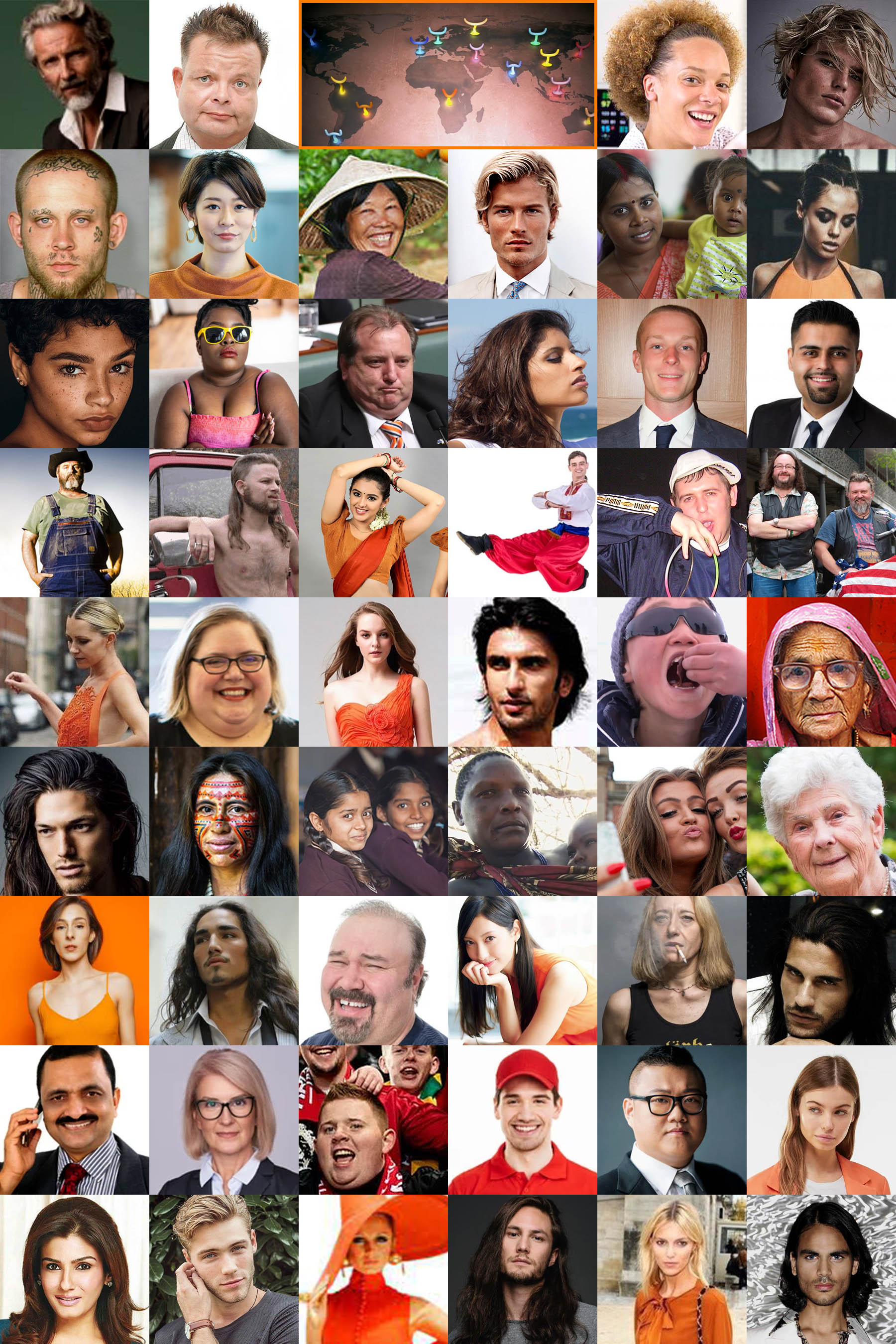
Image: Les habitants de la planète terre / The inhabitants of planet Earth
In 1950, even the UNESCO attempted to draft resolutions that would summarise the state of scientific knowledge of the time about race and issued calls for the resolution of racial conflicts; it defined a race as: “A race, from the biological standpoint, may therefore be defined as one of the group of populations constituting the species Homo sapiens“, which were broadly defined as Caucasian, Mongoloid, Negroid races but stated that “It is now generally recognised that intelligence tests do not in themselves enable us to differentiate safely between what is due to innate capacity and what is the result of environmental influences, training and education.” Those classifications nowadays of course look dated and ironic, almost ridiculous.

In 2003, latest sequencing techniques put an end to all racialist theories once and for all: the Human Genome Project, which began in 1990, was finally completed with the publication of the complete sequence of the 3 billion bases that make up the human genome. For the first time we were able to have a global notion of human diversity. The project proves that there is practically no variation between the DNA of two randomly selected humans across the whole planetary population of homo-sapiens [humans], both are 99.9% similar. Hence, this scientific research proved that we all have the same genes that are placed in a similar way on the same chromosomes. This homogeneity across human populations is remarkable, and it is something that only concerns humanity, since even the other higher primates show 4 to 5 times more differences between two individuals than between two human beings.
Nous, les humains, sommes tous de la même race !
[French for: We humans are all of the same race!]
Hence, the concept of “race” does not have any scientific legitimacy, “race” is a social construction based on minor variations in organic compositions that lead to physical and aesthetic differences e.g. skin tone and craniofacial morphology.

Hence, we can argue that since we now know that race is a social construct, it does not have any place in genetics research anymore. Researchers in other fields who still choose to use the racial classifications will have a huge responsibility when studying such a sensitive construct, and they will have to be incredibly sure of whatever results they bring to the table. Researchers, who use racial categories should be completely aware of what they imply, be able to define those properly and know and constantly update their historical and psychosocial knowledge as the human population continues to evolve.
The human genome project shows that if we really had what some call “human races” as there are different dog races, we would expect to find particular variants to be exclusive to a particular group of people in specific populations of humans on earth, and other variants to be exclusive to others; this is what we find in purebred dogs.

Les différentes races de chiens: Bulldog Anglais, Jack Russell Terrier, Rottweiler, Yorkshire Terrier, Cavalier King Charles Spaniel, Staffordshire Bull Terrier, Bouledogue Français, Saint-bernard, Berger Allemand, Épagneul Breton, Brachet Polonais, American Bully, Berger Belge, Spitz Finlandais, Welsh Corgi Pembroke, Dogue Argentin, Bichon Maltais, Dogue Allemand (Grand Danois), Husky de Sibérie, Spitz Japonais, West Highland White Terrier (Westie), l’Australian Kelpie, Chow-chow, & Malamute de l’Alaska
Instead, what we find in the human species is that all the variants of all the SNIPs [single-nucleotide polymorphism: the variation of a single base pair of the human genome] are present in all human populations. We are going to find every form of SNIP possible in every human being whether we study a tribe in the Congo, an Irish village, a Norwegian region, a Chinese village or people of the Kamchatka.
The French philosopher Barbara Stiegler wisely suggested that the task of creating the consent of the masses should be left in the hands of experts in psychology [i.e. those who understand the psychic structure and philosophies of how humans and societies operate, develop and evolve].
Assimilation
Human organisms that have chosen to shift their geography to be part of a new society along with its heritage, do not have any other concrete option if they want to live a fulfilling existence, but to fully “assimilate” and prove their genetic fitness/health and abilities, and hence become an asset to the new group by becoming a part of it to help maintain its stability and sense of synchronisation. Men and women who make that choice and who have the necessary education and intelligence to guide them, build themselves and change cultural / national identification registers when they have the capacity for development, the linguistic heritage and the genetics of intellect with a mastery of expression and speech. It is only then that they manage to represent a nation or an empire [or two?].
A discussion published in the Oxford Journal of Applied Linguistics based on the emerging field of heritage speaker bilingual studies challenged the generally accepted position in the linguistic sciences, conscious or not, that monolingualism and nativeness are exclusively synonymous; from modern academic discussions, it is now being acknowledged that heritage speaker bilinguals and multilinguals exposed to a language in early childhood are also natives; they have multiple native languages, and nativeness can be applicable to a state of linguistic knowledge that is characterized by significant differences to the monolingual baseline (Rothman and Treffers-Daller, 2014). There is no reason why this should not also be applicable in a French speaking environment.
In the 21st century, as far as ‘The Organismic Theory of Psychological Construction’ [which focuses on the singularity of the individual organism] is concerned, there is no debate between intellectuals in psychology, but simply the discovery of the new scientific and philosophical perspectives that it introduces to explain the psychological construction of the individual – as Carl Sagan phrased it, ‘Science is a way of thinking much more than it is a body of knowledge’. Construction [training], which ‘can be’ mechanical and structured in its application [e.g. distance learning by text / video / audio], develops indirectly to create and give a socio-cultural dimension to the individual once the desired skills have been fully adopted, mastered, and deployed in life.

Au XXIe siècle, les industries des arts, de la culture et de l’éducation s’appuient principalement sur les médias numériques pour toucher des clients dans le monde entier / The industries of the arts, culture and education in the 21st century, mainly rely on digital outlets to reach customers across the planet
The greatest child psychologist of all time, Jean Piaget argued that all forms of social interaction [which also includes artistic exposure] in the process of learning play an important role in “cognitive growth”[See: Essay // Developmental Psychology: The 3 Major Theories of Childhood Development]. Bernard Lahire pointed out that differences in cultural education [e.g. various forms of artistic exposure] have an impact on the developing child and leads to inequalities early in life, i.e. the child exposed to finer artistic experiences (e.g. literature, music, film, digital experiences, etc) has a better chance of developing a sophisticated mastery of language early in life than the child who is not. This does not mean that all individuals are doomed for failure because of their inadequate early development, as some gifted or dedicated individuals do catch up on their linguistic development later in life.
The term ‘social’ is also far too vague to be important as such… the term ‘social’ can simply be defined as the interaction and exposure [of all types, including cultural and artistic exposure] between organisms. So the term ‘social’ is not really valid scientifically and it lacks precision itself since it may refer to a wide range of variables. What we are left with then is only the individual’s choices, language(s) & abilities of personal development [i.e. psycholinguistic and cultural synthesis]: the major factors in the psychological & philosophical explanation of his/her singular conception [to note that each conception is unique to the individual human organism such as his/her fingerprints, skull shape, or body structure: singularity]. Thus: training, meritocracy, order and love! [See: The Concept of Self]

If new organisms who moved to another environment lack genetic fitness/health, then it seems reasonable to consider conceiving [through healthy donors] or adopting children of the similar organic composition of the majority from the respective societies they moved to and live in, as this will contribute in fostering the growth and continuity of the group and also ease the process of assimilation for both parents and child. Organisms who do change their mode of existence, i.e. organisms that have the potential and have taken the decision to and do assimilate in Western European societies, the best option seems to “see, breathe & live” [as a way of speaking] like the new society and nation they chose to be a part of, and also “feel” the new group’s pain, joy, values and heritage [even religion if possible / See: The Relationship between Religion and Discrimination].
True harmony in a genuine community of sophisticated, educated and enlightened minds relies on the construction of a united society which is closer to post-revolutionary French philosophical values of « Liberté, Égalité, Fraternité », which is not simply a question of living side by side with each other, but involves getting all individuals – besides their personal tastes as unique humans beings – to also honestly agree on identity, belonging, philosophical values and goals; feel, understand and synchronise their lives with each other as a genuinely united community that supports and helps one another, while also working and building harmoniously together at every level of human life – not simply economically.
Hence, going by scientific findings of the 21st century, it seems that the French civilisation is one that was always ahead of its time and far more sophisticated as an empire in a league of its own. Whatever the organic composition or colour shade of individuals in France, there is a strong sense of national concern and French identity embedded in the vast majority of French people who are proud of their evolving society and who want to enhance France and are in love with its heritage and people. In France, indeed, what seems to matter the most is one’s cultural identity and loyalty to the nation and one’s French sentiments, outlook and sense of connection with the native people and love for the nation, rather than the paleness of your skin.

We are living in pivotal times where the human civilisation is evolving at breakneck speed in so many ways and changing era right before our eyes in the 21st century [the sincere, realist, punching, unhypocritical, genre-defying, barrier-smashing, universal and mind-blowing documentary by fellow Frenchman Nicolas Hulot about the impact of humans on environmental change released in 2009, « Le Syndrome du Titanic » portrays this change of era magnificiently – unfortunately those types of production seem far too honest, scary, deep, profound and intellectually stimulating to get the publicity and attention they deserve among the mainstream consumers and the industries who have everything to gain in the masses staying naive and atavistic, but remains an iconic piece in the collection of the wise, avant-garde & insightful chosen few – facts that can never be dismissed or denied!].
Nowadays, we have a generation that has the chance of having access to a wide range of accelerated learning technologies available. The world’s societies have evolved beyond recognition from their « primitive » past, and are today interconnected and inspire and influence each other in so many ways [e.g. science, sport, medicine, cuisine, arts, literature, philosophy & education]. The advancement of technology has given us the ability to be extremely mobile, since most of the major works and research are now available in digital form and has led to the world being more connected without the absolute need to travel to ancient libraries to find academic resources; we could be managing a team or a company in Europe from the Amazonian jungle, from a tree house in Mexico or a tent in Denmark, as long as we have high speed broadband and decent technology – imagine what Da Vinci would have achieved if he had those in his time!

Carte montrant la différence des niveaux de littératie entre la génération plus âgée et la plus jeune / Map showing the difference in literacy levels between the older and the younger generation / Source: OurWorldinData
In most societies, immigrants tend to integrate, which simply involves abiding by the law, obtaining residency and a passport. Assimilation is different from integration! Integration only implies that a foreigner finds a place in the host society: that he/she has access to a job, to decent living conditions, that he/she respects the law, and does not imply that they adopt the habits and customs of the host country.
Assimilation, on the other hand, requires that the foreigner becomes similar to the majority population in terms of identity, cultural sensibilities, artistic and aesthetic tastes, perception, conception of relationship between men and women, etc.
The French laws of 2004 and 2010 on banning religious apparel in public places [e.g. the Muslim veil] are, according to historian Raphaël Doan, clearly assimilation laws; he points out that French society considered that veil wearing was not compatible with life “à la française“, so the French state demanded that Muslims comply with the French way of life, i.e. with heads uncovered in public. However, Doan argues that the French did not assume this action as a demand of assimilation, but hid it behind the notion of secularism or freedom of conscience.
Assimilation means to see the members of one’s new community as one’s own “blood”, just like those from avant-garde French schools of thought do, as it will be in any individual’s best interest in living “fully” [it is vital for all organisms to also consider the problems of «bad blood», since individual social incompatibility and/or lack of chemistry – which is not necessarily hateful – within organisms of the same geographical environment may happen due to a range of factors (e.g. intelligence, personal philosophical values, sensibility, personality traits, emotional relatedness, artistic tastes, level of cultivation, etc)].

Any society that cannot add highly talented organisms with exceptional genes that have the potential to enhance and sharpen them as a group through the process of assimilation, would be missing out and will forever have a weakness over avant-garde societies that can. However, it is important not to take the process of assimilation lightly as it is not a costume party. Assimilation is not an easy process as we have found.
The large majority of organisms who change geographic locations do not have the abilities or the desire to assimilate, since it involves focusing their loyalty and dedication to the new society and its people while also adopting [e.g names that are synchronised with the society’s heritage as it is commonly done in France] and mastering new behavioural and communicative patterns [as Nicolas Sarkozy also pointed out], which requires learning & adjusting.

Traduction(EN): “Us in France, we are different from others. To live, we have to drink, eat, but also to cultivate ourselves.” -Nicolas Sarkozy
Hence, the diplomatic deportation and relocation of incompatible organisms along with campaigns to help them settle still remain the best solution to alleviate the burden of mass migration and psychosocial disruption, because assimilation requires skills and dedication in learning and adopting new behavioural and communicative patterns, and at the exception of some talented and passionate individuals, the majority of foreign organisms fail and/or do not have any desire to do so, but still expect to have equal treatments by remaining the way they are; we may ask ourselves if this is reasonable?
It is fundamental to take note that there are some [not many] “incredible” individuals who manage to assimilate and become fully part of their new societies, and guide, manage and promote it passionately.

Those individuals who have made the tremendous efforts to become fully part of their new society where they have moved to and have the potential to enhance, guide and promote it, should be applauded and encouraged because they are individuals who have proven their genetic fitness/health, psycholinguistic/cultural belonging, national loyalty & identity are not in a new society simply for economic gains [as a foreign leech] but see themselves as part of the national community, and have taken the sensitive personal decision to completely blend in [assimilate] and become natives of their new societies where it reflects in their philosophical values, sentiments, perception, behaviour & artistic and aesthetic tastes along with their sense of concern for the community.

Traduction(EN): “I have called this principle, by which, each slight variation, if useful, is preserved by the term of natural selection.” -Charles Darwin / Note: Darwin devised the Theory of Evolution and was against bad breeding, and even supported a campaign to make marriage between cousins illegal due to the range of diseases and disabilities caused by consanguineous inbreeding [See: (1) Inbreeding, Consanguinity and Inherited Diseases, (2) The Role of Inbreeding in the Extinction of a European Royal Dynasty, (3) Royal dynasties as human inbreeding laboratories: the Habsburgs & (4) 75% of Jews Are Lactose Intolerant and 11 Other Facts

The Concept of Assimilation à la Française: A philosophical & scientific inspiration from the great civilisations
Assimilation has long been a founding pillar of French society, that even goes back to the ancient roots of the Gauls as French public figure Arnaud Montebourg has pointed out in 2016, saying: « Il y a un tiers des Français qui ont un grand-père étranger, c’est pour cela qu’il n’y a pas de Français de souche… on serait bien en mal de trouver la moindre souche dans l’Histoire de France, y compris chez les Gaulois. Finalement, la France était un cul-de-sac dans l’immigration venue de l’Est et du Sud avec une sédentarisation et des mélanges qui ont fait notre force et qui ont fait qu’il n’y a pas de communauté d’origine en France mais une communauté de destin, c’est le contrat qu’on va signer ensemble pour faire ensemble. » [Translation / French for: “One third of French people have a foreign grandfather, which is why there are no native French people… it would be hard to find any native French people in the history of France, even among the Gauls. Finally, France was a cul-de-sac in immigration from the East and the South, with a sedentary lifestyle and mixtures that have made our strength and that have meant that there is no community of origin in France but a community of destiny. It is a contract that we will sign together to create together.“].

Traduction(EN): “I, a Frenchman of mixed blood, my grandfather is Greek, my father is Hungarian. I don’t want to be taught the history of Greece or Hungary! My ancestors are the Gauls and I want to know the history of France. That’s what being assimilated into France is all about!” -Nicolas Sarkozy
Even we go back to Rome, we find that it was founded from a collection of people of different origins, so the Romans believed in the concept of assimilation, and did not have any difficulty in imagining that a foreigner could become fully Roman. This is even proven by science through an ancestral DNA analysis to investigate the genetic changes that occurred in Rome and central Italy from the Mesolithic into modern times (Antonio et al., 2019). Fellow French historian, Raphaël Doan points out that when a foreigner became Roman, he automatically received a Roman name, wore a toga as Romans did and received a similar treatment to all Roman citizens.
Emperors from Spain and Syria are known through history, but their origins are barely mentioned or seen as anything restrictive or shocking by their contemporaries. The Europe of the 21st century – at least in nations with a sophisticated breed of refined thinkers such as those of the French intellectual heritage – is a direct heir to this large-scale assimilation of the Roman tradition. However, in the final centuries of the Roman Empire, the machine for producing Romans took a halt; Roman generals with Germanic names appeared and were seen as Germanic foreigners by the Romans because of their unassimilated names; Germanic and non-Roman tribes were considered as barbarians. This failure of assimilation is believed to have contributed, among other factors, to the break-up of the Roman world, as French historian, Doan points out.

Image: l’Aigle Romain en or / The Golden Roman Eagle
France, a civilisation of avant-garde and innovative thinkers, intellectuals, philosophers and artists with a universal perspective of humanity on Earth, remains a point of reference when it comes to the philosophy of managing society across the planet since it has the reputation of a civilization founded on universal human values. The French intellectual heritage has always been perceived as the product of an organic society that believes in exceptional individuals and the extraordinary potential of human beings. The French civilization is built and structured on universal human values derived from its brightest intellectuals and philosophers such as Montaigne, Descartes and Voltaire (to name a few) – who carried the spirit of the intellectual enlightenment. Those values act as foundation to keep everyone, including mediocre street politicians and the uncreative, mechanical and simplistic minds of the capitalist bureaucracy in check.
In the mechanical and industrialised Western Anglo-Saxon world, such as the US, the atmosphere is very different. Politics there – as it is in most parts of the world – looks like a business venture where it is even harder to separate from industrialised capitalism. Even Noam Chomsky in his 2017 essai, “Requiem For The American Dream“, has pointed out that inequality has never been so high, and social mobility never so reduced; where a vicious circle sees wealth and power concentrated in the hands of a tiny minority who apply Adam Smith‘s ugly maxim “Everything for ourselves, nothing for others”. Chomsky paints a gloomy picture by arguing that what was once possible in the US: to start from nothing and climb the social ladder through hard work, merit, effort, regardless of one’s background, is no longer possible, and only the combined awakening and contribution of the masses can restore this dream. Thus, in those atavistic Western societies born out of the muddy and cold pits of industrialised capitalism, where the sole objective is mass production, market domination and profit, we find a lack of sophisticated philosophical and human values, a lack of respect for individual growth, human rights, concern for the accessibility to decent healthcare for all, and also a failure to develop a universal outlook of humanity. All those combined paint the barbaric and unsophisticated picture of societies that are completely indifferent to human life, where individuals are treated as nothing more than a mass to be understood through statistics, in the style of pure industrialized capitalist financial bureaucracy, where there is a lack of belief in human potential and exceptional individuals; those play a fundamental part in the huge amounts of social instability, crime, mental health crisis and human suffering in those societies. We may also note the poverty of the intellecual discourses that lack depth, sophistication and a strong philosophical spine, fed to those populations by their mediocre mass media industries that are – in many cases – owned and controlled by the same people of the industrialised capitalist bureaucracy – the combination of all those elements make a clear case for the shallowness of such a civilization’s foundations, its incapability to set an example and its inadequacy to lead mankind at a universal level.
« Je ne parlerai pas de philosophie à mes collègues … Ils sont trop stupides. »
-Colin McGinn
French for:
“I won’t talk to my colleagues about philosophy… They are too stupid.”
-Colin McGinn
This may not be surprising, since the industrialists who are products of pure capitalist bureaucracy are only able to run a shop, create tools (that still require ingenious, talented and creative minds to be put to proper use in producing masterpieces of various types), train workers for specific tasks, or apply rigid rules (learnt from textbooks over the course of 3 to 5 years) in order to manage a business team or synchronize the tasks of a few bankers and/or accountants. However, those very people who are the pure products from the depths of industrialised capitalist bureaucracy have never excelled or been gifted for philosophy, universal human values, political creativity, artistic depth, openness and humanities, those are part of the founding pillars of the French intellectual and philosophical heritage, firmly embedded in the “DNA” of the psyche of creative thinkers of the French intellectual tradition, which consitutes the vital components in structuring, uniting, synchronizing and laying the foundations (at every dimension of human life) of a sophisticated universal civilization. French philosopher, Michel Onfray recently elaborated on the term “assimilation” and in a similar line as ourself, referred to the post-revolutionary French values that led to this notion of the universality of the human race.
Onfray wisely noted that we could go even further back in history to link this French notion of universality to the universality of St. Paul. Judaism has a local perspective, since it never had and does not have the intention of judaising the whole planet, but Christianity, which appeared later, has a claim to universality. The French thinker, Onfray, observed in a philosophical discussion in 2021 that St. Paul came with the Christian concept of universality since he discarded the classification of human beings [i.e. no more man, no more woman, no more Jew, no more non-Jew, etc], hence, we find that it is a universal concept derived from the ecclesia [i.e. the collective body of Christians], the church, which is the whole planet.
It was the French revolution, which had been heavily influenced by the ideas of the intellectuals of the Enlightenment [i.e. the 18th century intellectual movement of reason], that would secularise a number of concepts inspired by Christianity into the constitution, most notably the famous « Liberté, égalité, fraternité » [Translation / French for: “Liberty, equality, fraternity”], which is inspired from the free will of Christians.
« The wars of the French revolution were also wars of ideological and intellectual colonisation… »
Equality [Égalité] is derived from the belief in equality before God, and brotherhood [Fraternité] is derived from the concept of the community of the ecclesia. Liberté [Freedom], of course, most people know what this means, which is the freedom to explore, to choose, to discover, to learn, to express ourself, to speak, to have open debates, to question, to propose, to love, to create, to live life fully within the limits of reason and respect for the mother psychosocial sphere. Hence, as Onfray further noted, we have a concept that was passed on from St. Paul to Robespierre and that went through the French revolution, where the new generation of French people secularised and embedded those values with the firm belief that “we have a universal world view; we want everyone to share our values – liberté, égalité, fraternité!“.

Lectrice au bord de la mer avec un livre / Reader at the seaside with a book
After all, the Declaration of Human Rights is for everyone, it is not only for us, i.e. people of the French intellectual heritage, but for all, that is Papua New Guinea, Equatorial Guinea, Montaigne’s Brazil, England, Canada, India, Japan, Germany, China, Australia, Mexico and their neighbours, the US and so on. As Onfray reminded, this led to a generation of French minds who think that we have to go out into the wider world, where the vast majority of people are, in order to share our good news with them, which is our universal human values of « Liberté, égalité, fraternité ».

Traduction [EN]: “What is the seal of freedom obtained? No longer being ashamed of oneself.” – Nietzsche
At the Assemblée Nationale, Jules Ferry stood for the idea of free, secular and compulsory school for everyone, and so, that school, we people who are the product of the French intellectual heritage thought that we will give it to the whole planet. This created the wave “We are going to colonise”. Onfray suggested the example of the colonisation of Algeria as one that shows the intention of the French to pass on their good ideas and values. The wars of the French revolution were also wars of ideological and intellectual colonisation.
When we consider Hegel’s passionate words about Napoléon, the German philosopher now seems like a great collaborator for the French colonisation concept, as himself as a German, described Napoléon’s conquering arrival in Germany as: “I saw the Emperor – this world-soul – riding out of the city on reconnaissance. It is indeed a wonderful sensation to see such an individual, who, concentrated here at a single point, astride a horse, reaches out over the world and masters it“.

Image: Hegel et Napoléon à Iéna (illustration tirée du Harper’s Magazine, 1895)
Those words from Hegel were written in a letter to his friend Friedrich Immanuel Niethammer on the 13 October 1806, the day before the battle of Jena, which would be fought on the plateau west of the river Saale in today’s Germany between the forces of Napoleon and Frederick William III of Prussia, with the historic defeat suffered by the Prussian army subjugating the Kingdom of Prussia to the French Empire; the victory is celebrated as one of Napoleon’s greatest. It is quite ironic, because the great German, Hegel’s words admitted that the French heritage is superior to his own; and Michel Onfray in 2021 ironically suggested « on a juste envie de lui dire ‘mais enfin, et ton Allemagne ? » [French for: You just want to say to him, “But what about your Germany?”].
Presentation: Napoleon crushes Prussia: Jena, 1806
On this same note, it is worth noting that there is French on the emblem of the British monarchy; the words, “Dieu et mon droit” have been the motto since the time of Henry V (1413 – 1422), and since those times old English is not the language of the English elite anymore which resulted to the use of words and expressions of French and Norman origin that are now widely used in the English language. [Note: For advanced learners of French in the Anglo-Saxon world, the essay “The «FRANÇAIS»: Verbs & Tenses for Advanced English Learners of French” may help]. If Henry V decided to use the French language, which to him was a foreign language, on the emblem of his own country, just like Hegel, he must have believed that the French heritage is superior to his own in more ways that one. In a short video in 2022 for History Hit, British historian, Professor Suzannah Lipscomb brought in the confirmation that the English aristocracy valued the French language, with Thomas Boleyn [the best French speaker at the Tudor court] wanting his daughter, the iconic Anne Boleyn to master the French language.
French has also been identified as an important language for the UK’s future. In an article published by the British Council in 2014, Professor Michael Kelly, who heads the Modern Langages Department at the University of Southampton described the “je ne sais quoi” in learning to master the French language; the British see French as the language of love as he pointed out, and the French language has a romance to the English speaker’s ear. It is the French culture that sparked the “wow” factor for Kelly who admitted being “bowled over by the depth of feeling” and still getting the tingles when coming across the works of Charles Baudelaire, with “L’invitation au voyage” taking him on a journey to a country where “tout n’est qu’ordre et beauté, luxe, calme et volupté” [French for : “all is order and beauty, luxury, peace, and pleasure” – quoted from Baudelaire’s poem]. Professor Kelly argued that to him, this sums up France at its best. Kelly writes that when words are said in French, they conjure up a world beyond their ordinary English counterparts; what marks French as a romantic language for the British is that it can almost but not fully be understood. Since it is not used all the time, the English do not get the overlay of everyday meanings that may crowd out the magic for some native French speakers, and according to Kelly, this may be why the British see French as the “language of love”. French has left a lasting impression on the English language and like most other countries, the French do talk, write and sing about love, however, the British, Professor Kelly points out, suspect that the French are more articulate about love, unlike the more ‘buttoned-up English’ (“coincé” is the descriptive term used by the French), who flounder like Hugh Grant in “Four Weddings and a Funeral”. The difference, Kelly observes, is the culture, not simply the language.
It is also to be noted that the French language has incredible international prestige since it was the language of culture for the European elites and also the language of international diplomacy up to the First World War. The negotiations for the Armistice in 1918 were conducted in French, with interpreters of French to German, however, the French generals and British admirals spoke to each other in French. French left its mark on the English language, and since the 16th century the French have taken pride in the precision and clarity of the language, embodied in the works of great minds such as René Descartes and Voltaire. Those factors attracted the Irish writer Samuel Beckett, who switched to writing in French, since in using the English language, the latter would end up saying more than he intended. Professor Kelly observed that ‘Ce qui n’est pas clair n’est pas français’, coined by the 18th century writer Antoine Rivarol, it became a pet phrase in French schools: ‘if it’s not clear, it’s not French’, though ‘it could be English, Italian, Greek or Latin’, Rivarol had added.
Professor Kelly notes that French is a significant language to learn for the UK industry since close neighbours in Europe [Belgium, Switzerland, Luxembourg, regions of Northern Italy, Channel Islands] also function with it, and with a global empire comparable to and competing with that of the British in the past, the French language is also widely distributed across the Francophone world [e.g. French-speaking Canada, some parts of Africa, North America, the Caribbean, South America]. London is nowadays considered as France’s sixth biggest city with large numbers of French people living in the UK. Kelly observes that unfortunately, not enough English people have the French language skills required to work in the various industries of the Francophone world [for e.g. aerospace (from Concorde to Airbus), defence, telecommunications, energy, water (Compagnie Lyonnaise des Eaux), fashion and beauty (L’Oréal, Chanel) and finance (BNP Paribas)]. Tourism is also a major factor in the importance of language since the British are the largest proportion of visitors to France and conversely, Britain welcomes more visitors from France than from anywhere else, hence until we wait for the world to become fully francophone, there is every incentive in learning each other’s language – currently being the two most practical languages in the modern world. French remains the most popular language for learners in school, in the workplace and for leisure in the UK; although other languages are also growing in popularity [such as Spanish], Kelly reminds that the geographical situation of the UK will continue to make French a vital language and a constant invitation to a journey.
«Le progrès est impossible sans changement, et ceux qui ne peuvent pas changer d’avis ne peuvent rien changer.»
-G.B. Shaw
French for:
“Progress is impossible without change, & those who cannot change their minds cannot change anything.”
-G.B. Shaw
This French concept to conquer with the intention to share noble values of human universality is still alive today. In Onfray’s words: « Vous vivez en berbères ? Vous vivez en maghrébin ? On va vous expliquer comment il faut vivre ! Et devenez ce que nous sommes ! » [Translation / French for: “Do you live in Berber? Do you live as a Maghrebi? We will explain to you how to live! And become what we are!“].
Video: French Escape Room Activity for UK Schools: The escape room is a unique and enjoyable way to improve students’ French language learning
Quite clearly, we can imagine that this may cause some upheaval in some countries, especially with brainwashed, delusional and proud nationalists who cannot imagine that there may be another civilisation with a vision, a psycholinguistic heritage, a social structure, a cultural knowledge, a philosophical outlook and a set of values superior to their own. Hence, Jules Ferry’s concept of colonising to spread the values that we believe in and share « Liberté, égalité, fraternité » eventually won the defining debate over the French minds.
As a product of France and its sophisticated intellectual and linguistic heritage, with an undeniable English influence, it would have been absolutely impossible for me to comply with Hitler’s vision of a German empire ruling the world with all languages being extinguished gradually for a complete German speaking world; a French speaking world seems one more suited for a civilisation of human beings with a belief in the exceptional abilities of individuals and humanity.
The French empire also has the respect for, the sophistication and the flexibility to accomodate all foreign heritage [what is worthy of keeping] without destroying or burning them, by simply translating foreign heritage so that it now becomes part of the repertoire of skills of the French empire; for example, we can find French instructors, such as Gabin Bellet and Arnaud Riou, who teach Toltec wisdom [which is a century-old Mesoamerican heritage] to French audiences, explaining individuals how to use Toltec wisdom and apply its concepts in their own lives to enhance their relation to others and themselves. Hence France, does not destroy the heritage of other cultures, but absorbs what is valuable from it [e. g. gastronomy, technology, industries, philosophy, arts, other beneficial practices, etc], shares it with the wider francophone family and embeds it in its own blood in its constant evolution. It would be progressive to see the world turn French as the empire absorbs and adopts the whole of mankind as a mother would in her arms in a harmonious, humane, sophisticated and strategic way.
As with all the essays published on this website, we focus on concepts that can be applied universally and break down variables to their tiniest components to clear out confusion with an objective scientific outlook based on naturalistic observation. We discard the concept of race, since it is nothing but organic composition; what we do put the emphasis on is psychological construction; hence in a sense it could be said that our orientations are more about the colour of one’s mind than of one’s skin, meaning that if we consider Western intellectual heritage as one that was derived from a “White civilisation”, then all its people should have a “White mind” which could be interpreted as a set of philosophical values, artistic and aesthetic affinity, perception, vision and sensibilities”, which is completely disconnected from one’s skin tone.

“Style is the physiognomy of the mind. It is a more reliable key to character than the physiognomy of the body.” – Arthur Schopenhauer [See: Philosophical Review: “The World as Will and Idea”, by Arthur Schopenhauer (1818)]
In France, the mind [i.e. psychical construction] of the individual is at the heart of the concept of assimilation towards a strong and united nation; race, at the exception of some simple-minded atavistic and extremist politicians, is not a topic of conversation and concern among sophisticated and cultured intellectuals as it is in other parts of the world, especially in undeveloped and atavistic areas of Eastern Europe, the Anglo-Saxon sphere and the Americas.
The elaboration of the Organismic Theory of Psychological Construction provides objective and mechanical explanations of human behaviour and discards the notions of political left or right as those who view the world from the academic lens of political studies do. However, some still want to locate the concept of assimilation on the political scale and wonder whether it is closer to the left or right. French philosopher, Michel Onfray, argues that assimilation is a concept derived from the left; although it can exist on its own and be applied universally as the logic of self-conception is explained through the Organismic Theory of Psychical Construction.
French Philosopher, Onfray phrased it as such: « L’assimilation consistait à dire: il faut que nous blanchissions les gens de couleur et qu’intellectuellement nous fabriquions des clones. » [French for: “Assimilation consisted of saying: we have to whiten the coloured people and intellectually we have to make clones.”]. Hence, Onfray pointed out to singular individuals such as Léopold Sédar Senghor who was a poet, writer, French statesman, and also the first person of African origin to sit in the Académie française; Senghar’s poetry was built on the hope of creating a universal civilisation and he believed in French values. Senghar’s wife and muse was Colette Hubert, who was from an old Norman noble family and to whom he dedicated the collection titled “Lettre d’hivernage“.
Léopold Senghor et Colette Hubert
Onfray pointed out singular characters such as Senghor who has been considered a model of assimilation, however, many racist, indigenists [i.e. black extremists] and other black fundamentalist movements, such as the Universal Negro Improvement Association, nowadays would consider him to be a white negro who is despicable in that sense.
«Ce qui distingue l’homme des autres animaux, c’est qu’il est le seul à disposer de la conscience, alors que les autres ont des sensations sans avoir la conscience.»
-Alcméon de Crotone
French for:
« What distinguishes man from other animals is that he is the only one who has consciousness, while others have sensations without consciousness. »
-Alcméon de Crotone
In a similar line as us and following a similar perspective, fellow Frenchman, Raphaël Doan, has spent a lot of time meditating on the issues of assimilation and immigration, which is a major phenomenon of the 21st century. Since Ancient Greece up to the modern world, many great civilisations have had a singular model of assimilation. The Greeks in the beginning were not a people generally open to the concept of assimilation, and hence had a different perception than the Romans. The Greek people were initially a group of cities only focused on themselves in a civic sense, and were at war with each other most of the time, while having a narrow conception of their citizenship: one had to be born from an Athenian father and mother to be Athenian. Hence, this narrow conception would not support assimilation to allow a foreigner to become Athenian. However, this would later change after the conquests of Alexander the great because it forced the Greeks to confront the foreigner and foreign populations who suddenly, under their domination, had become their responsibility; that position of power made them work on ways to create a stable empire with all those resources (i.e. land and human beings).
Alexander the Great had a philosophical education and studied the great tragedies with Aristotle himself and was considered as a god, or a man who was as close as possible to god, a friend of humanity who changed the whole world, who believed in mankind and proved it by adopting miserable tribes to create an empire where everything became possible. Alexander’s empire was not founded on land or riches but on ideas just like Napoleon’s: the Hellenistic idea of a civilisation open to everyone. Alexander carried an immense dream with the passion of eternal youth, completely convinced that our collective forces and imagination could take us to levels once thought impossible; where surpassing oneself became easy.
As for the Romans, their view of assimilation had always been different and more open-minded; their founding legend accepted the idea that those who shared both citizenship and the Roman way of life were Romans, without this being linked to any particular family or ethnic origin. The creation of Rome itself was done by Romulus in the legend, who brought together disparate populations and merged them into the Roman people. Hence, as Doan also points out, the Romans were never really interested in the origins or physical appearance of those who would become Roman and as mentioned, we had emperors in the Roman imperial era who originated from all corners of the empire without it being seen as anything important by the Roman historians, who would hardly notice or mention their non-Italian and non-Roman origins. This Roman line of thought is revealing of the more universalist and abstract conception of their own citizenship that the Romans had from the beginning compared to the Greeks.
« this more universalist and more abstract conception of their own citizenship that the Romans had… the concept of assimilation as being linked to the universality of human life»
Doan remains in line with Onfray in agreeing on the concept of assimilation as being linked to the universality of human life. The historian however, goes further in the past up to the Ancien Régime that already had tendencies for assimilation, both in the metropoles with the various small provinces that had been annexed to France, where Louis XIV would ask the inhabitants of Rousillon to dress themselves “à la Française” [in the French style] and abandon the Spanish style of dress, and also in the French colonies. He notes the first French colonies, in particular Canada, where attemps were made to “francise” the Native Americans, which was a concept that used the similar universal logic that would later be systemised much more rationally by the French revolution and the third republic that followed.

Image: Un Américain authentique et original, connu aujourd’hui sous le nom d’Amérindien après que son peuple ait été mis de côté et que ses terres aient été volées par des immigrants venus pour la plupart d’Europe / A true and original American, known nowadays as a Native American after their people was cast aside and their land was stolen by immigrants mostly chased from Europe
If France was not able to complete the assimilation of the Native Americans in the 17th century it is simply because there was not enough French presence there to give them an example and apply some social pressure [which is necessary for assimilation to succeed], Doan notes. After all, it is by being immersed in a particular psycholinguistic, artistic and cultural sphere that leads to easing the process of assimilation; it provides the foreigner with a deeper understanding of the founding heritage, psychosocial knowledge, artistic and aesthetic tastes and language. Doan points out that this francization, even if it was not completed, revealed the French mind’s tendency to always look at the foreigner as a potential Frenchman.
« the French mind’s tendency to always look at the foreigner as a potential Frenchman… »
This conception of assimilation was possible thanks to the characteristics of French civilisation: universalism, which was rooted in the French Revolution and the Declaration of the Rights of Man, but also a propensity for abstraction, that of classical tragedies or Cartesianism [Descartes, “Je pense, donc je suis!”].
In order to assimilate, however, it is necessary to not be biased by the origins and physical appearance of the foreigner and work on our perception in order to see in him a Frenchman in spirit and morals, as Doan who also follows our philosophical and psychical perspective explains.

Video: 3D animation showing the neuronal activity of a healthy and functional human brain
The historian points out that in regards to antiquity, what makes the unity of the assimilation à la Française is firstly its reference to an antiquity that is not only catholic but also Roman in a larger sense. Raphaël Doan cites the quote from Terence which appeared in his play Heauton Timorumenos, v.77 and reads:
“Homo sum, humani nihil a me alienum puto”
Latin for:
(FR) « Je suis un homme ; je considère que rien de ce qui est humain ne m’est étranger »
(EN) “I am human, and I think nothing human is alien to me.”
Hence, what this profound quotation implies, Doan explains, is that if we believe that all human beings share the same condition and that nothing that is human to me is alien then I can assimilate a foreigner since in all truth he is not so different from myself, or the differences that exist. are simply cultural and superficial. This reminds us of Arthur Schopenhauer’s philosophy of “the world as will and idea”, especially the concept of “maya” [illusion] that he associated with his theory of the world of ideas, arguing that in the end everything is maya [illusion], both the object and the subject [See: Essay // Philosophical Review: “The World as Will and Idea”, by Arthur Schopenhauer (1818)]

Image: Une collection de films anglo-saxons et américains / A collection of Anglo-Saxon and American films
Hence, French historian, Raphaël Doan points out that cultural and superficial differences between the foreigner and the Frenchman can simply be abolished through that work of assimilation; and that is a belief shared by the Latin and Roman intellectual heritage and the post-revolutionary French generation of the third republic who refer directly to the Roman practice of assimilation. The jurists of the third republic would be inspired by that Roman practice of assimilation, as during this golden age of French assimilation, they created a whole set of doctrines, a theory of assimilation and also a legal system where various means were used to create a political system that rendered it possible to assimilate the migrations experienced by both the metropoles of the time, and also the colonies.
“Il est impossible de concevoir un système si parfait que personne ne doit être bon.”
– T.S. Eliot
French for:
“It is impossible to design a system so perfect that no-one needs to be good.”
— T.S. Eliot
It is important to remember that the first French assimilation was the assimilation of France and its people to itself. French history show that the Bretons, the Normands, the Alsaciens, along with others had to be assimilated to France and its values and language. Hence, Doan points out that what France demands of immigrants nowadays was first imposed on the people of France, in his own words: « des petits Provençaux, bretons, alsaciens – qui ont subi une férule assez dur de la part des maîtres, qui éradiquaient le patois dans les classes et qui voulaient absolument promouvoir la langue française – il y a eu une tentative d’homogénéisation » [French for: “little Provençals, Bretons, Alsatians – who were subjected to a rather harsh férule by the teachers, who eradicated the patois in the classes and who absolutely wanted to promote the French language – there was an attempt at homogenisation“].

Traduction(EN): “The history of France begins with the French language. Language is the principal sign of a nationality. ” – Jules Michelet
Hence, strict assimilation was forced onto the French people [i.e. the Bretons, the Normands, the Alsaciens, etc] in order for them to become part of that specific community and build a strong nation and that is what schools and teachers are made for; they were compelled to drop their regional linguistic dialects through schooling systems that promote the modern French language. Nowadays, some French intellectuals observe that France does not dare to impose a similar assimilation on the new arrivals in France. This according to some has led to a total disruption that started from the 1970s, who also argue that we may start to think about this model of assimilation that had been working well in the beginning.
Doan argues that around the 1970s, we also started to see the appearance of a new ideological trend, which was that of the valuing of originality, singularity, diversity and difference, and that tended to go against the concept of assimilation, since assimilation assumes the desire to ressemble, to standardise, to homogenise, to believe in the majority group and to him those new values were incompatible with assimilation. Those two concepts, i.e. originality and assimilation, can be synthesised as long as they remain within the psychosocial sphere of the nation. Society is after all a group of individuals, each unique with significant differences and tastes but also with significant unifying similarities that allow each to be part of a nation, with language, a sense of belonging and loyalty as major pillars. After all, “liberté” is a founding value of French heritage, so individual creative freedom within the French psychosocial sphere provides fertile ground for originality and singularity while also embracing the concept of assimilation for a unified nation. There is nothing wrong in knowing about the wider world, but if one is to live fully as an assimilated immigrant, the dominant psychosocial identity should be that of the nation.
In fact, to be fully assimilated means giving up on one’s foreign identity and embracing the new society’s history, language, linguistic theme, nation and religion as an added option if possible. Jews should reflect on this: the fact that Western Europe is a Christian civilisation, just like Israel is a Jewish society and the Arab states are a Muslim civilisation, with the governments of the latter two countries taking religion as a serious matter of culture without ever compromising on religious priorities and necessities over any other foreign religion. Indeed, in many Arab states, the crucifix as a symbol of Christianity is banned and illegal, and they make no excuses for it, because they are firm Muslims and this is embedded in the fabric of their government and culture. To further this example, it is also ridiculous that the Grand Cross of the National Order of the Legion of Honour which is the highest French order of merit for military and civil merits, established in 1802 by Napoleon Bonaparte, was given to the Sultan of Brunei in 1997, a man who recently instated a new penal code that applies the sharia – Islamic law – as strictly as possible: death by stoning to punish homosexuals and adultery, amputation of a hand or foot for thieves, death penalty for insulting the prophet. Being Jewish or Muslim will always portray oneself as a person with foreign values derived from the history and values of those religions that are for the most incompatible with the human values of the French civilisation.
Nowadays we tend to tell young people who are products of immigration that they should be proud of their foreign roots and their difference, and that is an anti-assimilative attitude because it pushes individuals to shift their focus to a foreign system of belief, values and people who are not part of the nation; and Raphaël Doan brilliantly notes that the racist Vichy regime under the Nazis took a similar anti-assimilative stance.
« Vichy would denaturalise immigrants or new Frenchmen who had been previously naturalised by the third republic… »
The third republic was incredibly assimilative, at the exception of some truly racist figures who believed in a theory of races and of the superiority of some races over others. Those public figures of the Vichy regime criticised assimilation and said that it was something aberrant to try to transform an African, a Jew or an Asian into a Frenchman, because they were not of the same race [i.e. they did not share the same variance in organic composition that provided the similar physical appearance / aesthetics, i.e. skin tone and craniofacial morphology]. Nowadays we can consider such an observation as scientifically wrong since we know the human brain and its psychical structure is capable of a wide range of environmental adaptations and adjustments and race is a social construction that has no scientific validity, and differences such as skin colour and craniofacial shapes can be abolished through cultural assimilation, since it is also a market, as Raphël Doan points out.
However, under the German-occupied France, the Vichy regime and its collaborators had won their racist case and it was the very same Nazi-Vichy group people who created the Vichy policy of assimilation, or should we say de-assimilation.
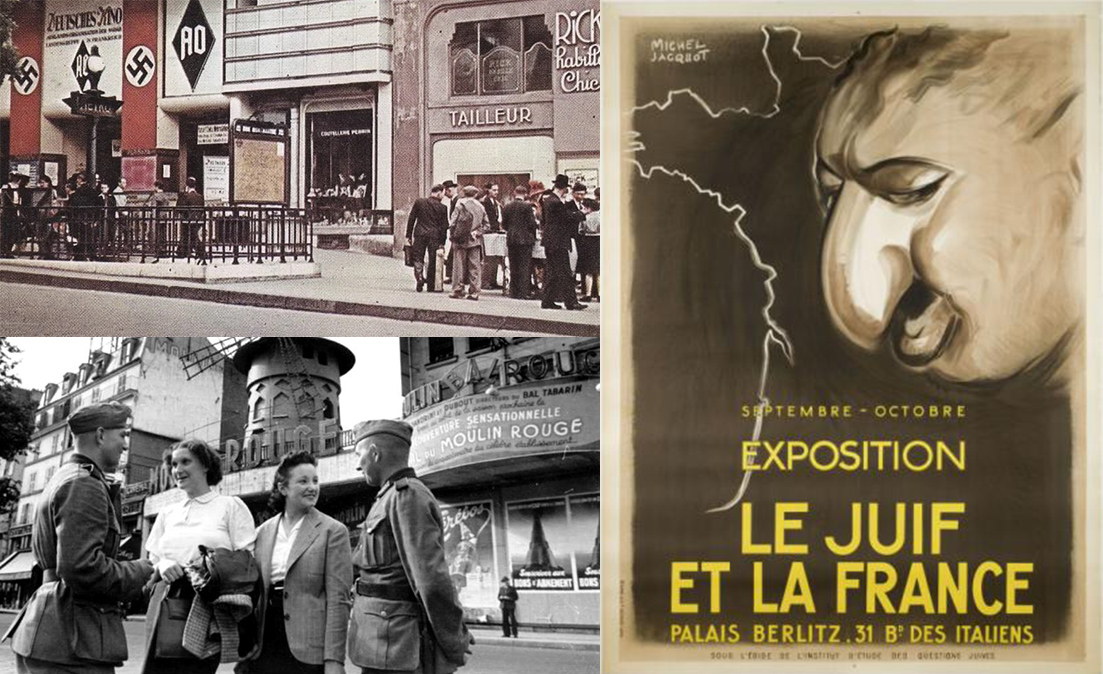
La France sous l’occupation allemande / France under German occupation
In the metropoles, Vichy would denaturalise immigrants or new Frenchmen who had been previously naturalised by the third republic – most of which were Jews – the Vichy regime attacked their French identity, heritage and nationality. It was even more striking in the colonies where the racist Vichy regime pretended to value local cultures, discouraging colonised French communities to ressemble the French, telling them not to name themselves as the French, i.e. not to take French first names, and not to dress like the French, but instead to focus on their local culture which Vichy hypocritically described as wonderful. This was done by the Vichy regime, because those people were disgusted by the thought of having to assimilate immigrants and turn them into Frenchmen, and hence encouraged them to go back to their past because the Vichy regime saw assimilation as unnatural, counter-intuitive or counter-productive.
Hence, it is not surprising that for a country that invaded France, killed its fathers, mothers, sons and daughters, and discarded its universal philosophy of assimilation with their pseudoscientific theories of race, what followed was a strong anti-german racism in France. Some people may be shocked to come to terms with the fact that racism also applies to those who choose to classify themselves ethnically as white; and just like being classified as any other category that people may choose to classify themselves, “white” does not say absolutely anything about a person’s intellectual cultivation, tastes, aesthetic affinity, literary voice, linguistic, artistic and philosophical influences, sensibilities, emotional relatedness, mind and sense of identity. This anti-german racism is still a feeling that lingers within the French people up to this day.
When Mélenchon published “Le Hareng de Bismarck” in 2015, he described the Germans as “roublards” [cunning], in love with “grosses bagnoles” [big cars], “bougons teutons” [teutonic grunts], obviously devoid of humour and arrogant. At that time, the big cars so cherished by the Germans did not exist, a member of the court of the King of France had kept a chronicle of the Second Crusade. It was the 12th century, the French and the Germans had been fighting side by side for the very first time, and witness described the Germans as “vulgar“, “brutal” and eager to “devour everything“. Seeing spiked helmets everywhere, Mélenchon hardly embarrasses himself to point out that it is not the ontological “German”, the one he calls “le gros lourd” [the big heavy], but his government that he is attacking. Hence, it is not hate against the individuals that constitute the German people from Mélenchon, but from a doctrinaire point of view, it is the liberal order of a Europe of budgetary orthodoxy that is being targeted, 10 years after Angela Merkel’s party first won the Bundestag. That exercise from Mélenchon, a few months before the start of the presidential campaign, was intended to be “pamphleteering” and obviously, provocative, writes Chloé Leprince for France Culture.
But 4 years later, it was Arnaud Montebourg who took his turn in the anti-german racism that took over France after the occupation by the Nazi regime; the former statesman used a similar technique to denounce what he called “une politique à la Bismarck” [a Bismarck-like-policy]. Bismarck, who embodies the Prussia of the 1870 war (lost by France) became this scarecrow for a section of the French people long before the European Greek crisis.
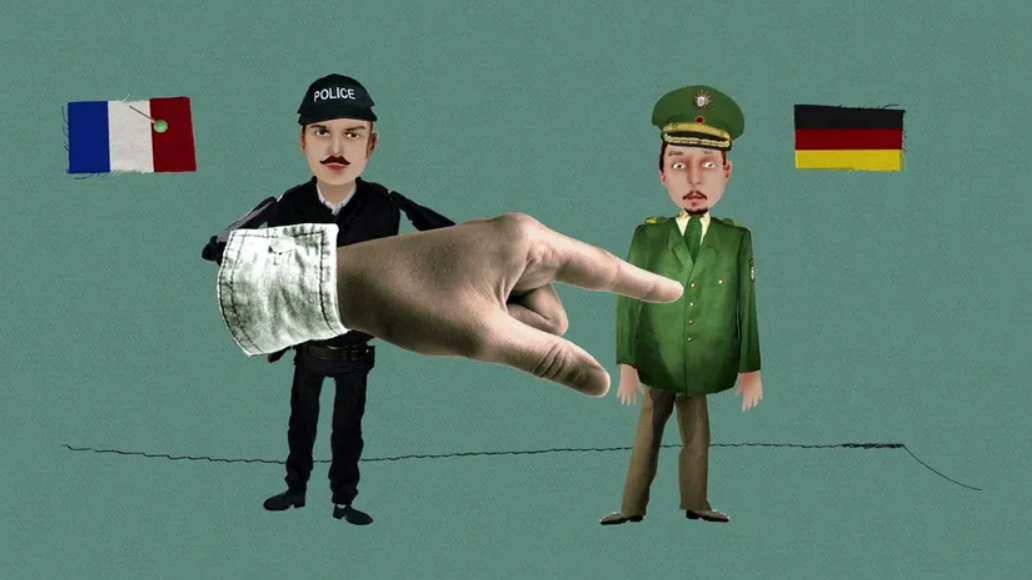
Visuel tiré de l’émission Karambolage, produite pour Arte, sur les stéréotypes.• Crédits : Arte
Since the 1970s, Bismarck, the so-called “Chancelier de fer” [Iron chancellor] has even been a recurring motif of political anti-Germanism. That is to say, this anti-German racism fed by politicians or trade union leaders across France in the name of ideological differences but with sometimes, under the guise of criticism of an anti-model, borders on deploring the wearing of socks in sandals. For the last 40 years, this anti-german racism had flourished, with one date that would mark its peak: the 1979 campaign for the European elections. The essayist Leprince notes that it was not a coincidence that those Euro elections made a section of the political class feel uncomfortable, because it was the fate of Europe, but more importantly the place of the French empire in Europe that fanned the flames for this anti-german sentiment.
Georges Marchais at that time denounced a “Europe à l’heure allemande“. In 1978, a great section of the French people did not want a German Europe, but instead wanted a Workers’ Europe [i.e. a People’s Europe]. Georges Marchais would also make his position clear, which was to explain that he was not attacking the German people but the French Right [of the late 70s], because in his own words: “leur seule volonté, c’est de prendre appui sur l’étranger pour s’opposer au peuple de France, dans la tradition des émigrés de Coblence, de Thiers s’alliant à Bismarck contre la Commune, ou de la collaboration pétainiste avec Hitler” [French for: “their only desire is to take support from abroad to oppose the people of France, in the tradition of the Coblenz emigrants, of Thiers allying themselves with Bismarck against the Commune, or of the Petainist collaboration with Hitler“]. On this note for those who do not know much of French history, the Coblenz emigrants were the section of the French people who are seen as traitors to the French nation since they would leave France because of the revolutionary laws, and this as soon as the day after 14 July 1789 and the iconic storming of the Bastille. [Note: The emigrants as they are known, emigrated out of France and were mostly monarchists who feared the collapse of royalty; many of them were nobles, wealthy bourgeois or prelates. This group emigrated to fight the revolution from outside and since their headquarters was based at Coblenz, they are thus known as the army of the emigrants of Coblenz. An almost similar event took place at Thiers by the end of June 1791 after the King’s escape had been halted at Varennes.]
Georges Marchais in 1979, rejected with contempt accusations of anti-German xenophobia and nationalism on public radio and would state: « Nationaliste ? C’est du nationalisme Messiers ! Alors je suis; nous sommes tous des nationalistes ! Parce que nous sommes effectivement décidés à défendre l’intérêt national. L’indépendance de notre pays, que nous aimons. Et il est vrai que l’intérêt de la France et l’indépendance de la France sont menacés par cette politique européenne et il est vrai que nous sommes menacés par la puissance économique, financière et militaire de la République fédérale allemande. » [French for: “Nationalist? That’s nationalism, gentlemen! So I am; we are all nationalists! Because we are indeed determined to defend the national interest. The independence of our country, which we love. And it is true that the interest of France and the independence of France are threatened by this European policy and it is true that we are threatened by the economic, financial and military power of the German Federal Republic.]
In 1979, the leaflets distributed by the Confédération générale du travail (CGT), which is an association of all employees in France, also mocked Germany altogether indiscriminately. So much that the CGT’s trade union rival, Edmond Maire, the boss of the Confédération française démocratique du travail (CFDT) denounced the rampant anti-German racism in the workshops and companies. In a radio broadcast on 4 February 1979, Maire spoke out against the deviation of trade union, saying: « Il nous fallait réagir vite et fort contre l’exploitation d’un vieux fond anti-allemand toujours présent, surtout en Lorraine. » [French for: “We had to react quickly and strongly against the exploitation of an old anti-German sentiment that was still present, especially in Lorraine.”].
« Je crains que ceux qui nous accusent de germanophobie et de xénophobie ne soient le plus souvent des francophobes… »
This “vieux fond anti-allemand” in France was not only stirred by Marchais, the well-known flamboyant and colourful public figure, Jacques Chirac would not be much different. For the election of European MEPs by universal suffrage, Chirac himself competes with ambiguity when he denounces, for example, “le parti de l’étranger“ [French for: “the party of foreigners“]. This was in December 1978, in a speech delivered from the Cochin Hospital. French newspaper, L’Humanité took up the idea of the “le parti de l’étranger” a few months later. But, for Henri Ménudier, a French professor in the studies of Germanism, it was even Chirac who initiated the most xenophobic campaign at that time. Afterwards, the young Jacques Chirac explained that he meant “party of the foreigner” as “le parti du doute” [French for: “the party of doubt“].

Sidérurgiste allemand au travail / German steel worker at work
But more often than not, Chirac charged the lieutenants of Gaullism with answering accusations of anti-Germanism. Michel Debré, for example, in Marseille in 1979 said: « Je crains que ceux qui nous accusent de germanophobie et de xénophobie ne soient le plus souvent des francophobes. Non, ce n’est pas faire preuve d’anti-germanisme, de xénophobie, que de dire que la politique de la sidérurgie française ne doit pas se faire sous la pression des sidérurgistes allemands. Avant bien d’autres nous avons voulu qu’il y ait un rapprochement profond entre la France et l’Allemagne. Mais ce rapprochement ne vaut que si une France forte équilibre une Allemagne qui a retrouvé sa puissance. » [French for: “I fear that those who accuse us of Germanophobia and xenophobia are more often than not Francophobes. No, it is not proof of anti-Germanism, of xenophobia, to say that the French steel industry policy must not be carried out under pressure from German steelmakers. Before many others, we wanted there to be a profound rapprochement between France and Germany. But this rapprochement is only worthwhile if a strong France balances a Germany that has regained its power.“]
The 1979 elections show that at that time, when European construction was in full swing, anti-Germanism was fed by two obsessions: (1) the question of French sovereignty (and the hostility of the Gaullists, to a supranational Europe); and (2) the fear of France’s subjugation under the weight of German hegemony. Bismarck became the symbol of this predatory Germany.

Otto von Bismarck à la Une du “Petit journal” en avril 1895• Crédits : via Wikicommons
The military and territorial dispute between the two countries reached a climax at the end of the 19th century under the leadership of this chancellor. So much so that intellectuals were already seizing on the scarecrow Bismarck. In his lecture of 12 December 1914 at the Académie des sciences morales et politiques, Henri Bergson, born in France to an exiled Polish Jewish family, who would win the Nobel Prize for Literature in 1927, compared Bismarck to Mephistopheles and said: « La civilisation avait déjà connu, sur tel ou tel de ses points, des retours offensifs de la barbarie ; mais c’est la première fois que toutes les puissances du mal se dressent ensemble, coalisées, pour lui donner assaut. » [French for: “Civilisation had already experienced, at one point or another, offensive returns of barbarism; but this is the first time that all the powers of evil have come together, united, to assault it.“]
« peace was made with men made of flesh and blood and not with nations… »
In 1979, the arrival of a certain Karl Cartens, a former paramilitary member of the Nazi party NSDAP, as President of Germany (albeit a symbolic one) exacerbated this anti-German racism. We can find, for example, numerous front pages of L’Humanité devoted in the 1970s to these senior German officials, still in office and not worried at all, who had escaped the purge after the defeat of Nazi Germany. But at the same time, the work of remembrance was taking place in Germany, while the rapprochement between France and Germany was taking place. It was the time when Helmut Schmidt, the social-democrat chancellor on good terms with Valéry Giscard d’Estaing, claimed an imperative duty to remember. A contrition capable of paralysing any hegemonic impulse in his country. It was also the time when, because it was said that peace was made with men made of flesh and blood and not with nations [i.e. not with governments and the politicians who sink their claws in its administration to control it according to their questionable and sometimes selfish motives], an attempt was made to forge a common narrative. Jacques Lacan observed that each time a man speaks to another in an authentic and full manner, we find in a true sense, “symbolic transference” – a process that takes place and changes the nature of the two beings present [See Essay // Psychoanalysis: History, Foundations, Legacy, Impact & Evolution].
The Franco-German Youth Office thus took off and jumelage between German and French towns was in full swing in the wake of the Elysée Treaty, signed in 1963 by Konrad Adenauer and General de Gaulle. In order to complete the fraternization of souls in front of their TV screens, the TV channel ARTE, created in 1991, has as its specifications to broadcast common programmes (even if the schedules vary because people do not dine at the same time on both sides of the Rhine). Jobst Plog on the German side and Jérôme Clément on the French side would be in charge. But the common destiny is stalling and a man who came fourth in the presidential election (Mélenchon, for those who don’t follow) continues to describe the Germans as “gros lourds” [French for: big heavies] with bloated predatory aims. But the 1963 Elysée Treaty or ARTE and its programmes on stereotypes (for example, the programme Karambolage, from which the visuals in this article are taken) will not completely bury anti-Germanism in France.
Visuel tiré de l’émission franco-allemande Karambolage, produite pour Arte• Crédits : Arte
Neither will the 200,000 young French and Germans who still rub shoulders every year under the patronage of L’Office Franco-allemand pour la Jeunesse (OFAJ), despite the fact that German language continues to lose ground in language learning at French secondary schools.
« faire redevenir les mauvais Allemands qu’ils étaient… »
By the 1990s, Germany had been reunited and its new borders actually revive those of the Prussia of yesterday. And this reunification has played a large part in this revival of anti-Germanism. François Mitterrand feared German reunification for the weight it would give to his neighbour. To the point of having been short-sighted: a short time before, the French President was still wagering that such a reunification of the two Germanies was simply “impossible”. Completely contrary to the direction of history, François Mitterrand had paid a courtesy visit to Germany on 20 December 1989. When Britain declassified part of its archives from the time, it was possible to discover what François Mitterrand said during his meetings with Margaret Thatcher. On the page of a meeting on 20 January 1990, for example, the French President is quoted as saying: “La perspective de la réunification a provoqué un choc mental chez les Allemands” [French for: “The prospect of reunification has caused a mental shock to the Germans“]. A shock that would have had the effect of “faire redevenir les mauvais Allemands qu’ils étaient” [French for: “making them become the bad Germans they were“], said Mitterrand that day, fearing that Germany would try to “reprendre des territoires perdus pendant la guerre” [French for: “take back the territories lost during the war“].
When the social-democratic chancellor Gerhard Schroder came to power, and with him a generation that had not experienced the war, his voluntarist communication on the rediscovery of German pride rekindled concern in France. It was as if Franco-German friendship was possible as long as Germany kept its head down and continued the policy of contrition that prevailed after the war until the end of the 1990s. In the twelve years that Angela Merkel has been at the helm, German hegemony has never been so strong. And with it, a defensive form of anti-Germanism is back on the agenda.
« Le Couple Franco-Allemand n’existe pas… »
The late blogger, essayist and author who sadly passed away at the age of 44 after a long cancer battle in December 2020, Coralie Delaume, [whom Marianne paid a respectful hommage], has also been incredibly adamant about the fallacy of the term “couple franco-allemand” in her book published in 2018 “Le Couple Franco-Allemand n’existe pas” [French for: The Franco-German couple does not exist]. She clears out that she is not saying that there is no franco-german friendship among individuals, franco-british, franco-spanish, franco-american or any other franco friendships [this is in line with factual psychological logic, since warmth, openness, empathy and kindness are human traits which can appear in individuals from any region on Earth, just like coldness, contempt, indifference and nastyness], but she is putting the emphasis on the term “couple” as if France and Germany were running Europe on equal grounds, this she argues, is a absolute lie – there is no “couple”! The term Franco-German couple [“couple Franco-Allemand”] is only used in France among politicians to give the impression that Germany and France govern Europe hand in hand with equal influence which is not true.
She points out that no one in Germany talks about a Franco-German “couple”, confirmed by the German sociologist, Wolfgang Streeck whom she interviewed, and who said that he had never heard of this term: “couple Franco-Allemand”. Germany like most countries in Europe, at the exception of France, focuses on its own sovereignty, while the structures of the European Union as they currently are, paradoxically contributing to consolidate the weight of the German state every time Germany acts in affirming or preserving its national interests. Delaume points out that Germany is systematically doing this, in contrast to France, which is more in line with a post-national perspective [universalism]. Far from forming a couple with Germany, she writes, our country [France] is now in its wake. A situation that is not to the displeasure of the complacent elites of the financial bureaucracy who govern France, and who use the German argument to enforce a certain order in France, as if the German model was the symbol of excellence that France should follow.
« this solely economic Europe has created a large deregulated market… »
Although Europe was initially French, particularly during the Gaullist era, and in the times of Voltaire where Europe spoke French and saw the language as the finest [i.e. the language of artists, intellectuals, philosophers, writers, etc], Europe gradually became German administratively because of a number of choices that were made in it the way it is structured, Delaume points out. Firstly, it is the choice of supranationality, when Europe could just as easily have been intergovernmental and thus the preserved national sovereignty of all nations. Secondly, it is the fact that the European Union is above all an “economic Europe” [with the only superficial similarity that it relies on to unite a people being the Euro currency, hence it could simply have been nothing more than a chamber of commerce for trade among countries close to each other on the European continent], this solely economic Europe has created a large deregulated market [hence, it is not a unified people’s Europe, it is not a nation organised like France with strong founding universal values and a sense of identity for its citizens].
What Delaume reminds is that European treaties are almost a purely economic constitution, and the court of justice of this union ensured in the 1960s that the treaty of European laws, whatever they are, will remain superior to all the national laws of its members, so it is impossible to adjust or find arrangements that nations may want because it is like being under a dome of treaties that are not reformable. How to oppose a complete constitution locked by a treaty? The law can be changed, but treaties with quasi-constitutional value cannot; those prevent democracies from functioning properly.
Supranational Europe, first of all, is reminiscent of the long-standing German political tradition. The European Union, administratively, resembles in some respects to what the First Reich (i.e. the Holy Roman Empire) was, i.e. a fluid entity with labile (i.e. loose) borders and a number of associated sovereign entities and with different levels of sovereignty. It is this history of identical administrative structures that make today’s Germany a federal state, it is also these structural similarities that allow Germany to situate itself much more comfortably and navigate in the quasi-federal institutions of the European Union; France on the other hand is different because it is a centralised country where the role of the state has been decisive in the ‘making’ of the unified nation and its founding universal values.
« an absorption of wealth from all the corners of Europe towards Germany… »
As for the large market of the European Union, it was born with the Customs Union, which is reminiscent of the Zollverein, which is the customs union built around Prussia in the 19th century and which became a customs union between German states. It then underwent transformations that constantly reinforced Germany’s economic weight and centrality; Delaume points out to the example of the transformation of the “Common Market” [which only involved goods & products] into the “Single Market” [which involves resources of production, work & capital] in 1986 which is the reunification that lead to an absorption of wealth from all the corners of Europe towards Germany at the heart of the continent and made it the most populous country. The mechanical way in which the Single Market and the Euro zone operate, as Delaume points out, structurally generate a phenomenon of Euro-divergence and against which we cannot take any actions because of the locked treaties.
Afterwards, the Euro currency, which was born of a French desire to restrain a reunified Germany after the disaster of Wold War II by depriving it of the fundamental instrument of its power, the Mark, but instead the Euro would in fact be built on the model of the Mark – which was the condition for Germany to accept it, even though it did not want to – i.e. around the principle of a strong currency, the independence of the Central Bank, and a Central Bank whose main role was to fight inflation.
« cheap Central and Eastern European labour… »
Coralie Delaume rightly observes that all those structural similarities and gradual developments in Europe were very much in Germany’s favour. At first because it was Germany’s monetary model, but also because the euro is structurally undervalued for the German economy and artificially boosts its cost-competitiveness, while it is largely overvalued for the French economy [and others, e.g. Italy, Spain, etc], and stifles our country’s competitiveness even if the European Central Bank’s monetary policy has changed a lot since 2012.

Coralie Delaume (1976 – 2020), l’auteur du live, « Le couple Franco-Allemand n’existe pas: comment l’Europe est devenue allemande et pourquoi ça ne durera pas », 2018.Michalon.Image: Thinkerview
Finally, the last element that favoured German economic power was the integration of the Central and Eastern European countries (CEEC or PECO) [i.e. Estonia, Latvia, Lithuania, Czech Republic, Slovakia, Poland, Hungary, Slovenia, Romania and Bulgaria] into the European Union (2004-2007). These countries have become the rear base of German industry (its Hinterland / Backyard), with the German industries relocating abundantly to benefit from a qualified and cheap workforce. And today some French economists, such as Nassima Ouhab-Alathamneh are asking whether the true hidden and quiet winners in all this drama are the CEEC countries who are bolstering their economy through the relocations due to the cheap labour they provide?

Le fossé européen du coût du travail / The European labour cost gap (Source: Statista France)
In regards to this cheap Central and Eastern European labour, Michel Onfray recently reminded what Jean Jaurès said, also pointing out that if anyone nowadays read those lines, they might think it was from the far-right, but it is from the same Jaurès who took part in founding socialist movements and was more to the centre-left of the political scale, who tried in vain to prevent the First World War by uniting with the International workers’ movements and trying to threaten a general strike at the European level and who was murdered by a French nationalist as he was having lunch in a café.
Yet, it is also the same Jaurès who said, in a speech on 17 February 1894: « Ce que nous ne voulons pas c’est que le capital international aille chercher la main-d’œuvre sur les marchés où elle est le plus avili, humilié, déprécié pour la jetter sans contrôle et sans réglementation sur le marché français et pour amener partout dans le monde les salaires au niveau des pays où ils sont les plus bas. C’est en ce sens, et en ce sens seulement que nous voulons protéger la main-d’œuvre française contre la main-d’œuvre étrangère, non pas, je le répète, par un exclusivisme d’esprit chauvin, mais pour substituer l’international du bien-être à l’international de la misère » [French for: “What we don’t want is for international capital to go looking for labour on the markets where it is most debased, humiliated, and depreciated, in order to throw it without control and without regulation on the French market and to bring wages everywhere in the world to the level of the countries where they are the lowest. It is in this sense, and in this sense only, that we want to protect French labour against foreign labour, not, I repeat, out of an exclusivism of chauvinistic spirit, but to substitute the international of well-being for the international of misery”]. Fellow French philosopher, Michel Onfray, justifies this because, first of all, there is French poverty that is produced with social dumping, etc, which is also present in other countries; he argues that we tend not to care about the haemorrhage that it can mean to let people come to France to whom we say, « la France a à vous offrir des dessous de pont, a à vous offrir des caves, des morceaux de carton et la France éternelle et elle vous accueille, l’hospitalité, c’est ça. » [French for: “France has to offer you underpasses, has to offer you cellars, pieces of cardboard and eternal France and it welcomes you, hospitality is that.“]. “But how?”, Onfray asks, and points out that we cannot offer hospitality to people if you tell them you’re at home here, when being at home means living almost two metres from the beltway. Another sentence from the same Jaures says: « à celui qui n’a plus rien, la patrie et son seul bien » [French for: “to the one who has nothing left, the country is his only possession“]. Today, the CEECs [or PECO in French], i.e. Estonia, Latvia, Lithuania, Czech Republic, Slovakia, Poland, Hungary, Slovenia, Romania and Bulgaria] are essential components of the German industrial platform.

Graffiti de l’artiste Britannique Banksy réalisé à Douvres à l’occasion du Brexit / Graffiti by British artist Banksy in Dover on the occasion of the Brexit
All those structural changes such as the transformation of the common market to the single market, the undervalued Euro for the Germany economy and the annexation of the Central and Eastern European countries transformed Germany into the centre and made it very powerful compared to its European neighbours. The European system is based on, made, administratively structured and synchronised for Germany and its Federal system more than for France, however Germany’s relative attachment to the common institutions distances it from the fetishism shown by successive French politicians who shared the control of the State.
« Maastricht’s European Union of supposed solidarity which while refinancing banks for 1400 billion euros, had permanently weakened Greece… »
The imperial model of the Europe administratively assembled by the European Union, based on federal structures, seems natural to Germany, which is itself a late state, a unification of cousin peoples. It is less affected than France by the dilution of state sovereignty caused by the construction of the European Union. Delaume wrote: « Cela n’a évidemment pas été prémédité, Ce n’est que le produit de rapports de force entre les différents pays membres, ainsi qu’entre les tenants de différentes conceptions de l’Europe. Au fil des tâtonnements, des avancées et des reculades, des crises et autres cafouillages, sans compter nombre de graves erreurs, la construction européenne a fini par ressembler à… une sorte de Reich. » (p. 142) [French for: “This was obviously not premeditated. It is simply the product of power struggles between the various member countries and between the proponents of different conceptions of Europe. Through trial and error, advances and setbacks, crises and other mishaps, not to mention a number of serious mistakes, the construction of Europe has come to resemble… a kind of Reich.“]. For Germany’s needs, the essayist continues, its eastern neighbours are now sacrificing their development by continuing to offer competitively priced labour.
The icing on the cake is that Germany, Athens’ largest creditor, has profited abundantly from the Greek crisis, earning 1.34 billion euros in interest between 2009 and 2017. It was the same Maastricht’s European Union of supposed solidarity which while refinancing banks for 1400 billion euros, had permanently weakened Greece by imposing a memorandum that excluded all solidarity, despite its massive rejection by the Greek people in the referendum of 5 July 2015.

Image: Sculpture Grecque / Greek sculpture
Delaume argues that in about 3 decades, Germany has established itself as the sole economic leader of the European Union, relegating France to a figurative role. And the Europe of the European Union has thus become German administratively, as the sociologist Ulrich Beck had already stated in the early 2010s. Paradoxically, Germany did not completely want it, just as it did not want the Euro currency. Yet in the end, Germany will have used its position of economic strength to its advantage, but it is not ready to give a new impetus to this irreformable and disintegrating European Union.
Hence, the essayist puts forward an economic situation that will gradually weaken France to the benefit of Germany. Delaume argues that those choices made by the politicians running the French government is based on a superficial but powerful inferiority complex of the French elites [of the financial bureaucracy] towards the “German model”, and probably also, on the will to use Germany as an external factor to impose their belief as a form of discipline on the French socio-economic model. A few years ago, Wolfgang Schäuble (then Finance Minister) had dared to say: “France needs to force its parliament to make structural reforms“. The statement obviously shocked, but it was not so wrong. She argues that, most likely, our ruling classes are happy to “make structural reforms to regain Germany’s confidence”. Delaume pointed out that the Macron government, after appointing several Germanophone ministers to his government (Bruno Le Maire, Sylvie Goulard, Édouard Philippe…), explicitly declared that he was implementing a roadmap to regain credibility and confidence in the eyes of Germany.
« the French people defended their sovereignty and showed what a sovereign people are… »
To the questions among French intellectuals about whether the French ruling classes are partially responsible for German egotism and whether France should be blamed for not standing up for its own socio-economic model and sovereignty, Coralie Delaume observes that there has been a twofold movement from the beginnings of the European Union to this present day; there has been the recovery of Germany’s sovereignty in exchange to its acceptance of being a member of the community, and as if the direct mirror image of this has caused the phenomenon of the erosion of French sovereignty. As Maxime Lefebvre, the French diplomat, intellectual, writer and doctor in political science at the Institut d’études politiques de Paris and at the ESCP Europe who published a range of books on International Realations and European Geopolitics pointed out in 2009: « la construction européenne a été pour l’Allemagne le moyen d’une restauration progressive de sa souveraineté, tandis que pour la France elle représentait un abandon continu de souveraineté ». [French for: “For Germany, the construction of Europe was a means of gradually restoring its sovereignty, whereas for France it represented a continuous surrender of sovereignty.“].
Up to this day, a large section of the French people are upset about the events of 29 May 2005, which was a central date for French democracy, a moment where the French people took its destiny in hand. That day, the French people defended their sovereignty and showed what a sovereign people are. Perhaps, without knowing, they had already laid the first stone towards a world after the crisis. By commemorating this enigmatic event, many French intellectuals, philosophers, writers and other public figures from all classes of society still remind the world that the French people always knew, and will always know how to unite as one family to defend French independence and the interest of the people that make it. That day, on the 29 May 2005, 55% of the French people rejected the treaty that proclaimed to establish a Constitution for Europe. As the collective tribune published by French newspaper Marianne, signed by many French public figure in 2020 states, by that vote, we expressed our refusal to limit our collective liberties and our refusal to transfer power to a higher administrative authority in order to merge our people with a superficial and hypothetical group known as the “European people” [who only share a superficial link based on the Euro currency] and also our refusal to kneel down to a very real and undemocratic power based in Brussels. Our citizens did not want to throw away the French nation and the Republic.

This may now be shocking, because France has a history as an Empire with universal values and vision and never limited itself to Europe. France with its imperial and universal foundations has all the resources [i.e. intellectual, scientific, philosophical, linguistic, educational, psychological, social, cultural, artistic, aesthetic, architectural, etc] to absorb Europe, the Americas, Asia and even the whole planet, transform them and make them part of our heritage. Hence, accepting to hand over France’s powers to Europe, metaphorically speaking, it is like allowing a little group of pigs to control a mythical imperial eagle – it is too much for them to fully feel or understand, let alone handle – a task beyond the abilities of the tiny pink farm animals – reminiscent of George Orwell’s “Animal Farm”.
That “No” vote by the French people on 29 May 2005, concluded a campaign marked by weeks of propaganda by all the media enterprises for a “Yes” vote. The overwhelming majority of the so called “ruling” classes promised the French people war and the ten plagues of Egypt if they dared to refuse. All the mainstream medias, their editors, the so-called experts and elected politicians had suddenly came together to propose this leap into the unknown, into the frozen waters of the Senne, into continental German style federalism, because that is what they envisioned as the direction of the great future of the history of France: Voltaire and Napoléon’s France – our France, my France! Left and right, both vibrated together about a supposed “unification”. Yet, the French people resisted and were more perceptive than the tipsy bureaucrats washing their boozy faces before bedtime. By refusing this mediocre treaty, the French people unequivocally rejected the path opened by Maastricht. Some rare lucid voices such as Philippe Seguin said: vous renoncez à votre monnaie pour gagner des emplois, vous allez perdre votre monnaie et vos emplois [French for: you give up your currency to gain jobs, you will lose your currency and your jobs].
Nulle démocratie, nulle République ne peut exister sans souveraineté, c’est-à-dire sans liberté de ses choix.
French for: No democracy, no Republic can exist without sovereignty, that is, without freedom of choice.
The French people, no more than any other, should never have been forced to engrave into the marble of treaties of economic choices, which are by nature contingent. As mentioned above, laws can be modified, but locked treaties with quasi-constitutional value cannot. The problem is the constitutionalisation of economic policies, which should be able to adapt to the economic situation. One can be in favour of the market or of interventionism, of recovery or of austerity, of inflation or of monetarism, but one cannot shelter these choices from the will of the French people.
« France has been seething and distrustful of the leaders it places at its head… »
No democracy, no Republic can exist without sovereignty, that is, without freedom of choice. However, since Maastricht, the European treaties have organised the voluntary servitude of the signatory countries in terms of budgetary, monetary and commercial policy, and have imposed on France, a single economic strategy, that of so-called free and undistorted competition. The result has been suicidal de-industrialisation, a growing and undifferentiated contraction of public spending, the destruction of public services, the opening up of countries with low social and environmental standards to unfair competition, and the prohibition of all planning and all aid to our companies and strategic sectors. Not to mention an ever-increasing dependence on American economic and military power. The steering of the European economies from Brussels, Luxembourg and Frankfurt has sent us straight into the wall.
The great French ‘non’ of 2005, it was presented by the losers – the politicians [i.e. the elites of the financial bureaucracy] defeated by their own people – as a withdrawal, a shameful act that had to be erased as soon as possible. By circumventing this “non”, four years later, with the adoption of the Lisbon Treaty – which was new only in name – the ruling class gathered in conclave in Versailles circumvented a cardinal principle of the Republic, popular sovereignty, without understanding that it was breaking the people’s trust in the traditional parties. Since that day, France has been seething and distrustful of the leaders it places at its head, as demonstrated by the gilets jaunes crisis marked by the desire for direct democracy.
La souveraineté ne se partage pas plus que la démocratie ou la liberté. Soit on est libre, soit on s’aliène.
French for: Sovereignty is not shared any more than democracy or freedom. Either we are free or we alienate ourselves.
Nowadays, more than a decade later, some have understood and learned nothing. Despite the industrial disaster made manifest by the health crisis, despite the insurmountable political differences within the European Union and the crisis of legitimacy of the rulers in our country, the same blinded elites are still proposing the same potion and are trying to sell us that dreadful oxymoron, legal griffin and political monster, which is “European sovereignty”. Sovereignty cannot be shared any more than democracy or freedom. Either we are free or we alienate ourselves. Either we give the people the last word, or we try to impose on them a path that they have not chosen. There is no “at the same time” when you are a democrat. Many in France argue that is time to give the “non” of 2005 its proper meaning.
This “non” was not shameful; it was not a rejection, but a reaffirmation of the will of the French people to remain sovereign in their country. The whole history of France is a series of repeated “non” votes to different projects of dismemberment, subjugation or debasement of our country. We can be proud of this “non”, as we were of those that preceded it; but more than a glorious memory, we must make it the starting point for the reconquest of our freedom. At a time when France is facing the most serious crisis since the Second World War, we must build on the solid foundation of this vote to construct the world of the future and recover the means of our independence.

It is time for the people to decide on the question of sovereignty: do they validate the political federalism pushed underhand by the current government on the pretext of the covid-19 crisis – mutualisation of the European debt or federal budget, or even transfer of geopolitical sovereignty? Or does it reject this disguised means of resuming the path from Maastricht to Aix-la-Chapelle and wants to reaffirm, as the German Constitutional Court in Karlsruhe has done, the superiority of its Constitution over European law?
Delaume, the insightful essayist who deeply studied and profoundly researched the fallacy of the “couple Franco-Allemand”, explains that nowadays, because of the administrative structures based on Germany’s federalism that the French politicians have lead France to adhere to [i.e. integrating a large deregulated and unstructured market, and supranationality], everytime time Germany defends its national interests – which it cannot be blamed for – it leads to the Germanisation of Europe a little bit more; this process takes place mechanically, without the German administration having to plan it. Hence, she explains that this results from effects produced by a cause [i.e. the administrative structures mapped on Germany’s federal model] and it is not a question of “German egotism”, which is an expression related to matters of moral judgement.
« Germany was a defeated and fragmented country eaten with guilt that joined the European Union because it desperately needed it to achieve its own desire to restore its own credibility and respectability… »
Germany indeed defends its national interests, because its leaders, such as Merkel are sovereignists, like most leaders in the world, except the French political leaders, Delaume argues, pointing out that Macron is an anachronistic president who believes he can still apply the politics of Giscard-d’Estaing in the 21st century when such a conception of Europe is outdated. Delaume sees most of France’s political class as being completely post-national with a lack of belief in their own country; one only has to look at the silence of Paris in the face of the unilateral decisions that Berlin is increasingly taking, from the unconcerned exit from nuclear power to the decision to suspend the Dublin asylum regulations without warning (2015). The blogger, essayist and author saw Macron as a someone who does not have a B plan, and hence will continue incessantly to propose what he has been proposing because his campaigns are built and structured on those.
A section of French politicians’ stubbornness is based on what seems to be an illusion, i.e. the German economic miracle would be the glorious fruit of the reform of the German labour market almost 2 decades ago (Hartz laws). A causal link that is now being challenged by several serious economic studies. But myths die hard… It’s only a short step from there to thinking that behind the French leaders’ desire to seduce their German neighbour is the hope that the latter will support a reform of the European institutions. The author is amused to detect in it an old perfume of Coblence, as also mentioned above, the reminiscence of a time when Prussia became the rallying point of the counter-revolution. Delaume wrote in her book, at that time, « l’Europe, ce n’est absolument pas la paix. L’Europe c’est l’ordre. Un ordre conservateur correspondant aux intérêts d’une certaine classe et dont on confie bien volontiers au monde allemand le soin d’aider à le maintenir ou à le rétablir » (p. 85)… [French for: “Europe is absolutely not peace. Europe is order. A conservative order corresponding to the interests of a certain class and which the German world is willingly entrusted to help maintain or re-establish…“].
Germany, Delaume argues, is evolving in a paradox; she also reminded that Germany was a defeated and fragmented country eaten with guilt that joined the European Union because it desperately needed it to achieve its own desire to restore its own credibility and respectability and not to participate in the great geo-strategic project of the construction of a united Europe [i.e. a Europe of the people with strong psychosocial structure, identity and values as France, because Germany does not have the ability to do so].
Unlike France, Germany’s transatlantic links with the US is structural; the Deutsche Marks were created under American patronage and in 1948 the Deutsche Marks were even printed in the US, but Delaume points out that the recent years have upset this relationship and lead to German instability, specially with Trump who had been pointing the finger at Germany and China to protect his own economic interests. Delaume observes that nowadays Germany is static ideologically and unstable in terms of knowing the progressive direction to move forward, and is not in a position to be such an imposing influence in Europe or to be the leader [with the only reason being its powerful financial position]. Germany’s economic success has been built on strong inequalities that are becoming more and more pronounced. The low-wage sector is exploding and the poverty rate now concerns 16% of the German population. Labour market reforms have made the most vulnerable more precarious with the development of “mini jobs”, part-time jobs of up to 50 hours paid at 450 euros. Pensioners are also suffering from the situation. More than 2 million elderly people live on less than 900 euros per month. Diesmal ist das Spiel vorbei.
It is important to remember that there is no hate or sense of prejudice from us against the population of Germany, i.e. the German volk as individuals. Many of the people of Germany are themselves victims to their own government and other policies being forced onto them; many Germans are not even aware of the deeper economic structures of the German government or the European Union, but are simply honest and hardworking citizens. The criticism is about the fallacy of a “couple Franco-Allemand” that people in the financial and administrative worlds use in France to misguide the public in believing that Germany and France are in a strong economic partnership with equal hold on Europe, when it is not true since Germany’s financial economy and its link to other industries imposes its weight on Europe whether Germany itself wants to or not. Once again, I am not denying the fact that Germany has produced many great intellectuals and thinkers, some of whom have even influenced my own thoughts and works just like others of the French intellectual heritage: Kant, Schopenhauer, Nietzsche, Freud and others. Yet, all those thinkers were not sovereignists as German politicians neither were they imposing treaties as the European Union, but had a universal vision in their works that could be applied to the whole human race across the planet, they were not narrow minded and only thinking for the population of a small region of the planet or for the German economy: Schopenhauer never had strong German patriotic values and saw himself as a cosmopolite, Nietzsche was a universal individualist who wanted his work to apply to individualists universally, just like Freud and Kant.

French for: “What is great in man is that he is a bridge and not an end.” –Friedrich Nietzsche (1844 – 1900)
I am also not denying the fact that Germany as a country with gigantic industrial manufacturing resources and a strong financial spine, invests tremendously, just like the US and other large scale manufacturing industrial economies, in their educational departments and enterprises, and wherever this is done, logically it simply leads to some individuals among their populations with intellectual, creative and manual potential [who are also present across the whole planet’s population even if they are not lucky to benefit from those facilities because of their location and sometimes differences in communicative patterns (language)] being able to develop and refine their skills. Hence, Germany, like many other countries around the world, has skilled workers and individuals who have proven their competence in production and a range of industries, for e.g. skilled craftsmanship in the steel industry and transportation industry. Most people with an above average IQ can work out this logic without having to play Sid Meier’s Civlization games [although it may be a helpful training experience for the large majority of mediocre street politicians across the planet].
The essayist, Coralie Delaume believes that the French elites [i.e. politicians who originated from the financial bureaucracy] are using the European Union as a reason to impose austerity, and the German argument to justify the endless trip to wage deflation in France when in reality those reforms were their own objectives in the first place. The European constraint and the desire to “win Germany’s confidence” are simply arguments for forcing through a Lutheran discipline on the « Gaulois réfractaires » [French for: “reluctant Gauls”], as well as economic policies that are slowly destroying the French social model.
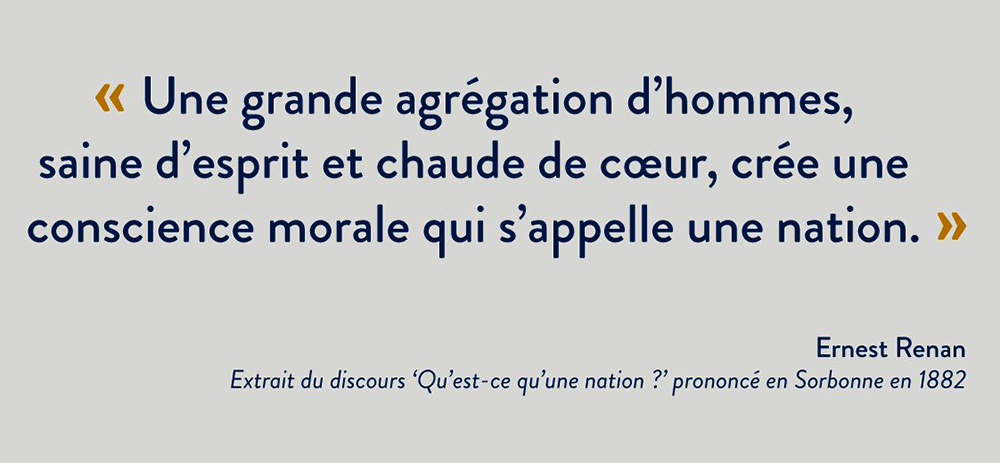
Traduction(EN): « A great aggregation of men sane in mind & warm in the heart, creates a moral conscience that is known as a nation » – Ernest Renan / Source: Université Paris 1 Panthéon-Sorbonne
Hence, going back to the development of the concept and philosophy of assimilation in France, German occupied France during the Vichy period was totally against assimilation and it was explicit in the official speeches. However, after the liberation, the third republic was restored.
In the dark hours of the war and the occupation, the Conseil national de la Résistance not only fought to give France back its full sovereignty, but also gave it concrete content. Nowadays, the supporters of “power of the people, by the people, for the people” – have everything to win in uniting around a rallying programme that will bring progress into the lives of the greatest number, centred on the values of the Republic, the principles of “liberté, egalité, fraternité”, answering to the general interest: not that of the technocrats of Brussels, but that of the French people.

La libération de la France de 1944-1945 et les têtes rasées des femmes qui avaient coopéré avec les occupants de l’allemagne Nazi / The Liberation of France from 1944-1945 and the shaven heads of women who cooperated with the occupants of Nazi Germany
Michel Onfray argues that Vichy is unthinkable and also refers to names such as Vacher de Lapouge and Gobineau who were real racists and who believed in a pseudoscientific theory of races, the kind of logic promoted by the Vichy regime. We can no longer be racists nowadays as we were at the time since Auschwitz took place, so the paradigm must be changed. The current crisis is serious; we should allow it to be an opportunity to take our destiny in hand.
French journalist, Claire Koç shared her experience of French assimilation. The daughter of Turkish immigrants, she changed her name from Çigdem to Claire in 2008, which was her personal choice, as she believes that when one feels French, one often wants a French name, which she adopted upon being naturalised since this is an available option in France. The Francisation of names to the French psychosocial sphere is not new, as we can observe from many great Frenchman who adopted French names upon assimilating, for example, Guillaume Apollinaire, Marie Curie, to name a few. Claire Koç explains that if she decided to become French it is for the love of France, the values, the traditions, the culture, the history and reveals that it is for those that she is harassed.
Koç was subjected to a lot of criticism from her own family who rejected her, along with her friends and colleagues who accused her of betraying her origins. She has since been revealing the weaknesses in the French system of assimilation from her own experience, and declares that when her parents came to France they were open to the French culture but they were not encouraged to adapt and integrate, and this came from the various associations that they consulted for a range of reasons and support which are supposed to help migrants . She notes that those associations, instead of imposing assimilation, would instead tell them to be wary of people who asked them to make an effort to assimilate as those are racists.
The French journalist relates her experience at special classes for children of immigrants that she had attended since her family wanted her to learn Turkish and be connected with the heritage, which she did instead of practising plastic arts. She find its quite shocking that she was learning Turkish in a French school that would teach them to be proud of being Turkish, but in the same French school in normal classes, children of France were not taught to be proud of being a French citizen. Hence, it appears that the modern educational system is being far too relaxed about the emancipation that assimilation provides, since it does not accentuate on the importance of these great Republican principles and is dangerously allowing itself to be infected by religious communitarianism, which leads to a fragmented society made of individual groups that are in some cases culturally alien to the French heritage.
She further relates her experience from her entourage who upon being naturalised, asked her whether she had sung the Marseillaise (which is the French national anthem); after replying that she had done so and thought that it was amazing, they responded by saying that it is not, but it is a war song, a violent and racist song. Claire Koç explains that around her, nothing encouraged her to assimilate, it was down to her own personal commitment and desire; she points out that assimilation is the complete opposite to multiculturalism, since multiculturalism is about everyone staying in their bubble with their own identity, culture and origin; whereas France is magnificent, mixed and we come from everywhere; having a foreign origin does not make one an inferior or superior citizen, we can build something magnificent together, she notes.

Claire KOÇ avec son livre « Claire, le prénom de la honte – Ils m’ont interdit de m’assimiler » paru chez Albin Michel, 2021
In her book “Claire, le prénom de la honte”, she also denounces the division that communitarianism causes in France, explaining from her own experience how the area where she lived slowly emptied itself from all its links to the French heritage. The last French people left and the number of Turkish migrant families increased considerably which led to those communities looking inward in an area where everyone spoke Turkish; the associations supposed to help migrants once again declared that they could not ask those communities to make an effort to speak French; hence, Koç asks the question of how is it possible to integrate people if nothing is imposed on them?
After the publication of her book with the editor Albin Michel, in February 2021, she has been insulted and threatened on the social networks, with some claiming that she is a Kurdish terrorist. Koç revealed that she received around 1500 messages of hate from Turks in France but also from Maghrebian and African migrants. Claire Koç points out that her parents are members of the Alevi religious minority who fled this animosity of the ultra-religious in Turkey and now she is reliving these intimidations in France.
Assimilation, she reminds, is something that France allows, but we still need to want it. Koç, in her book, tells the story of her parcours while still having the feeling of constantly being brought back to her origins in a France that seems to be losing its directions, allowing multiculturalism instead of universality [i.e. of French assimilative values], when she just wants to claim her love for France which allowed her to be free. She even wanted to push assimilation up to the point of converting to Catholicism, while regretting the disappearance of the “hussards noirs de la République”, as if she needed to find the comfort of a new identity. Her book is a rare plea for freedom and assimilation, against communitarianism and all obscurantisms.
When people who have the ability to assimilate choose to do so, they should first find their place in the new society based on their choices, desires, skills, and abilities [for e.g. of psycholinguistic and cultural synthesis]. Genuine efforts and desire of assimilation will be expected of them, and in France, this normally starts with a Western name of French Christian culture. People who do not assimilate fully, rebuild and reshape themselves and adopt a completely new identity should always remember that they are not at home and should not expect the same treatment as those who are – this is a simple question of common sense.
« Assimilation is a market… »
As Raphaël Doan also explains, a foreigner first of all must want to assimilate. Assimilation is a market: if the new arrival accepts to behave like the native population, the latter will agree to consider him or her as an equal and to offer opportunities, without discrimination. This does not mean that after assimilating, new citizens have to be subservient and cannot make a critical observation to help develop the country and push it forward, but their allegiance should be to the nation and the native people because they should consider themselves as part of that people. The objective after all is to create loyal citizens with a strong sense of concern for the society, not slaves! Natives too should learn to act like human beings and adopt the values of decency to understand that a society works better when the population is in harmony and happy while seeing genuinely and properly assimilated citizens as their own “blood”.
Doan notes that unfortunately, this mutual deal of assimilation is not clearly expressed in the minds of the masses: this may be due to a range of foreign media influences and perhaps also because some sections of society praise differences, singularity or diversity, hence those encourage the foreigner to keep behaving like a foreigner instead on working to assimilate and behave like us. He points out that there is a mass misunderstanding, because immigrants and their children are told both, which is “stay yourselves” but at the same time “become like us”. This leads to many young generation from migrant parents being confused and not clearly understanding that France is asking them to assimilate, be French, embody and defend our universal values, carry our language, psychosocial heritage and flag and live fully, much before these new arrivals have even thought whether they want to.
French historian, Doan, points out that to succeed with the concept of assimilation a strong cultural model is necessary and sees modern day France as a society that has become too abstract, because we no longer dare to talk openly about customs and concrete ways of living, and hence we tend to take refuge in the sky of republican values: liberté, egalité, fraternité and secularism. Those values are founding pillars and are admired, who would be against fraternity? But these pillars are vague and not enough to constitute a precise model that explains what is expected of the new arrivals to the French nation.
Raphël Doan points out that there are problems with the current political model and we have become prisoners of its narrowness which he argues leads to the weak philosophy of German philosopher Jürgen Habernas, who proposes a constitutional patriotism. This is weak and impotent, because it implies that people of a nation should only be united by the respect for a democratic constitution not by cultural similarities. Doan argues that the philosophy of Habernas is the worst ground for assimilation because no human being assimilates to a set of doctrines that is a constitution or a political regime (e.g. the Republic). Human beings develop a psycholinguistic habit, a cultural knowledge, an artistic taste, an aesthetic affinity, a psychical sense of connection, and gradually a sense of identity with all those, which leads them to assimilate to a cultural model and way of life [e.g. to the way a group dresses, eats, celebrate festivities, conceives relations between its generations and between men and women, etc] – it is with those questions that the politics of the State should dare to reconnect.
For our generation, living in the the 21st century, we also face the eternal question of the compatibility of Islam with the societal structures and values of France. Many have asked whether it is possible to assimilate Muslims. Jean Messiha, who calls himself a « Français de souche par naturalisation » [i.e. a native Frenchman by naturalisation] argued that Islam is incompatible with the French republic but says that he does not have it mixed up with “Muslims”. French historian, Raphaël Doan looks to the future of assimilation à la Française with optimism even if the word assimilation itself seems rejected, especially from most in the right or far-right of the political scale, he argues; assimilation to him is still very present in the French mind, including the governments and the elites but they define it with different names.
Secularism at the constitutional and administrative level, which places religious beliefs as a personal choice that should not be involved or influence administrative decisions related to the proceedings of the state, has played a significant role in putting back assimilation in the collective imagination, as French historian Doan also notes. When the French law of 2004 which banned the use of Islamic veil in schools was passed, it was described as a law related to the respect of secularism at the national level. Doan argues that it was in fact a law more inclined towards assimilation. Secularism in the beginning concerned agents of public services, not necessarily users, such as the students in schools. So, it was less the neutrality of the State in relation to religion that was at stake than simply the cultural belief of young girls being veiled in France not being a good thing; and hence it was banned from schools. Doan points out that such a law imposed by the state was really one in the pure tradition of French assimilation.
The law on separatism in France, to some, may have its faults and may require adjustments to achieve a stable state, but the main philosophical thrust of this law is rooted in the tradition of assimilation towards a united people, in order to prevent a fragmented nation of multiculturalism and communitarianism that is spreading in ghettoised neighbourhoods where young Muslims place the values of Islam ahead of those of the Republic and the Sharia law is hanging over the heads of teachers who dare to defend freedom of expression: there are countless glaring manifestations of the separatism that is fracturing our France. Hence, the universal French assimilative values, despite minor American and Anglo-Saxon influence that may exist in post-modern France, has resisted, as Doan also observes.
France focusses on the French identity for all citizens [natives and non-natives], which means a strong fibre of similarities related to the heritage, language, sense of human values and civic concerns, besides the unique characteristics and tastes that each citizen has the right to have, develop or adopt. Doan, argues that France will never assume itself as multicultural, although he fears that we may become so, despite ourselves, which is a risk if the state lowers it guards and values about the universality of French assimilation. All is not yet lost, but on the condition that we assume the will to assimilate and to revive this typically French tradition.
Multiculturalism has taken over the US, but it was not always so, since the Americans had also been assimilators for a long time, and only turned multicultural in the second half of the 20th century. Presidents Roosevelt and Wilson gave remarkable speeches in which they explained clearly what they expected from immigrants: they could of course retain affection for their country of origin, but they had to become in every way American, and not for example, Italian-American or German-American. Doan points out that the problem with the United States is that their assimilation model excluded the Blacks and the Native Americans [i.e the true Americans], the 2 largest minorities. Doan, in a similar line of thought as myself, believes that the new Americans have failed to discard a toxic racism inherited from the time of slavery, which is something already noted by French writer, Tocqueville in the 19th century.
It is also in 19th century America that most ridiculous and pseudoscientific racial theories would be amplified, with many falsifying Darwin’s works to fit their biased opinions and use it as an instrument to argue their views on Anglo-Saxon racial superiority, which obsessed many American thinkers in the latter half of the 19th century. i.e. the idea of world domination to be achieved by the race seemed to prove it the fittest.
Video: Les rapports de force économiques imposés par les Etats-Unis – Eclairages
If we go slightly further in the past to the 18th century, we find an almost funny character, Benjamin Bush (1745 – 1813) who was one of the founding fathers of the United States and a physician, who had proposed that being black was a hereditary skin disease, which he called “negrodism”, and that it could be cured. Rush suggested that non-whites were all really white underneath but they were stricken with a non-contagious form of leprosy which darkened their skin colour. He drew the conclusion that “whites should not tyrannize over [blacks], for their disease should entitle them to a double portion of humanity. However, by the same token, whites should not intermarry with them, for this would tend to infect posterity with the ‘disorder’… attemps must be made to cure the disease”.
We should be looking back at those pseudoscientific claims in the 21st century with a comical eye and be able to laugh, because we know they were wrong, but with the equipment they had, and the state of science at the time, these ridiculous views had all the elements to appear.
Darwin himself was an ardent opponent to slavery and consistently opposed the oppression of those that the Anglo-Saxon world consider as “non-Whites”. Charles Darwin was avant-garde and won his argument, because by modern scientific standards we find that what most refer to “race” is nothing more than minor superficial variations in organic composition [related to physical and aesthetic differences in skin tone and craniofacial morphology].
It is now an irrefutable scientific fact that human beings are all of the same species [i.e. the same race], and no government or policies can ignore this!

Human brain specimen being studied in neuroscience professor Ron Kalil’s Medical School research lab. © UW-Madison News & Public Affairs 608/262-0067 Photo by: Jeff Miller
The average American mind seems to find it incredibly hard to shift its perception to a higher and nobler level, because it fails to see beyond skin colour and craniofacial morphology and aesthetics and instead thinks that those superficial physical attributes are the most powerful factors in explaining the psycholinguistic heritage, the cultural knowledge and sense of identity of a person – this shows a lack of sophistication and incredible atavism in belief. French historian, Doan, notes that this stubborn weakness led to the failure and downfall of the assimilation model of the US, which is perceived as unfair and biased.
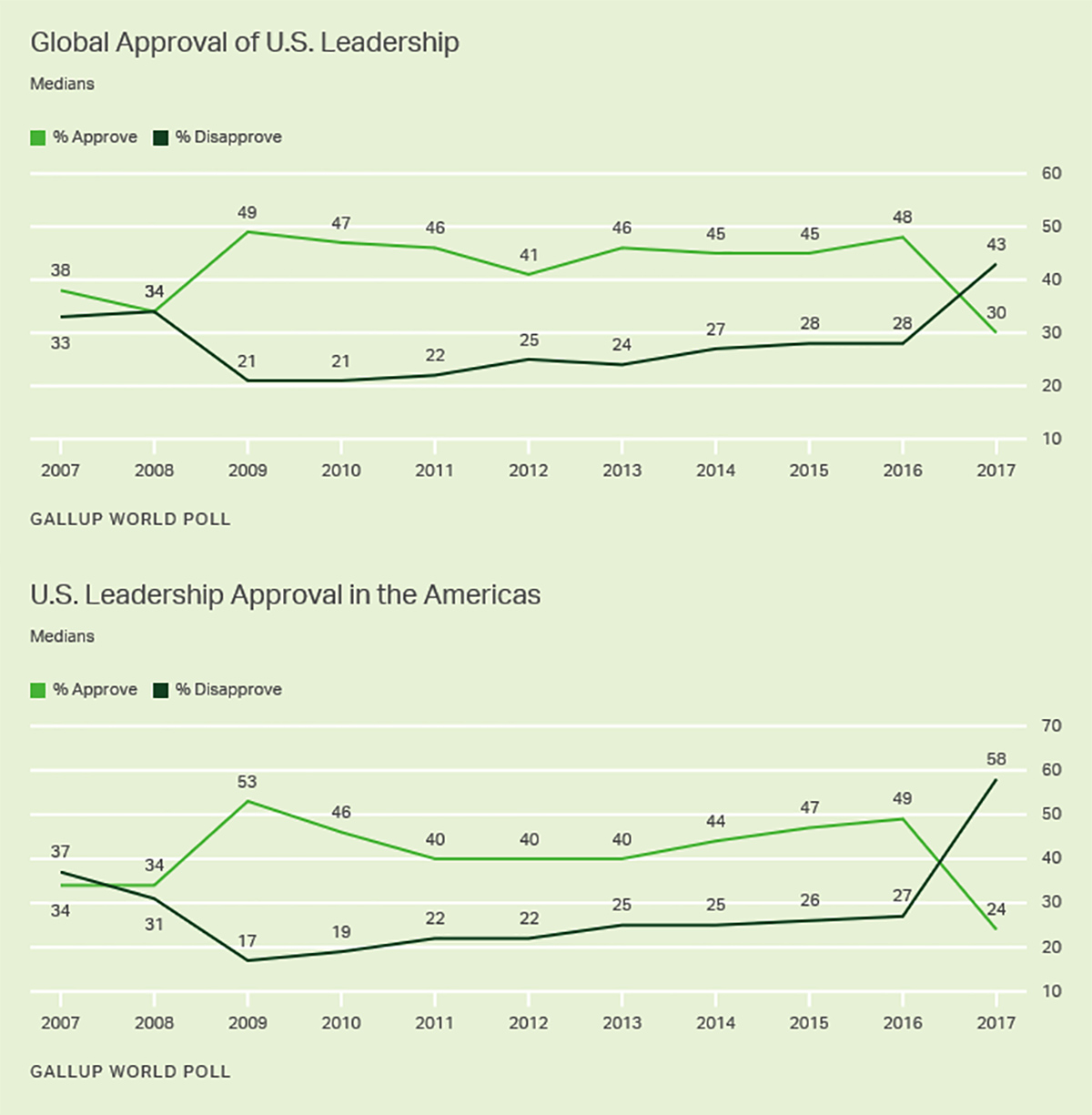
World’s Approval of U.S. Leadership Drops to New Low (Source: GALLUP)
Moreover, in 2021, my opinions on American democracy, which are based on years of research and empirical evidence and also observations based on the questionable values that some of the products of their industries intend to give to the world, seem almost similar to the perspectives of the great minds of the French intellectual family of the 18th and 19th centuries.
« and found that one could make money, that one could also see some interesting things, but that one could not live in the United States… »
For Charles Baudelaire (1821 – 1867), the system developed in America to transform a crowd of migrants into a kind of artificially synchronized nation caused Europeans to be uprooted in America. Baudelaire would find his thoughts in the texts of Edgar Poe (1809 – 1849), who was an American moralist writer who was himself anti-American and who painted a macabre and dark literary portrait on the theme of American vulgarity. America is not culturally free and Edgar Poe was for Baudelaire one of the rare cases of refinement and sensitivity in the middle of this wild jungle; the American writer who allowed us to pierce the media and cinematographic lie, the revealing heart of America – as will some more modern artists of the written word after him such as Hunter Thompson and Chuck Palahniuk also turn out to be. It is a way of letting America itself, through its writers, show us its dark and repulsive sides. For Poe, who had incredible acuity of vision, America was the place where mechanical geniuses and animal forces were gathered. As for Jules Verne (1828 – 1905), he thought that Americans were mechanics, just as Italians are musicians and Germans are metaphysicists. For Jules Verne, one of the authors who greatly influenced the literary minds of his time in their childhood, America was always the nation of violence and he was particularly disgusted by the “Gun Club” which for him was the image of the United States: an imperialist and military nation and a country of extremes. For Jules Verne, America was the land of brutality and speed of means of transport. Moreover in “Around the World in 80 Days” we see the train used by Verne as one of those mobile places where we will meet different samples of the human population on earth. Paul Claudel (1868 – 1955) described Chicago as the city of blood [i.e. despair, death, violence and horror]. Guillaume Appolinaire (1880 – 1918) had travelled around the world in words on the “machine” that is America, an immigrant land where the savage European is connected to the savage Red Indian and was particularly interested in the sexual morality of the Mormons of the state of Utah who had transformed polygamy into a religiously permitted activity and made the United States a country with a violent sexuality. Apollinaire described the people of Utah as Scandinavians in panties, Russians in red coats, English people wearing beards in collars, with Americans, Jews, Germans, etc. The American continent was revered but also repelled. Guillaume Apollinaire thought that Montparnasse at the time of the war was a projection of America in Paris: a juxtaposition of people from all over the world. In his writings Apollinaire also described the coldness of the people of Utah where he compared the rigid eyes of a spectator when a negro was hanged to those of an opium eater. Apollinaire thought that American democracy was insufficient and would always need Europe despite their Masonic symbol adopted from the triangle with the eye that was supposed to see everything. For Apollinaire, because of Mormon culture and polygamy, America appeared to be the country of women for Europeans. Europe was masculine and America feminine [LE rope & LA mérique / French wordplay of masculine and feminine words], and so Apollinaire saw America as a woman waiting for the European conqueror, while France was the country of standing men who should beware of American democracy. Blaise Cendrars (1887 – 1961) who was like Guillaume Appolinaire (1880 – 1918) a great admirer of the new painting which was the cubist painting of that time [the artists of that form, the Delaunays created a cultural movement on their own], which brought together different views of the same object, had also concluded that New York had failed as a new Rome because the new side had won over the Roman side. The other French writer André Breton (1896 1966), who was an avant-garde and a great poet of the city, refused to visit New York during his stay when France was under German occupation, suffering from a nostalgia for Paris and noted that the United States had become much more foreign in only 5 years. And Jean-Paul Sartre (1905 – 1980) who like many had a dream transmitted by American cinema would see his dream turn into a nightmare when he discovered the truth about America during his visit just after the liberation. Sartre as Breton describes America as a mysterious country that was less well known than before and a country that was profoundly different from European cities, which despite its fascination, was dangerous and to be wary of. During the war America had established itself as the most militarily powerful nation, and the initial enthusiasm of Western Europeans for their arrival would soon fade after the discovery of their simple and ignorant minds. The United States suffered attacks from Jean-Paul Sartre for being a fragmented society, which Sartre described as having more steel and aluminium than human beings: the most mechanical city in the world where winter is much colder and summer is much hotter. Sartre thought that New York looked much more like a North African city such as Dakar than a European city. In America, Sartre was looking for and thought he would find a European city with his feelings, like a mother who saw the inhabitants as her children who had to be sheltered and cared for, but did not find it, since for him the United States did not have the same historical tradition or European nature, which proved disappointing for a European colony. Sartre found New York terribly foreign. And finally, a figure who is almost paternal to me, Michel Butor (1926 – 2016), one of the great professors of modern French literature visited the United States, inspired by the curiosity of great Western European writers in America, and found that one could make money, that one could also see some interesting things, but that one could not live in the United States, and that the strangeness on the other side of the Atlantic made most of the books seem false – Simone de Beauvoir’s anecdotes (1908 – 1986) were correct. Let us note here that all literature is a collective work because words were not invented by writers because language is a collective creation and hence creates a social bond; cities are also collective creations, as are the landscapes around these cities and the names of the great men and women who mark the places [the genius of the place], and this is done with the hope that the spirit of those men mark the future generations.

Charles Baudelaire (1821 – 1867), Jules Verne (1828 – 1905), Paul Claudel (1868 – 1955), Guillaume Apollinaire (1880 – 1918), Blaise Cendrars (1887 – 1961), André Breton (1896 – 1966), Jean-Paul Sartre (1905 – 1980) & Michel Butor (1926 – 2016)
Many Americans also seem eager to point out their long lost European ancestry while being disconnected from it in terms of values and philosophy, and they seem to be unaware of the social evolutions of major European empires such as France. The Hollywood perspective may be fairly sufficient for an escort agency, a strip bar, to work as ladies of leisure, or meet the criteria as sex workers, but apart from those businesses, a sophisticated and philosophical society such as France, requires more from its citizens: individuals with a sense of belonging and responsibility along with the appropriate behavioural and communicative patterns and names that fit the thematic sphere to be in complete synchronisation with the requirements of the society – so physical ressemblance is superficial as it is not linked to psychical structure and hence is not enough and will forever be nothing more that a fragment among others that may ease the assimilation process [especially among the common brains that do not think and cannot see beyond the visual illusion] if all other factors are present [i.e. psycholinguistic heritage, values, sense of belonging, civic concern, adequate historical and cultural knowledge, national sensibilities, etc].
Indeed, the Jews have long used this visual illusion of physical ressemblance to blend among those they quality as “gentiles” or “Goy” of the European sphere, the non-Jews who according to their scriptures are inferior beings who were born to serve the Jewry and that can, according to their religious texts, be treated as animals and even killed if necessary. This is simply a factual observation of what is written in the religious texts of Jews. These are scriptures that have shaped the thought of Jewish societies since ancient times, and it is a fact that people should be aware of to understand the leading train of thought of a particular group, it is important to know the facts of the scriptures that shaped them, their values and outlook and why a great deal of their industries bleed civilisations dry of all their humanity. This seems completely opposite to [for example] the concept of Karma found in Hinduism which believes in causality through a system where beneficial effects are derived from past beneficial actions and harmful effects from past harmful actions, creating a system of actions and reactions throughout a soul’s (Atman’s) reincarnated lives – forming a cycle of rebirth. The causality in Hinduism is said to be applicable not only to the material world but also to one’s thoughts, words, actions and actions that others do under our instructions. Jews using their pale skin to spread and hide among the Christian Western European civilisation, have often throughout history had an easier ride that other immigrants [especially in the industries of show business & arts], and when they change their names to adopt Christian ones in the process of blending in, it is sometimes hard to differentiate a great amount of them from the native people of the Western European civilisation that was born out of Christian thought and artistry. The issue with most Jews is that although they blend, act, dress and name themselves as the natives of the European nations they move to, they always clearly classify themselves as Jews, and focus on the betterment of other Jews, and work systematically together in business to further the interests of Jews, and even have worldwide conventions among Jews, and parade the achievements of Jews with pride.
French philosopher Michel Onfray noted: « Il y a des leçons à prendre de cette civilisation juive, c’est une civilisation qui s’aime, qui s’apprécie, et qui estime ne pas avoir à faire de génuflexions devant toutes les autres civilisations, ni présenter ses excuses pour pouvoir exister » [French for: “There are lessons to be learned from this Jewish civilisation, a civilisation that loves itself, appreciates itself, and believes that it does not have to genuflect before all the other civilisations, or apologise in order to exist“]. The philosopher observed: « C’est une civilisation qui dispose d’une langue, qui fait savoir qu’il faut adhérer à un projet et que si on adhère à ce projet alors on peut faire une nation, un peuple. On peut constituer une identité, (une civilisation) qui ne craint pas de dire que tous ceux qui menacent son identité doivent être combattus par les mots, le verbe, et puis par la force, parce qu’il n’y a pas d’autres façons de faire en sorte qu’une civilisation dure. » [French for: “It is a civilisation that has a language, that makes it known that one must adhere to a project and that if one adheres to this project then one can make a nation, a people. We can form an identity, (a civilisation) that is not afraid to say that all those who threaten its identity must be fought with words, with the verb, and then with force, because there is no other way to make a civilisation last“]. If we notice all foreign groups do this, except Christians who seem to prefer killing each other and live a life of selfish hedonism, even Onfray seems on the same note: « Nous sommes dans une situation inverse, nous nous détestons. » [French for: “We are in a reverse situation, we hate each other.”]. “Les civilisations qui ne se préservent pas disparaissent“, Michel Onfray told Elie Chouraqui dans Elie sans interdit [French for: “Civilizations that do not preserve themselves disappear“].
So going by the logic of the Organic Theory of Psychical Construction [See: Essay // Psychology: The Concept of Self] another factor is more fundamental than physical fitness for assimilation as we can see using Jews as an example to explain that similarity in skin tone is hardly anything except a tiny factor that helps with the majority who rarely think.

Image: Bobak, A., Hancock, P. and Bate, S. (2015). Super-recognisers in Action: Evidence from Face-matching and Face Memory Tasks. Applied Cognitive Psychology, 30(1), pp.81-91.
The issue of physical ressemblance [which has to do with slight similarities and not “beauty” as it is commonly believed] only helps and eases the process of assimilation but is only a shallow indication of belonging and superficial as French historian Doan also notes, since the depth of an individual is an even more defining point, because the true worth of an organism lies in the mind, the perception and the values. To further this logic, I will give the example of a few other pale skinned organisms from some foreign societies who despite a pale skin tone are absolutely incompatible with the society of France, so it is not because they blend deceptively by giving a surface impression of being part of the majority through their skin tone that it means they are perfectly adapted to assimilate, because they do not reflect the linguistic heritage, the values, the founding philosophies of individual freedom, the Christian thought that shaped the civilisation even if they are not religious, and the receptive and human character of France.
A good example would be to consider Jews, Eastern Europeans, Russians, Mennonites or some segments of the Syrian population who sometimes happen to share a paler skin tone. And since we are on the topic, I have also never noticed “Jew” as a separate empirical category in the atavistic forms of the Anglosphere, why? After all, Jews are a distinct “race” [even if “race” is simply a social creation related to physical variations and groups, and has no scientific legitimacy in proving difference among human primates], as those who seem obsessed with empirical research have discovered – this is not a cause for concern to me because I see things from the advanced evolutionary perspective of “Organic Composition”, but I ask myself the question for those obsessed with the laboratory. What genetics seem to have revealed is that there are powerful genetic markers of Jewishness, so Hitler’s intuition seem to have been right. So, the Jews did not arise from conversions in Europe because geographically and culturally distant jews still have more genes in common than they do with non-jews and these genes are of Levantine origin [area where Israel is located] which points to a mixture of Eastern-Caucasus [area around Russia, Georgia, Azerbaijan, Armenia, Eastern Europe and Western Asia], European, and Semitic societies that seem to complete the missing link of the Jewish European Ancestry. It is now believed that the Ashkenazi jews descent from a heterogenous Iranian population that later mixed with Eastern and Western slavic people and possibly some Turks and Greeks in the territory of the Khazar Empire around 8th century A.D. Although my perspective on race comes to a simple matter of “different organic compositions”, it is simply a small observation for those scientists obsessed with genetics. Once again, it is important to consider the global evolution of all organisms, and also never forget that a superior and gifted organism can come from anywhere on earth – the evolution of the human race is continuous and never-ending.
I am also not suggesting in any way that some groups of people are socially, philosophically, culturally, linguistically and aesthetically repulsive and undesirable animals or that they should be castrated, sterilised and exterminated, so don’t consider my comments as discriminatory. I have always, in the same line as Darwin, stood with the brotherhood of mankind, preaching the conceptual philosophy of assimilation “à la Française” and brought forward the scientific and psychological facts to show that the individual organism has all the powers of self-creation and self-definition and that from an evolutionary point of view, human organisms of any “organic composition”[race] can procreate with whomever they want, and the superior organism can appear from anywhere, but this scientific reality is not enough to be assimilated.

Image: Yves Simoneau / Napoléon (2002)
What I am saying is that to “assimilate” in a sophisticated civilisation requires more than only physical ressemblance [which is superficial and deceptive], it is not simply a matter of accepting every “gros jambon rose” [French for: “fat pink sausage“] as Christian Clavier hilariously termed it in the movie “Napoléon” by Yves Simoneau in 2002. This is because we are not simply trying to create a society that has no structure, with the only defining point being a pale pinkish skin tone and then to flood the society with uncivilised pink balls of meat for the photo… no! Only the mainly Jewish Hollywood industry seems to see it that way, and perhaps because the United States is after all nothing more than a simple bastardised European colony composed mainly of migrants and Jews from the German and Anglo-Saxon sphere who tend to be very pale, if not pallid in terms of complexion, unlike the wider range of people who are the product of Europe, its empires and heritage. That mass of people who left Europe and moved to the Americas were forced to find a way to survive in the Wild West and had to unite around something in common, which they did around whiskey, guns, fried chicken, business and the English language that they also bastardised in their own version, while remaining an industrialised and mechanical group without any cultural structure; this applies to the vast majority of course, who seems to have a deep frustration that is reflected in a contempt for modern Europeans or Frenchman [especially those who are less pale] who have perfectly assimilated to the societies and nation that constitute their long lost ancestry.

Traduction(EN): “The fusion of races began in prehistoric times. The French people are a composition. It is more than a race. It is a nation.” – Jacques Bainville (1879 – 1936)
The most important and defining part of assimilation concerns handling the appropriate behavioural and communicative patterns of the society that the organism wants to fully be a part of. For successful and complete assimilation, organisms need to also embed the philosophy, understand the heart of the people according to their history, master the language, feel at one with the nation, feel the joy and pain of the people and also be able to use the term “us” to describe themselves and the natives; in other words see the people as their own “blood”, and this is how it is done in the most sophisticated civilisation, i.e. France, where the people are willing to love you and see you as their own blood if you show the genuine desire to be part of the people and loyalty to the nation.
Yet, what many foreign groups do is not assimilation, but simply blending and integrating and at times with the objective of imposing themselves and systematically dominate a society or system. Jews especially, have long been accused throughout history and centuries, to methodically and skilfully do this through their business ventures financial power in many European countries; they have also been extensively accused, over the centuries throughout history, of violent religious sacrifices to their blood thirsty gods that involve the sacrifice of Christian children; many mutilated corpses of young Christian children have been found across Europe drained of all their blood [Note: This myth is still alive in the 21st century, as a recently published article in the Times of Israel also suggests. More can be read from the Wikipedia article: Accusation antisémite de meurtre rituel]

Image: Martyre de Saint Simon de Trente par meurtre rituel juif (The Martyrdom of St. Simon of Trento for Jewish ritual murder) par Giovanni Gasparro (2020)
A painting titled “The Martyrdom of St. Simon of Trento for Jewish ritual murder” was unveiled by Italian painter Giovanni Gasparro in 2020 based on the historial rumours associated with the disgusting jewish practice. This is perhaps one of the many reasons why the Jews are the only group who throughout human history has been persecuted and banned from so many countries. Even after the Holocaust, there were pogroms against Jewish survivors in Poland in which the blood libel was regurgitated by the local Catholic population. A particularly notable example of this was the assault on the Jewish survivors in the Polish town of Kielce, where an outbreak of anti-Jewish violence resulted in a pogrom in which thirty-seven Polish Jews were murdered out of about two hundred survivors who had returned home after World War II. As the International Emergency Conference to Combat Antisemitism discovered, that type of incident had “something of a religious character about them.” Many people do not know these facts since most people are without any choice but to take their information from the majority of Jewish owned mainstream media industries, so learning is never ending.
Assimilation is incompatible with racism
French historian, Doan, further explains that assimilation is neither racist nor nationalist and goes back when it was at its peak and the end of the 19th century and reminds that it was the left-wing Republicans with the universal values of the French revolution firmly in place, who defended it against other atavistic intellectuals whose believed in unscientific theories that assumed a superiority of what they called the “white race”. The first link between assimilation and universalism is that assimilation implies the belief that human beings form a single community or species that has more in common than what differentiates them. Doan explains that assimilation is incompatible with racism. Conceptually this makes perfect sense, as he explains, since assimilation is the practice of requiring the foreigner to become a fellow citizen, similar to oneself.
Hence, if one believes that there exists different races and one’s own race is superior, one cannot accept the idea that a foreigner can become one’s similar. Doan writes that a racist would think that assimilation is unnatural. Hence, to believe in the concept of assimilation, like we do, he points out that we have to be convinced just like the mighty Romans, that the foreigner shares the same human features that we do, and that the difference between us is only superficial an cultural, as already mentioned, and can be abolished through the process of assimilation. Assimilation is rather linked to democracy because if it unites populations of different origins, and allows them to find common points and references: this is precisely what assimilation requires of foreigners.
One must be a universalist and humanist to believe in assimilation. The French historian cites: « Rien de ce qui est humain ne m’est étranger » et « A Rome, fais comme les Romains » : these two Roman maxims are the two pillars of assimilation. [French for: “Nothing human is foreign to me” and “In Rome, do as the Romans do“]

Image: Sabine, Rome Antique
Fellow French historian, Raphaël Doan, argues that there is no reason why assimilation should be rejected by the right of the political spectrum, or why it should be considered as sulphurous. He stresses that assimilation is the hallmark of open societies [i.e. with a universal outlook], societies which are not retreating into an ethnic conception of their identity, which have something to offer to the world and to the foreigners [i.e. the rest of humanity], and which are confident of their values [i.e. being universal].
Assimilation allows people from different backgrounds to coexist, but without the conflicts that inevitably arise when cultures are too dissimilar [i.e. multiculturalism]. Assimilation is so well suited to French values that it should be a matter of consensus and it should simply be defended relentlessly without transforming it a practice of the far right!
Doan, justifies his optimism about the future of assimilation in the fact that Islam as such is not enough to prevent the prospect of assimilation of immigrants that France has had in the last few years. Islam is obviously an additional difficulty, he points out, simply because it is another civilisation and a culture that is different, and so inevitably, the greater the gap, the harder and more time-consuming the work of assimilation will be, but the historian does not think it is irremediable. As already mentioned in my essay originally published in 2016 entitled, “History on Western Philosophy, Religious cultures, Science, Medicine & Secularisation“, Raphaël Doan also takes the example in his book of other Muslim countries, such as Iran and Turkey, that also worked on islamic culture in the 20th century. Those countries made efforts to westernise themselves, and such moves were spontaneous on their part, without any influence or pressure from Western societies; they tried to ban the islamic veil from the streets, in Turkey by Mustapha Kemal Ataturk and in Iran by the Pahlavis. Those modern figures worked to secularise, to modernise and westernise the atavistic and ancient bedouin-styled cultures of their countries. Unfortunately, in Iran they were halted violently by the Islamic revolution, but in Turkey this secularised and modernised cultural innovation lasted for almost a century, even if today, sadly, we are spectating the end of it with backward minds like Erdogan at the helms. However, the positive note is that those changes took place in countries that had been completely Muslim for centuries. Doan argues that if those Muslim areas managed to impose it for a while, in France, the task must be feasible since there is a much smaller Muslim population, and there are well-known individual cases of people originating from Muslim cultures and former-Muslims who have completely assimilated into French culture and society.
The philosopher Michel Onfray however takes a precautionary stance against such views, pointing out that with Ataturk’s cultural change, there was tremendous violence involved, which Doan acknowledges and argues that it is the method used that must be worked around. Onfray questions the purpose of a State where authority is not possible. Nowadays, with the COVID-19 pandemic the State’s authority is not even capable of imposing the vaccine to health care workers, Onfray finds it hard to imagine a State imposing a form of assimilation similar to that of Ataturk, which involved killing people; this is reminiscent of the Armenian genocide. Onfray clarifies his position as one that prompts extreme caution on the idea of a successful assimilation policy if we have to rely on violence, weapons and brutality, as that of Ataturk or the chad of Iran, Pahlavi.
The State has a problem with being a State nowadays with difficulties in restoring the principle of authority, which complicates further policies such as assimilation, which should be a voluntary civic duty at an individual and communal level. On that note, historian, Doan, rightly observes that authority complicates the picture when we are dealing with questions of every day communal life among fellow citizens, culture, ways of living, and those, obviously, are difficult issues for the State to be willing to legislate on. However, the State has done it before when it had to; as already mentioned, the 2004 law on the banning of Islamic veils in schools of France was voted at the Assemblée Nationale; this would be seen as almost extravagant for a country other than France. Despite that, Doan notes that we succeeded, so he argues that there is hope on the concept of assimilation.
The French collective mentality is still very much in the favour of assimilation and against separatism, as those laws show. In Canada, it is perfectly normal for a policewoman to wear a veil on duty, in France it would be a scandal. Doan points out that the the racial identitarianism that comes to us from the US is beginning to permeate certain circles, and is in direct opposition to the logic of French assimilation. But it is not too late to make assimilation an accepted reality.
Doan argues that success will also lie on the ability to make our culture desirable and hence assimilation itself desirable. On the whole Doan like myself remains confident about the fact that our French intellectual heritage and civilisation remains attractive and many people dream about it and want to adopt it.
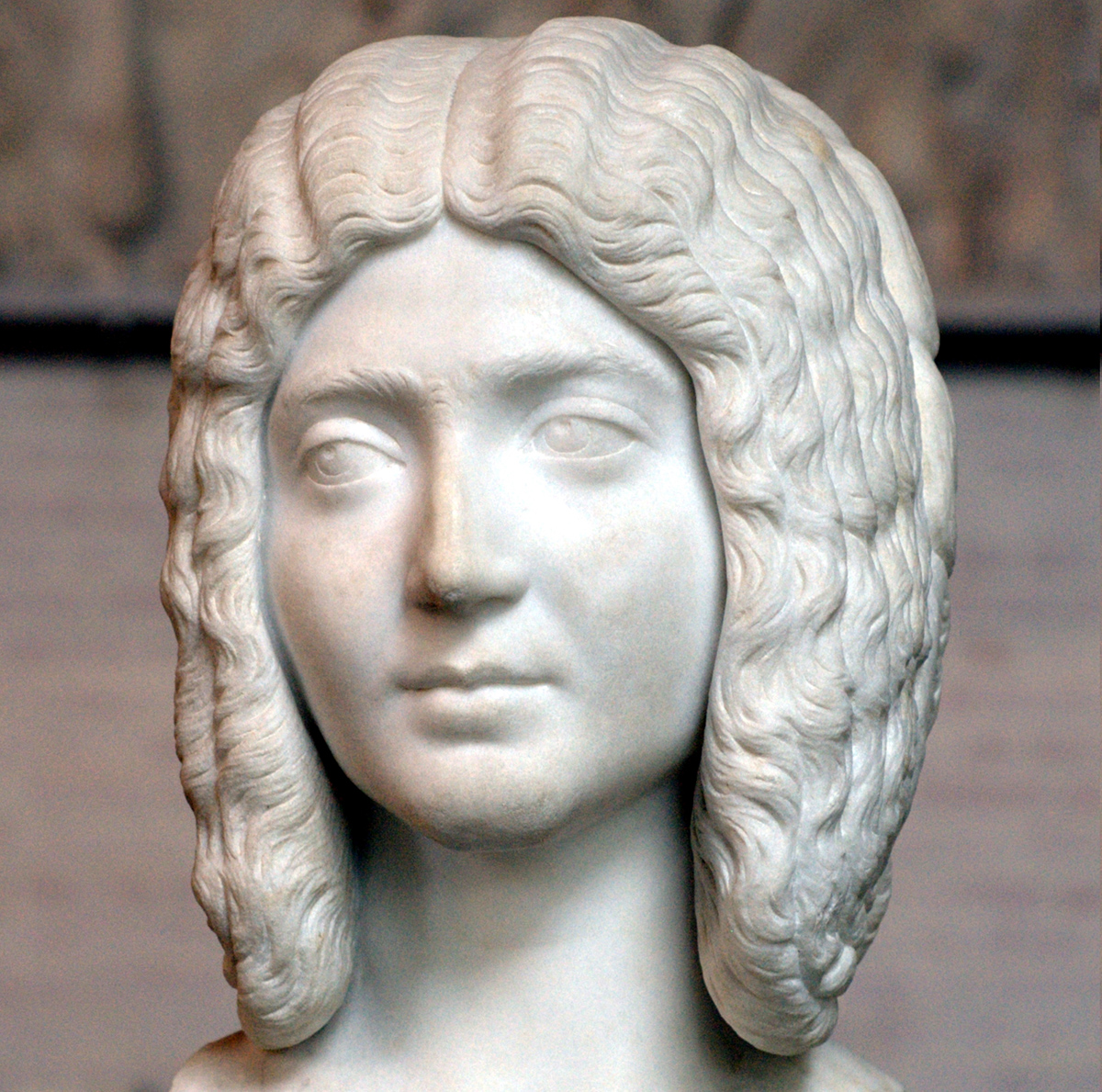
Image: Julia Domna, Rome Antique
If assimilation has slowed down today since the Roman Empire, it is not because of a lack of attractiveness but the historian argues that it is for two main reasons: firstly, there are immigrant communities that live among themselves in areas where they are the majority. This makes it harder for a child at school to adopt French habits and customs if the rest of his or her class is also of immigrant origin and are not connected to the French way of life; of course we have some individuals who by their own efforts, talent and intellectual cultivation succeed in their assimilation, but on the whole for the majority it is a much harder task in that situation. These particular groups are adjusted to the lifestyle of their area, but they are not assimilated to the values of France. To remedy to this situation, Doan proposes that immigrant populations should not be concentrated in one area, but spread among the native French population, as mingling with French society will be the main factor of assimilation. Secondly, Doan argues, that most French people do not tend to assume that we want to assimilate foreigners, and so they receive contradictory messages: “be proud of your diversity”, but at the same time “become entirely French”. Logically, confusion and misunderstandings are guaranteed!
In order to achieve a harmonious assimilation, concessions will have to be made on both sides, firstly from the people, who will have to consider accepting a primary unifying identity if they want to be part of a sophisticated, humane, fair and avant-garde nation, and secondly, from the civilisation that wants to win over the whole planet and human race, which will have to diffuse and let the world know about the universality of its intellectual and philosophical values, offer a fulfilling existence, equal opportunities to social ascension based on Republican values of meritocracy, transmit a sensible and sophisticated environment and culture that respect human dignity, while also having the passion to motivate individuals to progress in all aspects of civilised human existence.

« Le Rêve de l’assimilation: De la Grèce antique à nos jours » par Raphaël Doan, 2021, Passés Composés
It is encouraging for people of French heritage globally to find that the French mind is avant-garde when it comes to race, because unlike in the Anglo-Saxon world, the Americas and many foreign societies, the French mentality focuses much more on the character, language, discourse, personality, mind, culture and sense of belonging and identity of the individual, which we may qualify as the “colour of one’s mind“, rather than the origin of the organic composition of a person or the genetic lineage and ancient/prehistoric history behind the tone of an individual’s skin; what matters is the sense of French identity and belonging to the French nation. In that sense, the French heritage is nobler, more sophisticated and avant-garde compared to many atavistic societies and culture.
The debates of the 21st century about race, suggest that the majority of the world’s population is not evolving linguistically, psychologically, philosophically, emotionally, aesthetically, architecturally, artistically and culturally, fast enough to keep up with science. Because, science has sealed the debate and already proven that all humans are made up of the same organic matter and the term “race” has no scientific legitimacy and is nothing more than a social construction based on minor variations in organic compositions linked to superficial physical details [e.g. skin tone and craniofacial morphology].
Hence, we are a generation who are confident that the irrational concept of “pure race” is a superficial social construction because no race is pure since all human primates are the product of a range of migrations from the earlier primates and breeding of different sub-types; we are all genetic mixtures, and this mixture has led to our current form and a wide range of biological abilities within our bodies [For e.g. our adaptive immune system / See: Essay // Coronavirus II (COVID-19 / SARS-CoV-2): A wake up call to Human Civilization].
As previously mentioned, Darwin’s theory of evolution revealed that there is no eternal essence, and any idea of an exceptionally pure entity that would be beyond evolution does not exist – everything is in a constant state of flux, the only constant is change! Scientifically, racism is a totally archaic absurdity since we are all simply organic matter on a small blue planet in the vast universe being recycled, recreated and reshaped in a continuous process.
However, modern issues in regards to race was predicted by the late French essayist, Paul Yonnet, who rang the alarm bell around 3 decades ago, and whose works were very badly received. Michel Onfray points out that Yonnet had thought in the times of Bourdieu, without Bourdieu, despite Bourdieu and perhaps even against Bourdieu on some points, but without making Bourdieu an enemy. Yonnet simply did sociology differently. Bourdieu is not always easy to read and grasp, his works tend to be aimed at the academic community who are people with a higher education or who have been formed at university level. Bourdieu who was very mathematical differs from Yonnet, whom Onfray describes as having “une belle plume” and a certain “élégance à la française” that he describes as “la ligne claire en philosophie“, stating that when Yonnet writes, he had a way of taking his reader on a journey with him, which was very elegant at the time. The french philosopher observes that Yonnet was among the first thinkers and essayists to understand that the concept of “anti-racist” itself is problematic and racist because it places the question of race at the centre, and that manner of proceeding by placing race at the centre will be problematic – that was in 1993, almost 3 decades ago.
Onfray in the same perspective as ourself observes that many regular minds stuck with a vision imposed by political systems, tend to see everything as a question of “left or right”. Hence, as soon as anyone even touches a subject, that person can instantly be attacked as being either on the left or an extremist of the right, a racist, a bigot and so on. Those whose perception of life has been severely tainted by the lens of politics must acknowledged that the answers to some questions may be considered as being on the left, or on the right. But if we just say “immigration” to the average street politician? Well, they are very likely to respond by saying this is a question of the right. On the same level of the arguments that I have been putting forward over the last decade, Michel Onfray also points out that to those people the first step is to separate questions as being to the left or to the right. Hence, he sees some kind of confusion as when Fabius had been saying to Le Pen in the past that he asked the right questions but provided the wrong solutions. We ask ourselves what exactly does he mean by that, he should have elaborated further on that subject intellectually, if he felt that he came from the proper intellectual and linguistic veins, and had the discursive ability as heritage to do so. On the same note, and in the same line as Onfray, I would like to remind my readers that everything that we have published is fully questionable.
When Yonnet in 1993 said that the indelicate and crude concept of “anti-racism” will be problematic as it puts race at the centre, his work was savagely attacked by journalist, Laurent Joffrin, who recently went into politics after working as a journalist and for the media industry for years. Joffrin at that time, said that Yonnet was an ally of the Front National. Onfray notes that to many, as soon as anyone speaks of reality, he becomes an ally of the far-right if he says, in Onfray’s words: « attention l’antiracisme militant remet la race au centre, et si vous remettez la race au centre dans 20 ans ca va vous exposer a la figure. » [French for: “beware militant anti-racism puts race back at the centre, and if you put race back at the centre in 20 years it will blow up in your face.”]. We find out that it did blow up in our faces as we observe in 21st century all around the world. Onfray’s observation points to the fact that the stereotyped journalistic culture of tagging people for daring to talk of sensible topics openly, annihilates free speech and intellectual debate, and believes the problem with these people is that they promote intellectual terrorism, by colouring every discussion as a matter of left or right. The French philosopher, who back then was a young man and a reader of Libération, did not read Paul Yonnet because everyone had been saying that the essayist played the game of the far-right, the Front National.
Onfray looks back at the late Yonnet’s work and observes that he cannot tell if the essayist was on the right side or the left side of the political scale, but he was simply on the side of justice, fairness and intelligence. Onfray remembers Yonnet respectfully, stating that his voice is cruelly missed, with a book written by Jean-Pierre Le Goff posthumously to restore his honour, which Onfray argues was never lost, but the man was soiled in 1993 by the newspaper Libération, Joffrin and the others of his bunch, when all he did was to tell the truth and the reality; the truth about what was coming and it came.
In the 1990s, Paul Yonnet had already understood that sincere anti-racism was going to be trapped by itself and start producing what it thought it would be fighting against, i.e. racialism. Today, many countries systematically apply racialism at an institutional level, with statistics to count people by ridiculous grouping such as whites, blacks, arable types, yellows, etc. The concept of a human nation, as the French mind conceives it, is the complete opposite to this atavistic concept of institutional racialism, but is instead a melting pot but with a well organised cultural structure and sense of values that unites everyone around a strong French identity and flavour. Once again, it is worth mentioning that the Gallic roots of the French civilisation itself involved a mixing of cultures which made it possible to build a strong nation, to create a singular community, as Montebourg also reminded, but this concept was destroyed by those claim to stand for “anti-racism” and eventually led to the many draining, never-ending and boring issues of race nowadays.
Many people call themselves “anti-racist” and seem to equate the word with “anti-white”, which seems contradictory. Anti-racist, means adopting a sophisticated perspective which involves acknowledging science and seeing individuals across the earth as simply being made of organic matter, with the social construct known as “race” simply being minor variations in organic composition. What matters, is not the tone [i.e. colour] of one’s skin, but the “colour” of one’s mind, with the term colour being used here metaphorically to specify and describe the psycholinguistic heritage [i.e. what some may call culture] of a particular group by the majority of its geo-ancestral origins, without any bias regarding dermatological differences. What matters is psychical similarity for chemistry and group unity – as the French concept of assimilation proposes.
In 2021, a lady of negro origin, who is also a French public figure declared that whites should keep quiet in some meetings where no whites are allowed. Which is quite shocking coming from someone whose publicly known partners, men whom she considered adequate to share a bedroom with, were white. Hence, Lydia Guirous, another French public figure who is quite vocal on issues about migration, assimilation and race, spoke out to point out that Pulvar is racist for classifying people by their skin as white, beige, pink, brown, yellow, red, or whatever there is. Hence, Guirous points out that Pulvar is part of a segment that is infecting the republican left and killing the universal values of the French empire, it is a form of leftist racism, a new left that is rejecting universal values and instead embracing the concept of race, origin and type.
“La France […] assure l’égalité devant la loi de tous les citoyens sans distinction d’origine, de race ou de religion.” [French for: “France […] ensures the equality of all citizens before the law without distinction of origin, race or religion.”]. The 1958 French Constitution would soon be amended: the Law Commission of the National Assembly had adopted an amendment to delete the word “race” from this first article.

French for: “Laws are made to be broken when they cease to serve the purpose of protecting society but mislead. Laws are human, as are mistakes, and they have not been handed down to us by God, nor are they immune to analysis and criticism by science, philosophy and the logic of progress. In the field of medicine, when a treatment is found to be harmful after careful longitudinal studies, researchers strive to ban it and thus change the law on outdated drugs. In human society, such logic should be applied in the same way to design a more harmonious civilisation. It should be noted that there is no such thing as a moral fact, we define what is acceptable in the light of new evidence supported by reason.” -Danny d’Purb
2013, was the year that saw the removal of the word “race” from the French Constitution, probably the only reform worthy of remembering from the gros François Hollande, who had promised Parliament on 8 March 2012: « Il n’y a pas de place dans la République pour la race. » [French for: “There is no place in the Republic for race.”]. Hence, it appears that the same people of the Left, who campaigned virulently in the past to make the words “race” disappear completely from the French constitution, state, system and culture are nowadays sorting people by skin tone and are now putting the term “race” back in the public debate when we thought that it had been buried in the depths of history. As Yonnet said this would explode in the faces of those who claim to be anti-racist, because it is also a form of racism. Guirous argues that it is dangerous for the national cohesion of the French people and for the united Republic of France.
Guirous writes, some people are on the wrong path because one never fights racism by wallowing in racial vengeance. The “white” (Who is white? When are we white? Am I white?) is for them a conscious/unconscious executioner or an exterminator in the making. She notes that some people who call themselves “anti-racists” have a belief based on the vague assumption that there are people classed as “whites” who are the “dominant” and are supposed to benefit of something fallacious known as “white privilege”, a term mostly used in the US.

Travailleurs et demandeurs d’emploi en France / Workers and jobseekers in France
Lydia Guirous asks whether those so called “white” workers in the factories with 3-hour shifts, in the mines sweating and digging dirt and the peasants on benefits are enjoying those famous ” white privileges” every day? She explains that behind racialism lies a class struggle that makes all manifestations of segregation acceptable, provided they are exercised against a supposedly “privileged” person, i.e. what some people call “white” instead of seeing another human being like millions of others on the planet.
As most people conscious about the issues that the concept of race has led to over human history will know, racialism dehumanises people and also the so called “white” man; it opens the doors to the intolerable, to violence, to injustice and justifies the suffering of the other because he or she is not of the right colour of oneself. Guirous argues that it is racism that is exercised in the name of the “dominated”, so it would be right to ask “whites” to shut up”, to put their knees to the ground, to step aside, and soon be “cancelled”? She advises for all of us to beware, for the racism of racialists is an abomination like all racism. Lydia Guirous argues that nowadays we face the tyranny of so called “minorities” [because of their skin colour, where some anachronistic policy makers in the UK found it acceptable to place them all in a bucket known as “BAME”], permanent guilt-tripping, invitation to perpetual repentance, threats to unbolt statues. Racialism is an instrumentalisation of the so-called “racialised” populations, to put an end to the one and indivisible Republic.
We find nowadays, that many historical figures are having their statues vandalised because of some opinions based on the societies of their times, which are not necessarily racist [i.e. hateful or discriminatory against the variation of a particular group’s organic composition], but simply generalised observations about some specificities attributed to a particular group. Many of those historical figures have contributed extensively to the intellectual heritage of mankind, but because of a section or a line that some in the 21st century find slightly biased, they are being completely tarnished – this is excessive and unacceptable. As an example, we could use Schopenhauer, who himself analysed philosophy from cultures around the planet and even meditated upon the Hindu’s upanishad and left a universal thought behind. However, Schopenhauer did declare that he attributed civilisational primacy to the white races who gained sensitivity and intelligence via the refinement caused by living in the rigorous Northern climate; adding that the highest civilisation and culture, apart from the ancient Hindus and Egyptians, are found among the white races, and even within darker populations, the ruling caste, tend to be fairer in colour. Now, if we were to analyse his statement, we can find that it is not completely true in the 21st century, and he did not preach hate or discrimination against any particular group, but simply made a generalised “personal” observation about how the world around him seemed based on his observations and knowledge in the 18th century, almost 2 centuries ago. Some people may say, he was a racist, but I would argue that he just stated a generalised observation without any discriminatory intentions. If Schopenhauer was living in the 21st century, he most probably would have had a different opinion of the modern world. Another example, would be the great Darwin, who himself clearly implied that all humans are of the same race, and was even an abolitionist who was against slavery and was against the oppression of so called “non-Whites” by Anglo-Saxon arrogance, even calling his own people, the English, “policed-savages”. Darwin however, was not averse to the idea that some races were more fit than others. Is this racist? I do not think so, because Darwin was not targeting individuals, he was generalising his observation on a particular group. Hence, he was not saying that inferior individuals do not exist among all groups, or that superior individuals do not exist among all groups, but he was making an observation on the average state of groups in his time; his usage of the term “fit” was not simply restricted to physical health, but to a wide range of other factors [e.g. intellectual, emotional, creative, cultural, etc].
Guirous argues that the fight against racism is a fight to restore humanity and the dignity of each person. It is a fight to unite people, against arbitrariness and injustice. Racialism, on the other hand, is not a fight against racism at all, it is the establishment of a new racism.
French philosopher, Onfray, explains that the nation is a concept that says, whether you classify yourself ethnically as white, black, Jew, Muslim, catholic, or whatever categories that exist out there, it means nothing! The only thing that truly matters is whether you want to make France, to be French, to contribute to France, and if so, then you are French!
Hence, we see how singular and universal the French mind has always been, and this seems in line with what one of the rare American public figures with human sensibility once said:
« Les problèmes du monde ne peuvent être résolus par des sceptiques et des cyniques, dont l’horizon est limité par les réalités évidentes. Nous avons besoin d’hommes capables de rêver à des choses qui n’ont jamais existé, et de se demander pourquoi pas. »
-John Kennedy
French for:
“The problems of the world cannot possibly be solved by skeptics and cynics, whose horizons are limited by the obvious realities. We need men who can dream of things that never were, and ask why not.”
-John Kennedy
Onfray, very perceptive, points to what some skeptics might say, « un grand black diraient nos ancêtres les Gaulois, qu’est-ce que ça veut dire, c’est ridicule » [French for: “a big black guy would say our ancestors the Gauls, what does this mean, its ridiculous“]. The philosopher maintains that the Gauls can be his ancestors, because when we build a nation together, every element that makes the nation becomes part of your heritage and ancestry and we should not say that someone of African ancestry cannot have a Gaul as his ancestor; if we have made a nation together, then everyone enters into this logic, and from this same perspective Onfray points out that we can also say that the people of the Antilles who were colonised and became French are also our ancestors.

Image: Charte des couleurs de la peau / Skin colour tone chart
This means that as an individual who considers himself French through his intellectual heritage, sentiments and values, as Onfray says, we could say our ancestors the Carribeans, even if I do not consider myself to be “of colour” since I never could understand what this implies, or what degree of divergence from a particular paler tone should one reach to be able to benefit of the privilege of this classification, or more importantly what purpose does it serve in describing a person’s intellectual cultivation, tastes, aesthetic affinity, literary voice, linguisitc, artistic and philosophical influences, sensibilities, emotional relatedness, mind and sense of identity and connection to a particular heritage; yet the philosopher, Onfray, points out that we could say “my” Carribean ancestors, since Martinique & Guadeloupe have also contributed in making the French empire, a France, which Onfray feels nowadays seems to be less loved by many.
Michel Onfray argues that this lowered sense of love for France in France itself by many began around May 1968, with the eruption of the culture of the “me”, which has nothing to do with the community, no concern for the nation, it became all about my jouissance, unrestrained enjoyment, my sexuality, my joint, my rock concert, my life, my sexual liberation within my community of perhaps, women, men and everything in between. He argues that in May 1968, it was the emergence, not of the subject [which is a symbolic and well-adjusted self] since it can be formidable to unlock the subject within, but it was the emergence of the ego, pure egotism, and at that moment many people began to assume that France is boring along with the nation, the republic, the flag and for the rest of the story, we are the generation that knows it and perhaps also partially the product of it. Movements who consider themselves to slither on the leftist side of the show are unable today to say that we are on that dangerous road, because that is the path they follow. Hence today many such as Onfray and ourself ask the question: what exactly are the values that the political Left stand for? [if there is anything distinct as Left or Right in the 21st century among the outlooks of sophisticated and universal minds].
We have philosophical arguments (Schweikard & Schmid, 2013) along with empirical evidence (Tomasello, Carpenter, Call, Behne, & Moll, 2005) to support the idea that the ability to engage in joint actions is a key aspect of human sociability; joint actions can be explained by shared intentions. For an action to be shared among a group of individuals, the action must be triggered, steered and monitored by an intention that is also shared by those individuals (Bratman, 1993, 2014): two individuals walk together [instead of simply walking in parallel] if those individuals share the decision to walk together (Gilbert, 1990).
The importance of designing human life as a universal experience of the human race on planet Earth
French philosopher Barbara Stiegler suggested that we must rethink our political subject as first of all the members of a living species, this living species extends into an environment and the challenge for our species, as for any living species extends to adapt to this environment.

Tranduction (EN): “It is no measure of health to be well adjusted to a profoundly sick society.” – Jiddu Krishnamurti
Since his view applies to her work on “adaptation”, Barbara Stiegler approved another thought leader who was highly westernised intellectually and who even inspired other thought leaders such as Bruce Lee, Jiddu Krishnamurti, who declared, “It is no measure of health to be well adjusted to a profoundly sick society“.
French philosopher Stiegler, who similarly to Jacques Lacan and ourself, remains critical to the concept of “adaptation” derived from strict Darwinism [which she thought has gradually colonised all field of human life]. Hence, she asks the question of whether what is supposed to be a sign of good health is actually a disease when one adapts to something that is deleterious [for e.g. uncritically adapting to the product of the industrial revolution: the artificial society of steel and concrete that many were born into and never questioned the psychical suffering, sense of values and reality that it imposes on the human experience and civilisation].
From the second half of the 18th century, the creation of a completely new environment in the history of life on a global scale has implied an acceleration of exponential rates; all borders and fences have been disrupted in an extremely rapid manner because of the industrial revolution we created. This was the case before indeed, and in the field of life, environments are always redefined with organisms.
Walter Lippmann posed this interesting question, that is whether our species is adapted to this new industrial world, which is globalisation and it appears that cognitively, psychically and affectively humans are not evolving at the rate required to support this fast growing industrial environment that we imposed on ourselves; and due to this lack of skills, we have a mass of people that are completely atomised going in all directions; and who do not truly know what they desire.
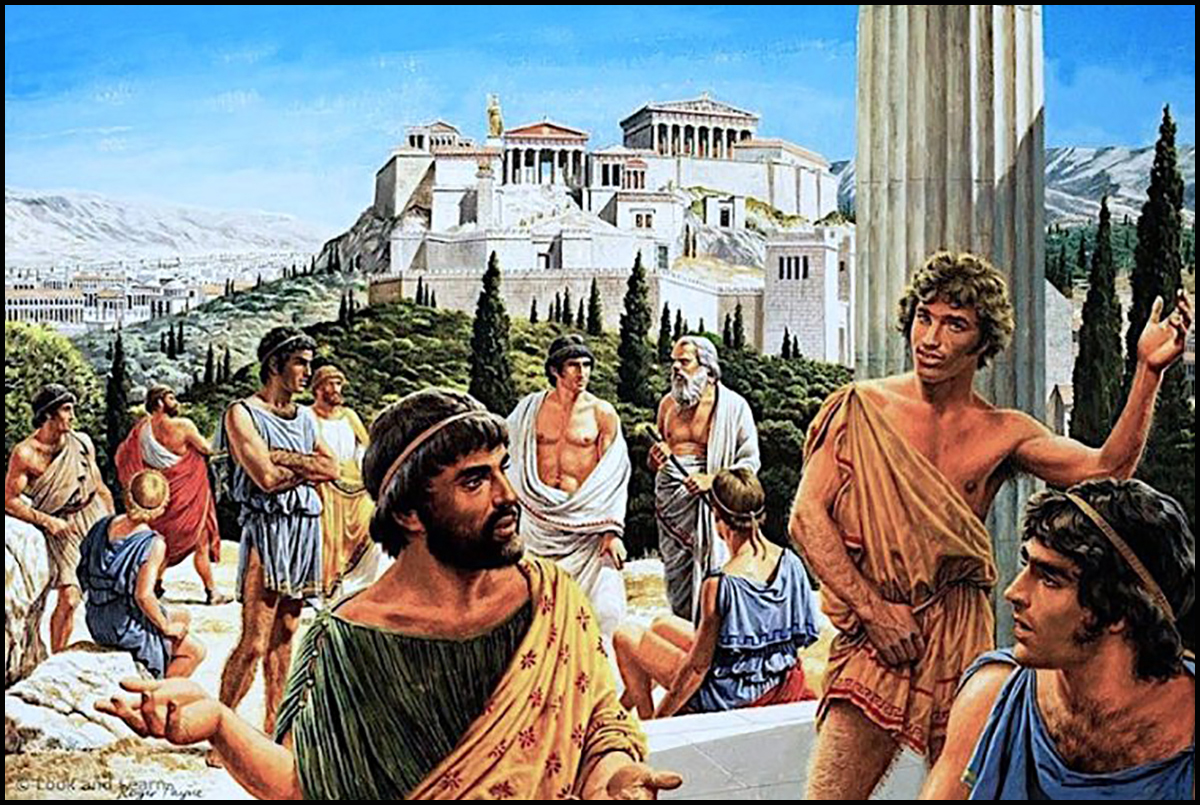
Life in Ancient Athens
This is not the image of a receptive Athenian people full of values, affectivity, artistry, creativity, rationalism, philosophy, honour, respect, loyalty, courage & passion, but is simply a mass of individuals like in the USA. Walter Lippmann suggested that this mass is apathetic, it means that it does not feel itself and has no consciousness of itself or class, which means that each individual that composes the mass is locked on himself and his little circle and hence is apathetic. This to Lippmann meant that it is an atomised mass which makes up the matrix, i.e. it is a huge accumulation of individual atoms; and Barbara Stiegler believes the mass is weak and impotent, stuck without structure, that can only find its power if it is taken over and shaped/trained.

Image: La masse atomisée : une foule de personnes marchant sur le trottoir, New York City / The Atomised Mass: a crowd of people walking on street sidewalk, New York City
But problems of society rarely have a single cause and we must accept that: we have a range of causes. Darwin stated very clearly that he honestly thought that evolution is accepting the idea that there is no end to evolution and it goes in all directions. So what does the history of life tell us? It’s that there is no end to history. But we do need reasonable guidelines to direct ourselves towards an organised and stable civilisation, otherwise we are bound to disappear as a species on earth. It may be good to consider the example of the dinosaurs, who ruled the earth for 175 million years and yet disappeared, while we humans have only been on earth for 6 million years [200,000 years for the modern human form, and only 6,000 years since civilisation as we knew it appearead], which means that dinosaurs lived on earth 29 times longer than us, and today have disappeared.
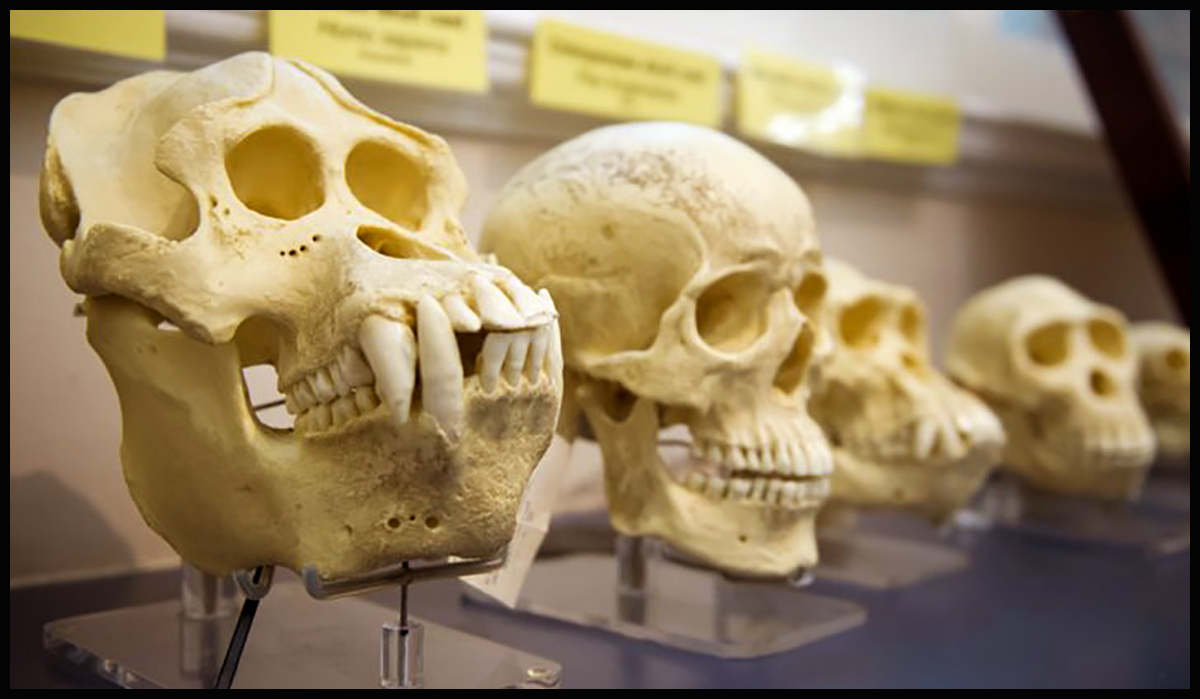
Le processus d’évolution qui a conduit à l’homme moderne / The evolutionary process that led to modern humans
Perhaps another example of a smaller scale is the Roman Empire that lasted for more than 1000 years and no one who lived at its peak thought that it would disappear.
In contemporary Darwinism, we find processes that are not solely based on competition between individuals, but which are based on cooperation between individuals and cooperation between groups. Hence, the classical Darwinian orthodox model has been revised and in reality it is also composed of all kinds of cooperation processes. This is where John Dewey focused on potentials that Walter Lippmann refused to see in the masses, and hence became a philosopher who contradicted some aspects of Lippmann’s work. Dewey acknowledged Lippmann about the masses, but argued that we also have inside those apathethic atomised masses as described by Lippmann, what Dewey called “a public”, individuals who are not satisfied for a particular reason who identify with others who have the similar problem and from this we have the emergence of what he called “publics”; who unlike the apathetic mass in Lippmann’s theory, feel themselves because of their common problem. The public eventually create a movement that shifts from passive to active, and they begin to look for a therapeutic solution to their problem, and from here they have the ability through modern media and communications brought by our industrial society, to identify themselves, to connect among themselves and go and look for resources in what Dewey called “knowledge”: the ability to use expertise to consider experimental solutions from contemporary science and philosophical discourse.

Assimilation as a French philosophical concept requires desire and dedication and should not to be confused with integration, which is simply economic and social. In any case, integration is limited to offering the foreigner the opportunity to succeed in life in the host society, i.e. to find a job, a house, correct living conditions, without imposing or asking him to change his values, his cultural references, his heritage, his way of life; he is simply given the conditions so that he can lead his life as he wishes, within the society – that is not assimilation!
We do sometimes see people of the Western crowd comparing themselves to members of third world crowds and foreign tribes to generate a fake sense of superiority. I would like to remind people that this by no means leads to the betterment of their lives. The Western society has a lot of problems that are deeply rooted and cannot be perceived with the naked eye from the surface, since it is a society that seems in love with packaging everything neatly, but being an intellectual who studied psychology, I can confidently say that there are immense problems in the West regarding the cultivating of minds for the betterment of our lives. Many people are sick in their minds and do not realise it and tremendous amounts of work remains to be done is fixing mentalities and instilling values for a harmonious and healthy society. People who do not assimilate generally do not have these matters at heart and tend to simply park themselves in Western Europe for an income while remaining foreign in their identities. These people should understand that if they are not assimilating, they should not expect to be treated as the organisms that are native and are fully part of the system because the system relies on its organisms for its continuity and existence, and this will also happen to their children if they are raised on foreign beliefs, identity and values. People who are in the west as highly skilled workers and do not want to assimilate should clearly classify themselves as temporary organisms who do not intend to stay forever and accept the life of a foreigner and the burden that goes with it, because I am not saying that the natives are perfect or that all of them are superior since we do have classes and different levels of education in all societies, but what I am placing the emphasis on is that the problems of the West need contribution and concern from its population to be resolved and those who do not contribute are not helping to make life better for themselves and the country – natives and non-natives alike. This is of course not a problem for tourists who are only visiting for photos and return to their countries after the trip is over.
« a way to make these peoples live together with a common referent being the Hellenic culture… »
Assimilation is sculpting one’s heart and soul to be one with the people and be part of the native majority group that constitutes the nation, through loyalty and dedication while playing one’s part as a citizen with civic duties. As Doan reminds, in Greek Antiquity, and in particular from the conquests of Alexander the Great, who was the first to open up the horizon of the Greeks through his conquests and who already had some idea of what the conquests had achieved, it would be necessary to find a way to make these peoples live together with a common referent being the Hellenic culture. In Ancient Greece, all members of society who did not partake in communal matters or get involved and take interest in matters concerning the running of the country and the harmony of the people were seen as “parasites”, and this includes all citizens – natives and non-natives alike – because all societies need its people to work together to address its problems and follow the never-ending course of positive change for the betterment of a civilisation.
In France, most people understand that being a citizen is like a duty, and hence until today they are the only civilisation who stood up for the brotherhood of mankind as individuals to be treated with respect, they are among the rare civilisations who listen to the opinions of the people, believe in genuine meritocracy and give the praise of an emperor to a common man if they feel the man, through his discourse and ideas, has the grandeur in his arguments and deserves so – we know this from the legend of Napoléon, a foreigner who assimilated and became emperor.

Traduction(EN): “We have a master. Napoleon Bonaparte does everything. He can do everything. He wants everything.” – Abbé Siéyès
In his early years, the future emperor did not even handle the French language properly and had a strong Corsican accent, and he was also bullied in college while at Brienne, an elite academy, and was treated as a little foreign immigrant. Yet, with such dedication, as an already amazing student and a great self-educated solitary, he would read all the great minds of Europe, cultivate himself and become one of the greatest Frenchmen to ever live. Indeed, from the little foreigner with a dodgy accent, to then become more French than the French, and rise to become the Emperor is truly inspiring.

Traduction(EN): “To make the republic dear to the citizens, respectable to foreigners and formidable to enemies.” -Napoleon
Before the day that he would place the crown himself on his head, after the people of France had decided to make him Emperor of the French republic, he turned around and looked to his brother saying, in Corsican « sì u nostru babbu ci hà vistu », meaning « if our father could see us ». This shows that although he embodied France in his heart he was respectful of his modest past as he rose from a man to Emperor in only 11 years.

Image: Napoléon (2002) avec Christian Clavier
The French people are one of the most receptive people, who are always willing to reason with new arguments in the noblest of ways no matter who the arguments are from. In fact, France is the least atavistic and most sophisticated civilisation of the modern world, and to achieve such a glorious task without a monarchy is amazing – it shows that when people see themselves as one and treat each other with respect while having a sense of moral and dignity, they embody an empire together, without or with an emperor – the head with a crown being simply an option if needed and deemed ingenious enough to guide a conquering civilisation, but not a necessity! To achieve this sense of harmony requires organisms that can find a strong sense of synchronisation as a people and see themselves as a nation and also feel each other’s pain and glory to reason as one. Of course, just like any society on earth, we do find some bad apples, and corrupt and immoral statesmen and cheap street politicians along with petty arguments, especially among the minor classes, but as a whole, it is a society that was built on human values and philosophies devised to foster the development of human beings where any individual can rise to the very top through his or her own desire, efforts and dedication in a system of Republican meritocracy. The unfortunate thing is that as time passes, and the passionate generation who were part of the foundation of this new world dies, these values sometimes fade in the minds of the new generation and the mediocre “Fisher Price” politicians, and it is great men and women with admirable character that throughout history have had the courage to stand up, speak and remind the nation of the number of people who fought and lost their lives for the society we now have and the need to push in the same direction to continue on the route of human progress.
I am not the first one and definitely not the last one to point out that when mediocrity are controlling the institutions that have already built a business model and a superficial community around it is allowed to impose its atavistic perspectives on the human population, the geniuses will suffer and be considered as dangerous, Honoré de Balzac also believed that thoughts, genius and talent were always what mattered most, as the late professor, Michel Butor would also observe in his lectures. Balzac in his writings also indicated how those with genius in them will be in advance on their times and will be misunderstood and see the present as a soulless palace where genius is unknown such as in Balzac’s “le chef d’oeuvre inconnu” – although well-known remains unknown. Honoré de Balzac competed with the painters of his time, and wanted to collect and reunite all literary genres just to give an idea of all the things a writer could do with his time, and two important themes of his were faith and the power of literature; faith in the possibility to find solutions to the apparent impossibilities was the purpose of his literature, inventing fictions that would eventually turn into reality because the characters exist due to an act of faith and speak of topics that before did not occupy the consciousness of society. Indeed, we both seem to side with the belief that revolutionary ideas are a result of the development of society. Even more coincidental, Balzac also thought that the society of his time had gone off-track and it was his duty to solve the problems, explaining to the press how incredible he was. Balzac likened contemporary society to a heartless woman who hurts those who love her, and contrasted it to a woman with heart and soul. Yet as Balzac described the illnesses of society, he also provided the solutions to cure them, and one of the main characteristics of Balzac is the custom of society that he compares to the exterior of a cathedral, and on the other hand the philosophy of society that he compares to the interior of the cathedral, and it is only after this initiation that we are able to reflect and dream with Balzac. This is one of the great contradictions of all works that are monumental and gigantic: the majority of people only read it in part.
Hence, he believed that the genius will always encounter problems because it is impossible for the majority of the mediocrity to understand everything instantly: we need time for ideas to diffuse and be fully understood. The fact that we do not see anything in a work of art does not mean it is not amazing, because it may simply shift to the other side of the limits of a certain period of history. In the 19th century we had many artists who were not known because they were ahead of their time. As a Christian symbolism, Balzac thought that the great artist because of the weight of his genius would suffer for his art and for the rest of the world, the same artist who has the whole world in his limitless workshop where man is a microcosme. « Ayant les oreilles pour écouter le chant des anges… croyant exprimer la musique du ciel a des auditeurs stupéfaits… » and « …en regrettant que vous ne saisissiez pas la plume à une époque ou les gentilhommes doivent s’en servir aussi bien que leurs épées afin de sauver leur pays… » [French for: “Having ears to listen to the song of angels… believing to express the music of heaven to amazed listeners…” and “…regretting that you did not grasp the pen at a time when gentlemen must use it as well as their swords to save their country…“]; under this beautiful language hid a common phenomena in the 19th century, that of collaborative writing where the author is the director of a great literary enterprise that would cover the whole of France [and eventually the world] while adding his personal touch. One of the main themes of the intellectual movement of the Romantics is that literature is the equivalent of nobility; the pen is what replaces the ancient sword and this found expression in the confused literature of the 19th century. The sword of the academician is the symbol of this essential theme of the replacement of the ancient nobility by the writer [being part of the romantic school of thought is considered to be a replacement for the ancient nobleman].
Despite being known as a genius of realistic literature, Balzac loaded his texts with dreams and fantasy [as in Perrault’s tales] since realistic literature is part of fantastic literature, which is always interpreted in a symbolic way. Realistic literature results in a transformation of history [and therefore has the effect of a lightning strike] and the general knowledge that results from this strike motivates society and the world to change. Balzac firmly believed that literature and painting were a way to build stronger skin, that love was an art, and that Dante was the genius of love.
_______________________________________
Bibliographie
- Alvarez, G., Ceballos, F. and Quinteiro, C., (2009). The Role of Inbreeding in the Extinction of a European Royal Dynasty. PLoS ONE, 4(4), p.e5174.
- Antonio, M., Gao, Z., Moots, H., Lucci, M., Candilio, F., Sawyer, S., Oberreiter, V., Calderon, D., Devitofranceschi, K., Aikens, R., Aneli, S., Bartoli, F., Bedini, A., Cheronet, O., Cotter, D., Fernandes, D., Gasperetti, G., Grifoni, R., Guidi, A., La Pastina, F., Loreti, E., Manacorda, D., Matullo, G., Morretta, S., Nava, A., Fiocchi Nicolai, V., Nomi, F., Pavolini, C., Pentiricci, M., Pergola, P., Piranomonte, M., Schmidt, R., Spinola, G., Sperduti, A., Rubini, M., Bondioli, L., Coppa, A., Pinhasi, R. and Pritchard, J., (2019). Ancient Rome: A genetic crossroads of Europe and the Mediterranean. Science, 366(6466), pp.708-714.
- Azzopardi, C. (2021) “Claire, le prénom de la honte” : le témoignage coup de poing de Claire Koç sur une intégration acquise de haute lutte. France Info: Culture, France Télévisions.
- Berger, F., (2003). L’exploitation de la main-d’œuvre française dans l’industrie sidérurgique allemande pendant la Seconde Guerre mondiale. Revue d’histoire moderne et contemporaine, 50-3(3), p.148.
- Berry, J. W., Trimble, J. E. and Olmedo, E. L. (1986). Assessment of acculturation. In W. J. Lonner and J. W. Berry (eds), Field methods in cross-cultural research (pp. 290-327). Beverly Hills, CA: SAGE.
- Beuve, J. (2019). À l’automne 1944, Français et troupes américaines au bord de l’affrontement. Le Point Histoire. Le Point.
- Bloom, P. (2019). Monitored: Business and Surveillance in a Time of Big Data. Pluto Press.
- Boakes, R. (1984). From Darwin to behaviourism: Psychology and the minds of animals. Cambridge University Press.
- Bobak, A., Hancock, P. and Bate, S., (2015). Super-recognisers in Action: Evidence from Face-matching and Face Memory Tasks. Applied Cognitive Psychology, 30(1), pp.81-91.
- Branca, É., (2017). L’ami américain: Washington contre de Gaulle. Perrin.
- Bratman, M. (1993). Shared Intention. Ethics, 104, 97–113.
- Bratman, M. (2014). Shared agency. A planning theory of acting together. Oxford: OUP.
- Brinkhof, T. (2023). The wild west was lawless and chaotic – and the police helped keep it that way, Big Think. Available at: https://bigthink.com/the-past/wild-west-lawless/ (Accessed: February 7, 2023).
- Bruchard, M. and Delage, I. (2020). La Guerre Franco-«Allemande» de 1870-1871. Le Site d’Histoire de la Fondation Napoléon. Napoleon.org.
- Binhas, R. (2021). Raphaël Doan: “Nous n’assumons pas de vouloir assimiler les étrangers. Marianne.
- Buffet, A., (2018). Fascinations antimodernes : la soif étanchée ?. Imaginaires de l’Amérique, pp.153-211.
- Butor, M. (1975). Représentation des Etas-Unis dans la littérature française. Faculté des lettres. Département de langues et de littérature françaises modernes (FRAMO). Université de Genève.
- Butor, M. (1980). Les récits philosophiques de Balzac. Faculté des lettres. Département de langues et de littérature françaises modernes (FRAMO). Université de Genève.
- Ceballos, F. and Álvarez, G., (2013). Royal dynasties as human inbreeding laboratories: the Habsburgs. Heredity, 111(2), pp.114-121.
- Chomsky, N., (2017). Requiem pour le rêve américain. Climats.
- Cohen D. (1979). J.B Watson: The Founder of Behaviourism. London, Boston and Henley.
- de Lumley, M., (2015). L’homme de Tautavel. Un Homo erectus européen évolué. Homo erectus tautavelensis. L’Anthropologie, 119(3), pp.303-348.
- Dard, O. (2018) ‘« l’homme des machines » de Georges Bernanos’, L’Homme & la Société, n° 205(3), pp. 87–107.
- Delaume, C. (2018). Le Couple franco-allemand n’existe pas – Comment l’Europe est devenue allemande et pourquoi ça ne durera pas, Éd. Michalon.
- Delaume, C. (2018). Coralie Delaume : « Les élites françaises ont un rapport maladif à l’Allemagne qui, pour sa part, ne cesse de germaniser toujours plus l’Europe ». Atlantico.
- Delaume, C. (2019). Union Européenne pour ou contre ?. Thinkerview.
- Delaume, C., & Sugy, P. (2020). Coralie Delaume: «Cet accord coûtera plus à la France qu’il ne lui rapportera». Figaro Vox. Le Figaro.
- Didion, J., Demarty, P. and Pétillon, P., (2009). L’Amérique. Paris: B. Grasset.
- D’Purb, D. (2012). GTA V: 10 Reasons You’d Be Insane Not To Play. WhatCulture.
- D’Purb, D. (2018). Biopsychology: How our Neurons work. dpurb.com essais.
- D’Purb, D. (2019). Biopsychology: The Temporal Lobes: Vision, Sound & Awareness. dpurb.com essais.
- D’Purb, D., (2020). Philosophical Review: “The World as Will and Idea”, by Arthur Schopenhauer (1818). dpurb.com essais.
- D’Purb, D., (2020). Philosophical Review: Moral Relativism – Aren’t we all entitled to an ugly opinion?. dpurb.com essais.
- D’Purb, D. (2021). Developmental Psychology: The 3 Major Theories of Childhood Development. dpurb.com essais.
- D’Purb, D. (2021). History on Western Philosophy, Religious cultures, Science, Medicine & Secularisation. dpurb.com essais.
- D’Purb, D. (2021). Psychoanalysis: History, Foundations, Legacy, Impact & Evolution. dpurb.com essais.
- D’Purb, D. (2021). The Concept of Self. dpurb.com essais.
- Drumont. E. (1886). La France juive : essai d’histoire contemporaine. Flammarion.
- Dubois, J., (2002). L’Amérique m’inquiète. Paris: Ed. de l’Olivier.
- Eisenthal, Y., Dror, G. and Ruppin, E., (2006). Facial Attractiveness: Beauty and the Machine. Neural Computation, 18(1), pp.119-142.
- Fabrice, V. (2016). « Les viols commis par l’armée allemande en France (1940-1944) », Vingtième Siècle. Revue d’histoire, 2016/2 (N° 130)
- France24. (2016). France: Un appel à ne plus porter la kippa après l’agression antisémite de Marseille fait débat. France. France.24.
- Gérard, P. (1977). LE PROTECTORAT INDUSTRIEL ALLEMAND EN MEURTHE-ET-MOSELLE. Revue D’histoire De La Deuxième Guerre Mondiale, 27(105), 9-28. Retrieved May 7, 2021, from http://www.jstor.org/stable/25728813
- Gesbert, O. (2018). Le couple franco-allemand est-il un mythe?. France Culture. Radio France.
- Guirous, L. (2021). TRIBUNE. Lydia Guirous: “Le racialisme est un nouveau racisme, de gauche”. Politique. Le Journal du Dimanche.
- Gilbert, M. (1990). Walking together: A paradigmatic social phenomenon. Midwest Studies in Philosophy, 15(1), 1–14.
- Grodin, E. and White, T., (2015). The neuroanatomical delineation of agentic and affiliative extraversion. Cognitive, Affective, & Behavioral Neuroscience, 15(2), pp.321-334.
- Gross, R. (2005) Psychology: the science of mind and behaviour. London, Hodder and Stoughton Educational
- Hafner, K., Lyon, M. and Loudière, G., (1999). Les sorciers du net. Paris: Calmann-Lévy.
- Hajdinjak, M., Mafessoni, F., Skov, L., Vernot, B., Hübner, A., Fu, Q., Essel, E., Nagel, S., Nickel, B., Richter, J., Moldovan, O., Constantin, S., Endarova, E., Zahariev, N., Spasov, R., Welker, F., Smith, G., Sinet-Mathiot, V., Paskulin, L., Fewlass, H., Talamo, S., Rezek, Z., Sirakova, S., Sirakov, N., McPherron, S., Tsanova, T., Hublin, J., Peter, B., Meyer, M., Skoglund, P., Kelso, J. and Pääbo, S., (2021). Initial Upper Palaeolithic humans in Europe had recent Neanderthal ancestry. Nature, 592(7853), pp.253-257.
- Havard, G., (2019). L’Amérique fantôme: Les aventuriers francophones du Nouveau Monde. Flammarion.
- Heinich, N. (2005). L’élite artiste: Excellence et singularité en régime démocratique. Collection Bibliothèque des Sciences humaines. Gallimard. Paris, France.
- i24news. (2020). “La civilisation juive dure parce qu’elle se protège” (M. Onfray à i24NEWS). i24NEWS.
- Jaquet, C. and Bras, G. (2018). La Fabrique des transclasses. Presses Universitaires de France. Paris, France.
- Jeune Afrique. (2016). « L’homme blanc plus intelligent que l’homme noir » : les propos d’une candidate au concours miss RDC provoquent un tollé. Jeune Afrique-Société. Jeune Afrique.
- Kael, P., (2010). Chroniques americaines. Paris: Sonatine.
- Kelly, M. (2014) French: Precise, romantic, influential, close to English | British Council. Available at: https://www.britishcouncil.org/voices-magazine/french-precise-romantic-influential-close-english (Accessed: January 25, 2023).
- Kieffer, A. (2017). La face cachée du miracle allemand. France Culture. Radio France.
- Koç, C. (2021). Comment se sentir française ? Claire Koç s’est choisie un prénom. TV5Monde.
- Kott, S. (2003). Chapitre 4. De Bismarck à Hitler?. BISMARCK, 109-140.
- Labro, P. (2022). La France vue d’ailleurs – Ken Follet : « J’aime la cruauté de Balzac ». Paris Match. Livres.
- Laïdi, A., (2019). Le Droit, nouvelle arme de guerre économique – Comment les Etats-Unis déstabilisent les entreprises européennes. Arles: Actes Sud.
- Lallart, M., (2020). La Saga GTA: Transgressions et visions de l’amérique. THIRD ED; Illustrated édition.
- Lebovic, M. (2020). Myth of Jews killing Christian children persists, says new book on blood libel. The Times of Israel.
- Leprince, C. (2017). Bismarck, grosses bagnoles et Méphisto : le racisme anti-allemand. France Culture. Radio France.
- Lilly, R. and Le Roy, F. (2002). « L’armée américaine et les viols en France, juin 1944-mai 1945 », Vingtième Siècle : Revue d’histoire, Paris, Presses de Sciences Po, no. 75, , p. 109-121.
- Lilly, R. (2008). La face cachée des GI’s. Les viols commis par des soldats américains en France, en Angleterre et en Allemagne pendant la Seconde Guerre mondiale, Payot.
- Lowenthal, L., Guterman, N., Platini, V., Martini, É., Voirol, O. and Lowenthal, L., (2019). Les prophètes du mensonge: étude sur l’agitation fasciste aux états-unis. Éditions La Découverte.
- Marchandier, I. (2021). « L’assimilation est par nature antiraciste ». Causeur.
- Marcucci, L., (2016). L’« homme vitruvien » et les enjeux de la représentation du corps dans les arts à la Renaissance. Nouvelle revue d’esthétique, 17(1), p.105.
- Marquis, É., (2014). Casser l’euro pour sauver l’Europe. Humanisme, N° 303(2), pp.122-122.
- Mearsheimer, J. and Walt, S., (2009). Le lobby pro-israélien et la politique étrangère américaine. Paris: La Découverte.
- Michel, J., (2008). Le lynchage aux Etats-Unis. Paris: La table ronde.
- Mogosanu, L., (2013). L’intime à l’oeuvre. Presses Academiques Francophones. Hachette.
- Nouvel, P. (2008) “Philosophie de la stimulation,” Les Cahiers du Centre Georges Canguilhem, 2(1), pp. 283–311. Available at: https://doi.org/10.3917/ccgc.002.0283.
- Onfray, M., & Doan, R. (2021). L’assimilation : un concept de droite?. Front Populaire.
- Ottavi, L., & Delaume, C. (2020). Il y a deux ans, Coralie Delaume publiait “Le couple Franco-Allemand n’existe pas”. Marianne TV. Marianne.
- Paulet, P. (2018) L’impossible « couple » franco-allemand. Voix de l’Hexagone.
- Perkins, J. (2005). Confessions d’un assassin économique – Révélations sur la manipulation des économies du monde par les États-Unis. Alterre.
- Phelps, W., (2021). On killing remotely: The Psychology of Killing with Drones. 1st ed. Little, Brown US.
- Pierucci, F. and Aron, M., (2019). Le Piège américain: L’Otage de la plus grande entreprise de déstabilisation économique témoigne. JC Lattès.
- Piketty, T., (2013). Le capital au XXIe siècle. Paris: Éditions du Seuil.
- Rafoni, B. (2006). Nathalie Heinich, L’élite artiste. Excellence et singularité en régime démocratique. Questions de communication, (10).
- Roberts, M. (2014). Des GI’s et des femmes Amours viols et prostitution à la Libération, Seuil, 2014.
- Rothman, J. and Treffers-Daller, J. (2014). A Prolegomenon to the Construct of the Native Speaker: Heritage Speaker Bilinguals are Natives Too!. Applied Linguistics, 35(1), pp.93-98.
- Sanchez-Palencia, E. (2017). Culture, progrès scientifique et convictions. Méthode Scientifique / Libres propos d’académiciens, Académie des Sciences.
- Savage, J.E., Jansen, P.R., Stringer, S., et al. (2018). Genome-wide association meta-analysis in 269,867 individuals identifies new genetic and functional links to intelligence. Nat Genet 50, 912–919.
- Schweikard, D. P., & Schmid, H. B. (2013). Collective intentionality. The Stanford Encyclopedia of philosophy (Summer 2013 Edition), Edward N. Zalta (ed.), Retrieved from http://plato.stanford.edu/archives/sum2013/entries/collective-intentionality
- Simonnet, D. (2006). “Les artistes sont les nouveaux aristocrates”. L’Express Culture Livres. L’Express.
- Skibba, R. (2019). The Disturbing Resilience of Scientific Racism. Smithsonian Magazine.
- Snowden, E., (2019). Permanent record. 1st ed. Metropolitan Books.
- Statista Research Department. (2020). L’Union européenne – Fait et chiffres. Statista.
- Taguieff, P., (2002). L’invention racialiste du Juif. Raisons politiques, 5(1), p.29.
- Thompson, H. (2012). The Gonzo Papers Anthology. Pan Books Ltd.
- Tomasello, M., Carpenter, M., Call, J., Behne, T., & Moll, H. (2005). Understanding and sharing intentions: The origins of cultural cognition. Behavioral and Brain Sciences, 28(5), 675–691.
- Tribune Collective., (2020). 29 Mai 2005 : Liberté, j’écris ton NON. Tribunes Libres. Marianne.
- Weil, S. (2017). Note sur la suppression générale des partis politiques. Paris: Editions Allia.
- Wilensky. G. (2010). Six Million Crucifixions: How Christian Teachings About Jews Paved the Road to the Holocaust. Qwerty Publishers. San Diego, California. US.
- Woodruff, P. (2022). Majority rule is not democracy, Oxford University Press Blog. Available at: https://blog.oup.com/2022/01/majority-rule-is-not-democracy/ (Accessed: February 9, 2023).
D. J. d’Purb | dpurb.com
____________________________________________________
While the aim of the community at dpurb.com has been & will always be to focus on a modern & progressive culture, human progress, scientific research, philosophical advancement & a future in harmony with our natural environment; the tireless efforts in researching & providing our valued audience the latest & finest information in various fields unfortunately takes its toll on our very human admins, who along with the time sacrificed & the pleasure of contributing in advancing our world through sensitive discussions & progressive ideas, have to deal with the stresses that test even the toughest of minds. Your valued support would ensure our work remains at its standards and remind our admins that their efforts are appreciated while also allowing you to take pride in our journey towards an enlightened human civilisation. Your support would benefit a cause that focuses on mankind, current & future generations.
Thank you once again for your time.
Please feel free to support us by considering a donation.
Sincerely,
The Team @ dpurb.com
P.S.
– If you are a group/organization or individual looking for consultancy services, email: info[AT]dpurb.com
– If you need to reach Danny J. D’Purb directly for any other queries or questions, email: danny[AT]dpurb.com [Inbox checked periodically / Responses may take up to 20 days or more depending on his schedule]
Stay connected by linking up with us on Facebook and Twitter


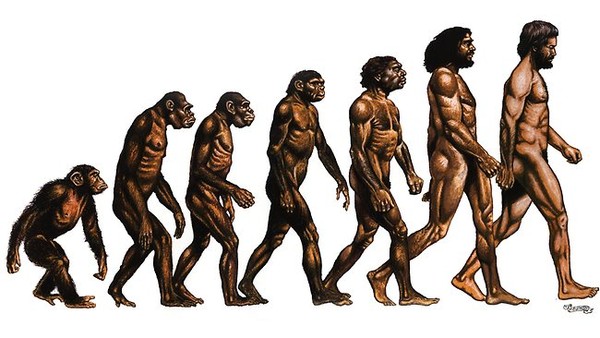



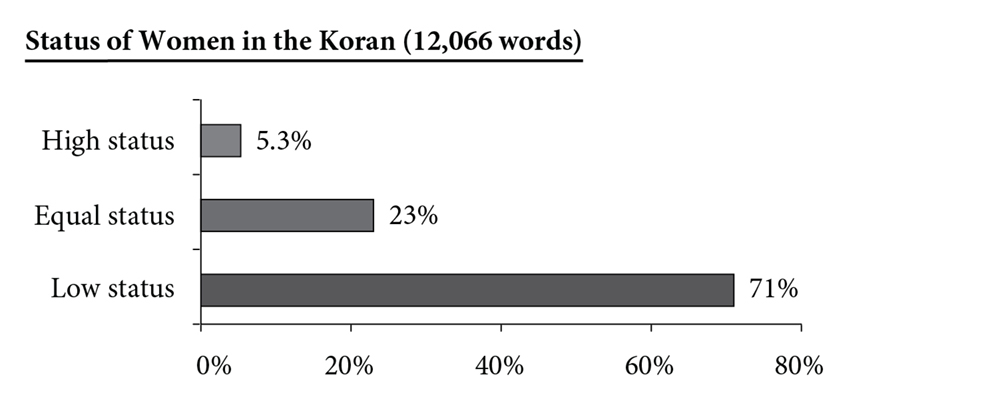


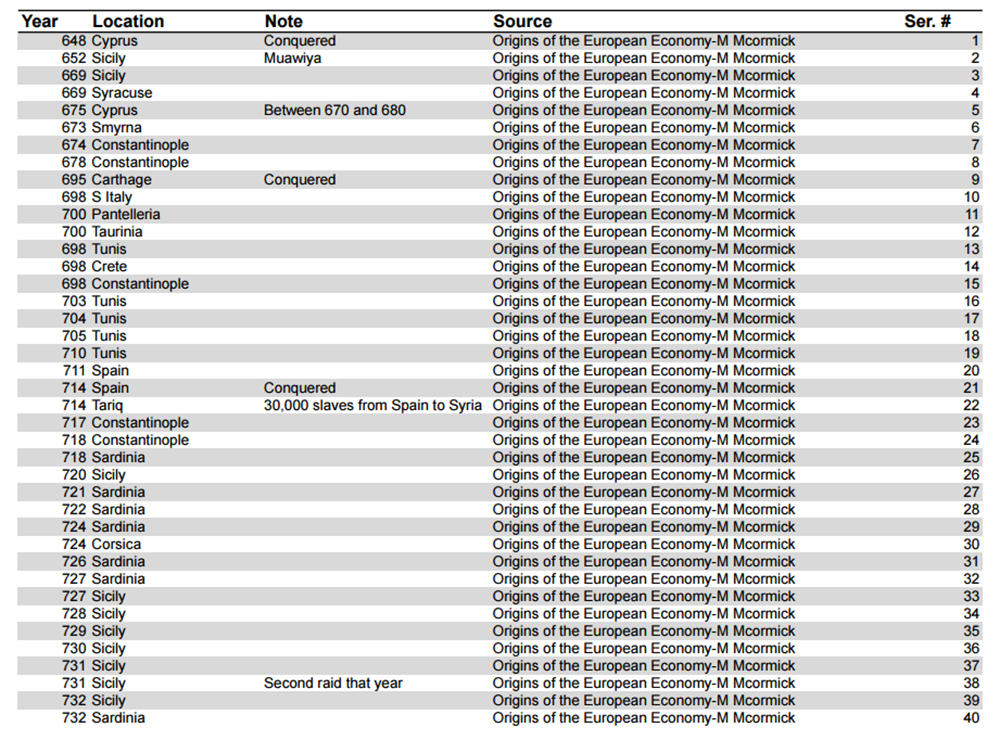


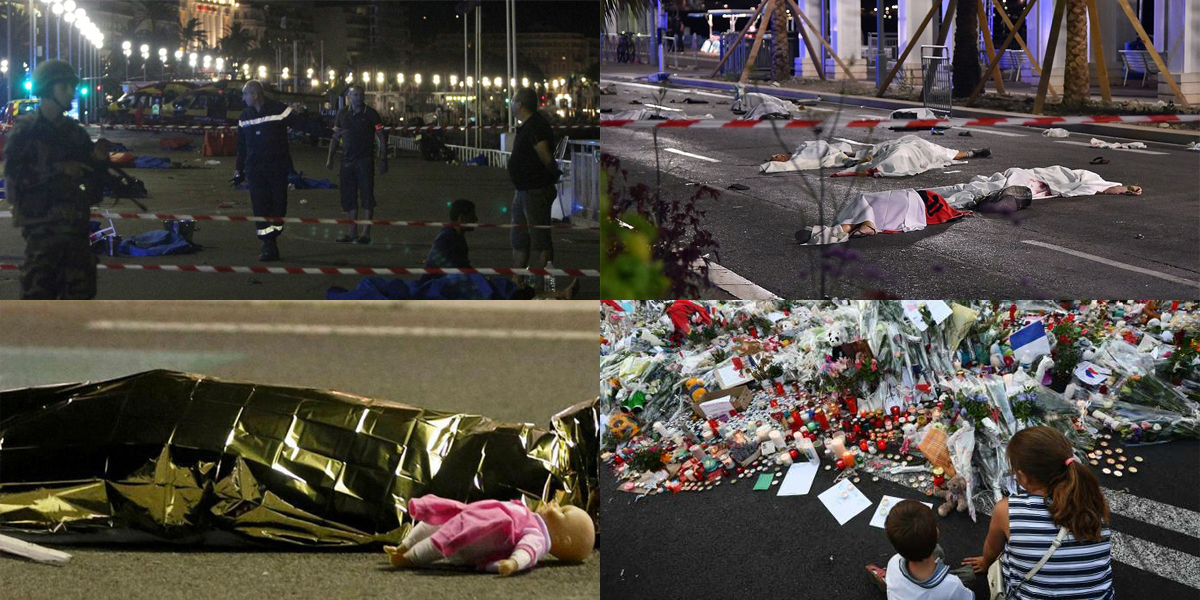






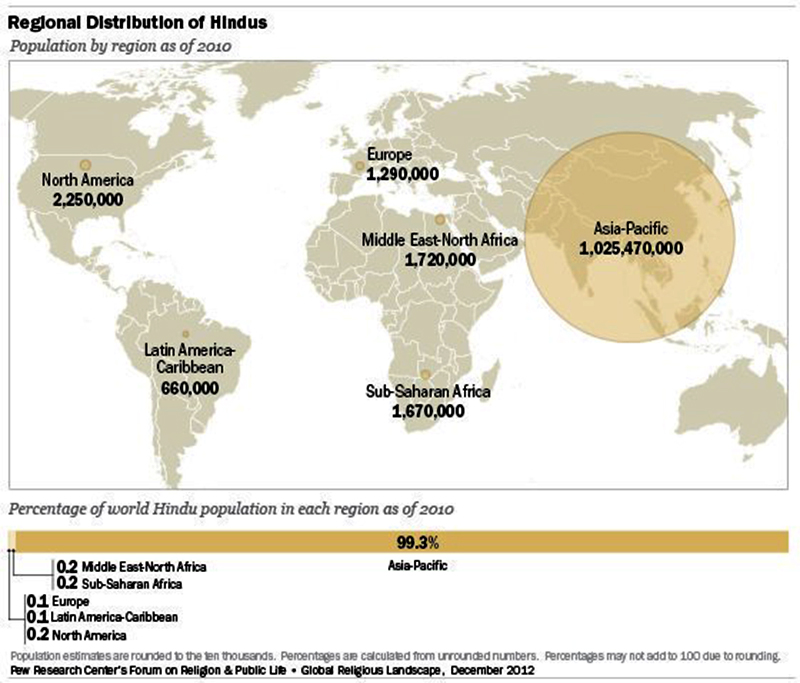

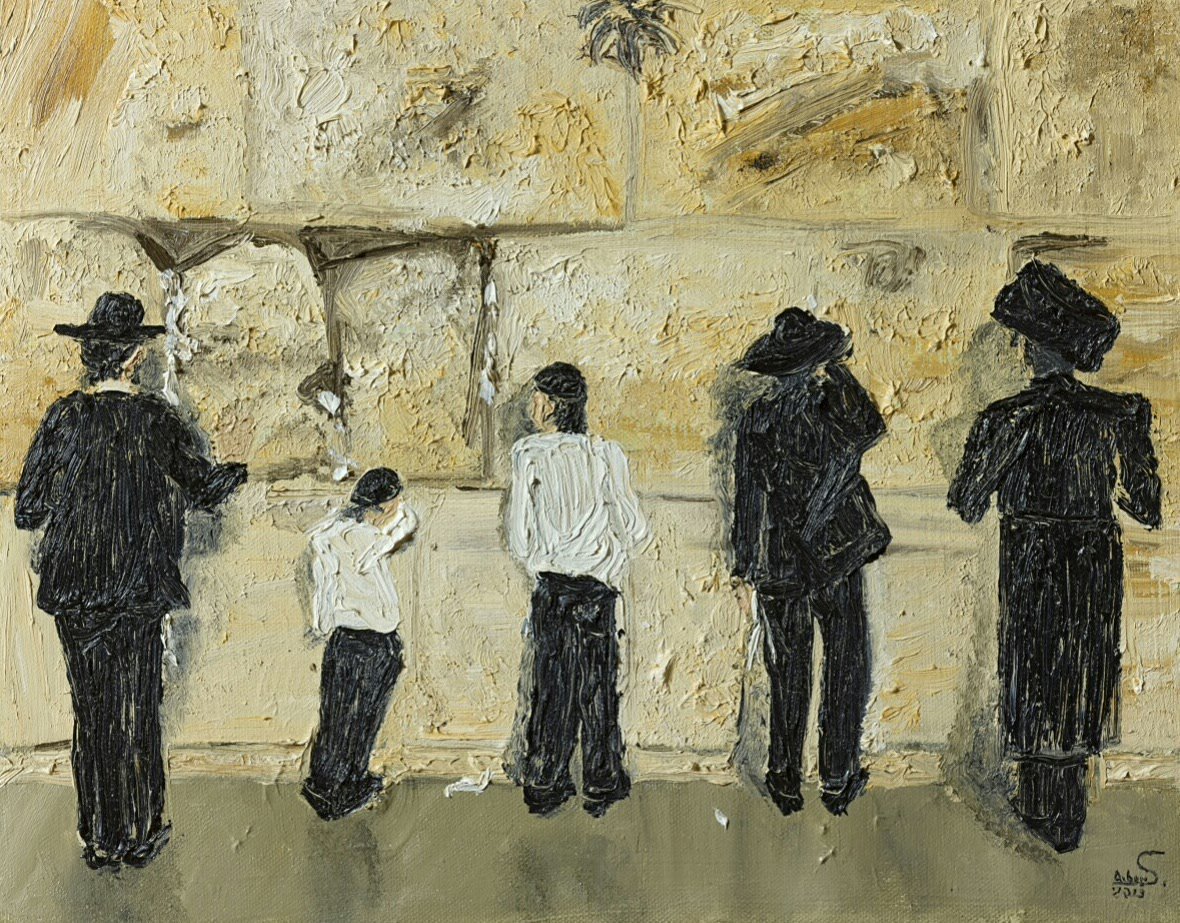
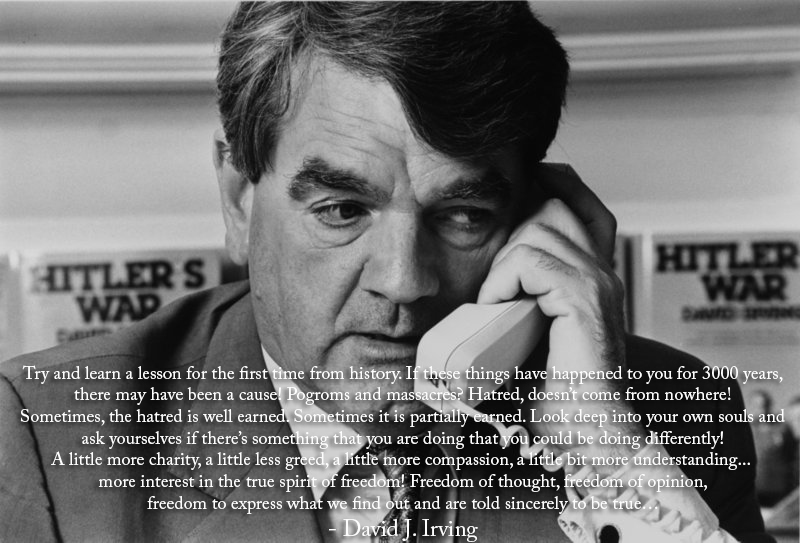












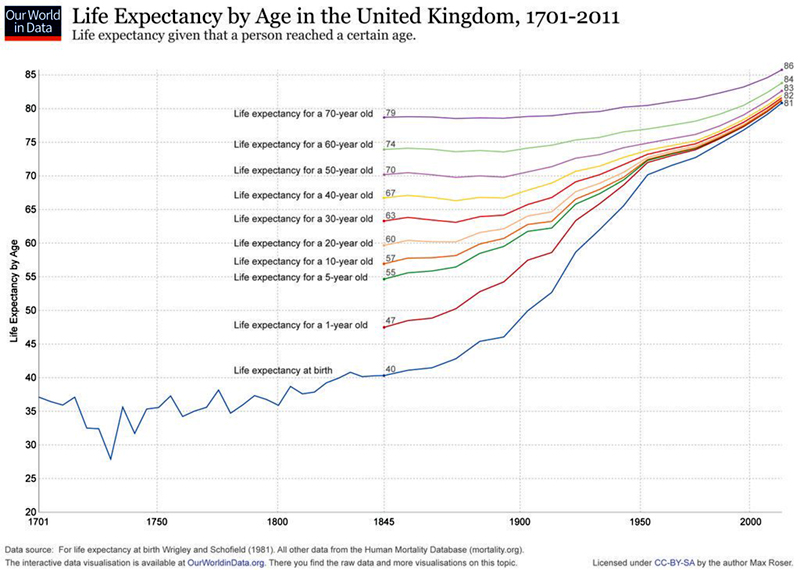


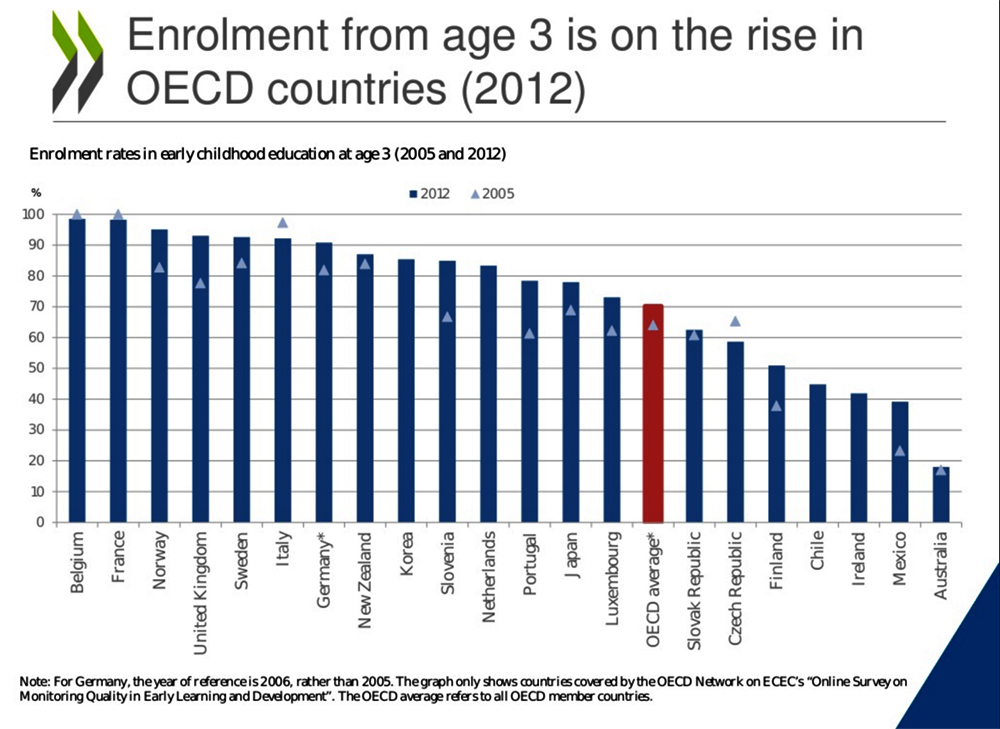


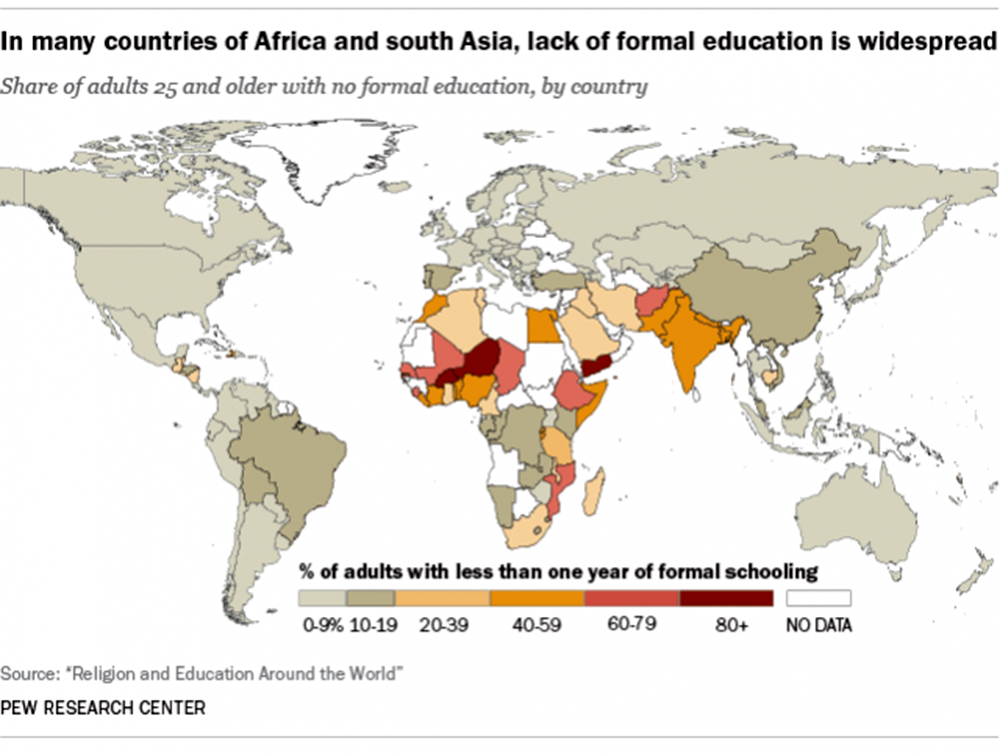


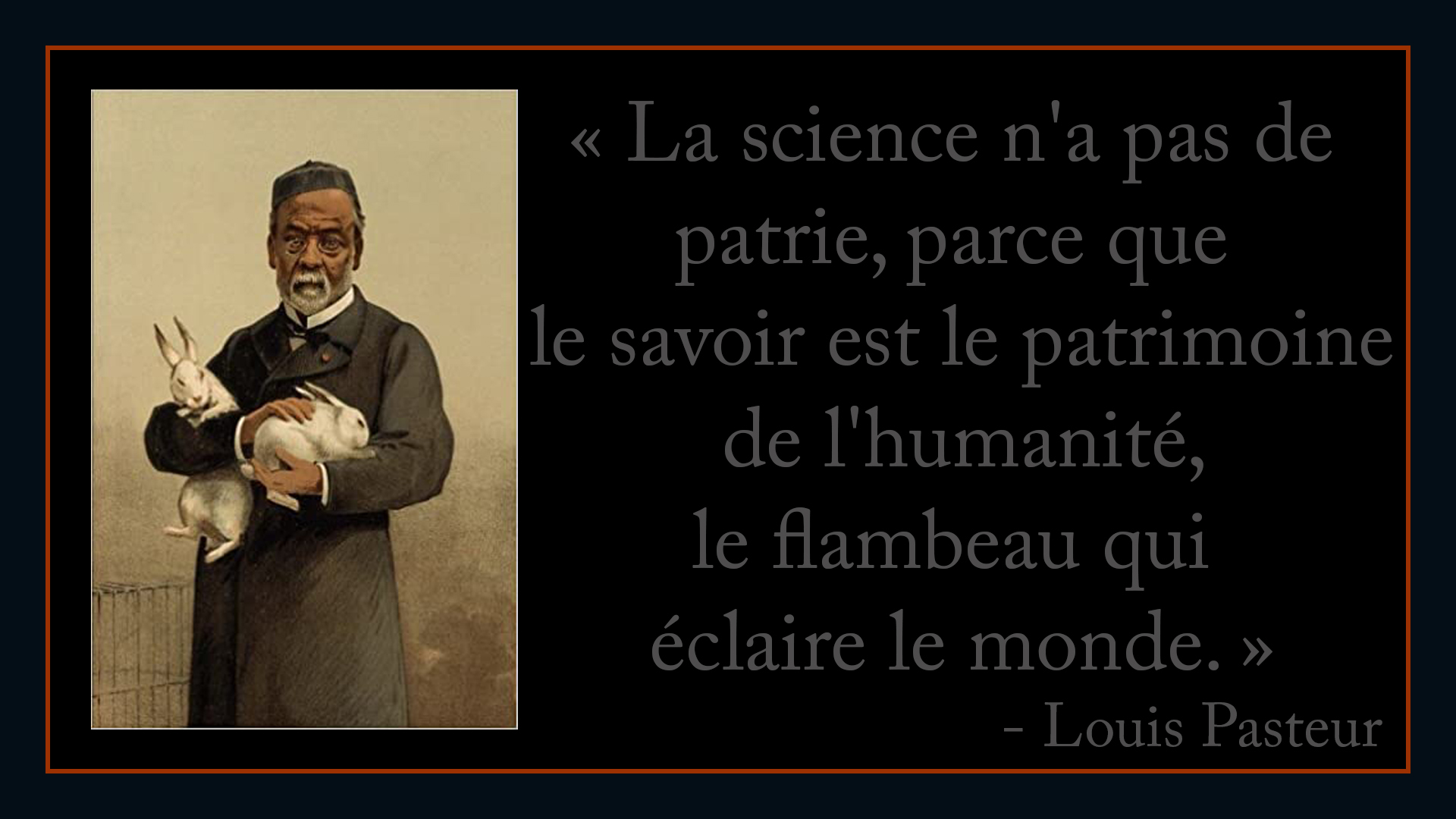


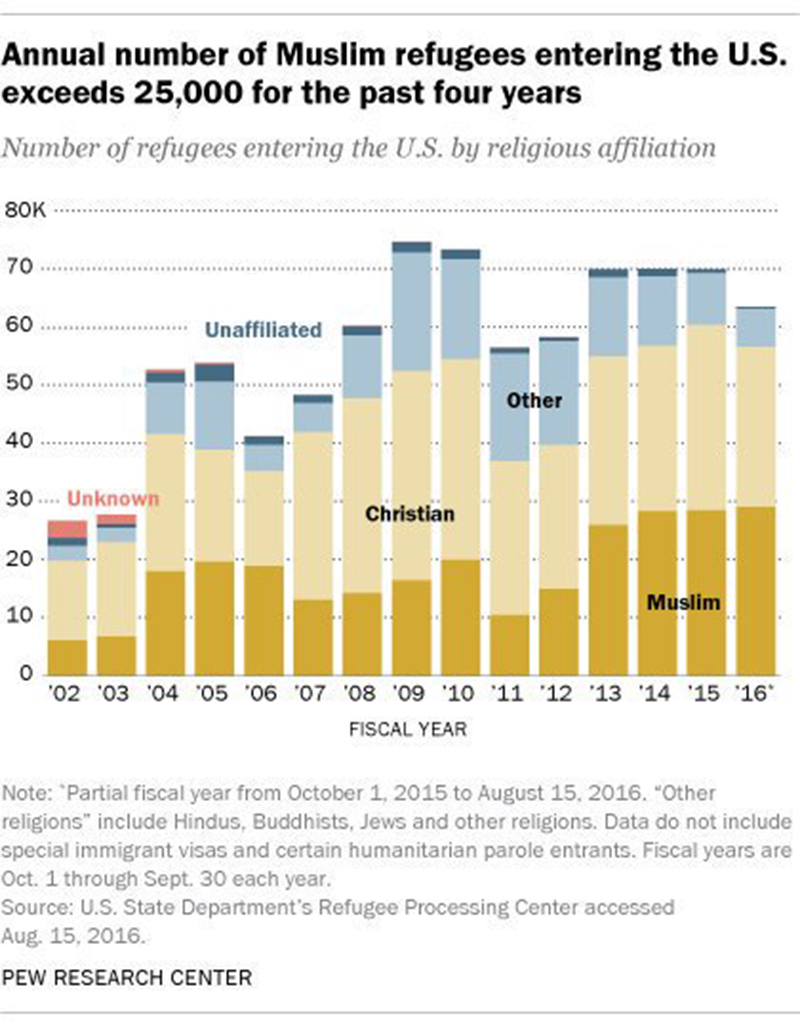


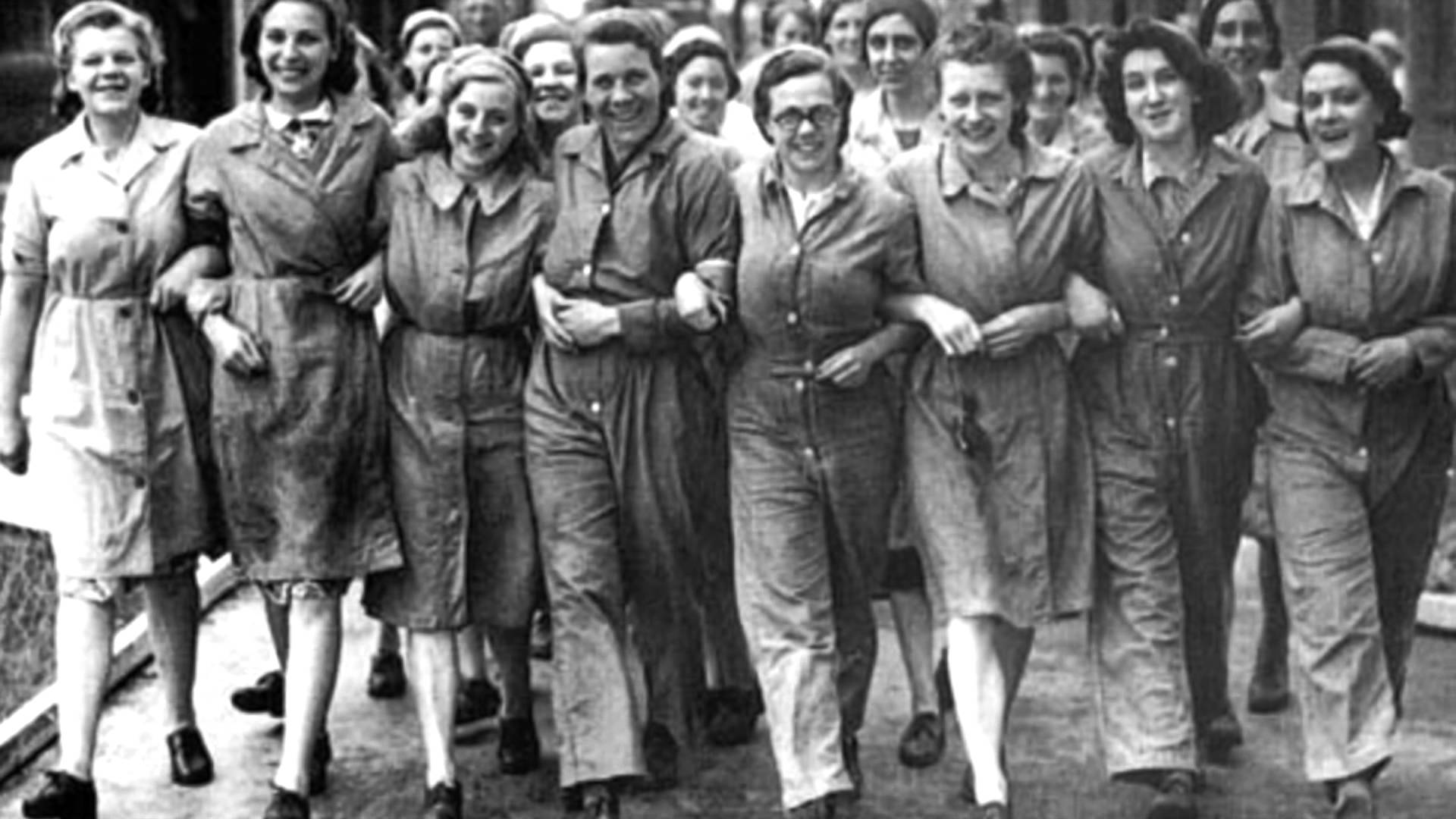
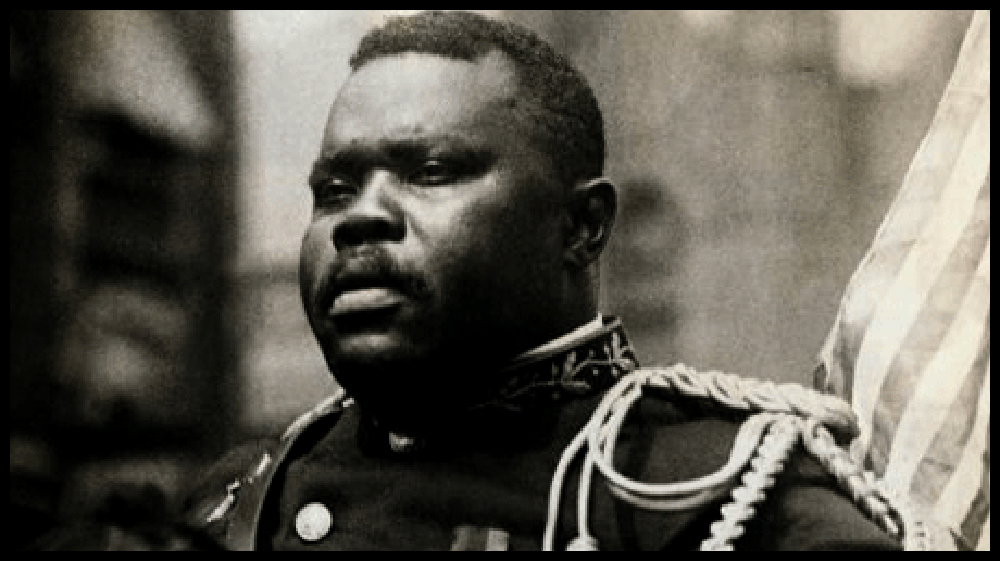



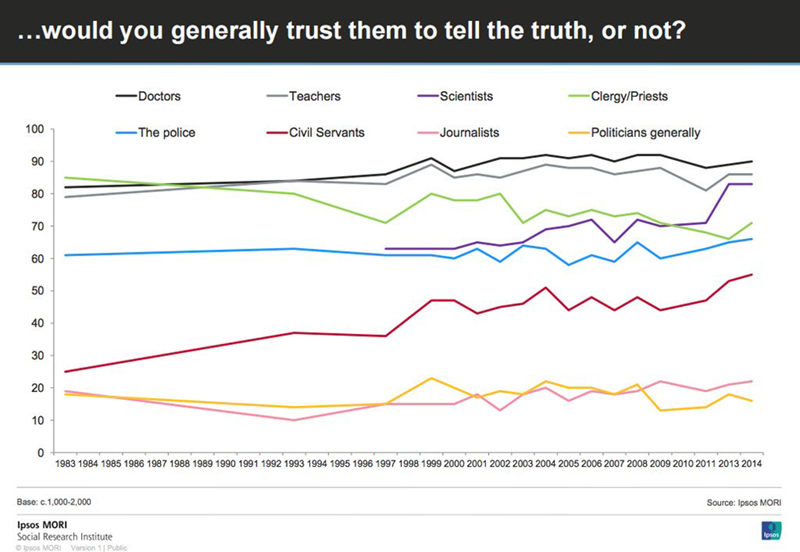

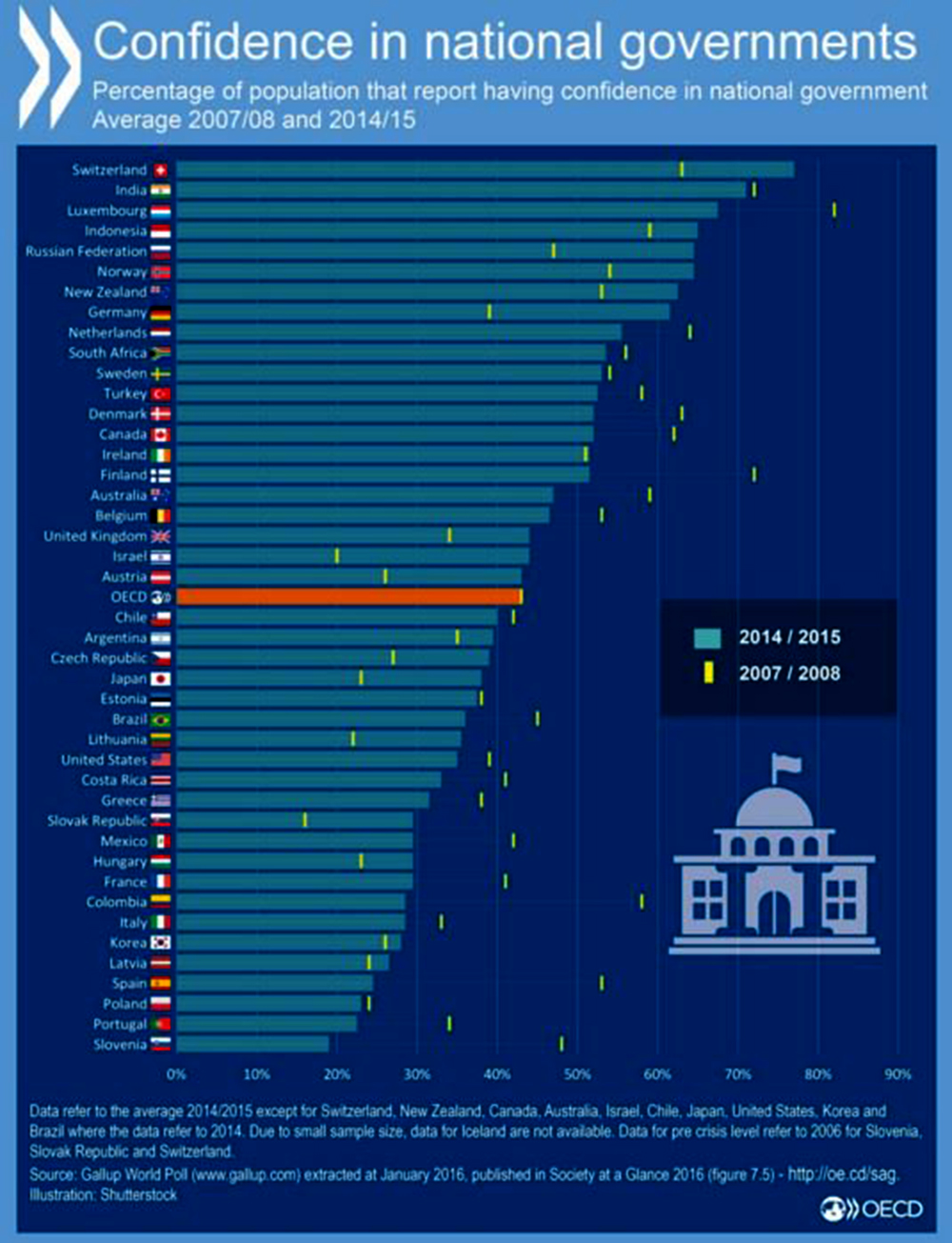


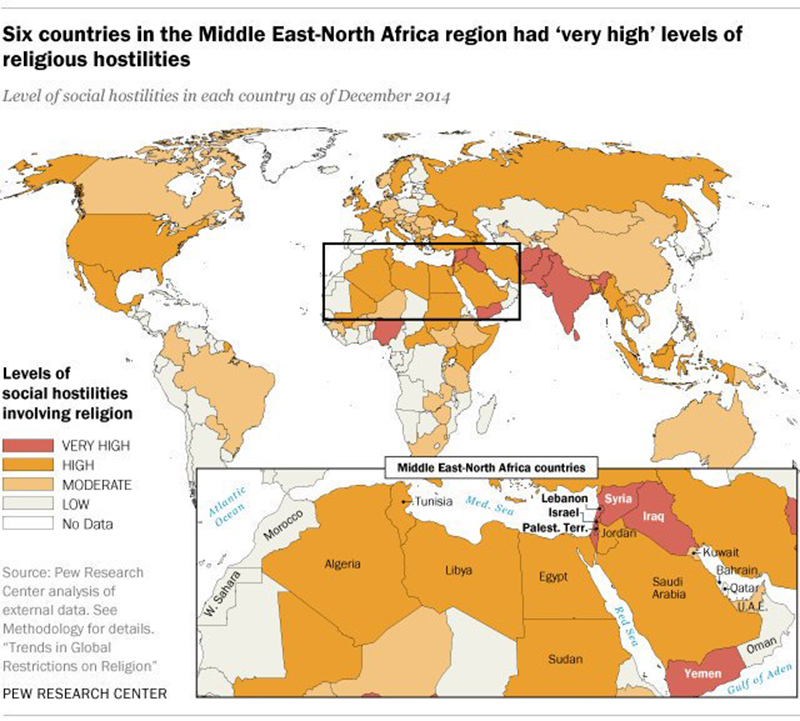
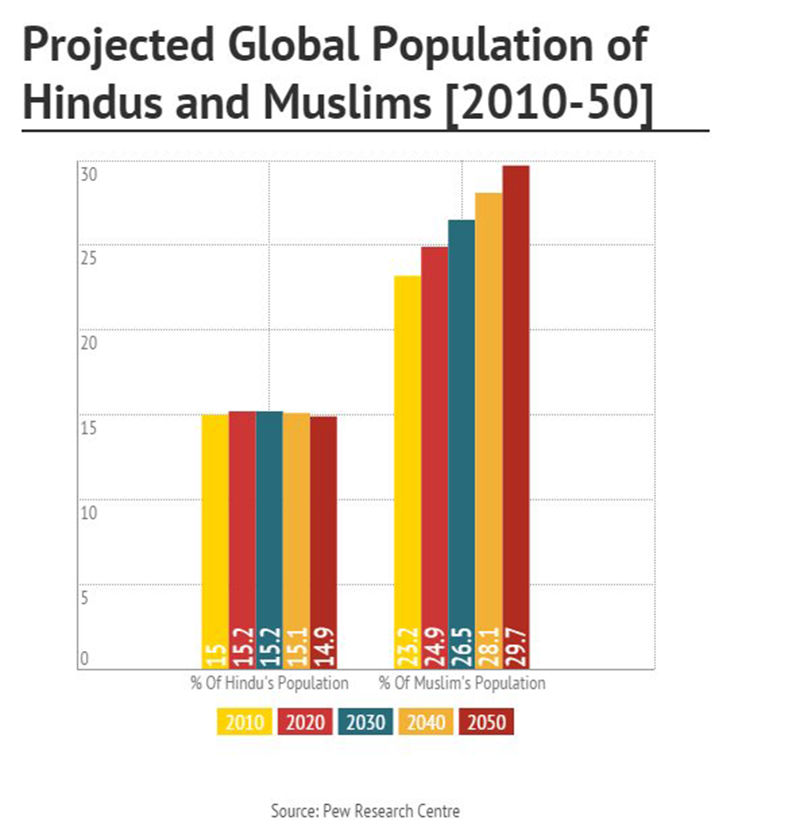





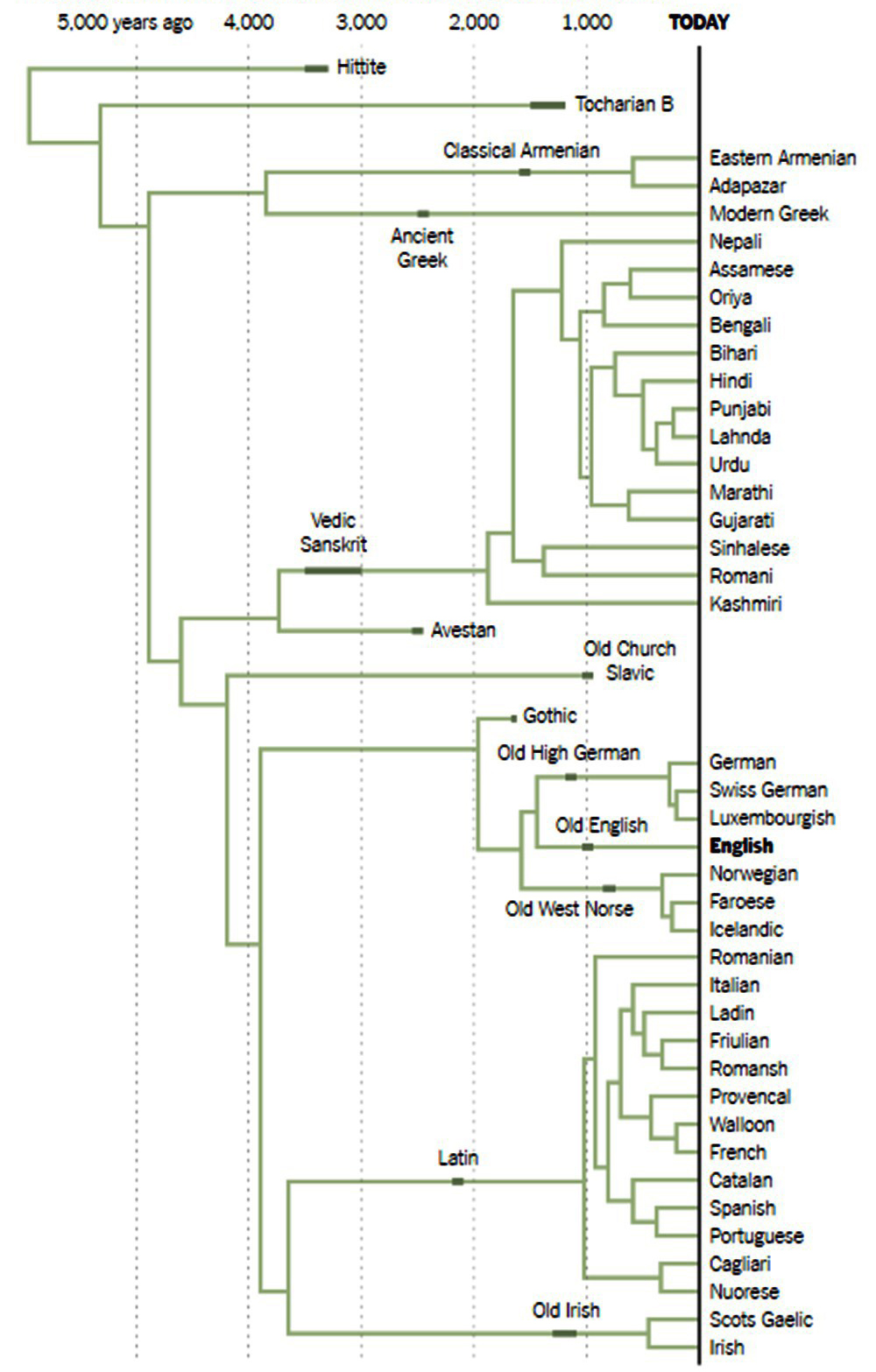
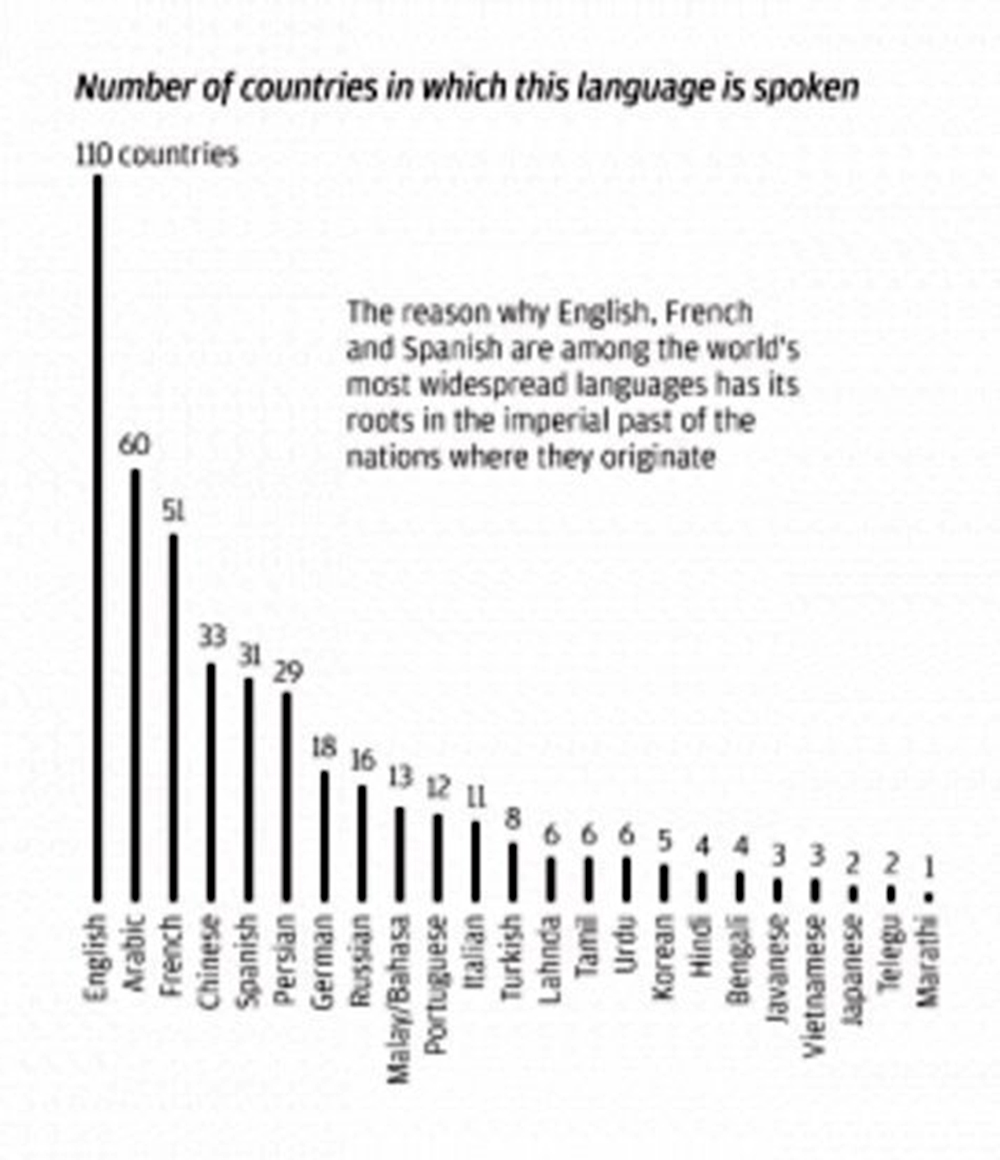


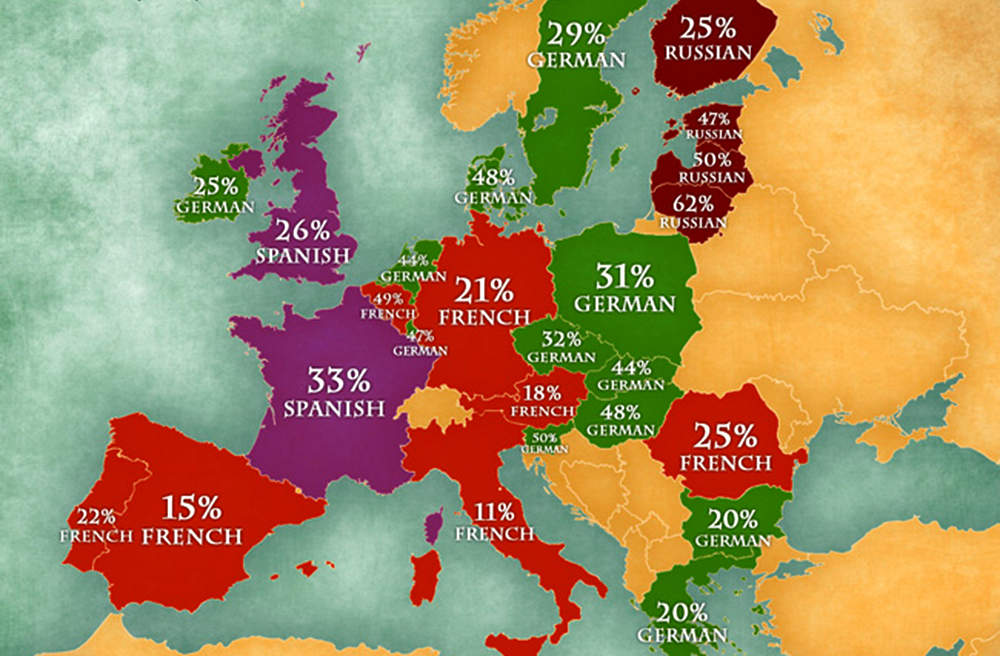


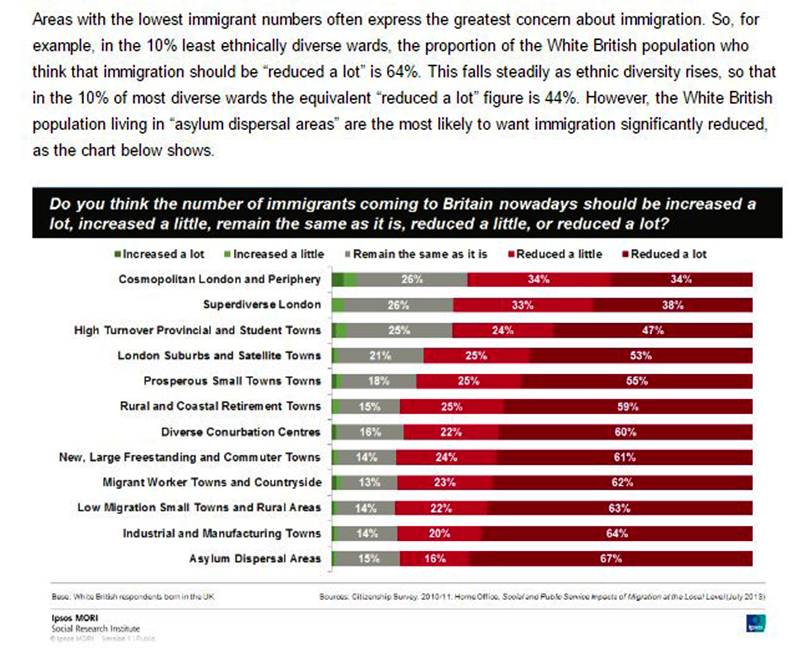


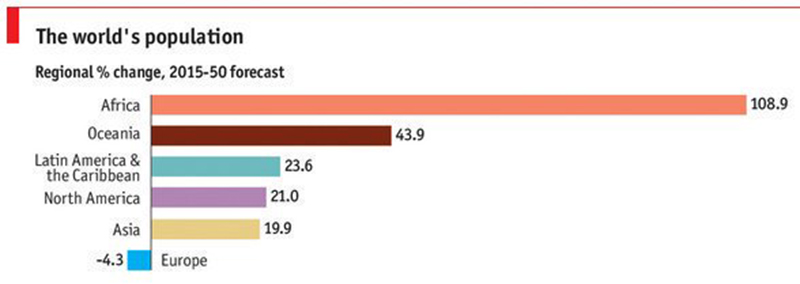


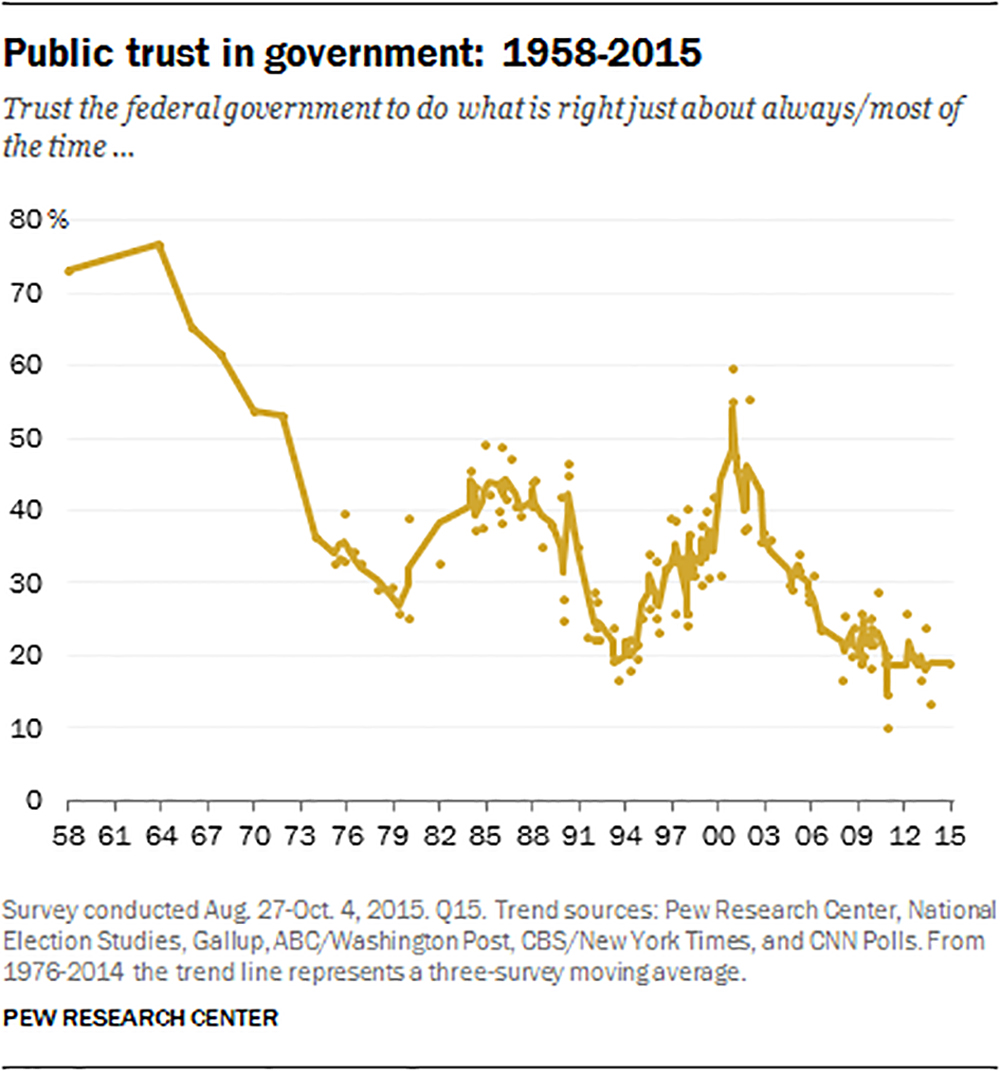


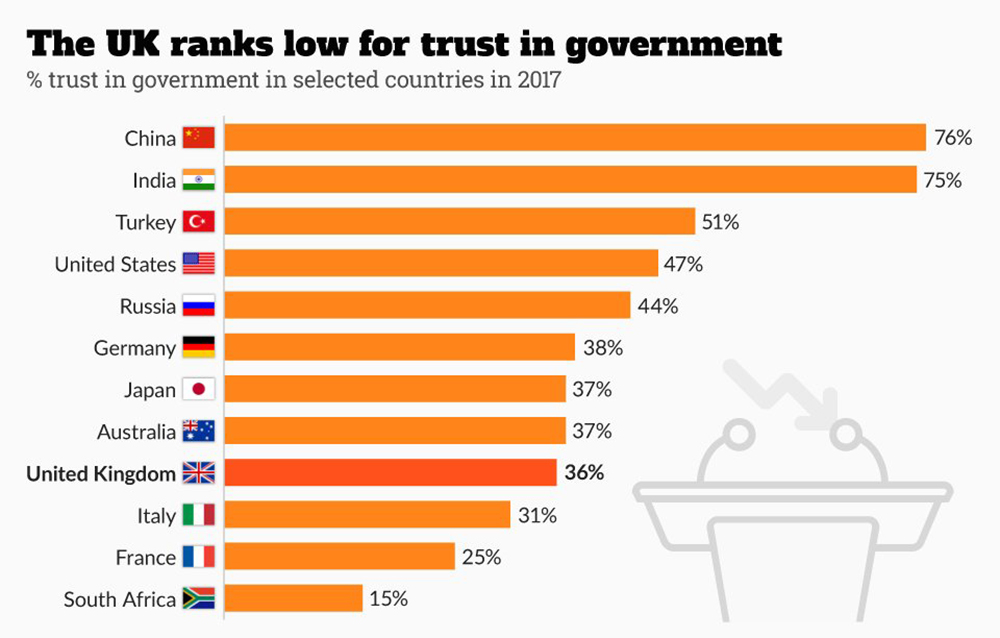



 dpurb . com