Essay // A Philosophical Critique of Schopenhauer’s “World as Will and Idea” & a Modern Lucretian View of “l’Art de Vivre”

Mis à jour le Samedi, 8 Avril 2023

Schopenhauer Lucrèce Lucretius D'Purb dpurb 2022

About the life of Arthur Schopenhauer

Arthur Schopenhauer was born on February 22nd of 1788 in Danzig, Germany, he was the son of Henri Floris Schopenhauer aged 38 and Johanna Henriette Trosiener who was then 19 years old. His father was a wealthy merchant and banker who had already planned for his son to become a business man before his birth, and hoped Arthur would follow in his steps. Henri Schopenhauer was also an independent minded man who moved his family from the city of Danzig when it was taken over by Prussia in 1793. The new family home was in Hamburg. Arthur Schopenhauer left to visit England and other countries, on the understanding that when he completed his tour, he would begin work in a business. The latter, then 16 years old, kept his promise but being much more intellectually oriented, he did not have a mercantile mind and had no interest for business and so when his father died, he got consent from his mother to continue his studies.

In 1809, he entered the University of Göttingen to study medicine, but he changed to philosophy in his second year, as he put it “life is a problem and he decided to spend his life contemplating it”. He also studied at Weimar where he lived with his mother until he became estranged from her. Schopenhauer had a moody, irritable temperament and could be violent in his passion.

At the university, Schopenhauer developed an affection for Plato and visited Berlin to hear the lectures of contemporary philosophers Johann Gottlieb Fichte (1762 – 1814) and Friedrich Schleiermacher (1768 – 1834). Fichte was the first transcendentalist idealist and Schleiermacher was a founder of modern Protestant theology. Schopenhauer found Fichte’s comment, “No one could be a true philosopher without being religious” absurd and retorted that no man who was religious turns to philosophy since they have no need for it [a questionable statement when religion (e.g. Christianity) does not cover all the aspects of the experience of life in detail, or study God’s works methodically through the lens of science and rationality, to understand the further implications in the betterment of the human world].
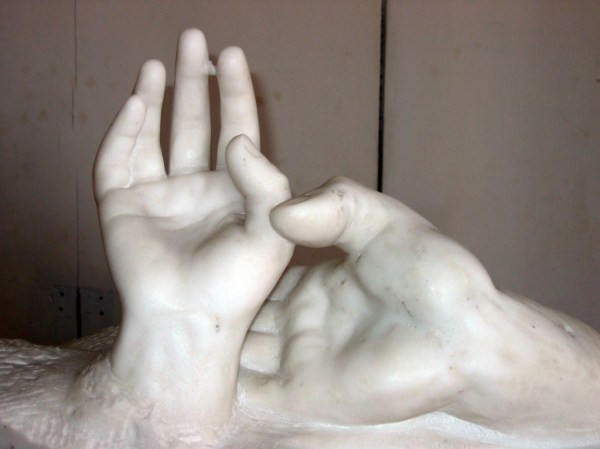
Rodin - Hands (Musee Rodin, Paris)

Image: “Les Mains” par Auguste Rodin

Schopenhauer left Berlin when Prussia rebelled against Napoleon. He never developed strong German patriotic values and sentiments [perhaps never given or found a reason to do so], and always regarded himself more as a cosmopolitan without any strong national affiliation. In that sense we can deduce that Schopenhauer’s vision resonates with the French intellectual heritage because it tends towards universalism; like Montaigne, Descartes and Voltaire, he genuinely had a universal vision of humanity and did not restrict himself to the particular collective frame of mind of a group of organisms conditioned within the limits of a geographical region, which is also similar to the vision of Socrates who said: “I am not an Athenian or a Greek, but a citizen of the world“.

Traduction (EN: “I am not an Athenian or a Greek, but a citizen of the world.” – Socrates

The thinker went into retirement to write his first dissertation called “On the fourfold route of the principle of sufficient reason”, which was published in 1813 and earned him a doctorate at Vienna. The poet Goethe congratulated Schopenhauer, and in return he wrote an essay called “On Vision and Colours” which supported Goethe in his stand against Isaac Newton. But the dissertation, although it won the admiration of Goethe, went practically unnoticed. The author however always considered it the groundwork and essential introduction to his philosophy. Shortly after he published his dissertation, Schopenhauer met an Oriental scholar, Friedrich Majer (1771 – 1818), who introduced him to Indian philosophy and literature. He maintained an interest in Indian philosophy throughout his life, and as an old man, he meditated on the Upanishad, part of the Vedas [the sacred script of the Hindus]. He would later associate his theory of the world of ideas with the Indian doctrine of Maya [to the Indians, Maya is illusion or the world as an illusion]. To Schopenhauer, this meant that the individual subject and object he wrote were “Maya”, all at the end.

For 4 years between 1814 and 1818, Schopenhauer lived in Dresden, which is where he wrote his masterpiece “The World as Will and Idea”. He sent the manuscript to his publishers and left for an art tour of Italy. The book was published the following year in 1819, and although it received attention from some philosophers, it sold very few copies. This was a disappointment to the author who felt sure it contained the secret of the universe.

This failure did not kill his eagerness however, so he returned to Berlin and started lecturing. By now he was 32 years old. He deliberately scheduled his lectures for the hour at which the philosopher Hegel was also accustomed to lecture – planning to compete with the master. But his lecturing career was a failure and Schopenhauer gave it up after only one semester. His ideas seemed at odds with the dominant spirit of the time.

Dolly_the_Sheep

Schopenhauer roamed around a bit and then settled in Frankfurt in 1833, he read European literature and scientific books and journals looking for illustrations or confirmations of his theories. He frequented the theatre and also continued writing, publishing on the Will of nature and winning a Norwegian prize for an essay on freedom. He failed to win a similar prize from the Royal Danish Academy of the Sciences for a separate essay on ethics; they disapproved of his disparaging remarks about other philosophers. These two essays were later published together in 1841, under the title “The two fundamental problems of Ethics”. In 1844, Schopenhauer published a second edition of “The world as Will and Idea”, which contained 50 new chapters. In the Preface, he took the opportunity to make a strong statement of his views about university professors of philosophy, which were of course not admiring.

In 1848 there was an unsuccessful revolution in Germany. A revolution from which Schopenhauer had no sympathy whatsoever. But after the failure of this revolt, people were more willing to consider a philosophy which emphasised the evil in the world which preached the rejection of life for the route of contemplation. Schopenhauer’s popularity was on the rise.

In 1851, he published a collection of essays that dealt with a wide variety of topics, and finally in 1859, he published third edition of the “World as Will and Idea” with more supplements. In the last decade of his life, the author finally became a famous man, all kinds of visitors with all kinds of philosophies came to see him and to enjoy his brilliant conversations. Lectures were given on his system at the University, the very university he has attacked, a sure indication that he had finally achieved success. Schopenhauer has spent a long, lonely life of reflection and only after his works were ignored for many years that he attained fame and reputation. He died in September 1860, at the age of 72.

Schopenhauer by Mitch Francis

Image: Arthur Schopenhauer (1788 – 1860) by Mitch Francis

Schopenhauer, was a realistic philosopher, focused on the raw nature of life: the mental evils and cruelty that lies within man, which he considered inevitable sides of human nature that psychologists view as mental disorders with a negative effect on both the character of the ill mind and the human environment at large exposed to that vile animalistic side of human nature. Schopenhauer’s negative view of man’s behaviour and role in life was a sharp contrast to the other more euphoric and at times unrealistic philosophers who marked the spirits of the generation before him, focussing on a an idealistic and exaggerated side of man’s mind and character.

Although Schopenhauer’s work originally gained little attention at the time it was published [perhaps for being too avant-garde for the atavistic institutions of his time when neither the theory of evolution was known nor evolutionary psychology], he expressed an interpretation of the world that was dragging, and embodied an opposition to the major intellectual figures who had imposed their thought before him: great names in philosophy such as Victor Schelling and Hegel. Schopenhauer opposed their thoughts on important points but did not deny expressions of art such as the romantic movement in its various forms. Schopenhauer who never refrained from publicly criticising people and ideas he disliked was very vocal in his complete contempt for these men, and regarded himself as their great opponent in the ring of the leaders delivering the “Real truth” to mankind and civilisation. Schopenhauer’s work in many ways could be viewed as an extension of another famous German philosopher, namely Immanuel Kant, who preceded him by one generation, delivering his major philosophical work, “a critique of pure reason”.

As a man, Schopenhauer was cultured, broadly educated, eloquent and articulate, witty and conversational, and a very talented writer, but he was also opinionated, egotistical, and often quarrelsome. His remarks about other philosophers were assaulted and his remarks about women in general were so scathing that they had to be deleted from his book by his editor. He was obsessed with the suffering of humanity, but did nothing to alleviate it. He himself made the comment that it is no more necessary for a philosopher to be a saint than it is for a saint to be a philosopher, and he never tried to prove otherwise. But, in the final analysis he was exactly the man he needed to be to write what he wrote.

Arthur Schophenhauer’s pessimistic and grim interpretation of life are not very likely to have come from a man of infallible tolerance or patience, and that interpretation of life played a significant role in the development of human thought and philosophy by keeping the debate open and providing inspiration to viewpoints that forced humanity to re-examine itself yet again.

The “Will to Live”: Schopenhauer’s concept, Human Love, Science & Evolutionary Psychology

The concepts of Arthur Schopenhauer’s major work, “The World as Will and Idea” constitutes the foundations for the future works of major thinkers in both psychology and philosophy. As a modern thinker, it is fundamental to get a good understanding of the core concept that structure the work of Schopenhauer, more precisely his philosophical concept of the “Will To Live“, which is echoed in evolutionary biology [i.e. in Charles Darwin’s theory of evolution, which is widely accepted by the scientific community worldwide]. Schopenhauer was incredibly avant-garde because at the time he composed his philosophical treaty of the “World as Will and Idea”, Darwin had not yet formulated the theory of evolution, which would only be published in 1859 – just one year before the death of Arthur Schopenhauer.

The importance of grasping the concept of Schopenhauer’s “Will To Live” cannot be escaped as that “Will” is also synchronised with our philosophical orientation in regards to desire and motivation for the “Organismic Theory of Psychological Construction“, since it resonates with the fundamental belief of the mind as an active, dynamic and self-generating entity, and this is in the German intellectual tradition of mental life [it was also a founding assumption for Jean Piaget as he developed his Theory of Cognitive Development in Children]. Freud also saw psychoanalysis as a revolution of the mind that had to disturb the consciousness of the world, and viewed the unconscious as a reservoir of impulsive force repressed in the biological depths of the soul – a notion that also relates to Schopenhauer’s “Will To Live”.

When Darwin published his theory of evolution, he was opposed to all the reigning ideas of the times, and faced a lot of criticism from religious scholars as he demonstrated that life appeared on Earth by complete chance and in an absurd manner. Life then developped and became more complex and sophisticated through the process known as natural selection. Darwin radicalised his vision of the world since he would go on to even discard any “Will” and his theory of evolution explains life based on the simplistic mechanic of “natural selection”; for example, natural selection allowed human beings to have organs such as eyes simply because such an organ gave man the ability to escape predators – there is absolutely no “Will” behind this procedure and no finalised plan.

What is genuinely interesting about the philosophical theory of the “Will To Live” in Schopenhauer’s work is that it would eventually come to resonate with the much later works of Charles Darwin. The scientific translation of the “Will to Live” in Schopenhauer’s work is what Darwin called the “struggle for life”. Hence, this connection between Schopenhauer’s thought and Darwin’s theory allows us to understand that for both of them, everything that human beings have inside their bodies is at the service of this “Will to Live” [i.e. survival instinct]. Hence, to acknowledge Schopenhauer’s sharp insight as a truly avant-garde thinker, we have to note that he set the foundations for the field nowadays known as “Evolutionary Psychology at a time when it was inexistent.

What are the principles of evolutionary psychology? Simply to fully extrapolate and firmly apply the logic of the theory of evolution to work out its consequences. The theory of evolution explains that all the organs present in the human body are the simple consequence of the evolutionary process of “natural selection” because those organs allowed the species to survive, i.e. we have eyes, a nose, ears and a mouth because those organs allowed homo sapiens (i.e. humans) to survive. So, evolutionary psychology goes even further to apply that survival and evolutionary logic to develop the school of thought on the foundational argument that, since the brain is also an organ that allowed us to survive, so what mankind has in the mind (i.e. our psychology itself) is also the direct result of the evolutionary process of natural selection. Thus, evolutionary psychology claims that the homo sapien mind (i.e. human psychology) is structured in such a way because it favoured the survival of homo sapiens.

The “Will to Live” what we could also call the “instinct for survival” is a profound force deeply embedded in the biological depths of all homo sapiens. That “Will to Live” impacts behaviour at both an individual level and at the level of the species (i.e. homo sapiens). The will to survive of the species is stronger than the will to survive of the individual – which means that the individual wants to survive but there is an unconscious will which is even stronger in the mind which aims not to ensure the individual’s survival, but to ensure the survival of homo sapiens. If we were to express this phenomena from the perspective of natural selection in Darwin’s theory of evolution, it would explain how nature, over the course of evolution, has selected and favoured individuals who were most apt in showing empathy towards their fellow human beings [e.g. towards their children] because such empathetic behaviour promoted the survival of the group [the species itself].

Schopenhauer pointed out that this “Will to Live” has no specific objective except that of preserving itself; which means that man reproduces life for life itself [i.e. one has children so that those children can have children and their children can also have more children, and so on – an infinite process without any precise objective or end result]. As such, no life has any sense, no life has any precise or known final objective; humans pass down the task of devising sense to the next generation and so on – the question of sense is completely inexistent.

Since, life has no clear final objective and no clear sense, Schopenhauer observed that life is absurd because it is mainly an experience of various kinds of suffering. Hence, his famous formula that life is like a pendulum that oscillates from right to left between suffering and boredom: what does this mean? It means that life is made of desire, and desire is always a lack [e.g. a poor person’s desire to have money results from the lack of money in order to be able to stay alive].

This idea of desire as lack will also be echoed in the works of Jacques Lacan as an explanation to human motivation. Hence, as Schopenhauer explains, lack is a form of frustration and suffering. When a human being desires, that person suffers, and when that desire is satisfied, peace and calmness are obtained and the person is in a state of serenity [for some time], but eventually that state of calmness does not last forever, and boredom soon engulfs the individual because nothing leads to moving forward in that state. It is desire that motivates man, it is desire that allows man to live and move forward, and so man oscillates between suffering [when one desires] and boredom [when a desire is accomplished].

If human psychology [i.e. the mind or psyche] is also direct result of evolution which includes the “Will to Live”, then what purpose do feelings and emotions serve? Much before Darwin and much before evolutionary psychology itself, Arthur Schopenhauer through his meditations asked and answered questions about the purpose of feelings and emotions in the human mind:

– In what way do feelings and emotions help us to survive?

– Is romantic love simply an elaborate illusion at the service of our survival instinct?

All human emotions and feelings are nothing more than illusions at the service of the will to live [or we could say the instinct for survival in evolutionary terms]. What Schopenhauer posits, is that when one understands [i.e. becomes aware] how one is being manipulated by emotions and feelings at the service of the “Will to Live”, it becomes possible to detach oneself from those emotions and feelings. But unfortunately, as Lev Fraenckel points out, detachment also leads the human mind to kneel to the demands of the cold and icy calculations of science in the quest to discard those feelings and emotions manipulating us; that could also compel us to become robotic, mechanical and purely utilitarian in our outlook and behaviour – which nature itself did not design human beings with such a mode of operation. Can we can find a balanced mode of existence to maintain our humanity in a life experienced with emotions while also embracing rationality and reason? This will be elaborated and discussed below in our constructive critique building on Schopenhauer’s foundation while also linking concepts from other disciplines and thinkers.

By the logic of the philosophy of Schopenhauer and evolutionary psychology, human emotions are fake (i.e. a seductive, elaborate and beautiful illusion), because they are simply nature’s manipulation to drive the individual to protect his fellow human beings so as to promote the survival of the species. It is exactly the same for romantic love because we have the impression of following and going after our own individual pleasure and romance when in fact it is also nature’s manipulation (i.e. a trick in the shape of a powerful spectacle of nature inherited through thousands of years of human evolution and natural selection) to push individuals to mate and reproduce – a powerful drive at the service of the will to live (or survival instinct). Lev Fraenckel, the French philosophy professor suggested that as a modern example, we could consider the reason why Jack in James Cameron’s film from 1997, Titanic, went as far as to die for Rose out of love; the reason behind his dramatic sacrifice lies in the fact that he was manipulated by his unconscious at the cost of his own life (i.e. the will to live or survival instinct as nature’s manipulation in the form of emotions that drive man to protect our fellow human beings).

Hence, from Schopenhauer’s perspective and even from the standpoint of evolutionary biology, sexual pleasure is simply a bait used by nature to promote reproduction among human beings [which makes a lot of sense in justifying the presence of sexual drives in human beings and animals alike since without them, a species would be devoid of the desire to procreate and become extinct]. That idea may shed some light on man’s love choices in a fairly interesting manner according to Schopenhauer, since it suggests that a male will fall in love with a female with whom he may hardly care about simply because it serves the interest of our species, i.e. the human race. The male will fall in love scientifically (and in many cases unconsciously, driven by his evolutionary instincts or manipulated by his will to live) with the signs of female fertility, i.e. hips wide enough to procreate and breasts adequate enough to breastfeed.

Image: Des mères allaitant leur bébés / Mothers breasfeeding their babies

In an episode of the French show, Arrêt Sur Image, Sébastien Bohler, the chief editor for the magazine Cerveau & Psycho and doctor in neurology explained how “in general”, men tend to be attracted to females with particularly shaped hips, scientifically caracterised by the waist to hip ratio. It is a value obtained by dividing the waist circumference by the hip circumference, and the ideal waist-to-hip ratio is 0.7 in all cultures apparently (Singh and Singh, 2011). As for females, according to evolutionary logic and Schopenhauer’s perspective, their primary biological instincts tend to make them fall in love with males who bear the apparent signs of virility and who manifest a fairly high level of testosterone in order to ensure the protection and security of the offspring. As such, females are also manipulated by their “Will to Live” towards a particular form of masculinity, which generates the female reproductive instinct.

This allows Schopenhauer to give a strong biological reason to the observation that the rate of infidelity is always higher among men than among women even if it is tending more and more towards equality, but still not the case.

Graphique montrant la démographie de l’infidélité en Amérique / Source: Institute for Family Studies

Logically, going by the physiological limitations of the female body, once a female falls pregnant, it becomes impossible for her to continue reproducing for 9 months; she can only produce an offspring once at a time. As such, it is in her best interest to remain with the same partner. On the other hand, in the male’s case, the dynamic is different, because his physiology does not halt or impose any limitation on his inherited reproductive instinct derived from thousands of years of evolution as a mammal, which allows him the choice to continue reproducing with more female partners. As such, Schopenhauer extracts meaning from this evolutionary logic at every level, and in his line of thought it becomes clear that males are also being manipulated by their survival instinct [i.e. their deeply rooted instinct of sexual selection], which renders them highly reactive and receptive to female signs of fertility, which Schopenhauer points out as the main cause for males’ attraction to young females. The simple and fundamental scientific reason behind such attraction being that the apparent desirable signs of female fertility [i.e. perfect waist-to-hip ratio and adequate breasts for feeding and raising offsprings] are mostly found in young females; although in the modern world, with widespread education about nutrition science, eating patterns, intermittent fasting and fitness, in some societies, for e.g. France, older females are preserving their signs of fertility longer. Fertility after the age of 40 has been rising steadily since 1980 in France.
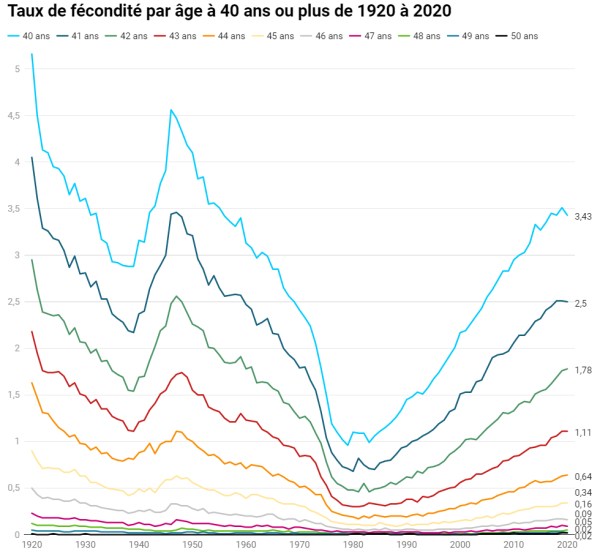
Graphique: Taux de fécondité par âge à 40 ans ou plus de 1920 à 2020 / Source: INSEE
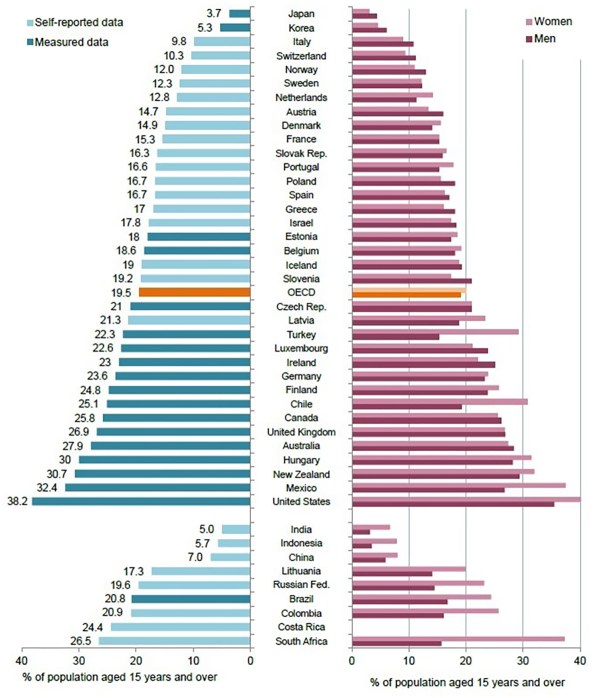
Le graphique présente les taux d’obésité (IMC>30kg.m-2). La moyenne des pays de l’OCDE est de 19,5% d’obèses. Les Etats-Unis, le Mexique, la Nouvelle Zélande et la Hongrie sont les pays les plus touchés avec respectivement 38,2, 32, 4, 30,7 et 30% d’obèses. Le Japon, la Corée, l’Italie et la Suisse sont les pays les moins touchés avec 3,7, 5,3, 9,8 et 10,3% d’obèses. La France est à 15,3% de taux d’obésité (donnée OCDE basée sur du déclaratif légèrement inférieure aux résultats d’ESTEBAN, basé sur des mesures) / Source: Centre de recherche et d’information nutritionnelles (Cerin)

This inherited “Will to Live” or survival instinct in homo sapiens is also one of the reasons why human beings have an instinctive attraction to beauty, since beauty has a biological basis. Human beings are attracted to the averageness and symmetry of faces, and by the harmony of the body because those signs are linked to good health and internal condition. A study carried out in 1994 by biologist Randy Thornhill supported the hypothesis that human beings prefer averageness and symmetry in faces (Grammer and Thornhill, 1994). Thornhill explained that this attraction and the selective criteria biased towards physical beauty has been observed and is also common among animal species; it is now known that symmetry is linked to better performances in terms of reproduction, survival and resistance to disease – we can now conclude that there is a similar pattern among homo sapiens, i.e. human beings.

As opposed to many common opinions, scientifically we find that beauty is not subjective at all because those criteria for sexual selection are similar across all human cultures., i.e. waist-to-hip ratio, averageness and symmetry of faces, and the harmony of the body.

Hence, Schopenhauer’s argument leads to the position that “love”, on the surface as experienced from the individual perspective of human beings, may seem like a romantic ideal, but this illusion is simply the elaborate spectacle used by the “Will to Live” to manipulate our species towards its survival by favouring mating – in order to replicate the lifeform that contains the will. This comes to echo Spinoza’s thought when he said: “Men are mistaken in thinking themselves free; their opinion is made up of consciousness of their own actions, and ignorance of the causes by which they are determined.”

« Les hommes se trompent quand ils se croient libres ; cette opinion consiste en cela seul qu’ils sont conscients de leurs actions et ignorants des causes par lesquelles ils sont déterminés. » – Spinoza / Traduction (EN): “Men are mistaken in thinking themselves free; their opinion is made up of consciousness of their own actions, and ignorance of the causes by which they are determined” – Spinoza

It is very important to not apply those criteria for sexual selection blindly [as we would for animals], to every single individual because human beings with good reflective self-function [i.e. the ability to reflect on conscious and unconscious psychological states, and conflicting beliefs and desires] have the ability to rise above their basic biological instincts and change their internal working models, and consequently their behaviour. However, it would also not be perceptive or realistic to completely ignore the presence of this powerful biological force in homo sapiens, because no matter how much human beings manage to detach themselves from it (i.e. the biologial will to live, or survival instinct), it is embedded through thousands of years of evolution in the biological depths of the human mind and operates most of the time at an unconscious level.

Sigmund Freud’s founding psychoanalytic concept states that intra-psychic conflict within the human mind is inescapable, which is a fundamental concept in psychoanalysis also taken over by the flamboyant French psychoanalyst Jacques Lacan, who also argued that desire is inextinguishable. Psychoanalysis is also founded on the fundamental concept that human beings are driven by forces beyond their own understanding and are a mystery to themselves, with a reservoir of instinctual “psychic energy” grounded in basic biological processes; the sexual form of this energy is referred to as “libido“. The case of Sigmund Freud’s patient Elisabeth von R. illustrated this well: torn on the one hand between her high morality, which dictated that she preserves the balance of her family, and on the other hand her deep erotic desire for her brother-in-law, of which she had been completely unaware of (unconscious). That unconscious conflict provoked a strong feeling of guilt in her such that she started suffering from violent physical symptoms.

Hence, the concept of the deeply embedded “Will to Live” which is accepted as the “Survival Instinct” of homo sapiens in evolutionary psychology, is also echoed in psychoanalysis. The major motivational constructs of Freud’s theory of personality was derived from instincts, defined as biological forces that release mental energy. Psychoanalysis implies that conflict within the mind’s opposing forces is inevitable:

  • i.e. the wild Unconscious (known as the Id or the “Ça” in French, where the “Will to Live” or survival instinct is located) will get into conflict with the Super-Ego (the preconscious or the “Surmoi” in French, which acts as the person’s conscience and the internalization of society’s rules); and the Ego (which is the conscious part of the mind but also with a partially unconscious side) will have to mediate between those two. The Ego now becomes the servant of three masters: the Id, the Super-Ego and the External Environment [Societal Rules]. It is now not enough to reconcile what is desired with what is possible under the circumstances because now the Ego also needs to take into consideration what is socially prohibited and impermissible. Instinctual drives must still be satisfied; which is a constant, however the Ego now attempts to satisfy them in a way that is flexibly “realistic” – that is, in the person’s best interests under current conditions – but also “socially” permitted. In the case of the majority of people, these prohibitions of various kinds are often very unreasonable and inflexible, rejecting any expression of the drive with an unconditional “NO”, either because the moral structures of a particular “culture” are intrinsically rigid, atavistic or unsophisticated, or because the individual’s internalisation of these structures is simply black-and-white, without any grey area to compromise for an adequate and acceptable form of expression of the drive. Thus, the Super-Ego imposes a pattern of conduct that results in some degree of self-control through an internalised system of rewards and punishments.

Intrapsychic conflict within the human mind is inevitable because the demands of society – or “civilization” – are generally opposed to the natural instincts and drives of homo sapiens. Indeed, intrapsychic conflict is one of the fundamental and defining concepts of psychoanalysis, and conflict within the mind is at the root of personality structure, mental disorder, and most psychological phenomena [e.g. artistic expressions of various forms]. The goal of personality is to reduce the energy drive through some activity acceptable to the constraints of the Super-Ego, which represents the conscience of the individual in line with what is acceptable or what can reasonably be made acceptable to society [This has been explained in detail in the Essay, Psychoanalysis: History, Foundations, Legacy, Impact & Evolution]

A explanatory review of the philosophical concept in “The World as Will and Idea”

Arthur Schopenhauer worked out a system in which reality is known inwardly by a kind of feeling where intellect is only an instrument of the “will to live”: the biological will to live and where process rather than result is ultimate.

Schopenhauer’s pessimism lies in his very strong rejection of life. In fact, this rejection is so strong that he even had to address the question of suicide as a solution to life although he never recommended it. He fortunately rejected this “suicidal solution” to life, which reflected influences rooted in Asian philosophy, particularly Buddhism and Hinduism. That is one of the most significant aspects of his work, being the first thinker produced by Western European intellectual heritage to assimilate Asian spiritual thought and leave a lasting impact on the Western mind. His preoccupation with the evil of the world and the tragedy of life is also reflected in ancient Hindu philosophies, and his writings stimulated an interest in Asian thought and religion in Germany, which can also be seen in the work of many later German philosophers.

In “The World as Will and Idea”, Schopenhauer also considered the important question of the function of art in far more depth than any of his predecessors; he even theorised a hierarchy for the arts, grading music, poetry, architecture [etc], from most important to least important. For that reason, his work had a profound effect not only on future philosophers, but also artists, particularly poets and composers, such as the enigmatic Wagner, who felt indebted to him and sent him a letter of gratitude when he was first introduced to Schopenhauer’s work.
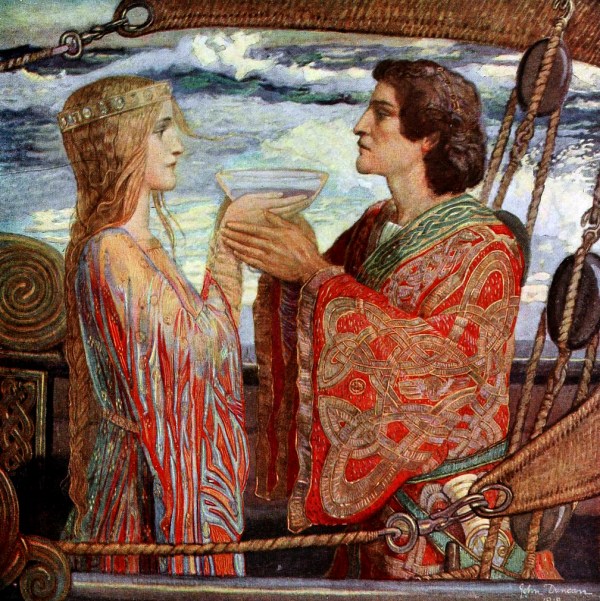
Tristan und Isolde (John Duncan 1912 Symbolism)

Image: Tristan et Isolde (1912) par John Duncan

It is believed that Wagner’s popular opera “Tristan und Isolde” in particular, shows Schopenhauer’s influence as a philosopher who believed that music was the highest form of art, an idea that of course, Wagner found pleasing, and so the composer began to think of himself as a prime example of Schopenhauer’s concept of a genius.

People in other fields of the arts were also influenced by Schopenhauer, including the novelist Thomas Mann. Schopenhauer’s ideas had the unique ability to influence not only philosophy but many other fields of human endeavour and expression. Within philosophy itself, Schopenhauer’s intellectual originality cannot be classified or allocated to a specific school of thoughtper se”, but his influence stimulates other philosophers towards a particular line of thought, which logically varied from one individual to another in terms of their response to Schopenhauer’s writing. The latter’s writing had a major impact on the enigmatic Friedrich Nietzsche, who was also a friend of Schopenhauer’s admirer, Richard Wagner.

Nietzsche shared the belief that life is tragic and terrible but can sometimes be transformed through art. Nietzsche was also the thinker famous, for his concept of the “Overman”. Unfortunately, Nietzsche’s writings and thought was taken out of context by his sister after his death to fit the ideologies of the Third Reich of Adolf Hitler. The “Overman” is in fact universal and not simply nationalistic as the true writings revealed after many scholars rejected the falsified and manipulated versions published by Nietzsche’s sister, Elizabeth [This was portrayed in Hedwig Schmutte’s documentary Nietzsche: Entre Génie et Démence, released in 2016].

Nietzsche’s concept of the Overman states that man is something that must be surpassed. That idea resonates strongly with Schopenhauer’s “Will to Live” (i.e. the wild survival instinct) as something that man must overcome, since those basic animalistic instincts along with other social distractions prevent man from becoming the Overman. Nietzsche’s philosophy sees the elevation to the state of the Overman as the result of one who rises above one’s lowest instincts and habits to reach a higher state of consciousness, in doing so, establishing a distinction from the mass mediocrity of the herd.

Those three names, Schopenhauer, Wagner and Nietzsche are often linked and are associated at times, through no fault of the men themselves with the controversial period of human history that saw the National Socialist regime come to power in Germany with unscientific ideologies and inhuman policies.

“The World is Will and Idea” begins with the famous line, The world is my idea when Schopenhauer says the world is his idea, he is referring to the relationship between an “object” and “the subject” [i.e. The person (subject) who perceives (or senses) the object and extracts meaning from it]. As an example, he did not mean that an apple is identical with your abstract concept of an Apple, he means that the apple as perceived by you exist only in relation to you as a person [the subject] who perceives it; its reality is only in what you perceive, it is what you perceive it to be so.

La Pomme Pourrie (Rotten Apple)- Apparence & Personalité d'purb dpurb site web

So, the world is my idea means that a whole visible world and its sum of total experience is simply “object” for a “subject”, its reality consists in the interpreted perception by a subject.

This theory of the world of idea was taken and developed from Kant’s philosophy, but the second part of Schopenhauer’s philosophy “The World as Will” is completely his own and expresses his very unique interpretation of human life. Briefly, this interpretation says that the will, i.e. “the will to liveis the strongest force in man and everything else is subordinate to it. Schopenhauer’s conception of the supreme wisdom of life lies in the ability of man to reject the irrational force in this “will to live” and escape from the tragic results of it.

The world is my idea. This truth applies to everything that lives and knows, but only man can reflect on it and bring his abstract consciousness to it. It becomes clear to him when he looks at the sun that what he knows is not a sun, but an eye that sees the sun, not a nurse but a hand that feels the earth. This truth is by no means new, it was a fundamental text of the Vedanta philosophy of the Hindus, it was also part of the reflections of the French philosopher René Descartes and finally it was also clarified by the philosopher George Berkeley – although neglected by Kant. But this view of the world as idea is one-sided and must be balanced by another one which is the impressive and awful truth that the world is my “Will”.

The world has necessary hands, the subject and the object. The object and the subject that perceives that object operate together. If one were to disappear, then the whole world would cease to exist. All objects have universal forms and either space, time and causality or the relation of cause and effect as Kant has demonstrated, they may be discovered and known apart from the objects in which they appear, as an expression of reason or the principle of sufficient reason. But what if our whole life is but a dream, or how do we distinguish between dream and reality? Kant tried to answer this question by stating that the connection of ideas, according to the law of causality, constitute the difference between them. But the long life dream in distinction from our short dreams has always had complete connection, according to the principle of sufficient reason. We are such stuff as dreams are made of and our little life is rounded with a sleep.

Life and dreams are leaves of the same book, the book we read through and the one whose leaves we turn idly to read a page here and there. Any system of philosophy that starts with the “object” has to deal with the whole world of perception, the most consistent form of these philosophies is simple materialism; which regards time and space and matter as existing absolutely. It ignores the object’s relationship to the subject (as perceived by it) in whom these ideas exist, then it takes a law of causality as its guiding principle: causality exists by understanding alone. Materialism seeks the most simple states of matter and then tries to develop all other states from it. It ascends from mere mechanism and chemistry: the chemical properties and attractions of objects. It ascends to vegetable and animal life, to sensibility and thought. But, the thoughts and knowledge reached through materialism in a long, laborious process, assumed from its starting point that there was a subject or perceived matter: eyes that side, hands that felt it and understanding that knew it.

The system of philosophy which opposes this materialism is idealism, which instead starts with the subject and then tries to derive or reach the object from the subject, but it overlooked the fact that there can be no subject without an object, like materialism this idealism begins by assuming what it is supposed to prove later.

The method of Schopenhauer’s system is different from both materialism and idealism, for it starts from neither object nor subject, it starts from the idea. The idea is the first form of consciousness and its essential form is the antithesis or opposite of subject and object. For each one of us, it is our own body that is the starting point in our perception of the world, and we consider it like all other real object, simply as an idea.

The understanding which develops ideas could never come into being if there were no simple bodily sensations from which to start. If the thinker were no more than a pure knowing subject without a body like a winged cherub that is all spirit, he would not be able to know the nature of the world. He would be like a man going around a castle getting to its façade and trying in vain to enter it, all reality would be a riddle.

But because the subject of knowledge is also an individual with a body and a bodily nature, the world becomes revealed, it is revealed in the will. Every true act of the will is a movement of the body for the action of the body is nothing but will expressed through an object. The body is the object, my body and my will are one. The double knowledge which each one has of his body out of idea and inner will becomes the key to the nature of the world. Phenomenal existence, the existence we perceive with our senses, is an idea and nothing more. Real existence or the thing in itself is the will.

die welt als wille und vorstellung

Will is a term that applies to both the highest and lowest in man’s nature, it is that which drives us to pursue the light of knowledge and it’s also that which in nature strives blindly and dumbly to survive. Both come under the common name of will, just as the first dim light of dawn in the rays of the full midday are both called sunlight.

If we consider the impulse with which water hurries to the ocean, or the way in which a magnet turns to the North Pole, or the eagerness with which electric poles seek to be united, or the way a Crystal takes form, we can recognise our own nature, for the same will describes the inner nature of everything that is in the world. The world as will is one, it knows nothing of the multiplicity of things in the outer world: the world of perception, the world of time and space. Notions like more or less, don’t exist to it, it knows nothing of quantities or qualities. For this reason, it cannot be said that there is a small part of the will in a stone or a large part of the will in a man. Relations like this between part and whole belong to the idea of space which does not apply to the will.

In reality, the will is present in its entirety and undivided in every object of nature and in every living thing. Yet in terms of its objectification, that is, its external expression, it has different grades in inorganic matter, in vegetation, in animals and in man. The lowest of these appear in the most universal forces of nature, in the form of gravity, rigidity, elasticity, electricity and the like, which are in themselves manifestations of the will, just as much as human actions are. The higher grades are seen in man where the will takes the form of individuality and consciousness. It is here that the will shows its second side. For in the human brain lies the potential of comprehending the will, so that as it is kindled by a spark it brings the whole world as idea into existence. In this manner, knowledge proceeds from the will, knowledge that is either from the senses or is rational and is destined to serve the will in its aim of expressing itself.

In all beasts and in most men, knowledge remains in subjugation to the will, yet in certain individuals, knowledge can free itself from this bondage to the will, so the subject of knowledge exists for itself as a pure mirror of the world. As a rule, knowledge remains subordinate to the will and grows on the will [so to speak] as a head on the body. In the case of the beast, the head is directed towards the Earth where the objects of its will are. But in the case of man, the head is elevated and set freely upon the body as in the Apollo Belvedere where the head of the guard stands so freely on his shoulders that it seems delivered of the body and no longer subject to it.

The Apollo Belvedere (Ancient Sculpture) - Vatican Museum - Roma

Image: Apollo Belvedere (Sculpture Ancienne), Musée du Vatican, Rome /Apollon est le dieu grec des arts, du chant, de la musique, de la beauté masculine, de la poésie et de la lumière. Il est conducteur des neuf muses. Apollon est également le dieu des purifications et de la guérison, mais peut apporter la peste par son arc ; enfin, c’est l’un des principaux dieux capables de divination, consulté, entre autres, à Delphes, où il rendait ses oracles par la Pythie de Delphes. Il a aussi été honoré par les Romains, qui l’ont adopté très rapidement sans changer son nom. Dès le ve siècle av. J.-C., ils l’adoptèrent pour ses pouvoirs guérisseurs et lui élevèrent des temples.

The transition from the individual’s knowledge of particular things to the knowledge of the idea takes place suddenly. It happens when the knowledge of the will changes someone into a pure will-less subject of knowledge, contemplating things as they are in themselves. If raised by the power of the mind, a man leaves the common way of looking at things behind and forgets both his individuality and his will, then he becomes a pure “without will”, timeless and painless subject of knowledge – this appears in the genius; because when Genius appears in a man a far larger amount of the power of knowledge comes to him than is necessary for the service of his will. This extra knowledge is free and purified from will: a clear mirror of the inner nature of the world.

All willing arises from want (desire). The satisfaction of a desire ends it, but for one wish that is satisfied, there remain 10 which are denied. No attained object of desire can give lasting satisfaction, for it is likely alms thrown to a beggar that keep him alive today so that his misery may be prolonged tomorrow. Attending to the demands of the will continually occupies and influences our consciousness. But when we are lifted out of the endless stream of willing, we can comprehend things free from their relation to our will without any personal interest or subjective opinions, and then the peace we have been seeking comes of our own accord. For we are, at least for the moment, set free from the miserable striving of the will – the wheel stands still. There is no more slavery to the will.

It is the function of the fine arts to express this freedom from the will: the different grades along the way. Matter as such cannot be an expression of the idea, but when it is expressed through a form of art like architecture (its characteristics of gravity, cohesion and hardness), the universal qualities of stone appear as a direct but low grade of the objectified or expressed will. In the building, nature reveals itself a conflict between the gravity of the building and the rigidity of the structure of the support, as in the simplest form of a column. The problem of architecture, apart from practical utility, is to make this conflict appear in a distinct way so that the building material instead of a mere heap of matter bound to the earth is raised above it, so that the roof for example is realised only by the means of the columns or arches which support it. The pleasure that comes from looking at a beautiful building lies in the fact that the viewer is set free from the knowledge which serves the will and is raised to the kind of knowledge which comes from contemplation that has no will.

Woman and Man Roman Sculpture

The highest grade of the expression of the will is found in anything that reflects human beauty in a way which reveals the idea of man. No object transports us so quickly into will-less contemplation as the most beautiful human form. We know human beauty when we see it, but true artists can express it so clearly that it surpasses even what we have seen. In the genius of a sculptor, we find a representation of what nature intended to express, so that if you were to present his statue to nature, he would say “This is what you wanted to say!”

danaide-le-baiser-par-auguste-rodin

Image: “Danaide” & “Le Baiser” par Auguste Rodin

In order to detach oneself from the “Will to live” which imposes suffering and meaningless striving, art plays a major role for Schopenhauer; the artist is not locked in a utilitarian relationship with the functional world, i.e. that of the “Will to Live”, but on the contrary, the artist will produce objects that have no functional use but that are simply beautiful. Schopenhauer defined beauty as a biological attraction for good health (i.e. the symmetry of the face, the harmony of the body, etc), and so we are still at the service of the desire imposed by the “Will” for reproduction. However, the artist will gain the ability to detach beauty from its functional goal (i.e. of reproduction): we can find the above sculptures by Auguste Rodin, “Danaide” and “Le Baiser” exquisitely beautiful, but we know that nothing concrete biologically (as desired by the “”Will”) can happen between oneself and those works since they are not living organisms. Hence, Arthur Schopenhauer noted that the artist does not participate in this tragic comedy of existence which consists of reproducing life at any cost, but instead, the artist is uninterested and produces objects of beauty in a completely uninterested frame of mind.

Painting as an art has character as well as beauty and grace for its object, for it attempts to represent the will of the highest grade in the idea of humanity. This, however, can be an abstract form of the concept known as the picture attempt [as it does at times an allegorical painting] to represent something other than what is perceived.

In poetry the relationship is reversed, for here what is given directly in words is the concept that leads readers away to the object of perception, this is done through metaphors, similes, parables, allegories and the like. The aim of all poetry is the representation of man. When it is a representation of the poet himself, we have the lyric. The lyric poet reveals himself in joy or more often grief as the subject of his own will, but along with this as the sight of nature impresses him, there is the awareness of himself as the subject of pure will-less knowing, and his joy now appears as a contrast to the stress of desire: desire imposed on him by his will. Epic poetry portrays man in a more historical context in connection with significant situations in human life. Drama in the form of tragedy is not only the best of poetic art, but the most significant in terms of this system of philosophy because it is the strife of the will represented at its highest grade of objectivity, it becomes visible in human suffering that is brought about by fate or error or wickedness, in which the will lives on while people fight against and destroy one another. The tragic effect in poetry may be produced by means of a character of extraordinary evil such as Iago in Othello or Creon in Antigone or by blind fate as in the Oedipus Rex of Sophocles or by circumstance and the situation in which the character finds himself such as Hamlet. In the tragic character we can observe how the noblest of men – after a long personal conflict and inward suffering – come at last to renounce the pleasures of life and the particular goals once so keenly fought for, instead the character joyfully surrenders to life itself. It is in this sense that Hamlet renounces life for himself but askes Horatio to remain a while and to – in this harsh world – draw his breath in pain to tell Hamlet’s story and clear his name.

Shakespeare's Hamlet Tragedy

Beginning with architecture, in which gravity and rigidity reveal the lowest grade of the conflict of the will with itself and ending with tragedy where this conflict reaches its highest grade, we have considered the arts and how they represent the will and the idea, but music stands quite alone, cut off from all the other arts, since it’s not a mere copy of any idea of existence in the world.

Music is as direct an expression of the whole will as the world itself is. Nature and music are two different expressions of the same thing, and so music speaks a universal language.

Traduction(EN): “What we could not say and what we could not silence, music expresses.” -Victor Hugo (1802 – 1885)

In the deepest tones of harmony in the bass we recognise the lowest grades of the will, for bass is in harmony with the crudest matter on which all things rest and from which they originate. The higher complimental parts of music are parallel with animal life and in the melody of high voice singing we recognise the high grade of the will in the effort and intellectual life of man.

The pleasure we received from beauty, the consolation we get from art and the enthusiasm of the artist, rest on the fact that whereas existence in the world is something sorrowful and terrible, the contemplation of the world as idea is both soothing and significant. But in the case of the artist, the contemplation of beauty doesn’t quiet the will and it doesn’t provide a pathway out of life as does the resignation of the saint. The deliverance from the will only occurs when – tired of the game – one renounces life and gets a grasp on what is real.

When the will – this blind and incessant impulse of nature – becomes conscious in man, it is recognised as the will to live. Man may affirm or deny it. He affirms the will to live when – having seen it as that which has produced nature and his own life – he then adds his own desires to it. The denial of the will to live occurs when the awareness or consciousness of it means the end of desire. The phenomena of the world – what we see and perceive – no longer motivates the will, for the comprehension of the world as idea has freed the will and allowed it to be silent.

It the essential nature of the will: nowhere free and everywhere powerful – to strive endlessly towards satisfaction that it is incapable of getting. Just as in nature, gravitation is the ceaseless striving towards a mathematical centre and this striving will not stop even if the whole universe were rolled into a single ball. In the same way the solid will become a fluid, the fluid will become a gas, and the plant – restless and unsatisfied – will strive through ascending forms until it goes to seed where it finds a new starting point.

All nature is a struggle in which war is waged that is deadly to both sides. All striving is in vain, and yet it cannot be abandoned and all this is identical to what appears in us. In us, the blind striving of nature becomes the will to live, but it is self-conscious will: we are aware of it! The fate of this will is in keeping with its striving nature in the face of constant obstacles and hindrances, and anyone who will consider the character and destiny of the will to live, will be convinced that suffering is essential to all life.

“Sadeness Partie I” par Enigma / Album : MCMXC a.D. (1990)
Ad Augusta Per Angusta

Translation (EN): “Has grandiose results by narrow lanes” / Source: Le Petit Larousse 2018 / Les locutions étrangères gravées dans nos mémoires ont la magie des formules oubliées dont le charme va croissant lorsque l’alchimie des mots nous est plus mystérieuses. Elles ont l’autorité de la chose écrite. / Mot de passe des conjurés au quatrième acte d’Hernani, de Victor Hugo. On n’arrive au triomphe qu’en surmontant maintes épreuves.

From where then did Dante take the materials for his hell? From the world! And when it came to describing the delights of heaven he had an insurmountable task, for the world could offer him no proper material. The fatal assertion of the will to live has produced man’s body and the desire to preserve and perpetuate it. So the assertion of the will is really the assertion of the body. In such assertion, we find the source of all egoism and all wrongdoing, but such selfhood is really an illusion due to a false philosophy in which the individual imagines he lives to himself alone. He is really only a product of the one will to live. Just as a sailor sitting in a boat trusting to his frail barque in a stormy sea, so it is that in the world of sorrows man sits quietly, trusting to the principle of individualisation and separateness, in which he only knows things superficially or as they appear to him, but when he comes to understand that the one will to live exists in all men alike, he realises that the difference between those that inflict suffering and those that bare it is only a perceived difference that is not real.

Eugène_Delacroix La Barque de Dante (1822) d'purb dpurb site web.jpg

“La Barque de Dante” par Eugène Delacroix (1822)

In truth, the evil man is like a wild beast, who frenzied and excited, unintentionally buries its teeth in its own flesh, injuring itself as it tries to injure another. But no matter how veiled and evil man is by illusion, he still feels the sting of conscience, which creates a sense that the gulf which seems to separate him from others isn’t real.

As all hatred and wickedness rely upon egoism and as egoism rest on the assertion of the will to live, so do all goodness and virtue spring from the denial of the will to live. The will turns around and no longer asserts itself but denies its own nature instead. Man then denies his own nature as expressed in his body and no longer desires sensual gratification under any condition.

Voluntary and complete chastity is the first step in the denial of the will to live. But then the human race would die out, and with it the mind in which the world is reflected, and without a subject of knowledge, there would be no object, there would be no world. To those in whom the will to live has turned and denied itself [miserable and utterly dead inside], this world of ours with all its sun and milky ways is nothing.

These are some of the ideas and the basic themes presented in Schopenhauer’s “The world as Will and Idea”, a very lengthy work that of course includes many other ideas and elaborations of the ones we have mentioned. But the essence and main thrust of Schopenhauer’s philosophy can be found in a few basic points.

To begin with, he sees the will of man, and specifically the will to survive as the dominant force in the universe and slavery to this will is the root of all evil. Man and all other creatures are subservient to their will to live. In exercising his will, man inflicts all kinds of cruelties and evil. Schopenhauer first examined these cruelties in the world of nature, spending a lot of time on the way in which animals of one species prey on those of another. Then he moved onto man and says, “the chief source of the most serious evils which afflict man is man himself”. Whoever keeps this last fact clearly in view, sees the world as a hell which surpasses that of Dante through the fact that one man must be the devil of another. Schopenhauer uses war and various other cruelties such as industrial exploitation, bravery and social abuses to back up his claim.

Schopenhauer had no sympathy for the revolution of his time because he felt the state was justified, exactly because of the cruelty of man. It existed to make the world a little more bearable than it would otherwise be. He did not consider the state government divine, but he considered it necessary [a view he may have been willing to revise had he been alive in the 21st century with democracy falling apart and not being properly applied, leading to evil, unethical, unscrupulous and unskilled street politicians getting into positions above their understanding – forgetting that they are the servants of the people and instead believing that they should have power over the people].

Schopenhauer believed that we can take action to alleviate human suffering but that it is pointless to think that we can change the fundamental character of the world or of human life. If war was abolished for instance and if all of men’s material needs were met, they would eventually still resort to conflict – “it is their nature”. He is quick to condemn the optimism or idealism of other philosophers who disregard the ugly side of human nature, or who try to justify it as rational. To Schopenhauer these dark aspects of life were not secondary feature, they were the most significant aspects of human life in history. On this basis, he created his theory of The Blind and Striving Impulse, he called the Will. Then, he looked around and found support for his theory in the inorganic, organic and human phenomena of life.

Unquestionably, Schopenhauer held a one-sided vision of the world, but because of its one-sidedness and exaggeration it served as a counterbalance to philosophers like Hegel who focused attention on the glorious triumph of reason throughout history and he tended to dismiss evil and suffering with elaborate, evasive, phrasing. He did believe that the human mind could develop beyond what was required just to satisfy his physical and material needs; it could develop a surplus of energy over and above what was needed to fulfil its biological function. When that happened, man can use the extra energy to escape the life of desire and striving, of assertion of the ego, of conflict, none of which brings him satisfaction anyway.

Schopenhauer did offer 2 ways of escape from the slavery to the will:

(i) one was the path of contemplation, which is the way of art;

(ii) and the other was the path of asceticism, which involves renouncing the world in one’s personal desires or will (i.e. to completely get rid of the “will to live”). Man must stop willing to live, not only at the level of our species but more importantly at the individual level.

In transcending the Will through art [expressing it with insight], Schopenhauer was very specific about which art forms served what purpose, and in defining which were superior to others. Not surprisingly, the supreme poetic art is tragedy, for tragedy reveals the real character of human life expressed in dramatic form or as he said the unspeakable pain: the wail of humanity, the triumph of evil, the mocking mastery of chance and the irretrievable fall of the just and innocent.

However, art and contemplation, besides reflecting on the evil of life, can also open a door that becomes perhaps the only hopeful point in Schopenhauer’s entire book. This door is opened when man can see through the veil of Maya [illusion]. That is precisely where Schopenhauer finds much inspiration from hinduism and buddhism; in those philosophies of Asia, there is the notion that in order to attain the state of nirvana, one must extinguish the “will to live” and thus one’s irrational desire, which is simply a form of manipulation that is referred to as “Maya”. We find this idea resumed in the four noble truths of Buddhism.

Maya, being the Hindu concept for the illusionary nature of the world and life. It is Maya [i.e. the illusionary manipulation of the will to live] that causes one to see separateness and division where there is none. Schopenhauer observed that man had the intellectual capacity to develop gradually a site that penetrated this illusionary manipulation that is Maya. He raised some very important questions:

– What is the purpose of achieving such virtue?

– What happens afterwards?

To start with, the man who denies the Will treats the world as nothing, for the world is just the appearance of the will, which he denied. So it is true that when we discard our will to live, it is a scenario when the will denies itself, and when this happens our world with all its sun and Milky ways means nothing! But then what happens at death? Schopenhauer is convinced of the finality of death. “Before us”, he says “there is indeed only nothingness”. Death or the withdrawal from the world means the extinction of consciousness. In life, he reduces existence to thin thread, and at death, it is finally destroyed.

The man who denies his will to live reaches the final goal, which is to not live. This is where Schopenhauer finds strong inspiration from Asian spiritual philosophy, more precisely in Buddhism, which is to say that when one renounces the “Will to Live”, life becomes much more enjoyable and serene. This is a powerful remedy since it allows us to put all our suffering into perspective when we are at our worst [for e.g. in deception in love matters when one realises the feelings are simply the manipulation from the will]. However, like all great remedy, extreme abuse can have a negative effect since we can overdose on them, which would lead us to completely shut down our “Will to Live”, and that can lead to suicide because human experience and life itself would lose all meaning and taste: no desire and no motivation. A clinical investigation among community-dwelling older adults in the US found that the will to live decreases with age, and that decrease in the “will to live” predicts depressive symptoms (Carmel, Tovel, Raveis and O’Rourke, 2018). However, those older adults studied were not meditating from a conscious desire to extinguish their will to live, and as such developped depressive symptoms.

Image: Image: Dieu hindou, Seigneur Shiva en méditation [Shiva est le dieu de la destruction, de l’illusion et de l’ignorance. Il représente la destruction mais le but de celle-ci est la création d’un nouveau monde. Voir :History on Western Philosophy, Religious cultures, Science, Medicine & Secularisation]

Individuals who consciously extinguish their will to live after firmly acknowledging the belief that it is the source of their suffering will not feel depressed, but will instead reach a different frame of mind; and with it, a different model of perception. We find that some people sometimes known as “Gurus” in deep meditation in Asia [where Schopenhauer adopted the concepts of Hinduism and Buddhism] are often barely dressed, sitting under the trees and surrounded by nature, in a meditative trance in the posture of the hindu god, Lord Shiva. It appears that their consciousness has been elevated to a point unachievable to the majority of people who are fully under the powerful control of their “Will to Live” and conditioned to the modern civilization of industrialized capitalism, i.e. the majority of Westernized societies all over the planet nowadays. In some regions of Asia (particularly India), those enigmatic figures are treated as living legends as close to gods, where the common people even go to touch their feet and then their own heads, as an act of taking their blessing; which is different from most of the modern societies of our Westernized planet, where the complete opposite to these kinds of individuals are treated as the model of the perfect man, for e.g. billionaires on the covers of magazines.

When extreme meditation allows such spiritual individuals like we find in Asia to detach themselves from the “Will to Live”, the whole world of perception changes within the mind and every single object that structures modern life [that to most people conditioned to the modern materialistic world gained a particular meaning that was passed on to them through their parents, teachers, the media, the government or books] loses meaning to the individual who goes to the extreme and extinguishes his will to live; the way his mind experiences life changes [i.e. perception and interpretation of everything in our world]. Those kinds of people may turn into passive lifeforms as close to plants and the very atoms that constitute every single particle in the universe, completely in harmony with nature and the cosmos, since they would find no meaning in life as defined by the industrialized world; they would have no desire and no motivation unlike most people, since by extinguishing their “Will to Live”, they renounced the suffering that comes with desire, and life is made of desire which is a lack, and lack is a form of frustration and suffering. That path may partially fit the direction of Nietzsche’s “Overman” in the search for nirvana.

Reaching such extreme levels of consciousness by rejecting the “Will to Live”, detaches the mind from all external influence in interpreting the universe and life, it can also lead to seeing everything simply as atoms, which constitute the whole universe, and hence generating the feeling of being one with the cosmic reality of the universe. In the case of organic life, which includes, plants, animals and human beings, those too are simply atoms [i.e. dust from the universe] that have gathered into living cells simply because the atmospheric conditions on Earth allowed such transformation. From such perspective, human consciousness is simply the product of the brain, which is the organic matter resulting from the assimilation of atoms from the universe expressing themselves through the limited senses of the human body.

Schopenhauer does leave one last hope beyond the grim disappearance of consciousness and of the world, admitting that it is possible that ultimate reality, which he called the thing in itself may possess attributes that we do not know about and that we cannot know. That reality would not be a state of knowledge since there would not be a subject and an object [that phenomenal and illusionary relationship that is required for knowledge], but it might resemble some experience that cannot be communicated and to which mystics refer to, but only in obscure vague ways.

In the end, like all great thinkers are expected to, Arthur Schopenhauer admitted that he did not have all the answers, but he thought he had some. Ultimately, it is the questions his answers posed to others that became his most significant contribution, for the role of the philosopher and of philosophy itself is not only to solve our problems, but also to express points of views that stimulate us to further thought and consideration on human nature and the meaning of life, in that, he was incredibly successful.

Schopenhauer sur Le Style

“Style is the physiognomy of the mind. It is a more reliable key to character than the physiognomy of the body.” – Arthur Schopenhauer

­­­

Concluding Thoughts on “The World as Will & Idea”

One of the interesting aspects of Schopenhauer’s philosophy is that it is in a fairly strong resonance with science, i.e. the theory of evolution, which is accepted among the scientific community, and it also set the groundwork for the field of evolutionary psychology. In that aspect, the philosopher was incredibly insightful and avant-garde.

Schopenhauer’s philosophical framework empowers individuals by providing a mode of thinking and perception that acts as a the tool to rise above grief & sadness from the many tribulations of life, especially love matters.

The concept behind the “World as Will and Idea” can become a very strong remedy for people depressed and weakened by love deceptions because Schopenhauer’s foundational framework clearly explains that those emotions and sentiments are simply an illusion (i.e. a manipulation) at the service of one’s survival instinct or “Will to Live”. Schopenhauer strenghens the individual by giving the individual the awareness of this manipulation of nature and hence the ability to rise above, discard and become detached from those feelings and emotions to heal their pain.

This is quite ironic, because while many personal development coaches advise us to reinforce our “Will to Live” to be better in life, the philosophy of Schopenhauer orients us towards the complete opposite, but only after developing the awareness of the consequences of renunciation that such action can lead towards personal empowerment. However, precautions must be taken to not completely extinguish our “Will to Live” since it can lead to suicide if we are not firmly aware of its implications and ready to cope with the life it imposes.

Schopenhauer does not recommend killing oneself even if he does not condemn the act in some texts – he even describes suicide as nonsense. However, he does not hide his admiration for the courage of the Hindus who go as far as to offer themselves as food to the crocodiles, or allow themselves to die of starvation voluntarily, or even throw themselves from the top of the Himalayas – as such the philosopher saw the end of life as a solution to the incessant suffering imposed by the will to live but did not openly promote or propose it as a complete solution the wider human population. It appears that those people who consciously end their lives, have extinguished their will to live after coming to terms with the fact that life is a state of various kinds of suffering and also an endlessly replicating cycle without any clear end result, i.e. living or not living has absolutely no impact on the state of things in the universe. No matter how far human civilization goes [for e.g. colonizing planets in the universe], the same cycle will be repeated endlessly without any clear end objective, i.e. human beings would replicate everything on Earth on those planets and continue to mate, reproduce and pass down the task of finding sense to life to the next generation; we would invest tremendous resources to reach other planets [e.g. developing artificial intelligence, creating sophisticated and articulate androids with human-like capabilities, developing cryogenics or some other technical solution to survive journeys that may last from 50 to 100 years or more], and once there, we would build houses, roads, restaurants, shops, an economic system, create jobs, etc.

In the case of people who become completely aware of the manipulation imposed on human experience by the “Will to Live” and make the conscious choice to extinguish it completely, the continuity of the human race or the survival of his fellow humans have absolutely no importance or meaning since life has no sense to such a being because it simply replicates for the sake of replicating itself – in the cosmic order of the universe we are nothing but atoms, or space dust.

The final and fundamental powerful point to keep is that thanks to Schopenhauer’s philosophy, we can at any moment we choose to detach ourselves from all of the most violent emotions and feelings that inhabit our thoughts simply by reminding ourselves that our “Will to Live” (i.e. survival instinct) is simply manipulating us.

A constructive critique for joie de vivre & progress

A reason to live for the human race

We can base ourself on the observation that if atoms from space dust in the universe collected on a very specific planet known as Earth where the atmospheric conditions are perfect to allow the transformation of those atoms into living cells which over thousands of years became more complex to eventually give rise to human beings, then there must be a hidden force that lead to this creation. In that sense, we can also question this creative atomic force and meditate forever about the reason behind our creation. The explanation from the Christian bible about the creation of man by The Lord God from the dust of the ground comes across as a great metaphor since all life is made from matter.

Some people may link this creative force that sparked life on our planet to the notion of divinity and the process of creating life. So, on that issue if we were to allocate reasons behind every form of creation, we can assume that the cosmic forces of the universe had a reason for creating humans and as such, those forces that may be linked to the divine creation and wanted us to live, and may have planned for us to achieve some form of task in the story of the universe. This, I believe, makes a case for the human race to value surival and continuity, even if we are unaware of any final objective or final result that our continuity will lead to. Perhaps one day, we will understand why we were created and why we are the most sophisticated lifeform on this planet, unmatched in terms of intellectual abilities by no other species known to date.

The Right to Choose a Mode of Existence

Every individual should have the right to choose how to experience life and it would be extremely arrogant to impose a particular model of living or a particular mode of existence as the ultimate way of being. If an individual chooses to restrain his “Will to Live” to the limits of extinction and wishes to experience life through his organic body in a minimalistic and spiritual way as some people in Asia do, then it is a choice as valid as any other, moreover those people are not asking anything from others and are not imposing this mode of existence of humanity; it is a matter of personal perspective and desire in line with a vision to discard what some see as an existence of suffering and desiring endlessly in the industrialised world. Whatever the reasons behind the choice of an individual to live such a minimalistic life by repressing their “Will to Live” [or survival instinct], as long as it is personal, it should be respected. Among those personal reasons, may also be the choice to not replicate life to endure various forms of suffering, and this may be a reasonable and admirable choice for individuals who unfortunately are not in the best conditions due to a range of factors, to bring a new life into this world and provide it with the best chances to prosper and live a fulfilling existence.

According to the epicurean school of thought, pleasure is the absence of suffering, and in order to stop suffering, it is a duty for individuals to question whether it is fair to create life when the conditions awaiting mean struggling through various kinds of hardship.

There is only a limited amount of living space on our planet, and the issue of population growth being mismanaged and unrestrained should be a great topic of concern for humanity to reflect on as the world begins to deal with the question of over-population which will only cause extreme mass suffering when also having to deal with the problems of climate change that will lead to many catastrophic environmental disasters in the future (e.g. limited resources to feed a dangerously growing population). For example in many poor regions on the planet, for e.g. Africa, the population growth has been steadily increasing despite the lack of resources to provide an adequate and respectable standard of living to the new born, who come to the world only to suffer due to the lack of family planning. Hence, this topic should be the concern of all respectable community leaders, and should raise the urgency for providing education about family planning.

A Sense of Concern for the Survival of Homo Sapiens

Complete detachment from our feelings and emotions once an individual extinguishes the “Will to Live” can lead to suicide, which is nonsense. Complete detachment may also lead to a mind that is stale and completely devoid of any form of reaction to any external event that is not connected to the organism that is in such a state, this would also lead to a lack of emotions, for e.g. compassion and empathy (since those are the products of the ability to feel the pain of others and react to the emotions and feelings elicited).

If an individual discarded the “Will to Live” completely, it would also mean discarding the very behaviours linked to the “Will” that are responsible for the survival of homo sapiens, which lead us to protect our fellow human beings [i.e. the evolutionary purpose of emotions and the ability to feel].

The individual who kills the “Will to live” completely would also have no sexual drives, which would also not promote the survival of the human race as there would not be motivation to mate and reproduce. In that sense, if the whole population were to choose to completely extinguish their will to live, it would lead to the extinction of homo sapiens (i.e. the human race).

Engineering our Modern World in Harmony with Nature

The evolution of our species has led to the development of its various intellectual abilities and eventually given rise to the modern world, which took homo sapiens out of the primitive lifestyle from the caves and the jungles and into settlements of the modern world with a range of facilities, for e.g. sophisticated healthcare, education, technological advancement, legal protection, literary and artistic developments, to name a few.

However, with all those developments as advantages, also came disadvantages, since human suffering is still a reality in our modern world, with inequality, greed, lack of concern, badly managed economic systems, laws that are still primitive in terms of promoting human wellbeing.

We also have corrupt governments run by mediocre politicians who lack the philosophical knowledge and values of legendary imperial leaders, but are nothing more than simple minded bureaucrats from mainly financial and legal backgrounds who seem to think of the management of a civilisation as if it was an enterprise to manage. People trained in a particular subject should stay in their field.

A strong economy provides a lot of options and helps to foster development, and hence those trained in finance should be in charge of departments for economic development to ensure that the economy is working to improve and sophisticate human existence and civilisation not the other way round [i.e. education, traning, wellbeing and human development at every level]. As for those trained in legal matters, they should manage the department of justice to ensure that the funds are being used properly and also to protect the rights of individuals at every level of society.

To place people with purely financial and legal perspectives at the head of civilisation is a sure way to a ship wreck; because that is the scenario in store when a civilisation places its destiny in the hands of people who lack the proper knowledge to understand how human beings function [i.e. what leads to wellbeing and harmony, what kind of support individuals need to prosper, what individuals feel and desire, how a human being’s mind works, and what philosophical values to implant and protect in order to defend human dignity, foster creativity, provide freedom at every level, and eradicate suffering].

Logically, living as a recluse in a meditative trance in nature or living as a citizen of the modern world is a personal choice for the individual that both comes with advantages and disadvantages. My perspective on this issue will also come with a frame of mind as an individual who is a pure product of  Western European intellectual heritage, and also someone born and raised in the the modern Westernised world. In that sense, throughout history, all thinkers have had to side with an argument. In the end, as we know from the history of civilisation, we have to take a stance and believe in something, because whether we choose not to have any opinions, or we choose to spectate quietly, we are going to be judged. As educated human beings of the post 20th century, we have to find the balance and extract meaning from the lessons history has taught us. We have to synthesise the advantages of a life in nature and the advantages of a life in the modern technological world.

We need to find a sense of harmony in the modern world with nature and continue to push for the design of a civilisation that respects:

(i) the environment;

(ii) the liberties of the individual;

(iii) the promotion of a greener lifestyle;

(iv) the scientific discoveries about the creative force of the human brain;

(v) the philosophy of individual growth;

(vi) the dignity of working men and women;

(vii) the right to rise in a meritocratic system of values;

(viii) the belief in an economic system that is organized so that everyone has a chance to prosper;

(ix) the right to decent education at every level for everyone at every stage of life;

(x) the free access to high quality health care and guidance for everyone; and

(x) the fact that there is no eternal essence since evolution means that everything is locked in a constant process of change; however, we have the power to steer this change in the direction that leads to a civilisation that embraces those elements for a harmonious human experience for mankind.

Only after engineering our modern world to be in harmony with nature, i.e. both the environment and the psychology of human beings, that life will become a noble and pleasant experience – only the absence of suffering brings pleasure, happiness and prosperity, as the Epicurean school of thought posits.

Thus, Lucretius, the Roman thinker’s main philosophical thrust would definitely be a great doctrine for human beings to read, reflect on and adopt if we are to steer civilisation on the right track and live a harmonious life without suffering while embracing the advantages and possibilities of the multi-dimensional senses that nature has equipped mankind with, i.e. the ability to experience existence through an incredible brain.

Mental Conditioning: Justified Desire & Rational Emotions as Restraints to a Healthy Will to Live

The powerful aspect of Schopenhauer’s concept is that it operates similarly to our very own “Organismic Theory of Psychological Construction” as it does not aim to simplify human life or experience, but it acts as a strong guiding compass that allows individuals to shift their perception at any moment to find clarity, order & stability when they may be faced with a clouded mind due to stress or a lack of mental clarity caused by the many obstacles of human life.

Both concepts provide strong intellectual frameworks or skeletons as foundations to explain human experience, and although those foundations may come across as mechanical, they are also dynamic and provide a precise objective model to understand the way organisms function. Those models also do not claim to be permanent modes of perception that individuals should be locked in all the time, but rather act as a perceptive filter and guiding restraint based on logical reasoning that will be used to shape human consciousness through practice; once firmly embedded in the conscious mind, all human emotions can be released, since they would be synchronized with reason and logic, and simply be a layer superposed over, in order to be able to experience life with human emotions since they motivate us and also allow us to feel.

So, those philosophical frameworks allow all the layers that sophisticate, deepen, add symbolic meaning and bring artistic complexity to be superposed, constructed and developed on them; in that sense they are mechanical, but also dynamic since they do not discard an organic reality.

In the attempt to generate an imagery in the reader’s mind, I will use the metaphor of a tsunami causing a massive displacement of water rushing towards an area. If that area had a well designed barrier to receive the full blow of the torrent of water with a perfectly designed system of tunnels that would cause the force of the torrent to be broken down by evenly splitting the water through an articulate system of canals, there would be no catastrophic damage, and the water could even be used for a range of purposes. The powerful torrent of water is meant to represent the survival instinct, or the “Will to live”; and the well designed system to channel that torrent is meant to represent a trained “consciousness”. Similarly to this metaphor, Freud used a wilful horse to describe the force of the unconscious Id, and explained that the human consciousness [which in his theory is represented by the Ego] should act as a rider in order to channel all of the horse’s force into a desired outcome or direction.

That is exactly what it means to shape one’s consciousness. In order to orient oneself in life and make the right decisions, it is important to calculate and think with a clear mind oriented with reason. Every individual does not have the same objectives in life [i.e. in terms of career goals, philosophical values about a range aspects in life, vision of success, tastes in various personal matters, etc], and as such, every individual should be able to use pure reason to situate themselves in life and know what their objectives are and what they need to do to attain those objectives [e.g. the short-term objectives and the long-term objectives]. Such reflection is best done with a rational mind that is not clouded by irrational emotions; however emotional feelings cannot be permanently discarded because they serve the purpose of motivating human beings in various situations in life and play a significant role in the enjoyment and jouissance of existence itself.

Emotions paint a picture of both our inner world and the external world, telling us where to look, what to remember and what to forget, what to think about, and what our next step should be – this is backed up by science. The choices we make as individuals are influenced by our emotional feelings, for e.g. we watch particular types of films or read particular types of books that elavate us, empower us, enlighten us, make us smile, laugh or cry. In other social situations, we tend to avoid people who elicit a sense of disgust, anger or fear in us. At a physiological level, our bodily feelings indicate us that our stomach is full when we eat. Until this day, the human mind’s depth and complexity has not allowed psychologists to precisely figure out the exact number of the types of emotions that human beings feel.

Scientists have always had problems with emotions and trouble on agreeing what it really means; most of them assume that emotions involve other things than simply feelings [e.g. bodily reactions, like when a person’s heart is racing from a feeling of excitement; or expressive movements such as facial expressions and sounds; or behaviours like yelling at someone when we are angry]. Despite the fact that there are many types of emotions, feelings are usually seen as the most important; as such scientists studying emotions measure them as much as their metholodologies allow by asking participants in their study how they are “feeling”. In an investigation published in 2017, to study the number of emotional feelings human beings experience, 300,000 self-reported emotional responses elicited by 2,185 emotional videos were collected. Mathematical modelling was then used to find out about the different emotions captured in those responses; this lead to the patterns of emotions being found corresponding to at least 25 different categories of emotions where many of them can be mixed together (Cowen and Keltner, 2017). Those 25 categories of emotions are:

  • admiration, adoration, appreciation of beauty, amusement, anger, anxiety, awe, awkwardness, boredom, calmness, confusion, craving, disgust, empathic pain, entrancement, excitement, fear, horror, interest, joy, nostalgia, relief, sadness, satisfaction, and surprise.


As such, it was found that the emotions people reported experiencing are much more complex than scientists had theorised. Hence, in order to achieve this state of equilibrium between reason and emotions and embed that particular state into one’s consciousness, every individual may resort to different methods depending on their uniqueness. Some may achieve it instantly, others may need to resort to meditation and practice, and others may use whatever techniques from coaches or psychologists. This is a matter of individual differences that best suits a particular type of person. However, once this stage is perfected, that individual can then shift his/her mode of thought from the focused, disciplined, meditative and reasoned state to a relaxed state of being. It is a scientific fact nowadays, through the field of Neuroscience that new experiences shape the nervous system, a phenomenon known as “neuroplasticity”, and the more we practice a particular task, the better the brain gets at performing it – as the well known saying goes “Practice makes perfect” [See the essay, Biopsychology: How our Neurons work].

This is where we can refer to the act of extinguishing the “Will to live” temporarily to find clarity as the extreme meditators do. When an individual is in this state, the mind is detached from all external influence, emotions, and gains a sense of freedom to interpret everything the external world and life itself. This exercise resonates with Descartess words, when he said: “In order to seek truth, it is necessary once in the course of our life to doubt, as far as possible of all things.”

« Pour examiner la vérité il est besoin, une fois dans sa vie, de mettre toutes choses en doute autant qu’il se peut. » // Traduction[EN]: “In order to seek truth, it is necessary once in the course of our life to doubt, as far as possible, of all things.” – Descartes

This state of serenity can be reached from meditation, and when in that frame of mind, it becomes easier to think and reason rationally and logically, with a clearer perspective of everything in one’s life about topics of concern and solutions required. However, an individual should ensure that the “Will to live” is not extinguished permanently and that a return to a normal state of conciousness is possible. Logically, most normal individuals in the modern world do not remain in a meditative state 24 hours a day and 7 days a week.

Meditation can be likened to a form of temple (metaphorically) that one enters to find clarity and to think rationally and logically about a problem in the search for solutions. Once the solutions are obtained, one can leave the temple and get back to normal life with a new mode of thinking and perceiving obtained from the “temple” when one was in a state of calmness and oriented purely by reason in the search for clarity and solutions. Now that the solution is in hand, or rather in mind and rationally implanted in one’s consciousness, one can relax, allow the brain to return to its natural state, and allow emotions to compliment that state of clarity and knowledge about one’s path towards the desired objective.

The main objective here is to point out that reason should lead but emotions should follow, those two major qualities of the human condition must be synchronized with each other, i.e. the head and the heart must work together, but the mind must lead and the heart must follow.

Most human beings tend to act on emotions and instincts without questioning their behaviour. However, a human who becomes conscious of life and his/her objectives by reaching an elevated sense of awareness gains the ability to synchronise emotions with reason. It is not a stage easily achievable for every single person, and it is also dependent on talent, individual differences in the ability to reflect, and also personal dedication and will power.

However, when this state of higher consciousness is reached and it becomes a skill that is perfectly managed and firmly embedded, it manifests itself as a reflex (almost normally and unconsciously and goes as far as to shape one’s dreams); life becomes much more stable; through the mental clarity achieved, the individual gains the power to experience life with justified desire and rational emotions; and those restrain the force of the “Will to Live” in the direction that is beneficial to the individual and the human race; to use Freud’s metaphor, the rider (consciousness) learns to master the force of the horse (the Will to Live).

Our Conversion: a Lucretian guide to “l’Art de Vivre”

Lucretius, the great Roman thinker, proposes a conversion for a better life, that is, a renunciation of our old life which brought us only mediocrity, stress and pain.

After an enlightened understanding of life brought about by his reflections, Lucretius the Roman philosopher asks us to abandon this old life forever and to start a conversion by motivating ourselves for our new life, built on an enlightened perspective: an initiation based on an existential wisdom, edifying, practical and really practicable – we just need to want it!

In a 2021 conversation with Pierre Coutelle at Mollat Editions about his book, “La conversion: vivre selon Lucrèce”, the French philosopher Michel Onfray explains precisely the major foundations of Lucretius’ thought.

Roman philosophers discuss suffering and old age, wealth and frugality, love and friendship, women and pleasure, life and death concretely and openly to give the ability to truly live one’s life and not merely think about it.

Onfray says that Lucretius saved his life, and he would like to pass on this philosophical knowledge with his book to people, with the thought that it could be useful to people who are in pain; who are suffering ; who are facing friendship or love pains or wounds inflicted by friends who are not friendly; who are anxious about the passing of time, the money they don’t have, the money they don’t have anymore or the money they have in excess; who are questioning themselves about honours or happiness, etc.

With Lucretius we find answers to all these existential questions and with concrete epicurean solutions – we just need to want it!

Philosophy changes your perception, and therefore your mind, and preserves your health

Cohen et al (1998) identified two types of stresses associated with increased health impairment:

(i) Interpersonal problems with family and friends
(ii) Enduring problems associated with work

While many other studies have revealed the dangers of stress, Marucha, Kiecolt-Glaser and Favagehi (1998) found that healing was prolonged in experimental subjects (dental students) in the period leading up to their exams, and conversely, faster healing was observed during holidays (when stress was at a minimum).

Research by Janice Kiecolt and colleagues (1995) also found that wound healing was prolonged in people exposed to continuous stress, but at the same time these people also had lower levels of cytokines, which are essential for maintaining a functioning immune system, and stress is known to cause an increased secretion of cortisol, a hormone that may stop cytokine production (Kiecolt-Glaser et al., 2002). However, cortisol is crucial for increasing access to energy during stressful experiences and is released daily through two well-defined components: the Cortisol Awakening Rise and diurnal levels that gradually decrease throughout the day. It has also been found that high levels of stress can lead to lower cortisol production in the morning (O’Connor et al., 2009b).

An individual going through a series of severely stressful events would have an increased risk of developing an infectious disease, regardless of age, gender, education, allergic status and/or body mass index (Cohen, 2005). The conclusion that experiencing stress is a reaction to stress triggers in the environment has led researchers to study stress triggers in our daily lives in order to work out ways to improve the environment and eliminate them.

Scientific research has shown that subjective apprehension (our reasoning to justify our choices and actions) of a situation in a positive or negative way plays a major role in the detrimental effects of stress on physical health (Lazarus & Folkman, 1984, p.19); we explained this in the essay “Design, Selection & Stress in Occupational & Organisational Psychology” – calm your fears and stay positive!

One can really live by Lucretius’ philosophy, we just have to want it!

This sentence can change life, as philosophy changes life, and Lucretius’ philosophy can change the life of those who read and understand it, because philosophy changes our perception, and therefore our mind, by providing us with a more harmonious and positive perspective for “apprehending” life and the world around us.

An intellectual material available to everyone for everyday life

Lucretius’ thought aims at solving problems quickly and logically in a few arguments, and in this sense it is truly pragmatic and rooted in the Roman intellectual tradition.

Roman philosophers are interesting because it is possible to live a lifetime according to their principles. As Onfray describes it, it’s an eminently concrete, pragmatic and poetic philosophy; if the arguments are useless then they are rejected; as for the arguments that really bring about a concrete change in life, they must serve in a really effective way.

The Romans were inspired by the Greek arts, but were also disinterested in the thinking of many Greek intellectuals. Roman thinkers didn’t see philosophy as a practice of complicating life with big superficial visions and rhetoric and then running away from life and favouring ideas as many Greek thinkers did; all this complicating didn’t lead to anything concrete and so the Romans thought it was a Greek tradition and they weren’t interested.

Lucretius was a great Roman thinker inspired and influenced by Epicurean philosophy. Despite the fact that Epicureanism originated in Greece, Lucretius retains a truly Roman intellectual trait and did not simply restate Epicurus’ thought in verse as many have often claimed.

For every problem there is a solution; for every suffering there is also a jouissance

Only the one who cannot think will be afraid of death, of the future, of lack of money (if he is poor), of losing his money (if he has too much). If man is able to use his mind to think, then it is possible to address all these questions about suffering, pain, death, honours, wealth, and so on. The philosophical thought of the Epicureans, undoes all these fictions, and allows us to understand that for every problem there is a solution; for every suffering there is also a jouissance (a form of joy); whenever there is a reason to be unhappy, there is a reason to be happy.

These are really simple logical schemas, but with extraordinary power and depth! To live serenely, we simply have to be where we are in life, to live in the present moment and not to destroy this present with what no longer exists or does not exist (e.g. sorrows, pains, arguments from the past, transient feelings based on anger, etc.).

Michel Onfray said it clearly when he explained that if the pain is there and it is so terrible that it embarks you, then you have to go. But if the pain doesn’t take you away, it means that the situation is not serious and you just need to learn to breathe and stay calm – simple yet extraordinary philosophical recipes for keeping your composure!

Pleasure is the absence of suffering

Cicero, who was a Stoic, criticized the Epicureans and argued that the only thing they were interested in was pleasure, which for him was enjoyment, which he judged to be a crude goal that gave rise to all sorts of obscenities.

Obviously, Epicureanism is a hedonistic thought where the triumph of pleasure is sought. Julius Caesar was an Epicurean, but the pleasure was far from the crudeness that Cicero described. Pleasure among the followers of Epicurean thought is not an obsession with unbounded and total enjoyment; it would be a grotesque caricature of Epicureanism to imagine grand scenes with stuffed sows, generalized orgies and other coarsenesses, explains Onfray.

The pleasure of the Epicureans is above all the absence of suffering. If you don’t suffer then you are happy: when you are thirsty, you drink to quench your thirst, and when you are hungry, you eat bread to quench your hunger. So these images are far from the scenes with stuffed sow’s teats, which was a crude caricature of Epicureanism by the Stoic opponents.

Simply calm your fears!

« Je sais qui est Lucrèce ! Je vais le mobiliser dans ma vie ! Je vais le mobiliser parce que je suis dans une situation où il me faut régler des problèmes. » said Onfray.

[French for: “I know who Lucretius is! I will mobilise him in my life! I will mobilise him because I am in a situation where I have to solve problems”]

With the thought of Lucretius one can approach and solve all the questions about the problems of every day and of everyone: friendship, death, suffering, pain, honours, wealth, and many other questions of existence and of daily life.

Lucretius’ thought is based on the Epicurean school of thought:
If death is here, you are no longer here, but if you are here, then death is not here!

So, it suggests that in order to live without spoiling your life on a daily basis, you should stop focusing on anxious events that are not yet present!

This is a simple thought, but with a profound effectiveness that can be adopted by all humanity! If we inhabit our present fully, we will not destroy it with nostalgia for the pains of the past, nor with a depressing and negative future when this present is calm and harmonious.

A man who tells himself that it was really good in the past, in his youth when he was handsome and slim, will ruin his life; in the same way if he tells himself that his advanced age means that death is near, while complaining of being tired, carried by the thought that he does not have much time to live.

Epicurean philosophy explains that a person destroys the moment by nostalgia for what was, or by a future that anguishes him: this is the recipe for unhappiness. For the Epicureans, to live harmoniously and not to be depressed and unhappy, one must live in the present moment!

Are you going to die? It’s true, this applies to you, me and every human being. But is death for now? No ? So why talk about it and think about it? Michel Onfray explains it very well: death will come one day, we can wait for it serenely, and when it comes, it will only be a bad quarter of an hour to spend. We simply have to calm our fears!

Onfray asks the question: “What do you want? A legion d’honneur?”

We can deconstruct this desire by thinking that it is simply a piece of cloth, and that many noble people have not received it, which illuminates us with the understanding that it is not proof of a person’s greatness or nobility; especially since nowadays it is the politicians in charge who decide who to give the Legion of Honour to; politicians who rarely have unbiased opinions. There are many noble people who have refused the Legion d’honneur, such as the economist Thomas Piketty who even said: « Je refuse cette nomination, car je ne pense pas que ce soit le rôle d’un gouvernement de décider qui est honorable » [French for: “I refuse this nomination, because I don’t think it is the role of a government to decide who is honourable”].

Image: Les politiciens européens faisant preuve d’agressivité / European politicians in a display of aggression

Do you want to be President perhaps? Again, Onfray notes that there is not only happiness in this pursuit since it means having lots of stress, and trouble and having to make decisions about everything constantly, while knowing that the whole world will be scrutinizing your every move. And by being in charge of the administration, you will be surrounded by liars and hypocrites; you will also lose many of your friends while not being completely free of your emotions and to express yourself, or to indulge in the everyday pleasures of life – you will be forced to wear a social mask and take part in a bureaucratic theatrical sham that the whole world is aware of in the 21st century. Epicurean thinking undoes all these fictions that make you unhappy.

In citing the above examples, the point is not to discourage anyone from desiring a Legion d’honneur or to dissuade from wanting to reach the head of state, but it is simply to argue that if the conditions are against these goals, it should not stunt you since life is layered and there will always be reasons to be happy, to live fully, to have an exciting existence and to remain serene while keeping your inner greatness and your honour intact.

Lucretius thought tells us that wisdom can be achieved, and that it consists of an arithmetic of pleasures with a dietetics of desireswe have to give the body what it desires but we also need to make sure that we stay within a limit so that the body does not become a slave to what we give it.

The idea is truer than reality

Onfray reminds us that the history of philosophy is made up of opposition between idealists and materialists. In the end, it is the idealists who have come to dominate the world of thought since Christianity is a form of idealism – Friedrich Nietzsche said that Christianity is Platonism for the poor.

Idealism is based on the argument that the idea is more true than reality. What we perceive as reality is in fact an illusion. This thought is also supported by Jacques Lacan, who explains that the real is not reality, because reality for the individual is what has a symbolic value.

What we see in the real, in all its banality, is not reality since the ideal world does not need it to exist, nor does the individual since he does not attach any importance to it – it is a part that is almost invisible to the eyes and especially to the mind.

These concepts, in the time of Cicero and Lucretius, made the philosophers did politics in spite of themselves. Politicians were also involved in philosophy, since to be a Stoic or an Epicurean is to have a certain belief in the structural values of a world and of the individual, and therefore, these are political issues. Onfray skilfully and ironically invites us to try to imagine the climate of political mediocrity in the 21st century with presidential candidates who would have been Sartreans, Camusians, Aronians, etc.

Moreover, towards the end of his writings, Lucretius explained the beginning of the end of his era; he could clearly see that the republican Rome in which he lived had nothing of the great imperial Rome of before. Onfray finds the present situation in the 21st century comparable to that precise historical epoch described by Lucretius, who sensed the decomposition of the republican Roman state and saw this as the herald of a new form of civilisation, which is the one of our generation today; he predicted that our civilisation too would disappear in its turn to give birth to something else.

An aesthetic of existence: a dynamic world that allows for self-sculpting

In contrast to Epicurean thought, the philosopher Plato’s vision of a republic was not truly egalitarian and just, because the Platonic republic was based on an almost unmovable hierarchy. In Plato’s republic, we have a social structure that places the philosopher at the top of the pyramid, then at the base we have those who work, and in between these two categories we have the military to enforce the law and act as a barrier to prevent individuals from the working classes from having the desire to be people of power.

A true republic must be the result of a vision of justice, but this Platonic republic is not truly just, since it prevents and discourages a section of its population from risingan idea contrary to the science, psychology and enlightenment heritage of Descartes and Voltaire. In this Platonic republic, we find the aristocrats (who nowadays might represent the very wealthy) who after esoteric classes among themselves get the opportunity to maintain or take power in order to keep this terrible hierarchy going.

But in Epicurean philosophy, we have what is called the garden of Epicurus. And since Epicureans believe that one must live to resemble gods who know ataraxy (the absence of suffering), Onfray extrapolates to point out that this presupposes that in Epicureanism, men live as friends; and observes that if Lucretius had completed his writings, there would most likely be a greater consideration of friendship between men than in the texts that influenced him, i.e. Epicurus himself.

Onfray argues that there is an idea in Epicureanism about friendship that tells us that on earth we can build an ideal communitya kind of republic in Epicurus’ garden that would be truly egalitarian and just, and that would contrast with the injustice in Plato’s republic. Unlike Plato, among the Epicureans there is room for everyone: men, women, young, old, poor and also those who are not poor. In this sense, this human composition is astonishing since it really aims at making a civilisation work while synchronizing in a spirit of fraternity and mutual aid all its members.

The modern society closest to those ideals of the Epicurean garden republic or “république du jardin” (as Onfray phrased it) is the French civilisation. It was the French revolution, which had been heavily influenced by the ideas of the intellectuals of the Enlightenment [i.e. the 18th century intellectual movement of reason], that would secularise a number of concepts inspired by Christianity into the constitution, most notably the famous « Liberté, égalité, fraternité » [Translation / French for: “Liberty, equality, fraternity”], which is inspired from the free will of Christians. Equality [Égalité] is derived from the belief in equality before God, and brotherhood [Fraternité] is derived from the concept of the community of the ecclesia. Liberté [Freedom], of course, most people know what this means, which is the freedom to explore, to choose, to discover, to learn, to express ourself, to speak, to have open debates, to question, to propose, to love, to create, to live life fully within the limits of reason and respect for the mother psychosocial sphere. The new generation of French people secularised and embedded those values with the firm belief that “we have a universal world view; we want everyone to share our values – liberté, égalité, fraternité!“.

In this vision of the Epicurean republic, which could be called a “garden republic”, there is an idea that echoes the organic theory of psychological construction that we have developed; a belief in line with modern psychological science in the capacity of the human organism (the individual) to educate itself, to cultivate and sculpt its mind, to deepen its discourse, and to elevate itself through its own intellectual efforts; and so there is a belief in the nobility of meritocracya meritocratic hierarchy based on effort, talent and merit, and open to all!

In the Epicurean garden, we have this idea that it is never too late or too early to philosophise: you can philosophise if you are young, or if you are very old! If some of you think that at 80 years old it might be too late to philosophise, Epicurean thinking will prove you wrong! The time is always right – better late than never.

The very young, children, as soon as they have the capacity to think, can start philosophising. Of course, it would be unreasonable to impose on a three-year-old the knowledge and full understanding of the logical reasoning of the thoughts of Lacan, Nietzsche, Darwin, Schopenhauer, Voltaire, Kant, Camus, Descartes, Freud and Rousseau. But we can start to implant the ability to reason and question from a very young age; to teach them to think about the world, to think about their place in the world, to question life and the structures of civilisation to develop a critical sense and also a sophisticated reasoning that will allow them to have solid opinions; this is what I call creativity, and this foundation will develop and serve them in all fields for a lifetime and maybe even their children if the transmission is done.

Time is limited: put excellence into every moment and don’t waste the second

In a logic and line of thought similar to ours, Onfray very perceptively suggests that an individual must understand that the moment we live is not eternal. Therefore, to live as if we have an infinite number of moments is not reasonable, since our time on earth among humans is counted. Just as in the womb there is a limited number of eggs and at a certain age the ability to give life stops – for some this is not even possible from birth, for some it stops early, for others late, for some with much pain, for others peacefully.

But Epicureanism opens the eyes of those who encounter it, and asks the individual not to waste the second, not to waste the moment, not to waste the day; if we do not use our time productively to live, we lose it forever since time is counted and will not return.

In the 2021 interview with Pierre Coutelle, Michel Onfray uses everyday scenes from life in the modern world to emphasise the importance of not wasting time, explaining that many people simply think that their lives will magically turn out okay; those ordinary people who are in the industrialised routine of the five-day week (i.e. wake up every morning, look at the time, shower, coffee, get the kids ready for school, train, office, work, anecdotes from the kids who find school unbearable, trouble at the office, coffee breaks for a quick bite to eat, and then the same recipe on Tuesday, Wednesday, Thursday, Friday) As for the weekend, everyone is exhausted, so on Sunday these people stay in slippers or trainers, they don’t shave, they don’t wash, they’re not clean or fresh, they smell bad, they watch TV, they flick from one channel to another, and then, on Monday, it all starts again!
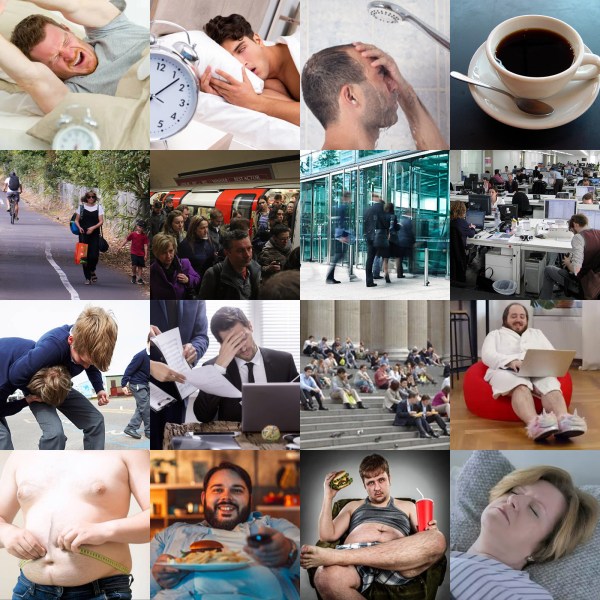
In the face of all this, Onfray’s observations invite civilisation to ask itself the following questions:

« Est-ce que c’est ça la vie ? »

Traduction[EN]: “Is this what life is all about?”

« Est-ce que c’est ça que nous voulons comme vie ? »

Traduction[EN]: “Is this what we want as life?”

« Est-ce que nous pouvons nous s’asseoir paisiblement en pensant qu’a un moment donné tout cela va changer magiquement et le bonheur apparaitra ? »

Traduction[EN]: “Can we sit back and think that at some point all this will magically change and happiness will appear?”

« Ne serait-il pas convenable de prendre les choses en main toute de suite sans perdre de temps pour changer notre existence de tel sorte qu’on ne vive pas cette vie raté et nulle ? »

Traduction[EN]: “Wouldn’t it be nice to take matters into our own hands right now without wasting time to change our existence so that we don’t live this failed and lousy life?”

The Epicurean thought that inspired the writings of Lucretius asks us to put excellence in every moment and not to bear mediocrity, every moment lost is definitely lost! This may not be a great revolution for those who are self-aware, civilised and have cultivated the art of critical thinking, but these questions simply push us towards answers that ask us to live each moment as if we could see it reappear infinitely.

If you are still reading this essay and have felt and understood the arguments, then asking yourself the other three questions would be constructive:

« Est-ce qu’on va encore démarrer sa semaine de la même manière ? »

Traduction[EN]: “Are we going to start our week the same way again?”

Crédits : Philippe Lopez – AFP

That is, for example:
– Going to work knowing that we live with people we don’t love, and who don’t love us?
– Knowing that the relationship with the people you work with or with your children is not serene and healthy?

« Est-ce qu’on a envie que ça continue ainsi et que ça se répète sans cesse ? »

Traduction[EN]: “Do we want it to continue like this and repeat itself over and over again?”

« Pouvez-vous vous mettre à la place d’un autre être humain ? »

Traduction[EN]: “Can you put yourself in the place of another human being?”

« Pensez-vous qu’un autre être humain puisse éprouver des émotions ? »
[Par exemple, des émotions telles que la confusion, le dégoût, la colère, l’horreur, la honte, la tristesse, la faiblesse, l’anxiété, la solitude, l’ennui, la douleur empathique, la nostalgie, le soulagement, la satisfaction, l’admiration, la joie, le calme, l’excitation, etc ?]

Traduction[EN]: “Do you think another human being can experience emotions?”
[For e.g., emotions such as confusion, disgust, anger, horror, shame, sadness, weakness, anxiety, loneliness, boredom, empathic pain, nostalgia, relief, satisfaction, admiration, joy, calmness, excitement, etc ?]

« Puisque l’on serait Dieu si l’on était parfait, et que l’on n’est pas Dieu. Pouvez-vous imaginer la possibilité que votre comportement ou celui d’un autre être humain puisse déclencher certaines des émotions négatives ou positives mentionnées ci-dessus chez un autre être humain ? »

Traduction[EN]: “Since one would be God if one was perfect, and one is not God. Can you imagine the possibility that your behaviour or another human beings’s behaviour could trigger some of the above negative or positive emotions in another human being?”

« Ne devrions-nous pas faire tout ce qui est nécessaire pour arranger les choses, afin que les expériences négatives et horribles n’aient plus lieu et que le reste de notre vie soit différent ? »

Traduction[EN]: “Shouldn’t we do whatever is necessary to make things right, so that negative and horrific experiences do not take place anymore and the rest of our lives are different?”

Carl Jung was incredibly accurate in saying: “Crises, upheavals and illness do not happen by chance, they serve as indicators to rectify a trajectory, explore new directions, experience another way of life.”

CITATION Jung - les crises & bouleversements (un autre chemin de vie)

« Les crises, les bouleversements et la maladie ne surgissent pas par hasard. Ils nous servent d’indicateurs pour rectifier une trajectoire, explorer de nouvelles orientations, expérimenter un autre chemin de vie. » / Traduction[EN]: “Crises, upheavals and illness do not happen by chance, they serve as indicators to rectify a trajectory, explore new directions, experience another way of life.” – Carl Jung

In 1948, from an article entitled “Ni victimes ni bourreaux” and in the chapter entitled “Le siècle de la peur” [French for, “The century of fear”], Albert Camus wrote that man lived in terror; between generalised fear of some kind of war that everyone at that time seemed to be preparing for, and the particular fear of murderous ideologies. Surprisingly, his words seem still fresh for our world today.

Camus saw man living in terror because persuasion seemed impossible, since man had been handed over entirely to history [as if history had stopped and could not be written anymore]. For Camus, man seems unable to turn to that part of himself, which is just as true as history itself, that part of himself which he finds in front of the beauty of the world and of human faces; because man lives in a world of abstraction, which is the world of offices and machines, the world of absolute ideas and messianism without nuance. Camus noted that man suffocates among people who believe that they are absolutely right, whether in their machines or in their ideas; he observed that for all us who can only live in dialogue and human friendship, that silence means the end of the world.
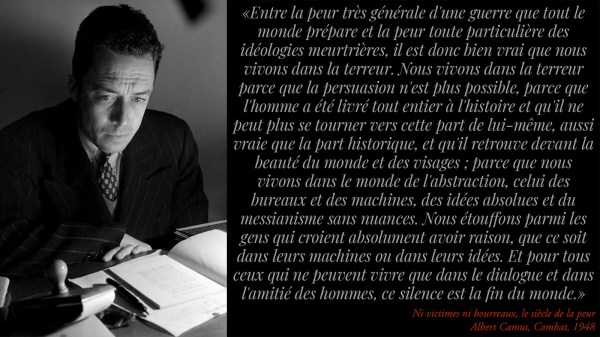
2022-02-05 Camus (La Peur) D'Purb dpurb site

« Entre la peur très générale d’une guerre que tout le monde prépare et la peur toute particulière des idéologies meurtrières, il est donc bien vrai que nous vivons dans la terreur. Nous vivons dans la terreur parce que la persuasion n’est plus possible, parce que l’homme a été livré tout entier à l’histoire et qu’il ne peut plus se tourner vers cette part de lui-même, aussi vraie que la part historique, et qu’il retrouve devant la beauté du monde et des visages ; parce que nous vivons dans le monde de l’abstraction, celui des bureaux et des machines, des idées absolues et du messianisme sans nuances. Nous étouffons parmi les gens qui croient absolument avoir raison, que ce soit dans leurs machines ou dans leurs idées. Et pour tous ceux qui ne peuvent vivre que dans le dialogue et dans l’amitié des hommes, ce silence est la fin du monde. » / Traduction [EN]: “Between the very general fear of a war that everyone is preparing for and the very particular fear of murderous ideologies, it is therefore true that we live in terror. We live in terror because persuasion is no longer possible, because man has been handed over entirely to history and can no longer turn to that part of himself which is as true as the historical part and which he finds again before the beauty of the world and of faces; because we live in the world of abstraction, the world of offices and machines, of absolute ideas and of messianism without nuance. We suffocate among people who believe they are absolutely right, whether in their machines or in their ideas. And for all those who can only live in dialogue and human friendship, this silence is the end of the world.” – Albert Camus

However, Camus also argued that in order to get out of that terror, one should be able to think, reflect and act on one’s reflection. But if man lives in a world of terror, it is precisely the terror that creates a climate that does not encourage or provide space for reflection. He was of the opinion that instead of blaming that terror, we should work to find a solution to it, and that there was nothing more important because it concerns the fate of a great number of human beings who are fed up of violence and lies, disappointed in their highest hopes, disgusted at the thought of inflicting suffering on their fellow men.

Learning to live a life so that you won’t regret it when death comes

Optimists see the best everywhere, pessimists see the worst everywhere. Tragic people see reality as it is, and this requires a lot of courage because reality in all its rawness is not always easy, even if what it presents is of no value to us and we are almost blind to that empty aspect of life which symbolises nothing. In spite of this, tragics do not tend to make myths or fictions – they see the real, it is not perfect, but it is so.

Lucretius is known to be a vitalist, and this line of thought tends towards the tragic since vitalists are firmly anchored in the fact that everything that is alive will eventually die. In the organic world, there is always a cycle: growth, decay and then extinction. Onfray points out that this also applies to civilisations. This is a very logical observation since the Aztec civilisation, the Egyptian empire with the pharaohs, the Roman empire, the empire of Alexander, to name a few examples, no longer exist – except in the form of fragments preserved in our museums. The conclusion is that nothing and no one can stop the disappearance of what has done its time – of what eventually becomes obsolete.

Tragedy thus reminds us that no one and almost nothing (except atoms) will last forever and that we will all eventually disappear. This notion is exactly the treasure of tragic thinking, because it makes us understand that we really have to learn to live a sublime life in every sense. We must cherish each day and lead a life that will allow us to watch death come with a smile, serenely, telling ourselves that if we had to do it again, we would do it exactly the same way without any regrets.

Image: Socrate
(470-469 av. J.-C. –
399 av. J.-C.) a en train de débattre

Reality, as Onfray reminds us, is made up of many people who, at the moment of death, regret not having done a lot of things that were important to them, not having made the right choices, not having given enough importance to this or that person in their life, not having succeeded in realising their dreams, etc. So we have to learn to live and lead a life in a way that will not leave us in pain and regret the day death decides that our journey among humans has come to an end.
“La mort de Napoléon” (1828) par Charles de Steuben. Musée Napoléon, Palais d’Arenenberg, Suisse.

Will power: do we have power over ourselves?

The Epicurean philosophers’ reflection on life is nothing more than an invitation to will power to counteract suffering.

In contrast to the Epicurean philosophers, the philosophers of fate always have something problematic; they believe that everything is already written. But if there is only fatality, what can we do with free will? Onfray also invites us to ask ourselves this question. If everything is already written, how is it that we have the possibility of choosing?

– For example, to eat a strawberry instead of a potato? To move to a city or a village? To read Balzac or Camus? To study the mind or law? To become a writer or an electrician? To write an academic book or a work of fiction? To engage in debates and learn from the great intellectuals to change the world or to chat with tramps in a bar? To criticize politics, gastronomy, sports, technology, economics, psychology, philosophy, art or business?

The question of the individual having power over his life has long been the question of Nietzsche, Spinoza, and the Stoics. The Epicureans, on the other hand, never asked this question about the power of the will over oneself. But if there really is a fatality of what happens, then what can be done with will power?

– Does will power exist?

– Does man have power over himself?

Lucretius, like us, truly believes that we have power over ourselves, that we can take matters into our own hands to change our destiny and guide it towards healthier and more harmonious horizons. All we have to do is to want it: to live each moment of life as if it were our last, to live each day as if it were our last. But abusing any good remedy can be harmful, and this is where Onfray asks us to impose a certain reasonable limit.

Living each day as if it were your last should not lead an adult to suddenly throw out his children, whom he finds untalented, personality-less, and future-less; to suddenly divorce his annoying spouse without discussion; to take all his money and spend it at the casino or betting on a horse; to suddenly quit his job while savagely insulting his tyrannical boss, whom he has always found to be rude, disrespectful, insensitive, intransigent, and depressing. If Epicurean philosophy makes you think that it is justifiable to act in this way then you have misunderstood, because if this is not your last day on earth, the next day you will find yourself in a truly miserable and possibly suicidal state.


Living each moment of life as if it were the last, and living each day as if it were the last, should inspire you to build your life discreetly, modestly, but powerfully
!

Onfray tells us that it is to willingly accept that your current life is miserable. In that sense, to acknowledge that the elements that define your life are not well organized; and therefore, to say to yourself:

« Je ne vais pas passer ma vie à vivre des choses qui ne me conviennent pas. Je n’aurais pas deux vies. »

Traduction[EN]: “I’m not going to spend my life living things that don’t suit me. I won’t have two lives.”

It’s a way of motivating yourself to build your present so that you can be happy and live in the absence of suffering – it’s a revolutionary healing thought!

Onfray believes that Lucretius’ work was left unfinished, and so there is a clear doctrine on friendship that might be found in the missing pages. There are, however, a few lines, which Onfray believes represent an idea that an individual can have a companion or a being in his life, with whom the capacity to share something serene, calm, without hatred, without war, without contempt, with gentleness and tenderness, develops. There is here the idea of love as a remedy for passion.

An invitation to a sculpture of the self: the psychological construction

Lucretius’ work echoes my own thinking in the sense that it is an encyclopedic elaboration. Lucretius left us an encyclopaedic poem, a knowledge where he painted a dynamic world. Like the logic of the organismic theory of psychological construction that we have developed, Lucretius’ perspective is quite similar since he is a dynamic atomist, not a purely mechanical and reductionist one. He starts with the atom and then explains life; we start with the individual organism and then explain everything by extrapolating a theory derived from established work in various fields, respecting a logic based on scientific observation while valuing clarity in the explanation.

Like the organismic theory of psychological design, Lucretius’ work is also an invitation to sculpt the self, in its psychological depth, in order to re-establish sound philosophical foundations that allow one to structure one’s thinking and thus modify one’s perception for a more harmonious life; it is an aesthetics of existence that aims to decorate and reshape the mind in order to promote mental equilibrium and thus keep the mind harmonious in all the dramatic situations of life.

The Romans proposed a conversion, which was also a consolation quite similar to the initiation ceremony of Freemasonry in the sense that there is the life before which one renounces, and then there is the life after which one adopts for good; it is like a new birth, and so by accepting the conversion, one is reborn – it is a rebirth.

Conversion among Roman thinkers means adopting a new life: rebirth

Among the Romans, when one has accepted one’s conversion, it is no longer the same life; among the followers of Epicurean philosophy there is no initiation ceremony as in Freemasonry, but simply the meeting with, or one could say the adoption of, a “maître” (master); a wise man who initiates us by transmitting his knowledge and reminding us the real is simply made of atoms in free fall in the void; that the real is material and does not constitute reality; that the idea is truer than reality; that this physics of the here below dispenses with a metaphysics of the world beyond; that paradise exists on earth but it must be built with determination!

As Michel Onfray also points out, when we meet this “maître” (master of thought), one fine day he enters our lives, opens the curtains (metaphorically) and everything becomes clear. In Roman antiquity it was like this, with an existential maître of truth who asks us to strip ourselves of all our old clothes (metaphorically – to describe our old life) in order to live another life from now on; a life that will allow us to be sovereign over ourselves, lord of ourselves, and in becoming so we will know truth, freedom and enjoyment.

Onfray emphasises that hedonism is this: be the master of yourself, and you will see what jubilation there is in being so! Lucretius’ Epicurean thought finally seems to wake us up by showing us what an excellent life we have the possibility to live – without pain and without horror.

Rome was founded from a collection of people of different origins, so the Romans genuinely believed in the concept of assimilation and never had any problems imagining that a foreigner could become fully Roman [As explained in detail in the essay, “Psychological Explanations of Prejudice & Discrimination and the Conceptual Philosophy of Assimilation à la Française“]. The Europe of the 21st century – at least in nations with a sophisticated breed of refined thinkers such as those of the French intellectual heritage – is a direct heir to this large-scale assimilation of the Roman tradition.

Matter: everything can be explained from the atom

Lucretius’ philosophy is atomistic and shows us that reality is simply material and consists only of atoms that fall into the void and nothing else. Epicureanism is a very subtle thought, and in Lucretius’s work we find a vitalist materialism. Onfray points out that it is not just the atom that is found in the atom, but much more; there is an arrangement of atoms.

Epicureanism is therefore not a vulgar, simplistic or reductionist mechanism. Obviously, it starts with an atom, but this atom goes on to explain the creation of civilisation, i.e. the whole world; in this sense, Lucretius’ Epicureanism is a profoundly sophisticated proposition.

This idea of the atom was already present in the work of the Greeks and Democritus. The latter had found inspiration in a very ordinary everyday scene. Democritus was in his room with the curtains closed, and through a small opening a ray of light entered, and at that moment Democritus saw a very fine cloud of dust dancing in that ray of lightan event that man does not see with the naked eye, but which is revealed by the light. These dust particles that constitute our whole world and reality as it is, represent the atoms (the term “Atomos” is used in Greek, referring to the hypothetical ultimate particles of matter, a word that meant uncut, since the atom is the smallest indivisible unit of matter).

In Lucretius’ work, everything is explained from the atom: one atom meets another atom and so on to start a chain process and eventually we see the world structured into an infinite number of universes. In this sense, it is a coherent thought, intuitive but also empirical. Onfray points out that even if we visit the works of Lamarck and Darwin, the evolutionary explanations, quantum mechanics, the theory of the multiverse and the multiverse, we can see that Lucretius’ thought cannot be disqualified, since it resonates with the whole scientific philosophy of the modern world.

When we speak of atoms, we are speaking of the making of the whole universe and of all life, and so there is a certain mystical and spiritual aspect where we might well associate the creative process which for many is connected to God, that is, the divine creation of everything from matter. How something as simple and mundane as seeing a few particles of dust in the light through the curtains in a bedroom can reveal to us this idea of the atom giving birth to the world and the universe is truly amazing; moreover, 25 centuries later, the atom and the intellectual debates about creation are still part of our reality.

Anything that has mass and take up a given amount of volume is defined as matter. As such, everything around us is made up of matter, and to go further, everything is made up of atoms. Atoms however are incredibly far from one another since they are more void than they are matter. Every atom has a nucleus  in the centre, surrounded by electrons.

To understand the relative size of the empty space that represents the void in an atom, we can imagine the nucleus [noyau in French] being the size of a peanut, and if that was the case, the entire atom would be about the size of a large football stadium. Around the edges of that stadium the electrons exist, their numbers varying by different elements. Hence, a nucleus is about 100 000 times smaller than the atom in which they are locked in, hence the atom is practically empty space.

If all the empty space was removed from every single atom in every single human being on earth (i.e. around 7.6 billion people), then compressed together, the overall volume of all the particles that make up the whole human population would be smaller than a sugar cube. This may sound ridiculous, however, it makes sense when we consider the weight of that sugar cube of human beings, because it would weight exactly the same as the sum of weight of all human beings on earth. If we assume an average weight of 45 Kg (considering children weight less and adults more) for 7.6 billion people, that small sugar cube would reach a weight of 345 billion Kg, which is the equivalent of around 1000 huge skyscrapers.

Atoms make up 100% of the universe and since 99% of the atom is empty space, we come to the conclusion that a human being is made up of nothingness. Every human being on planet Earth is made up of several millions of atoms [around 7,000,000,000,000,000,000,000,000,000 (7 octillion) per person], and every single atom is 99% empty space.

If everything is made of matter, what are the gods made of? Matter!

Onfray explains it in a simple way accessible to all, this notion in Lucretius that atoms are extremely subtle, and that there is a theory of simulacra. If you and I are on stage and there is an audience that sees us, this theory of simulacra suggests that metaphorically there is a kind of aura, a layer, or a skin that comes off of us that is made of atomic particles and that diffuses into the external environment.

If you hear me, it is because my speech passes through in the form of sound as I speak, and the act of speaking emits atoms according to this theory of simulacra: these atoms of my speech travel all over the world, and they are simulacra which penetrate into the ears and into the minds of those who listen to us; into the eyes as far as vision is concerned; at which point one develops the possibility of the art of communication.

“Tête Raphaélesque Éclatée” par Salvador Dali (1951)

To sum up Lucretius’ theory of simulacra clearly, it is simply to understand that there are simulacra everywhere, all the time! Onfray invites us to imagine that these atoms of simulacra are like waves during the use of a mobile phone; waves which are invisible to the eye but which remain very present. Simulacra operate in the same way; they are extremely tenuous atoms that travel, circulate and offer the possibility of seeing, tasting, hearing, perceiving, among many other capacities.

Since these atoms of simulacra are indeed present in the environment and proceed subtly in the effects they generate while being invisible, then the gods must be made of this kind of subtle matter. Onfray explains that we have one world, two worlds, many worlds, and this multiplicity of worlds implies that there are interworlds. The gods are present in the interworlds and are made of matter, and represent an autonomous power that is satisfied with itself; a power that knows ataraxy (which means the end of suffering).

The gods rejoice in being and enjoy the power of existence; the Epicureans ask man to resemble these gods, to know the absence of trouble – this absence of suffering is enjoyment!

So, we see that this enjoyment is not crude as Cicero’s Stoic thought conceived it.

Based on this theory of atoms, the Epicureans tell us that death is not to be feared because it is simply a disorganisation and reorganisation of matter and not its suppression; all matter that decomposes will eventually recompose itself, it is an eternal cycle and an atomic recycling of the universe.

This idea of the eternal recycling of matter (and thus of atoms) seems to suggest that there might be a kind of resurrection in atomic terms, that a dead being can have fragments of the matter of which it was composed transported into another being generations later; this is perhaps one of the many reasons for the presence of the qualities of great dead men in succeeding generations, whether in terms of personality or physical resemblance; it is something for deep atomic thinkers to ponder: the atom cannot be destroyed and is eternal, there is a limited amount of matter and on earth it follows an eternal cycle of recycling. This observation seems to echo a metaphoric interpretation of reincarnation in Hinduism, where it is believed that a living being begins a new life in a different physical form or body after biological death.

Most of the atoms on Earth have been present since the formation of the planet itself; a small amount came from outer space and through nuclear reactions. As such, human beings are just a composition of atoms that used to part of something else, we are all recycled. The atoms in our living body used to be the food, the water and the air we consume to remain alive; since our conception in the womb, food, water and air (and all tha atoms that consitute them) has been used by our organic body and transformed into what we are.

When a person dies, the atoms that made up its body is quickly recycled. If a human corpse is buried, the bacteria in the intestinal tract are starved from not being given any food, and they start devouring the corpse itself which leads to decomposition. Decomposition is also dependent on temperature, i.e. a corpse in the tropics will be reduced to a skeleton within days or weeks. If a corpse is buried in a wooden coffin, it quickly becomes food for organisms that live in the soil (e.g. worms), and the atoms that were part of that dead body quickly re-enters the food chain – those atoms become part of whatever consumed the corpse and later of whatever consumes that organism. When the bones decay, which is a slower process, the calcium and phosphorous in those bones will be incorporated in plants. Eventually, those plants will be consumed by people or animals, and those living organisms eventually die, and the cycle through the biosphere goes on over and over. If a corpse is buried in a hermetically sealed container or crypt, then the recycling process is interrupted and that body turns into a soup of rotting flesh and bones. If a corpse is embalmed, then the decomposition process is slowed down, but not halted completely. If a person dies in a very cold region, e.g. on a glacier, then the corpse may be found perfectly frozen and intact dozens or hundreds of year later. In the case where a corpse is cremated, the organic body is combusted, the soft tissues are consumed by oxygen and mostly turn into carbon dioxide: the gases are released into the atmosphere and the bones are reduced to ash, which is mostly carbon. The atoms released in the air from combustion are quickly recycled into other things in the biosphere [environment]; if a person’s ashes are spread around, they eventually re-enter the food chain or are converted into minerals. As such, tiny pieces of a person [his atoms] of this generation, may eventually end up in the pork chop, the corn flakes or the potato salad of his or her grand children.

Hence, the atoms that make up our body come from outer space, and have been around for billions of years since the creation of Earth. We get to use them for a very short amount of time, since our average lifetime is incredibly short and meaningless when we speak in planetary terms [consider a very young planet being 25 million years]. We should make the most of our atoms while we can, because our life is short and once we are gone, our atoms are converted into something else.

The law of thermodynamics states that both matter, which is made up of atoms, and energy can neither be created nor destroyed. Thus, all the atoms in our physical dead body eventually get recycled.

Hence, we can ask ourselves this question:

“Are we truly dead if our atoms still exist?”

Philosophy, Poetry, Tragedy & Comedy were Linked for Centuries

12 hommes en colère de Reginald Rose dpurb 2022

Image : “12 hommes en colère” de Reginald Rose, adaptée par Francis Lombrail et mise en scène par Charles Tordjman (Théâtre Hébertot, Paris, 2022) / Photo : Fabienne Rappeneau

Lucretius’ philosophical work is a huge poem that has been poorly translated like all ancient poetry. Aeschylus, Euripides, Sophocles and the Roman comedy (e.g. The Iliad, The Odyssey) were all written in verse; this aspect has been forgotten because all translations were made in prose. 5 or 6 years before Christ, intellectuals had to memorise, and poetry was used because it facilitates memorising: just as a song allows us to memorise the words more easily (e.g. Aragon’s poem, sung by Jean Farrain).

There is a lyrical dimension to Lucretius, it is a poetic and scenic dimension. Onfray finds that Lucretius, in his style, tries to get people on board. This is a tangible deduction when we know the extent of Lucretius’ Epicurean thought, which gives the concrete feeling of a real intellectual journey that transforms us for good.

If we take the example of a passage of Lucretius in “De Rerum Natura” which is in the last section of Canto VI, where he describes the plague in Athens, we can see with what descriptive mastery he makes the scene of the plague present, explaining to us a detailed chronology of the beginning, the development and then the horrors of death on men. Onfray wonders if this is really reality and asks himself:

– Is it metaphorical?

– Is it allegorical?

Anything is possible in Lucretius, Onfray notes that he seeks to reach those who are listening, in a message that tries to make the point that the real plague is the human condition – again a metaphor that seems to describe what might be called mental illness in the 21st century.

Philosophy, poetry, tragedy and comedy were linked for centuries. What Lucretius leaves us is an immense existential treatise synthesized in an encyclopedia of the world. Translated into prose, it is an intellectual material available for everyday life where pleasure, which means the absence of suffering, is what we seek and aim for!

Throughout this essay, we have also seen how so many thinkers across different generations have had their thoughts echo each other’s perspectives and beliefs with many also confirmed by modern science.  Good ideas, or good people, find each other and fit together. This reminds the world that all intellectual work that is built on the solid foundations of reason, logic and rationality will echo in eternity. Voltaire was completely right in his correspondence with M. Thiériot dated June 30, 1760, when he wrote: « Les beaux esprits se rencontrent. » [French for: “Beautiful minds meet.”]

« Les beaux esprits se rencontrent. » // Traduction[EN]: “Beautiful minds meet.” – Voltaire

In Lucretius’ writings, there is a multitude of ethical and moral propositions that give man the ability to liberate himself by elevating his mind, to lead an Epicurean philosophical life in particular, a life that is made for happiness – “l’art de vivre” according to Lucretius!

D.J. d’Purb | dpurb.com

*****

Bibliographie

  1. Berger, P.L. and Luckmann, T. (2022). La construction sociale de la réalité. 3e edn. Malakoff, France: Armand Colin.
  2. Camus, A., (1948). Ni victimes ni bourreaux. Combat.
  3. Carmel, S., Tovel, H., Raveis, V. and O’Rourke, N., (2018). Is a Decline in Will to Live a Consequence or Predictor of Depression in Late Life?. Journal of the American Geriatrics Society, 66(7), pp.1290-1295.
  4. Chaine, C. (1984) “Sartre et les femmes,” De Sartre à Foucault, pp. 108–122. Available at: https://doi.org/10.3917/hache.muchn.1984.01.0108.
  5. Cohen, S., Frank, E., Doyle, W.J., Skoner, D.P., Rabin, B.S. & Gwaltney, J.M., Jr. (1998) Types of stressors that increase susceptibility to the common cold in adults, Health Psychology 17: 214- 23.
  6. Cohen, S. (2005) The Pittsburgh common cold studies: Psychosocial predictors of susceptibility to respiratory infectious illness, International Journal of Behavioral Medecine 12: 123-31.
  7. Cowen, A. and Keltner, D., (2017). Self-report captures 27 distinct categories of emotion bridged by continuous gradients. Proceedings of the National Academy of Sciences, 114(38), pp.E7900-E7909.
  8. Eisenthal, Y., Dror, G. and Ruppin, E., (2006). Facial Attractiveness: Beauty and the Machine. Neural Computation, 18(1), pp.119-142.
  9. France Inter., (2022). La fécondité des Françaises de plus de 40 ans en hausse depuis 1980, d’après l’Insee. France Inter: Société.
  10. Grammer, K. and Thornhill, R., (1994). Human (Homo sapiens) facial attractiveness and sexual selection: The role of symmetry and averageness. Journal of Comparative Psychology, 108(3), pp.233-242.
  11. Grothendieck, A. (2016) “Allons-nous continuer la recherche scientifique?,” Ecologie & politique, 52(1), pp. 159–169. Available at: https://doi.org/10.3917/ecopo1.052.0159.
  12. Hagman, G., (2002). The Sense of Beauty. The International Journal of Psychoanalysis, 83(3), pp.661-674.
  13. Haughton, N., (2004). Perceptions of beauty in Renaissance art. Journal of Cosmetic Dermatology, 3(4), pp.229-233.
  14. Hubbard, T., (2014). A companion to Greek and Roman sexualities. Chichester: West Sussex, UK.
  15. Kiecolt-Glaser, J.K., Marucha, P.T., Malarkey, W.B., Mercado, A.M. & Glaser, R. (1995) Slowing of wound healing by psychological stress, The Lancet 346: 1194-6.
  16. Kiecolt-Glaser, JK., McGuire, L., Robles, TF., Glaer, R. (2002) Psychoneuroimmunology: Psychological Influences on Immune Function and Health, J Consult Clinical Psychology, 70, 537-47.
  17. Lazarus, R.S. & Folkman, S. (1984) Stress, Appraisal and Coping, New York: Springer.
  18. Le Monde, (2015). Thomas Piketty refuse la Légion d’honneur. Culture. Le Monde.
  19. Liu, C. and Chen, W., (2012). Beauty is Better Pursued: Effects of Attractiveness in Multiple-Face Tracking. Quarterly Journal of Experimental Psychology, 65(3), pp.553-564.
  20. Lucrèce. and Combeaud, B., (2021). La naissance des choses. Bordeaux: Mollat Editions.
  21. Marcucci, L., (2016). L’« homme vitruvien » et les enjeux de la représentation du corps dans les arts à la Renaissance. Nouvelle revue d’esthétique, 17(1), p.105.
  22. Marucha, P.T., Kiecolt-Glaser, J.K. & Favagehi, M. (1998) Mucosal wound healing is impaired by examination stress, Psychosomatic Medicine60 362-5.
  23. Murr, D., Lavaud, L. and Trinquier, J., (2020). Présentation. Aitia. Regards sur la culture hellénistique au XXIe siècle, (10).
  24. Nouvel, P. (2008) “Philosophie de la stimulation,” Les Cahiers du Centre Georges Canguilhem, 2(1), pp. 283–311. Available at: https://doi.org/10.3917/ccgc.002.0283.
  25. O’Connor, D.B., Hendrickx, H., Dadd, T. et al. (2009) Cortisol awakening rise in middle-aged women in relation to chronic psychological stress, Psychoneuroendocrinology 34: 1486-94.
  26. Onfray, M., (2021). La conversion: Vivre Selon Lucrèce. Bordeaux: Mollat Editions.
  27. Russell, B. (2008) Principes de Reconstruction Sociale. Translated by N. Baillargeon and E.de Clermont-Tonnerre. Québec, Canada: Presses de l’Université Laval.
  28. Schmutte, H., (2016). Nietzsche: Entre Génie Et Démence. ARTE.
  29. Schopenhauer, A., Roos, R. and Burdeau, A., (2014). Le monde comme volonté et comme représentation. 3rd ed. Paris: Presses Universitaires de France.
  30. Singh, D. and Singh, D., (2011). Shape and Significance of Feminine Beauty: An Evolutionary Perspective. Sex Roles, 64(9-10), pp.723-731.
  31. Stansbury-O’Donnell, M., (2013). Desirability and the Body. A Companion to Greek and Roman Sexualities, pp.31-53.
  32. Sypeck, M., Gray, J. and Ahrens, A., (2004). No longer just a pretty face: Fashion magazines’ depictions of ideal female beauty from 1959 to 1999. International Journal of Eating Disorders, 36(3), pp.342-347.
  33. The Encyclopedia of Greek Tragedy, (2012). Male and Female Body in Greek Tragedy. pp.789-791.

____________________________________________________

While the aim of the community at dpurb.com has  been & will always be to focus on a modern & progressive culture, human progress, scientific research, philosophical advancement & a future in harmony with our natural environment; the tireless efforts in researching & providing our valued audience the latest & finest information in various fields unfortunately takes its toll on our very human admins, who along with the time sacrificed & the pleasure of contributing in advancing our world through sensitive discussions & progressive ideas, have to deal with the stresses that test even the toughest of minds. Your valued support would ensure our work remains at its standards and remind our admins that their efforts are appreciated while also allowing you to take pride in our journey towards an enlightened human civilization. Your support would benefit a cause that focuses on mankind, current & future generations.

Thank you once again for your time.

Please feel free to support us by considering a donation.

Sincerely,

The Team @ dpurb.com

P.S.
– If you are a group/organization or individual looking for consultancy services, email: info[AT]dpurb.com
If you need to reach Danny J. D’Purb directly for any other queries or questions, email: danny[AT]dpurb.com [Inbox checked periodically / Responses may take up to 20 days or more depending on his schedule]

Stay connected by linking up with us on Facebook and Twitter

Donate Button with Credit Cards

Essay // Psychology: The Concept of Self

Mis à jour le Vendredi, 5 Décembre 2025

SelfRope

The concept of the self will be explored in this essay – where it comes from, what it looks like and how it influences thought and behaviour. Since self and identity are cognitive constructs that influence social interaction and perception, and are themselves partially influenced by society, the material of this essay connects to virtually all aspects of psychological science. The self is an enormously popular focus of research (e.g. Leary and Tangney, 2003; Sedikides and Brewer, 2001; Swann and Bosson, 2010). A 1997 review by Ashmore and Jussim reported 31,000 social psychological publications on the self over a two-decade period to the mid-1990s, and there is now even an International Society for Self and Identity and a scholarly journal imaginatively entitled Self and Identity.

Nikon Portrait DSC_0169 Res600

The concept of the “self” is a relatively new idea in psychological science. While Roy Baumeister’s (1987) painted a picture of a medievally organised society where most human organism’s reality were fixed and predefined by rigid social relations and legitimised with religious affiliations [family membership, social rank, birth order & place of birth, etc], the modern perspectives adopted by scholars and innovative psychologists has been contradicting such outdated concepts. The idea of a complex & sophisticated individual self, lurking underneath would have been difficult, if not impossible, to entertain under such atavistic assumptions of social structures affecting an individual human organism.

However, all this changed in the 16th century, where momentum gathered ever since from forces such as:

Secularisation – where the idea that fulfilment occurs in afterlife was replaced by the idea that one should actively pursue personal fulfilment in this life

Industrialisation – where the human being was increasingly being seen as individual units of production who moved from place to place with their own “portable” personal identity which was not locked into static social structures such as extended family

Enlightenment – where people felt they were solely responsible for choosing, organising and creating better identities for themselves by overthrowing orthodox value systems and oppressive regimes [e.g. the French revolution and the American revolution of the late 18th century]

and

Psychoanalysis – the psychoanalytic theory of the human mind unleashed the creative individual with the notion that the self was unfathomable because it lived in the depth of the unconscious [e.g. Theory of social representations – theory invoking psychoanalysis as an example of how a novel idea or analysis can entirely change how people think about their world (e.g. Moscovici, 1961; see Lorenzi-Cioldi and Clémence, 2001). [See: Psychoanalysis: History, Foundations, Legacy, Impact & Evolution]

Jacques Lacan d'purb dpurb site web

Jacques Lacan (1901 – 1981)

Together, these and other socio-political and cultural influences lead to society thinking about the self and identity as complex subjects, where theories of self and identity propagated and flourished in this fertile soil.

As far as self and identity are concerned, we have noticed one pervasive finding in cultural differences. The so called “Western” world involving continents such as Western Europe, North America and Australasia, tend to be individualistic, whereas most other cultures, such as in Asia, South America and Africa are collectivist (Triandis, 1989; also see Chiu and Hong, 2007, Heine, 2010, 2012; Oyserman, Coon and Kemmelmeier, 2002). Anthropologist Geertz puts it beautifully:

“The Western conception of the person as a bounded, unique, more or less integrated, motivational and cognitive universe, a dynamic centre of awareness, emotion, judgement, and action organized into a distinctive whole and set contrastively both against other such wholes and against a social and natural background is, however incorrigible it may seem to us, a rather peculiar idea within the context of the world’s cultures.”

Geertz (1975, p.48)

conceptofself d'purb dpurb site web

Markus and Kityama (1991) describe how those from individualistic cultures tend to have an independent self, whereas people from collectivist cultures have an interdependent self. Although in both cases, people seek a clear sense of who they are, the [Western] independent self is grounded in a view of the self that is autonomous, separate from other people and revealed through one’s inner thoughts and feelings. The [Eastern] interdependent self on the other hand, unlike in the West, tends to be grounded in one’s connection to and relationships with other people [expressed through one’s roles and relationships]. As Gao explained: ‘Self… is defined by a person’s surrounding relations, which often are derived from kinship networks and supported by cultural values based on subjective definitions of filial piety, loyalty, dignity, and integrity’ (Gao, 1996, p. 83).

From a conceptual review of the cultural context of self-conception, Vignoles, Chryssochoou and Breakwell (2000) conclude that the need to have a distinctive and integrated sense of self is “likely” universal. However from individualist and collectivist cultures, the term “self-distinctiveness” holds a set of very different assumptions. In the individualist West, separateness adds meaning and definition to the isolated and bounded self. In the collectivist & Eastern others, the “self” is relational and gains meaning from its relations with others.

universal

A logic proposed by analysing historical conceptions of self with an account of the origins of individualist and collectivist cultures along with the associated independent and interdependent self-conceptions may be related to economic policies. The labour market is an example where mobility helped the industry by viewing humans as “units” of production who are expected to shift their geographical locations from places of low labour demand to those of higher demand, along with their ability to organise their lives, relationships, self-concepts around mobility and transient relationships.

New York Construction Workers Lunching on a Crossbeam

Construction workers eat their lunches atop a steel beam 800 feet above ground, at the building site of the RCA Building in Rockefeller Center.

Independence, separateness and uniqueness have become more important than connectedness and long-term maintenance of enduring relationships [values that seem to have become pillars of modern Western Labour Culture – self-conceptions reflect cultural norms that codify economic activity].

However, this logic applied to any modern human organism seems to clearly offer more routes to development [personal and professional], more options to continuously nurture the evolving concepts of self-conception through expansive social experience and cultural exploration, while being a set of philosophy that places more powers of self-defined identity in the hands of the individual [more modern and sophisticated].

TheMan

Now that some basic concepts and origins of the “self” along with its importance and significance to psychological science has been covered, we are going to explore two creative ways of learning about ourselves.

Firstly, the concept of self-knowledge which involves us storing information about ourselves in a complex and varied way in the form of a schema means that information about the self is assumed to be stored cognitively as separate context specific nodes such that different nodes activate different ones and thus, different aspects of self (Breckler, Pratkanis and McCann, 1991; Higgins, van Hook and Dorfman, 1988). The concept of self emerges from widely distributed brain activity across the medial prefrontal and medial precuneus cortex of the brain (e.g. Saxe, Moran, Scholz, and Gabrieli, 2006). According the Hazel Markus, self-concept is neither “a singular, static, lump-like entity” nor a simple averaged view of the self – it is a complex and multi-faceted, with a relatively large number of discrete self-schemas (Markus, 1977; Markus and Wurf, 1987).

masks

Most individuals tend to have clear conceptions of themselves on some dimensions but not others – generally more self-schematic on dimensions that hold more meaning to them, for e.g. if one thinks of oneself as sophisticated and being sophisticated is of importance to oneself, then we would be self-schematic on that dimension [part of our self-concept], if not then we would not [would not be part of our self-concept – unsophisticated]. It is widely believed that most people have a complex self-concept with a large number of discrete self-schemas. Patrice Linville (1985, 1987; see below) has suggested that this variety helps to buffer people from life’s negative impacts by ensuring enough self-schemas are available for the individual to maintain a sense of satisfaction. We can be strategic in the use of our self-schemas – Linville described such judgement colourfully by saying: “don’t put all your eggs in one cognitive basket.” Self-schemas influence information processing and behaviour similarly to how schemas about others do (Markus and Sentis, 1982): self-schematic information is more readily noticed, is overrepresented in cognition and is associated with longer processing time.

S€lection de Vos Oeufs d'purb

Self-schemas do not only describe how we are, but they are also believed to differ as we have an array of possible selves (Markus and Nurius, 1986) – future-oriented schemas of what we would like to become, or what we fear we might become. For example, a scholar completing a postgraduate may think of a career as an artist, lecturer, writer, philosopher, politician, actor, singer, producer, entrepreneur, etc. Higgins (1987) proposed the self-discrepancy theory, suggesting that we have 3 major types of self-schema:

  • The actual self – how we are
  • The ideal self – how we would like to be
  • The ‘ought’ self – how we think we should be

Discrepancies between the actual, ideal and/or ought, can motivate change to reduce the discrepancy – in this way we engage in self-regulation. Furthermore, the self-discrepancy and the general notion of self-regulation have been elaborated into the regulatory focus-theory (Higgins, 1997, 1998).This theory proposes that most individuals have two separate self-regulatory systems, termed Promotion and Prevention. The “Promotion” system is concerned with the attainment of one’s hopes and aspirations – one’s ideals. For example, those in a promotion focus adopt approach strategic means to attain their goals [e.g. promotion-focused students would seek ways to improve their grades, find new challenges and treat problems as interesting obstacles to overcome. The “Prevention” system is concerned with the fulfilment of one’s duties and obligations. Those in a prevention focus use avoidance strategy means to attain their goals. For example, prevention-focussed students would avoid new situations or new people and concentrate on avoiding failure rather than achieving highest possible grade.

aimhigh

Whether an individual is more approach or prevention focussed is believed to stem during childhood (Higgins and Silberman, 1998). Promotion-focus may arise if children are habitually hugged and kissed for behaving in a desired manner and love is withdrawn as a form of discipline. Prevention-focus may arise if children are encouraged to be alert to potential dangers and punished when they display undesirable behaviours. Against this background of individual differences however, regulatory focus has also been observed to be influenced by immediate context, for example by structuring the situation so that subjects focus on prevention or on promotion (Higgins, Roney, Crowe and Hymes, 1994). Research also revealed that those who are promotion-focussed are more likely to recall information relating to the pursuit of success by others (Higgins and Tykocinski, 1992). Lockwood and her associates found that those who are promotion-focussed look for inspiration to positive role models who emphasise strategies for achieving success (Lockwood, Jordan and Kunda, 2002). Such individuals also show elevated motivation and persistence on tasks framed in terms of gains and non-gains (Shah, Higgins and Friedman, 1998). On the other side of the spectrum, individuals who are prevention-focussed tend to recall information relating to the avoidance of failure by others, are most inspired by negative role models who highlight strategies for avoiding failure and exhibit motivation and persistence on tasks that framed in terms of losses and non-losses. After being studied in intergroup relations (Shah, Higgins and Friedman, 1998), the regulatory focus theory was found to strengthen positive emotion related bias and behavioural tendencies towards the ingroup when in the context of a measured or manipulated promotion focus. Prevention-focus strengthens more negative emotion-related bias [haters] and behavioural tendencies against the outgroup (Shah, Brazy and Higgins, 2004).

ADLER PLANETARIUM UNIVERSE

On May 25, 2012, take off on a mind-blowing tour of the Universe in the Adler’s new space adventure Welcome to the Universe! Audiences travel a billion light-years and back in this live, guided tour unlike any other in the world. Visitors explore the breathtaking, seemingly infinite Universe as they fly through space to orbit the Moon, zoom into a canyon on Mars, and soar through the cosmic web where a million galaxies shower down upon them in the most immersive space environment ever created. (C) Adler Planetarium. (PRNewsFoto/Adler Planetarium)

The second way of learning about the concept of self is through the understanding of our “many selves” and multiple identities. In the book, The Concepf of Self, Kenneth Gergen (1971) depicts the self-concept as containing a repertoire of relatively discrete and often quite varied identities, each with a distinct body of knowledge. These identities have their origins in a vast array of different types of social relationships that form, or have formed, the anchoring points for our lives, ranging from close personal relationships with other professionals, mentors, trusted friends, etc and roles defined by skills, fields, divisions and categories, to relationships fully or partially defined by languages, geography, cultures [sub-cultures], groups values, philosophy, religion, gender and/or ethnicity. Linville (1985) also noted that individuals differ in terms of self-complexity, in the sense that some individuals have more diverse and extensive set of selves than othersthose with many independent aspects of selves have higher self-complexity than those with a few, relatively similar, aspects of self. The notion of self-complexity is given a rather different emphasis by Marilynn Brewer and her colleagues (Brewer and Pierce, 2005; Roccas and Bewer, 2002) who focussed on the self that is defined in group terms (social identity) and the relationship among identities rather than number of identities individuals have.

TheMask

They argued that individuals have a complex social identity if they have discrete social identities that do not share many attributes but a simple social identity if they have overlapping social identities that share many attributes [simple]. For example, when Cognitive Psychologists [cognitive psychology explores mental processes] study high-level functions such as problem solving and decision making, they often ask participants to think aloud. The verbal protocols that are obtained [heard] are then analysed at different levels of granularity: e.g. to look at the speed with which participants carry out mental processes, or, at a higher level of analysis, to identify the strategies being used. Grant and Hogg (2012) have recently suggested and empirically shown that the effect, particularly on group identification and group behaviours of the number of identities one has and their overlap may be better explained in terms of the general property of social identity prominencehow subjectively prominent, overall and in a specific situation, a particular identity is one’s self-concept. Social identity theorists (Tajfel and Turner, 1979) argued 2 broad classes of identity that define different types of self:

(i) Social Identity [which defines self in terms of a “particular” group membership (if any meaningful ones exist for the individual), and

(ii) Personal Identity [which defines self in terms of idiosyncratic traits & close personal relationships with specific individuals/groups (if any) which may be more than physical/social, e.g. mental [strength of association with specific others on specific tasks/degrees]

The first main focus question here is asked by Brewer and Gardner (1996), ‘Who is this “we”?’ and distinguished three forms of self:

  • Individual self – based on personal traits that differentiate the self from all others
  • Relational self – based on connections and role relationships with significant/meaningful others
  • Collective self – based on group membership [can depend of many criteria] that differentiates ‘us’ from ‘them’

More recently it has been proposed that there are four types of identity (Brewer, 2001; Chen, Boucher and Tapias, 2006):

  • Personal-based social identities – emphasising the way that group properties are internalised by individual group members as part of their self-concept
  • Relational social identities – defining the self in relation to specific other people with whom one interacts [may not be physical or social only] in a group context – corresponding to Brewer and Gardner’s (1996) relational identity and to Markus and Kitayama’s (1991) ‘interdependent self’.
  • Group-based social identities – equivalent to social identity as defined above [sense of belonging and emotional salience for a group is subjective]
  • Collective identities – referring to a process whereby  those who consider themselves as “group members” not only share self-defining attributes, but also engage in social action to forge an image of what the group stands for and how it is represented and viewed by others.

China Collective

The relational self  [for those who choose to be defined by others at least] is a concept that can be considered a particular type of collective self. As Masaki Yuki (2003) observed, some groups and cultures (notable East-Asian cultures) define groups in terms of networks of relationships. Research also revealed that women tend to place a greater importance than men on their relationships with others in a group (Seeley, Gardner, Pennington and Gabriel, 2003; see also Baumeister and Sommer, 1997; Cross and Madson, 1997).

In search for the evidence for the existence of multiple selves which came from research where contextual factors were varied to discover that most individuals describe themselves and behave differently in different contexts. In one experiment, participants were made to describe themselves on very different ways by being asked loaded questions which prompted them to search from their stock of self-knowledge for information that presented the self in a different light (Fazio, Effrein and Falender, 1981). Other researchers also found, time and time again, that experimental procedures that focus on group membership lead people to act very differently from procedures that focus on individuality and interpersonal relationships. Even “minimal group” studies in which participants are either: (a) identified as individuals; or (b) explicitly categorised, randomly or by some minimal or trivial criterion as ‘group’ members (Tajfel, 1970; see Diehl, 1990), a consistent finding is that being categorised tends to lead people to being discriminatory towards an outgroup, conform to ingroup norms, express attitudes and feelings that favour ingroup, and indicate a sense of belonging and loyalty to the ingroup.

ManVsGorilla

Furthermore, these effects of minimal group categorisation are generally very fast and automatic (Otten and Wentura, 1999). The idea that we may have many selves and that contextual factors can bring different selves into play, has a number of ramifications. Social constructionists have suggested that the self is entirely situation-dependent. An extreme form of this position argues that we do not carry self-knowledge around in our heads as cognitive representations at all, but rather that we construct disposable selves through talk (e.g. Potter and Wetherell, 1987). A less extreme version was proposed by Penny Oakes (e.g. Oakes, Haslam and Reynolds, 1999), who does not emphasise the role of talk but still maintains that self-conception is highly context-dependent. It is argued that most people have cognitive representations of the self that they carry in their heads as organising principles for perception, categorisation and action, but that these representations are temporarily or more enduringly modified by situational factors (e.g. Abrams and Hogg, 2001; Turner, Reynolds, Haslam and Veenstra, 2006).

evolution

Although we have a diversity of relatively discrete selves, we also have a quest: to find and maintain a reasonably integrated picture of who we are. Self-conceptual coherence provides us with a continuing theme for our lives – an ‘autobiography’ that weaves our various identities and selves together into a whole person. Individuals who have highly fragmented selves (e.g. some patients suffering from schizophrenia, amnesia or Alzheimer’s disease) find it very difficult to function effectively. People use many strategies to construct a coherent sense of self (Baumeister, 1998). Here is a list of some that we have used ourselves:

Sometimes we restrict our life to a limited set of contexts. Because different selves come into play as contexts keep changing, protections from self-conceptual clashes seem like a valid motive.

Other times, we continuously keep revising and integrating our ‘biographies’ to accommodate new identities. Along the way, we dispose of any meaningless inconsistencies. In effect, we are rewriting our own history to make it work to our advantage (Greenwald, 1980).

We also tend to attribute some change in the self externally to changing circumstances [e.g. educational achievements, professional circle, industry, etc] rather than only internally, to construct who we are. This is an application of the actor-observer effect (Jones and Nisbett, 1972).

In other cases, we can also develop self-schemas that embody a core set of attributes that we feel distinguishes us from all other peoplethat makes us unique (Markus, 1977). We then tend to recognise these attributes disproportionately in all our selves, providing thematic consistency that delivers a sense of a stable and unitary self (Cantor and Kihlstrom, 1987). To sum up, individuals tend to construct their lives such that their self-conceptions are both steady and coherent. A major element in the conception of self, is the ability to master language and its varying degrees of granularity that hold a major role in social identity [linguistic discourse].

[The remaining part of this essay will focus on the power and importance of language as the essence of the human being]

___________________________________________________

MicOne.jpg

The Essence of the Modern Human Being: Language, Psycholinguistics & Self-Definition

Human communication is completely different from that of other species as it allows virtually limitless amounts of ideas to be expressed by combining finite sets of elements (Hauser, Chomsky, & Fitch, 2005; Wargo, 2008). Other species [e.g. apes] do have communicative methods but none of them compare with human language. For example, monkeys use unique warning calls for different threats, but never combine these calls on new ideas. Similarly, birds and whales sing complex songs, but creative recombination of these sounds in the expression of new ideas has not occurred to these animals either.

As a system of symbols, language lies at the heart of social life and all its multitude of aspects in social identity. Language may be at the essence of existence if explored from the philosopher Descartes most famous quote, “Cogito Ergo Sum” which is Latin for “I think, therefore I am.”, as thought is believed to be experienced and entertained in language. In expressing his discourse, Descartes based the science system on the knowing subject in front of the world that it constructs and represents to itself – a system that would later also be the basis for many of the concepts of Jacques Lacan’s psychoanalysis.

cogito ergo sum

The act of thinking often involves an inner personal conversation with oneself, as we tend to perceived and think about the world in terms of linguistic categories. Lev Vygotsky (1962) believed that inner speech was the medium of thought and that it was interdependent with external speech [the medium of social communication]. This interdependence would lead to the logical conclusion that cultural differences in language and speech are reflected in cultural differences in thought.

In the theory of linguistic relativity devised by linguists Edward Sapir and Benjamin Whorf, a more extreme version of that logic was proposed. Brown writes:

Linguistic relativity is the reverse of the view that human cognition constrains the form of language. Relativity is the view that the cognitive processes of a human being – perception, memory, inference, deduction – vary with structural characteristics – lexicon, morphology, syntax – of the language [one speaks].

rene-descartes

Rene Descartes was not only one of the most prominent philosophers of the 17th century but in the history of Western philosophy. Often referred to as the “father of modern philosophy”, Descartes profoundly influenced intellectuals across Europe with his writings. Best known for his statement “Cogito ergo sum” (I think, therefore I am), the philosopher started the school of rationalism which broke with the scholastic Aristotelianism. Firstly, Descartes rejected the mind-body dualism, arguing that matter (the body) and intelligence (the mind) are 2 independent substances (metaphysical dualism) and secondly rejected the causal model of explaining natural phenomena and replaced it with science-based observation and experiment. The philosopher spent a great part of his life in conflict with scholastic approach (historically part of the religious order and its adherents) which still dominated thoughts in the early 17th century.

Les bons plans de René

Rene Descartes (1596-1659) / Image: Université Paris-Descartes

Communication & Language

The study of communication is therefore an enormous undertaking that draws on a wide range of disciplines, such as psychology, social psychology, sociology, linguistics, socio-linguistics, philosophy and literary criticism. Social psychologists have tended to distinguish between the study of language and the study of non-verbal communication [where scholars agree both are vital to study communication (Ambady and Weisbuch, 2010; Holtgraves, 2010; Semin, 2007)]; with also a focus on conversation and the nature of discourse. However the scientific revolution has quickly turned our era into one hugely influenced by computer-mediated communication which is quickly turning into a dominant channel of communication for many (Birchmeier, Dietz-Uhler and Stasser, 2011; Hollingshead, 2001).

Communication in all its varieties is the essence of social interaction: when we interact we communicate. Information is constantly being transmitted about what we sense, think and feel – even about “who we are” – and some of our “messages” are unintentional [instinctive]. Communication among educated humans comprises of words, facial expressions, signs, gestures and touch; and this is done face-to-face or by phone, writing, texting, emails or video. The social factors of communication are inescapable:

  • It involves our relationship with others
  • It is built upon a shared understanding of meaning
  • It is how people influence each other

Spoken languages are based on rule-governed structuring of meaningless sounds (phonemes) into basic units of meaning (morphemes), which are further structured by morphological rules into words and by syntactic rules into sentences. The meanings of words, sentences and entire utterances are determined by semantic rules; which together represent “grammar”. Language has remained an incredibly and endlessly powerful medium of communication due to the limitless amount of meaningful utterances it can generate through the shared knowledge of morphological, syntactic and semantic rules. Meaning can be communicated by language at a number of levels, ranging from a simple utterance [a sound made by one person to another] to a locution [words placed in sequence, e.g. ‘It’s cold in this room’], to an illocution [the locution and context in which it is made: ‘It’s cold in this room’ may be a statement, or a criticism of the institution for not providing adequate heating, or a request to close the window, or a plea to move to another room (Austin, 1962; Hall, 2000)].

Délice Sonore M100 Master d'purb dpurb site web.jpg

Linguistic mastery therefore involves dexterity at many levels of cultural understanding and therefore should likely differ from one individual to another depending on their personality, IQ, education and cultural proficiency in self adjustment. This would lead to being able to navigate properly in the appropriate cultural context through language whilst knowing the appropriateness of the choice of words in term of “when, where, how and to whom say it.” Being able to master these, opens the doors to sociolinguistics (Fishman, 1972; also see Forgas, 1985), and the study of discourse as the basic unit of analysis (Edwards and Potter, 1992; McKinlay and McVittie, 2008; Potter and Wetherell, 1987). The philosopher John Searle (1979) has identified five sorts of meanings that humans can intentionally use language to communicate; we can use language:

  • To say how something is signified
  • To get someone to do something.
  • To express feelings and attitudes
  • To make a commitment
  • To accomplish something directly

Language is a uniquely human form of communication, as observed in the natural world, no other mammal has the elaborate form of communication in its repertoire of survival skills. Young apes have been taught to combine basic signs in order to communicate meaningfully (Gardner and Gardner, 1971; Patterson, 1978), however not even the most precocious ape can match the complexity of hierarchical language structure used by a normal 3-year-old child (Limber, 1977).

BabyBoy

Language has been called a human instinct because it is so readily and universally learned by infants. At 10 months of age, little is said, but at 30-month-old infants speak in complete sentences and user over 500 words (Golinkoff & Hirsh-Pasek, 2006). Moreover, over this very 20 month period, the plastic infant brain reorganises itself to learn the language of its environment(s). At 10 months infants can distinguish the sounds of all languages, but by 30 months, they can readily discriminate only those sounds to which they have been exposed (Kraus and Banai, 2007). Once the ability to discriminate particular speech sounds is lost, it is very hard to regain in most, which is one of the reason why most adults tend to have difficulties with learning a new language without an accent.

Neuro_SpeakingAHeardWord

Processes involved in the brain when speaking a heard word. Damage to areas of the Primary auditory cortex on the Left temporal lobe induce Language Recognition Problems & damage to the same areas on the Right produce deficits in processing more complex & delicate sounds [e.g. music, vocal performances, etc]. Hence, in Neuroscience, although it is not always the case, it can be generalised with a fair amount of confidence that Left is concerned with Speed, and Right is focused on Complex Frequency Patterns.

Most intellectuals researching the evolution of sophisticated human languages turned first to comparative studies of the vocal communications between human beings and other lesser primates [e.g. apes / monkeys]. For example, vervet monkeys do not use alarm calls unless other similar monkeys are within the vicinity, and the calls are more likely to be made only if the surrounding monkeys are relatives (Cheney and Seyfarth, 2005). Furthermore, chimpanzees vary the screams they produce during aggressive encounters depending on the severity of the encounter, their role in it, and which other chimpanzees can hear them (Slocombe and Zuberbuhler, 2005).

A fairly consistent pattern has emerged in the study of non-human vocal communication: There is a substantial difference between vocal production and auditory comprehension. Even the most vocal non-human primates can produce a relatively few calls, yet they are capable of interpreting a wide range of other sonic patterns in their environment. This seems to suggest that non-human primates’ ability to produce vocal language is limited, not by their inability to interpret sounds, but by their inability to exert ‘fine motor control’ over their voices – only humans have this distinct ability. It also confidently suggests that human language has likely evolved from a competence in comprehension already existing in our primate ancestors.

theyoungafricanape

The species specificity to language has led to some linguistic theorist to assume that an innate component to language must be unique to humans, notably Noam Chomsky (1957) who argued that the most basic universal rules of grammar are innate [called a “Language Acquisition Device”] and are activated through social interaction which enables the “code of language” to be cracked. However some other theorists argue for a different proposal, believing that the basic rules of language may not be innate as they can be learnt from the prelinguistic parent-child interaction (Lock, 1978, 1980), furthermore the meanings of utterances are so dependent on social context that they seem unlikely to be innate (Bloom, 1970; Rommetveit, 1974; see Durkin, 1995).

Motor Theory of Speech Perception

The motor theory of speech perception proposes that the perception of speech depends on the words activating the same neural circuits in the motor system that would be activated if the listener said the words (see Scott, McGettigan, and Eisner, 2009). Support for this theory has come from evidence that simply thinking about performing a particular task often activates the similar brain areas as performing the action itself, and also the discover of mirror neurons, motor cortex neurons that fire when particular responses are either observed or performed (Fogassi and Ferrari, 2007).

Cerebellum

Broca’s area: Speech production & Language processing // Wernicke’s area: Speech Comprehension

This seems to make perfect sense when solving the equation on the simple observation that Broca’s Area [speech area] is a part of the left premotor cortex [motor skills/movement area]. And since the main thesis of the motor theory of speech perception is that the motor cortex is essential in language comprehension (Andres, Olivier, and Badets, 2008; Hagoort and Levelt, 2009; Sahin et al., 2009), the confirmation comes from the fact that many functional brain-imaging studies have revealed activity in the primary or secondary motor cortex during language tests that do not involve language expression at all (i.e., speaking or writing). This may also suggest that fine linguistic skills may be linked to fine motor skills. Scott, McGettigan, and Eisner (2009) compiled and evaluated results of recorded activity in the motor cortex during speech perception and concluded that the motor cortex is active during conversation.

Gestural Language

Since the unique ability of a high degree of motor control over the vocal apparatus is present only in humans, communication in lesser non-human primates are mainly gestural rather than vocal.

chimps-gestures

Image: Reuters

This hypothesis was tested by Pollick, and de Waal in 2007, who compared the gestures and the vocalisations of chimpanzees. They found a highly nuanced vocabulary of hand gestures being used in numerous situations with a variety of combinations. To conclude, chimpanzees gestures were much more comparable to human language than were their vocalisations. Could this simply suggest that primate gestures have been a critical stage in the evolution of human language (Corballis, 2003)?

On this same note, we may focus on the already mentioned “Theory of Linguistic Relativity” (Whorf, 1956) which states that our internalised cognitions as a human being, i.e. perception, memory, inference, deduction, vary with the structural characteristics, i.e. lexicon, morphology and syntax of the language we speak [cultural influence shapes our thoughts].

Thoughts

In support of of Sapir and Whorf’s position, Diederik Stapel and Gun Semin (2007) refer poetically to the “magic spell of language” and report their research, showing how different categories in the language we speak guide our observations in particular ways. We tend to use our category of language to attend to different aspects of reality. The strong version of the Sapir-Whorf hypothesis is that language entirely determines thought, so those who speak different languages actually perceive the world in entirely different ways and effectively live in entirely different cognitive-perceptual universes. However extreme this suggestion may seem, a good argument against this assumption would be to consider whether the fact that we can distinguish between living and non-living things in English means that the Hopi of North-America, who do not, cannot distinguish between a bee and an aeroplane? Japanese personal pronouns differentiate between interpersonal relationships more subtly than do English personal pronouns; does this mean that English speakers cannot tell the difference between relationships? [What about Chong, Khan, Balaraggoo, Tyrone, Vodkadinov, Jacob, Obatemba M’benge and Boringski – where would you attribute their skills in the former question?]

The strong form of the Sapir-Whorf hypothesis is believed to be the most extreme version to be applicable to the mainstream, so a weak form seems to better accord with the quantitative facts (Hoffman, Lau and Johnson, 1986). Language does not determine thought but allows for the communication of aspects of the physical or social environment deemed important for the community. Therefore in the event of being in a situation where the expertise in snow is deemed essential, one would likely develop a rich vocabulary around the subject. Similarly, should one feel the need to have a connoisseur’s discussion about fine wines, the language of the wine masters would be a vital requisite in being able to interact with flawless granularity in the expression of finer tasting experiences.

EQ2

Although language may not determine thought, its limitations across cultures may entrap those ‘cultured’ to a specific one due to its limited range of available words. Logically, if there are no words to express a particular thought or experience we would not likely be able to think about it. Nowadays such an idea based on enhancing freedom of expression and the evolution of human emancipation, a huge borrowing of words across languages has been noted over the years: for example, English has borrowed Zeitgeist from German, raison d’être from French, aficionado from Spanish and verandah from Hindi. This particular concept is powerfully illustrated in George Orwell’s novel 1984, in which a totalitarian regime based on Stalin’s Soviet Union is described as imposing its own highly restricted language called “Newspeak” designed specifically to prohibit people from even thinking non-orthodox or heretical thoughts, because the relevant words do not exist.

Further evidence over the impact of language on thought-restriction comes from research led by Andrea Carnaghi and her colleagues (Carnaghi, Maas, Gresta, Bianchi, Cardinu and Arcuri, 2008). In German, Italian and some other Indo-European languages [such as English], nouns and adjectives can have different effects on how we perceive people. Compare ‘Mark is gay’ [using an adjective] with ‘Mark is a gay’ [using a noun]. When describing an individual, the use of an adjective suggests an attribute of that individual; whereas a noun seems to imply a social group and being a member of a ‘gay’ group. The latter description with a noun is more likely to invoke further stereotypic/prejudicial inferences and an associated process of essentialism (e.g. Haslam, Rothschild and Ernst, 1998) that maps attributes onto invariant, often bio-genetic properties of the particular social category/group.

Paralanguage and speech style

The impact of language on communication is not only dependent on what is said but also by how it is said. Paralanguage refers to all the non-linguistic accompaniment of speech – volume, stress, pitch, speed, tone of voice, pauses, throat clearing, grunts and sighs (Knapp, 1978; Trager, 1958). Timing, pitch and loudness (the prosodic features of language; e.g. Argyle, 1975) play major roles in communication as they can completely change the meaning of utterances: a rising intonation at the end of a statement turns it into a question or communicates uncertainty, doubt or need for approval (Lakoff, 1973). Underlying emotions are often revealed in prosodic features of speech: low pitch could signify sadness or boredom, while high pitch could communicate anger, fear or surprise (Frick,1985). Naturally fast speech often reflects power and control (Ng and Bradac, 1993).

EQ

To gain further understanding of the feelings elicited by different paralinguistic features, Klaus Scherer (1974) used a synthesizer to vary short neutral utterances and has had individuals identify the emotions that were being communicated. Fig. A shows how different paralinguistic features communicate information about the speaker’s feelings.

In addition to paralinguistic cues, communication can also happen in different accents, different language varieties and different languages altogether. These are important speech style differences that have been well researched in social psychology (Giles and Coupland, 1991). From social psychology, the focus in language is mainly on how something is said rather than on what is said, with speech style instead of speech content; whereas discourse analytic approaches also place importance on what is said.

Table D2

Fig. A | Emotions displayed through paralinguistic cues

Social Markers in Speech

Most individuals have a repertoire of speech styles that is automatically or deliberately tailored depending on the context of the communicative event. For example, one would tend to speak slowly, use short words and simple grammatical constructions when dealing with foreigners and children (Clyne, 1981; Elliot, 1981). Longer, more complex constructions along with formalised language varieties or standard accents tend to be used in more formal contexts such as an interview or a speech.

In 1979, Penelope Brown and Colin Fraser categorised different components of a communicative situation that may influence speech style and distinguished between two broad features:

  • The scene (e.g. its purpose, time of day, whether there are bystanders or an audience, etc)
  • The participants (e.g. their personality, ethnicity, chemistry between them)

It is important to note however that individual differences have a major role to play in this objective classification of situations as different individuals may not define the similar “objective” situations similarly. For example, what is deemed formal for some may simply be common place to others; this subjective perception of objective situations has an effect on one’s chosen speech style.

RelaxedNaturally

One amazing point raised by Adrian Furnham (1986) is the fact that not only does one adjust speech styles to subjectively perceived situational demands, but one also seeks out situations that are appropriate to a preferred speech style. Contextual variations in speech style contains information about who is speaking to whom, in what context and on what topic? Speech contains social markers (Scherer and Giles, 1979). The most researched markers in social psychology are of group “memberships” such as society, social class, ethnicity, education, age and sex. Social markers are in most cases clearly identifiable and act as reliable clues to group membership. For example, most of the English can easily identify Americans, Australians and South Africans from their speech style alone, and (see Watson, 2009) are probably even better at identifying people who have been cultured in Exeter, Birmingham, Liverpool, Leeds and Essex! Speech style generally elicits a listener’s attitude towards the group that the speaker “represents” [at the exception of some non-mainstream individuals – as in any other group]. A mainstream media example could be the actress Eliza Doolittle’s tremendous efforts in the film My Fair Lady to acquire a standard English accent in order to hide her Cockney origins. This idea or concept is known as the match-guise technique, one of the most widely used research paradigms in the social psychology of language – devised to investigate language attitudes based on speech alone (Lambert, Hodgson, Gardner and Fillenbaum, 1960). The method involves individuals rating short speech extracts similar in paralinguistic, prosodic and content respects, differing ONLY in speech style (accent, dialect, language). All the speech extracts were spoken by the very same individual – who was fluently bilingual. The speaker is rated on a number of evaluative dimensions, which fall into 2 clusters reflecting competence and warmth as the 2 most basic dimensions of social perception (Fiske, Cuddy and Glick, 2007).

  • Status variables (e.g. intelligent, competent, powerful);
  • Solidarity variables (e.g. close, friendly, warm).

The matched-guise technique has been used extensively in a wide range of cultural contexts to investigate how speakers of standard and non-standard language varieties are evaluated. The standard language variety is the one that is associated with high economic status, power and media usage – in England, for example, it is what has been called received pronunciation (RP) English. Non-standard varieties include regional accents (e.g. Yorkshire, Essex), non-standard urban accents (e.g. Birmingham, North/South London) and minority ethnic languages (e.g. Afrikaan, Urdu, Arab, Hindi, Mandarin and other foreign minority languages in Britain). Research reveals that standard language varieties are more favourably evaluated on status and competence dimensions (such as intelligence, confidence, ambition) than non-standard varieties (e.g. Giles and Powesland, 1975).

42-23059472

There is also a tendency for non-standard variety speakers to be more favourably evaluated on solidarity dimensions. For example, Cindy Gallois and her colleagues (1984) found that both white Australians and Australian Aborigines upgraded Aboriginal-accented English on solidarity dimensions (Gallois, Callan and Johnstone, 1984). Hogg, Joyce and Abrams (1984) found that a similar scenario occurs in other linguistic cultures, for e.g. Swiss Germans upgraded speakers of non-standard Swiss German relative to speakers of High German on solidarity dimensions.

Language, Identity & Ethnicity

Matched-guise technique and other studies in linguistics have revealed how our speech style [accents, language, grammatical proficiency & voice] can affect how others evaluate us socially. This is unlikely to be due to the fact that some speech styles are aesthetically more pleasant than others, but more likely to be because speech styles are associated with particular social groups that are consensually evaluated more or less positively in society’s scale. Unless being acted, a person speaking naturally in the speech style of lower-status groups may lead to an evaluation similar to that of the group and their image [i.e. way of life] in society [for most mainstream cases & not expert assessors of individuality]. This suggests that processes associated with intergroup relations and group memberships may affect language and social behaviour among the mainstream crowd.

Descartes par Jacquand dpurb site web.jpg

René Descartes (1596-1650) par C. Jacquand • Crédits : Gianni Dagli Orti / The Art Archive / The Picture Desk – AFP

Howard Giles and Richard Bourhis and their colleagues employed and extended principles from the social identity theory to develop an intergroup perspective on the social psychology of language (Giles, Bourhis and Taylor, 1977; Giles and Johnson, 1981, 1987). Since the original analysis focussed mainly on ethnic groups that differ in speech style, the theory is called ethnolinguistic identity theory; however, the wider intergroup analysis of language and communication casts a much wider net to embrace all manner of intergroup contexts (e.g. Giles, 2012; Giles, Reid and Harwood, 2010). 

Speech Style and Ethnicity

Although it is well know that ethnic groups differ in appearance, dress, cultural practices, and religious beliefs, language or speech style is often one of the most distinct and clear markers of ethnic identitysocial identity as a member of an ethnolinguistic group (an ethnic group defined by language or speech-style). For instance, the Welsh and the English in the UK are most distinctive in terms of accent and language. Speech style, then, is an important and often central stereotypical or normative property of group identity: one of the most powerful ways to display your Welshness is to speak English with a marked Welsh accent – or, even better to simply speak Welsh.

Language or speech style cues ethnolinguistic identity. Therefore, whether people accentuate or de-emphasise their ethnic language is generally influenced by the extent to which they see their ethnic identity as being a source of self-respect or pride. This perception will in turn be influenced by the real nature of the power and status relations between ethnic groups in society. Research in England, on regional accents rather than ethnic groups, illustrates this (e.g. Watson, 2009) – some accents are strengthening and spreading and others retreating or fading, but overall despite mobility, mass culture and the small size of England, the accent landscape is surprisingly unchanged. Northern accents in particular such as Scouse and Geordie have endured due to low immigration and marked subjective regional pride of these respective communities. Brummie is slowly spreading into the Welsh Marches due to population spread, and Cockney-influenced Estuary English popular due to it being portrayed in mainstream middle-class films has luckily not influenced East Anglia and South East England – that have kept their grammar and granularity.

Bloomsbury 128

It should be noted that almost all major societies have a multicultural component with ethnic groups, however all contain a single dominant high-status group whose language is the lingua franca of the nation with ethnic groups whose languages are subordinate. However, in major immigrant economies such as the United States, Canada and Australia some of the biggest variety of large ethnic groups occur. Unsurprisingly, most of the research on ethnicity and language comes from these countries, in particular, Australia and Canada. In Australia for example, English is the lingua franca, but there are also large ethnic Chinese, Italian, Greek and Vietnamese communities – language research has been carried out on all these communities (e.g.  Gallois, Barker, Jones and Callan, 1992; Gallois and Callan, 1986; Giles, Rosenthal and Young, 1985; Hogg, D’Agata and Abrams, 1989; McNamara, 1987; Smolicz, 1983)

Speech Accommodation

Social categories such as ethnic groups may develop and maintain or lose their distinctive languages or speech style as a consequence of intergroup relations. However, categories do not speak. People speak, and it is generally done with one another, usually in face-to-face interaction. As mentioned earlier, when people interact conversationally, they tend to adapt their speech style to the context – the situation, and in particular the listener. This concept is the foundation of the speech accommodation theory (Giles, 1984; Giles, Taylor and Bourhis, 1973), which invokes specific motivations to explain the ways in which people accommodate their speech style to those who are present. Motivation involved for such adaptations may be a desire to help the listener to understand what is being said or to promote specific impressions of oneself.

Oxford Radcliffe Square at night by Y_Song2

Radcliffe Square at Night, Oxford [Image: Y. Song]

 Speech Convergence and Divergence 

Since most conversations involve individuals who are potentially of unequal social status, speech accommodation theory describes the type of accommodation that might occur as a function of the sort of social orientation that the speakers may have towards one another (See Fig. B). Where a simple interpersonal orientation exists (e.g. between two friends), bilateral speech convergence occurs. Higher-status speakers shift their accent or speech style ‘downwards’ towards that of the lower-status speakers, who in turn shift ‘upwards’. In this scenario, speech convergence satisfies a need for approval or liking. The act of convergence increases interpersonal speech style similarity and this enhances interpersonal approval and liking (Bourhis, Giles and Lambert, 1975), particularly if the convergence behaviour is clearly intentional (Simard, Taylor and Giles, 1976). The process is based on the supported idea that similarity typically leads to attraction in most cases (e.g. Byrne, 1971).

Table D1

Fig. B | Speech accommodation as a function of status, social orientation and subjective vitality

Consider a particular scenario where an intergroup orientation exists. If the lower status group has low subjective vitality coupled with a belief in social mobility (i.e. one can pass, linguistically, into the higher status group), there is unilateral upward convergence on the part of the lower status speaker and unilateral speech divergence on the part of the higher status speaker. In intergroup contexts, divergence achieves psycholinguistic distinctiveness: it differentiates the speaker’s ingroup on linguistic grounds from the outgroup. Where an intergroup orientation exists and the lower status group has high subjective vitality coupled with a belief in social change (i.e. one cannot pass into the higher status group), bilateral divergence occurs. Both speakers pursue psycholinguistic distinctiveness.

Speech accommodation theory has been well supported empirically (Gallois, Ogay and Giles, 2005; Giles and Coupland, 1991). Bourhis and Giles found that Welsh adults accentuated their Welsh accent in the presence of RP English speakers (i.e. the standard non-regional variety of English). Bourhis, Giles, Leyens and Tajfel (1979) obtained a similar finding in Belgium, with Flemish speakers in the presence of French speakers. In both cases, a language revival was under way at the same time, and thus an intergroup orientation with high vitality was salient. In a low-vitality social mobility context, Hogg (1985) found that female students in Britain shifted their speech style ‘upwards’ towards that of their male partners. Accommodation in intergroup contexts reflects an intergroup or social identity mechanism in which speech style is dynamically governed by the speakers’ motivation to adopt ingroup or outgroup speech patterns. These motivations are in turn formed by perception of:

  • The relative status and prestige of the speech varieties and their associated groups; and
  • The vitality of their own ethnolinguistic group

Stereotyped Speech

One important factor that may actually govern changes in speech style is conformity to stereotypical perceptions of the appropriate speech norm. Thakerar, Giles and Cheshire (1982) distinguished between objective and subjective accommodation. People converge on or diverge from what they perceive to be the relevant speech style. Objective accommodation may reflect this, but in some circumstances it may not: for instance subjective convergence may resemble objective divergence if the speech style stereotype is different from the actual speech behaviour of the other speaker.

Even the “Queen’s English” is susceptible to some accommodation towards a more popular stereotype (Harrington, 2006). An analysis of the phonetics in the speech of Elizabeth II from her Christmas broadcasts to the world since 1952 show a gradual change in the Royal vowels, moving from ‘upper-class’ RP to a more ‘standard’ and less aristocratic RP. This may simply reflect a softening of the once strong demarcation between the social classes – social change may sometimes be a catalyst for speech change. Where once she might have said “thet men in the bleck het”, she would now say “that man in the black hat”.

ClownRedQueen.jpg

Red Queen Illustration from Alice’s Adventures in Wonderland & Through the Looking Glass (Oxford Classics)

Speech accommodation theory has been extended in recognition of the role of non-verbal behaviour in communication – now called communication accommodation theory (Gallois, Ogay and Giles, 2005; Giles, Mulac, Bradac and Johnson, 1987; Giles and Noels, 2002), which acknowledges that convergence and divergence can occur non-verbally as well as verbally. Anthony Mulac and his colleagues found that women in mixed-sex dyads converged towards the amount of eye contact (now called ‘gaze’) made by their partner (Mulac, Studley, Wiemann and Bradac, 1987). While accommodation is often synchronised in verbal and non-verbal channels, this is not necessarily the case. Frances Bilous and Robert Kraus (1988) found that women in mixed-sex dyads converged towards men on some dimensions (e.g. total words uttered and interruptions) but diverged on others (e.g. laughter).

Bilingualism and second-language acquisition 

Due to the excessive and culturally destructive waves of migration caused by the exploitation of diplomacy and corrupt politicians with their partners in the mainstream media to promote uncontrolled migration, most major countries are now bilingual or multilingual, meaning that people need to be able to speak two or more languages with a fair amount of proficiency to communicate effectively and successfully achieve their goals in different contexts. These countries contain a variety of ethnolinguistic groups with a single dominant group whose language is the lingua franca – very few countries are effectively monolingual (e.g. Portugal and Japan) anymore – which nowadays seems to be reflected in the lack of socio-psychological coherence and the clash of values and visions.

JLD_IOSW_MDL

The Intervention of Sabine Women par Jacques-Louis David (1795-1799)

The acquisition of a second language is rarely a matter of acquiring basic classroom proficiency, as one might in order to ‘get by’ on holiday – in fact, it is a wholesale acquisition of a language embedded in a highly cultural context with varying degrees of granularity to reach the levels of flawless/effective communication (Gardner, 1979). Second-language acquisition requires native-like mastery (being able to speak like a native speaker), and this hinges more on the motivations of the second-language learner than on linguistic aptitude or pedagogical factors. Failure to acquire native-like mastery can undermine self-confidence and cause physical and social isolation, leading to material hardship and psychological suffering. For example, Noels, Pon and Clément (1996) found low self-esteem and marked symptoms of stress among Chinese immigrants in Canada with poor English skills. Building on earlier models (Gardner, 1979; Clément, 1980), Giles and Byrne (1982) proposed an intergroup model of second language acquisition. There are five socio-psychological dimensions that influence a subordinate group member’s motivational goals in learning the language of a dominant group (see Fig. C):

  • Strength of ethnolinguistic identification
  • Number of alternative identities available
  • Number of high-status alternative identities available
  • Subjective vitality perceptions
  • Social beliefs regarding whether it is or is not possible to pass linguistically into the dominant group

Low identification with one’s ethnic ingroup, low subjective vitality and a belief that one can ‘pass’ linguistically coupled with a large number of other potential identities of which many are high-status are conditions that motivate someone to acquire native-like mastery in the second language. Proficiency in the second language is seen to be economically and culturally useful; it is considered additive to our identity. Realisation of this motivation is facilitated or inhibited by the extent to which we are made to feel confident or anxious about using the second language in specific contexts. The converse set of socio-psychological conditions motivates people to acquire only classroom proficiency. Through fear of assimilation, the second language is considered subtractive in that it may attract ingroup hostility and accusations of ethnic betrayal. Early education, individual Intelligence, personality and aptitude may also affect the individual’s proficiency.

table-d3
This analysis of second-language acquisition grounds language firmly in its cultural context and thus relates language acquisition to broader acculturation processes. John Berry and his colleagues distinguished between integration (individuals maintain ethnic culture and relate to dominant culture), assimilation (individuals give up their ethnic culture and wholeheartedly embrace the dominant culture), separation (individuals maintain their ethnic culture and isolate themselves from the dominant culture) and marginalisation (individuals give up their ethnic culture and fail to relate properly to the dominant culture (Berry, Trimble and Olmedo, 1986).

braintolivein

Human brain specimen being studied in neuroscience professor Ron Kalil’s Medical School research lab. © UW-Madison News & Public Affairs 608/262-0067 Photo by: Jeff Miller

While the most effective forms of adjustments that completely benefit a system remain “native citizens[in terms of creating organisms equipped to be part of an inherited system from the lower to the upper scale of society], along with assimilation [i.e the culturally & educationally worthwhile & proficient organisms that manage to adjust themselves and become fully part of the dominant culture], the remaining could simply be qualified as burden to most systems, for example, unassimilated children deriving from labour and 3rd world migration who are being born in mass due to the higher fertility culture from their parents’ traditional origins, and who seem to want native-like treatment and consideration, which seem to be illogical demands and expectations if they are unable to interact, communicate, adjust their perspective and perception to orient and group themselves with native-like proficiency in order to fully identify with the dominant culture [i.e. cultural belonging and identity], find their place in the society and contribute like all the citizens to the development and continuity of the dominant civilisation. This unassimilated and ‘nomadic‘ generation whose parents initially moved from land to land simply for financial gains from a larger economy may unfortunately [at the exception of some mediocre college-educated extreme-leftist human rights activists] be a scenario fit to be described metaphorically as “parasitic“, while to others [e.g. another segment of the same crowd of mediocre college-educated extreme-leftist human rights activists], this could be what they describe as “cultural-enrichment[See the Essay: Psychological Explanations of Prejudice & Discrimination].

In a sophisticated reality, from the perspective of the experienced scholar and intellectual drenched in literature, psychology, science and philosophy that I have grown to become over the years, I believe that the “parasitic” example may simply be described as a mass phenomenon that civilised society is not used to dealing with and has not been monitoring effectively since the 1950s to a point where confusion and desperation sets for both native citizens and authorities when thinking of a “rational” solution that seems to be constantly shunned by illogical laws and extreme-leftists global conventions that are generally unfavourable to civilised societies while unconditionally defending excessive refugee resettlement programs and cheap and unskilled migration originating from linguistically, culturally and economically atavistic systems [e.g. the third world, middle east, some areas of Europe & parts of Southern and Eastern Asia] to be relocated and transformed into our collective burden.

james

Thus, the consequences for second language learning can indeed be very dramatic and have a life changing impact. The major economies of Europe are still divided and unsynchronised due to linguistic barriers and psychosocial differences. Furthermore, language and discourse are refined, enhanced and cultivated from interactions and exposure; the lack of psychosocial and linguistic coherence may also play a role in the drop in cultural standards along with the appearance of a generation that does not seem to have any direction or to represent any concrete philosophical ideals or values, composed of nothing but a simple classroom proficiency in order to meet the basics of daily communication with hardly any granularity or refinement in the psycholinguistic and cultural context of a rich heritage built on and developed over centuries of human civilisation.

USAChineseTourists

Majority group members do not generally have the motivation to acquire native-like mastery of another language. According to John Edwards (1994), it is the international prestige and utility, and of course widespread use of English that makes native English speakers such poor language students: they simply lack the motivation to become proficient. Itesh Sachdev and Audrey Wright (1996) pursued this point and found that English children were more motivated to learn languages from the European continent (e.g. French, German, Italian) than those from the Asian continent (e.g. Mandarin, Hindi, Russian, Urdu, Tamil, Arabic, etc) even though a fair amount of children in the sample were exposed to more Asian & African immigration [due to years of mediocre policies linked to cheap democratic governments & extreme-leftist agendas bent on promoting alien invasions – fragmenting societies & violently destabilising geographical compositions] than languages & cultures from Europe. A possible reason would be that English children perceive more prestige and desirability in mastering additional languages & learning about cultures such as French, German & Italian instead of far-flung incompatible foreign ones [e.g. African Third world, Middle-East, Asia etc].

Communicating without words

Speech rarely happens in complete isolation from non-verbal cues. Even on a phone, individuals tend to automatically use a variety of gestures [body language] that cannot be ‘seen’ by the recipient at the other end of the phone line. In a similar fashion, phone and computer-mediated communication (CMC) conversations can be difficult precisely because many non-verbal cues are not accessible [e.g. users may interpret some messages as ‘cold’, ‘short’ or ‘rude’ when a participant might simply not be proficient at expressing themselves on a keyboard]. However, non-verbal channels do not always work in combination with speech to facilitate understanding. In some cases, non-verbal message starkly contradicts the verbal message [e.g. threats, sarcasm and other negative messages accompanied by a smile; Bugental, Love and Gianetto, 1971; Noller, 1984].

Agony, Torture, and Fright by Charles Darwin

Agony, Torture, and Fright | Charles Darwin, 1868

Human beings can produce about 20,000 different facial expressions and about 1,000 different cues based on paralanguage. There are also about 700,000 physical gestures, facial expressions and movements (see Birdwhistell, 1970; Hewes, 1957; Pei, 1965). Even the briefest interaction may involve the fleeting and simultaneous use of a huge number of such devices in combination, making it unclear even to code behaviour, let alone analyse the causes and consequences of particular non-verbal communications. However, their importance is now acknowledged in social psychology (Ambady and Weisbuch, 2010; Burgoon, Buller and Woodall, 1989; DePaulo and Friedman, 1998), and doing research in this area has remained a major challenge. Non-verbal behaviour can be used for a variety of purposes, one may use it to:

  • Glean information about feelings and intentions of others (e.g. non-verbal cues are often reliable indicators of whether someone likes you, is emotionally suffering, etc);
  • Regulate interactions (e.g. non-verbal cues can signal the approaching end of an utterance, or that someone else wishes to speak)
  • Express intimacy (e.g. touching and mutual eye contact);
  • Establish dominance or control (non-verbal threats);
  • Facilitate goal attainment (e.g. pointing)

These functions are to be found in most aspects of non-verbal behaviour such as gaze, facial expressions, body language, touch and interpersonal distance. Non-verbal communications has a large impact, yet it goes largely ‘unnoticed’ – perhaps since we acquire them unaware, we tend not to be conscious when using them. Most individuals acquire non-verbal skills without any formal training yet manage to master a rich repertoire of non-verbal behaviour very early in life – suggesting that huge individual differences in skills and uses should be noticed. Social norms can have a strong influence on our use of non-verbal language, for example, if one is delighted at the demise of an arrogant narcissist or foe, one would be unlikely to smile at their funeral – Schadenfreude is not a noble emotion to express [at least in most situations].

StoneGarden

Individual and group differences also have an influence on, or are associated with, non-verbal cues. Robert Rosenthal and his colleagues (Rosenthal, Hall, DiMatteo, Rogers and Archer, 1979) devised a profile of non-verbal sensitivity (PONS) as a test to chart some of these differences. All things equal, non-verbal competence improves with age, is more advanced among successful people and is compromised among individuals with a range of psychopathologies (e.g. psychosis, autism).

Gender Differences 

Reviews conclude that women are generally better than men at decoding both visual cues and auditory cues, such as voice tone and pitch (E. T. Hall, 1979; J. A. Hall, 1978, 1984). The explanation for this seems to be rather social than evolutionary (Manstead, 1992), including child-rearing strategies that encourage girls more than boys to be emotionally expressive and attentive. One major question remains whether women’s greater competence is due to greater knowledge about non-verbal cues. According to Janelle Rosip and Judith Hall (2004), the answer seems to be ‘yes’ – women have a slight advantage, based on results from their test of non-verbal cue knowledge (TONCK). A meta-analysis by William Ickes has shown that when motivated to do so, women can become even more accurate: for example when women think they are being evaluated for their empathy or when gender-role expectations of empathy are brought to the fore (Ickes, Gesn and Graham, 2000).

Femelle Et Male

Most individuals can improve their non-verbal skills (Matsumoto and Hwang, 2011), that can be useful for improving interpersonal communication, detecting deception, presenting a good impression and hiding our feelings [when required in some situations]. Practical books have been written and courses on communications has always had an enduring appeal. Why not try yourself out on the TONCK?

Non-verbal behaviour differs among individuals since most have different attachment styles thus different relationships too. In the case of intimate relationships, we would tend to assume that partners would enhance each other’s emotional security through accurate decoding of their individualistic non-verbal cues and responding appropriately (Schachner, Shaver and Mikulincer, 2005). Although there are data dealing with non-verbal behaviour in parent-child interactions and how they relate to the development of attachment styles in children (Bugental, 2005), there is less research focussing on how adult attachment styles are reflected ‘non-verbally’ in intimate relationships.

Discovering the Self

In turning our attention to ourselves, we begin to apply the psychological concept of self to the individual’s consciousness of his or her own identity. What does the “mind’s eye” see when it looks into the self – into that special mirror that reveals one’s innermost thoughts and feelings, i.e. our own private world we so often hide from others. Ancient Greeks who travel to the Oracle at Delphi for answers to their problems, found this message inscribed on the shrine: “Know Thyself”.

Centuries later, it was William James who in 1890, set the stage for the modern resurgence of psychology’s interest in the self. In studying what he called “the mind from within”, James distinguished three aspects of the self: the material, the spiritual and the social.

The material self is our awareness of the physical world: our body and the people and things around us.

The spiritual self is the part that “thinks of ourselves as thinkers” – the inner witness to events.

And the part of the self that focuses on the images we create in the minds of others is called the social self.

While it was William James who pioneered the scientific concept of the self, many earlier philosophers and writers had also recognised this dimension of human nature. Some psychologists believe that the gradual separation of a young child from its mother, a process called individuation, is essential for developing a unique sense of self and a healthy personalityfailure to acquire an independent self-identity may lead to psychological problems.

Today many psychologists are keenly interested in studying the self, however there was a time when psychology focused almost exclusively on behaviour – there was no place for anything as fuzzy as the concept of self. Even to Freud, the conscious self was little more than a weak, passive link in his triad of Id, Ego and Superego. Freud defined the Id as a primitive, unconscious part of the personality where drives and passions originate. The Superego restrains the Id. For Freud the Superego is a combination of the conscience and the ideal self. The ego, our conscious self of self-identity, moderate between the Id and Superegobetween our primitive impulses and our sense of moral obligation. Freud was much more interested in the dramatic confrontations between the unconscious Id and Superego, than he was in the conscious processes of the ego [which we believe accommodates many basic principles of Cognitive Psychology, although not sufficient to explain a complete model of the mind, behaviour, drives and motivation as it tends to ignore the unconscious processes].

Carl Rogers in the 1960s placed a much greater emphasis on aspects of the conscious self [the conscious Ego]. Rogers led the humanistic movement, which was hugely responsible for psychology’s return to the self. In contrast to Freud’s view of a conflicted, impulse driven creature, Rogers offered a vision of psychological growth and health. There exists within the healthy individual, a capacity for self-understanding, for self-direction, for guiding behaviour in self-directed ways, which can be tapped if the right conditions [e.g. resources, education, commitment, training, etc] are provided.

LArt de l'Éducation education dpurb d'purb site web 2019.jpg

In other words, the individual does have the capacity and a potential for self-development, change and integration [eventually leading to assimilation in various “cultural” contexts, i.e. linguistic, socio-behavioural, philosophical, geographic, etc] – which does not need to be supplied from the “outside world”, but rather learnt and developed from within the individual. As Jacques Lacan beautifully puts it in describing the mirror stage, one unfortunate outcome of the stage is that individuals tend to look outward and not inward in their search for identity – such external orientation toward individuals’ own identity is doomed to fail.

One great historical example of self-development, change and integration is Paul Léautaud, the son of an indifferent father and an absent mother, who never had any formal literary education and left school at 15, worked in all kinds of small jobs to live, and educated himself by reading all the great authors voraciously late at night. Eventually, he would become part of the literary crowd and be pivotal in the discovery of Guillaume Apollinaire, even if he would not publish much himself. He was an Écrivain pour hommes de lettres” in his own words [French for: “Writer for men of letters”]. To have the freedom to write, something that meant the world to him, he accepted a badly paid job at the Mercure de France, where he was charged for a short time to be a drama critic under the name of Maurice Boissard; he would make himself known for his frankness, his mocking and subversive mind. Léautaud went through hard times financially but never allowed his problems to become an obstacle to his literary aspirations, stating “Quand je marque mes dépenses chaque jour, quand j’inscris 20 francs, il y a 15 francs pour les bêtes et 5 francs pour moi. Je vais avec des souliers percés, du linge en loques et souvent sale par économie, ce qui est une grande souffrance pour moi, je mange insuffisamment et des choses qui me répugnent, je porte mes vêtements au-delà de toute durée et toujours par économie ou impossibilité de les remplacer, je ne m’achète rien, je ne m’offre aucun plaisir, aucune fantaisie. Je vais même peut-être être obligé de cesser de m’éclairer à la bougie pour travailler, ce qui me plaît tant. Voilà ma vie à 52 ans accomplis ou presque” [French for: “When I mark my expenses every day, when I enter 20 francs, there are 15 francs for the animals and 5 francs for me. I go with pierced shoes, ragged clothes and often dirty by economy, which is a great suffering for me, I eat insufficiently and things that repel me, I wear my clothes beyond any duration and always by economy or impossibility to replace them, I buy nothing, I offer myself no pleasure, no fantasy. I may even have to stop lighting myself with candles to work, which I like so much. This is my life at 52 years or so.”] Solitary, collecting abandoned animals in his pavilion in Fontenay-aux-Roses and living in poverty himself, he devoted himself for more than 60 years to his Journal, which he called literary, where he recounted, day by day, under the direct impression, the events that affected him: « Je n’ai vécu que pour écrire. Je n’ai senti, vu, entendu les choses, les sentiments, les gens que pour écrire. J’ai préféré cela au bonheur matériel, aux réputations faciles. J’y ai même souvent sacrifié mon plaisir du moment, mes plus secrets bonheurs et affections, même le bonheur de quelques êtres, pour écrire ce qui me faisait plaisir à écrire. Je garde de tout cela un profond bonheur. » [French for: “I only lived to write. I only felt, saw, heard things, feelings, people only to write. I preferred this to material happiness, to easy reputations. I have even often sacrificed my pleasure of the moment, my most secret happiness and affections, even the happiness of a few people, to write what made me happy to write about. I keep a deep happiness from all this.“] He was also elitist, and in terms of the mind and the absence of prejudice, he puts himself above most of his contemporaries, declaring: “Sorti de l’école à 15 ans, mis aussitôt à travailler comme employé par mon père, ayant appris seul ce que je peux savoir, m’étant donné seul la culture que je peux avoir (je n’ai jamais cessé), m’étant perfectionné seul comme écrivain, cela n’a pas fait de moi un démocrate. Tout le contraire : un aristocrate. Je l’entends par mon esprit, ma façon de penser et de juger.” [French for: “Leaving school at 15, immediately made to work as an employee by my father, having learned alone what I can know, having alone given myself the culture that I can have (I have never stopped), having perfected myself alone as a writer, that did not make me a democrat. Quite the opposite: an aristocrat. I mean it by my mind, my way of thinking and judging.“] A great admirer of Stendhal, he readily acknowledged a taste for egotistical exploration: “J’ai un grand penchant […] à parler de moi, de mes souvenirs. Aussi, dans mes songeries, j’aurai passé ma vie à me revivre” [French for: “I have a great inclination[…] to talk about myself, about my memories. Also, in my thoughts, I will have spent my life reliving myself“]. He thought that good writing should have the qualities of tone, the sensitivity, of a certain personality and that the great brand is to write in complete relationship with the man we are and that it causes fire works. Léautaud’s last words before dying were, “Maintenant, foutez-moi la paix.” [French for: “Now, leave me alone.”] Marie Dormoy, whose lover he had been, became his universal legatee and executor and helped to publish and make known his Literary Journal after his death. The style of the journal is natural and spontaneous. Léautaud practiced, without vulgarity, a living French, a delicious mixture of writing and orality, through a stream of emotional, reactive and lively thought. For those who discovered Leautaud’s voice in his famous radio interviews, the reader has the impression, on each page, of hearing it. Few writers have been able to create the plastic dynamism of the French language as he has. A man of the eighteenth century lost in the first twentieth century, he had the dryness, naturalness and ease of the great masters of French prose before Chateaubriand. Paul Gilson, director of the Services artistiques de la radio would say: “Nous n’avons jamais eu d’entretiens aussi vivants, intéressants et qui aient un pareil succès.” [French for: “We have never had such lively, interesting and successful interviews.”] It seems that Paul Léautaud’s life can be resumed in one quotation from Adèle de Bellegarde, which is “Je n’ai réussi qu’une seule chose, vivre selon mon goût” [French for: “I only managed one thing, to live according to my taste.”]

Vivre selon mon gout - Adele de Bellegarde dpurb site web.jpg

Traduction(EN): “I only managed one thing, to live according to my taste” – Adèle de Bellegarde

Marcel Gauchet put it well by explaining that when one lives in a world structured by republican meritocracy and when one is a good student, one knows that there are paths to social ascension.

Hence, in the humanistic view, we find a self that is striving towards personal fulfilmenta guiding force that moves us towards positive actions and enhancements imbued with a kind of virtue that gives humans kinship with the angels. For psychologists, the next step after describing the properties of the self has been to explore just how this dynamic mental structure works in controlling behaviour. Researchers who study the self usually speak of the self-concept: the individual’s awareness of his or her continuing identity as a person. This self-concept is viewed as an internal regulator of thoughts, feelings and behaviour. It interprets and organises our ongoing experiences. It reflects on how our present actions compare with our standards and expectations, and it affects our performance by providing plans, scripts, goals and incentives.

CITATION Socrate - s'ameliorer

Traduction [EN]: “The simplest and most noble way is not to crush others, but to improve oneself.” – Socrates

We tend to organise our beliefs and information about ourselves in terms of schemas, or knowledge clusters. For example, to some people, gender schemas are all-important – masculinity and femininity dominate their thinking. To others, “weight schematic” may be more important, where they may be trying to lose weight and perceive others primarily in terms of being fat (out of control) or being thin (having it all together). Our self-schema or self-image can have a powerful impact on our behaviour. If our self-image is good, we try to live up to our standard: we try harder and succeed more often. If our self-image is bad, we tend to adjust downward, and end up failing more often. So, self-image can work for or against us. Along this line, Albert Bandura of Stanford developed what he calls the theory of self-efficacy, a new theory of how the self works which can help us understand how some people translate promise and passion into optimal performance. In this experiment, researcher Delia Cioffi would give one subject the task of improving production at the model furniture factory. She would tell the subject that his ability to make good decisions for the factory is based on innate intelligence and ability. The higher one’s basic capacities in the skills, the better one will perform. Nowadays however computer programs tend to ease this process. The next subject is told that complex decision-making is an acquirable skill, and that his performance can improve through his own efforts. In any new skill, one does not begin with faultless performance, but the more one practices formulating and testing decisions, the better one gets at it. The first subject who believes that decision-making is a measure of his intelligence proceeds cautiously and sets lower goals for himself and is frustrated by an increasing number of incorrect decisions. His confidence is measured by the number on the lower left of the screen which keeps falling, as does his sense of efficacy. The second subject, however, sees early mistakes as a necessary part of learning. He profits by them and his performance improves. He sets higher goals for himself, and his response to questions about confidence demonstrate an increasing sense of his own efficacy.

It can be deduced that a subject made to believe that skill is something that can be acquired will continue to move forward on the path of progress and self-development even if his/her mistakes along the way could be qualified as steps backward. However, those steps backward were part of the overall path of continuously moving forward and progressing. This resonates with the popular quote by Jacques Sternberg: “Vivre, ce n’est jamais que reculer pour mieux sauter.” [French for: “To live is only to go backwards in order to better jump forward.”]

As such, the issue is not what we have, but how we use what you have. From this point of view, we can see that we can have the same competencies and subskills and use them poorly, adequately, or extraordinarily, depending on our self-belief. So for this reason, we can often predict people’s accomplishments better from their self-belief rather than from just their past attainments.

Up to this point we have been focusing on the part of the self which focuses inward to assess its capabilities. But there is another aspect of the self that focuses outward to get an understanding on the impression being created in others. This outward focus, the awareness of the social self, asked the questions: “How am I coming across? What impression am I creating? Do you see me the way I see myself? Do you see me the way I would like you to see me?”

Livres Audio Nouvelle Génération dpurb site web.jpg

Image: Audiobook and child: Audiobooks are becoming increasingly popular to the literary crowd in 2019 as they ease the process of transfering information to the brain while leaving the hands free, but also pack a more powerful emotional punch through the sound of speech which also allow the listener [reader] to learn and improve their vocal skills. Neuroscience research has also shown that audiobooks are more emotionally engaging than film or TV [see: Richardson, D., Griffin, N., Zaki, L., Stephenson, A., Yan, J., Curry, T., Noble, R., Hogan, J., Skipper, J. and Devlin, J. (2018). Measuring narrative engagement: The heart tells the story.

Statistiques Livre Audio les Critères 2019 dpurb site web

Cette statistique montre les critères de choix les plus importants lors de l’achat de livres audio parmi les consommateurs français en 2017. On y apprend que près de 70 % des lecteurs accordaient une très grande importance au sujet des livres audio lors du choix. Un peu moins de la moitié des lecteurs considéraient la voix de l’interprète comme un critère très important. / Source: Statista France

« Je suis officier de la Légion d’honneur, je n’en tire pas de vanité. Je vous dis ces choses parce qu’aux yeux de certaines personnes cet accessoire vestimentaire confère à ceux qui le portent un certain prestige. Cet attribut me donne le privilège d’être écouté respectueusement par les imbéciles. Les autres ne me prêtant quelque attention qu’à cause de mon talent, de ma carrière ou de mon passé. » [Traduction(EN): « I’m an officer of the Legion of Honor, I don’t get any vanity out of it. I say these things to you because in the eyes of some people this clothing accessory confers a certain prestige on those who wear it. This attribute gives me the privilege of being listened to respectfully by imbeciles. Others only pay attention to me because of my talent, my career or my past. » – Professeur Lambertin (joué par Louis Jouvet) / Un Extrait du film, Entrée des artistes (1938)

To better explain this part about self-presentation, we are going to explore the arts, particularly drama which addresses the nuances of self-presentation. One of the greatest writing geniuses of all time, Honoré de Balzac, has been a great personal influence on my own writing, since like Napoléon, he had a precise mathematical style of organisation in his work, notably one of the most fundamental, “La Comédie Humaine” which he divided into 3 parts: studies of manners, philophical studies and analytical studies. The main message that “La Comédie Humaine” conveys is that the whole of human existence can be intrepreted with all the elements of drama and theatre since the role we play in society is the same role in which a great number of different actors can succeed each other.

As a former student of literature and drama, I will use the example of the drama teacher who trains young individuals and actors in self-presentation skills to help them convey an impression to an audience. How does this work? Well, we are going to use the concept of status, which has to do with how we manipulate the affect of our self to one another. The content in a given circumstance may be the same, however the way in which I choose to speak to you [the way I use non-verbal cues, i.e. body language] may affect my relationship to you.

These status transactions, come in different aspects, and here we are going to discuss some of them.

The first of these would be eye contact, as it is commonly known that eye contact is a useful device in asserting oneself.

The second variable is of course whether or not one’s body is moving in a sustained way or whether it has jerky movements. As soon as a person starts to move in jerky ways it also affects his or her speech, as it is hard to sustain sentences when for example one is moving there head up and down. Many people tend to speak uncomfortably while moving at the cost of their status [e.g. Uh, as soon as, um, I begin to move my body in, uh, jerky ways – it also affects my speech you notice, It’s hard to uh, sustain sentences when I’m moving, uh, kind uhbut, but it, uh…. At the cost of their status in some cases]. A third kind of jerky motion we notice often is people touching the face, their hair or their hands, which conveys a sense of nervousness – which again would be lowering their status as a speaker]. In other words, anything we might consider to be nervous gestures would be in the category of lowering one’s status. So, the prototype for high status would be someone who is basically calm and composed, and who speaks in complete sentences, breathes deeply, makes eye contact and [uh?] does not have any particular jerky mannerisms.

These factors in interactions are known as status transactions, and they take place all the time between all kinds of people. They are a form of interpersonal communication where individuals establish their degree of social status and power, and demonstrate as well as anything the social aspects of the self-concept. To manage the impressions we create in others, we all engage in what is known as strategic self-presentation – how we present ourselves to others so that they perceive us in the way we see ourselves. Society reacts to us according to the context our behaviour has created [e.g. profession(s), values, education, language(s), nationality(ies), etc], then we see the way they respond to us, which confirms our original belief about the kind of individual we truly are [have become through growth and development]. It is a closed circle – what researcher Mark Snyder has called behavioural confirmation. Our beliefs, our sense of self, create their own reality. That is why depressed people elicit negative reactions and tend to be treated as if, in fact, they are inadequate in most aspects of normal life. While extroverts create an easy-going social climate in which others tend to respond positively to them.

There is also an intimate connection between self and culture [please note that culture here may be related to many fields, e.g. language, profession, clubs, private circles, orientations, identities, musical circles, arts, etc] – culture can be defined objectively [scientifically] as behavioural patterns individualised to a particular select group.

When we talk about the self, we are referring to the way in which the biological organism/being becomes a person. Becoming a person [human being], is largely a social endeavour, and there is nothing more social than language [i.e. linguistic discourse]; language creates a social bond, as Jacques Lacan also pointed out, language [i.e. linguistic discourse] gives the Subject the ability to attain recognition from others [i.e. the rest of humanity]. We can be a biological being [a primate] all by ourselves but to become a person, to become a self, we must engage with or take on or incorporate the cultural meanings, cultural ideas and practices of a particular group or groups [for individuals who have the chance to be bi or tri-cultural] and all these are learnt by language in its different forms. We must use these to become a person as it would be impossible to be a self by ourself. We can be a biological entity, but to be a person with a sense of self, we normally do it in some set of culture specific ways.

Culture can be seen not as biologically based, but rather socially based. It is a set of behavioural patterns and attitudes that we adopt as a means of defining who we are depending of where we are and who we want to be.

Danny D'Purb dpurb.com official concept of self dpurb site web

« Le jour où je cesserai de questionner, d’apprendre, de créer et d’innover sera le jour où je serai mort. » – Danny J. D’Purb // Traduction(EN): « The day when I will stop questioning, learning, creating and innovating, will be the day that I will be dead. » -Danny J. D’Purb (2018)

Many tend to think of “culture” as an entity inside people, similar to some sort of essence. Taking myself as an example, I qualify myself as bi-cultural, being a Franco-British individual, and since the majority of people do not have the chance to receive the heritage of two European empires, I will focus on the French side. Many people tend to think about us French [yes, the heirs of the language of Napoléon, Voltaire, Descartes, Balzac, Camus, Lacan & Foucault] as having some kind of French genes, or French traits or some kind of French attributes that make us French. It is absolutely not true, as culture is “what we choose to do”. And so, as the French school of thought, which has always been avant-garde in structuring minds to the French family; if we take an individual and guide him or her to connect with and use French ideas/concepts, and French ways of perceiving, feeling, behaving and doing things [i.e. values], then eventually that person will become French. Similarly, if I took that same person and placed him or her in the British context, that person will then become British in that sense [at least the science of Psychology in 20th century has enough evidence that I have collected throughout the dpurb.com website, to show that such a scenario depending on the individual’s abilities should be scientifically and psychologically valid – the mainstream people at large are still to embed and share this principle to open new perspectives to their own lives and in doing so allow themselves to grow psychologically and culturally – like Boris Cyrulnik beautifully phrased it:

« Un savoir non partagé humilie ceux qui n’y ont pas accès. »

– Boris Cyrulnik

___________

French for :

“Unshared knowledge humiliates those who do not have access to it.

Boris Cyrulnik

Culture is simply a set of common ideas and common ways of doing things – although each culture has its sub-cultures that may vary [e.g. geographically, linguistically, artistically and philosophically]. We can view culture and self as a collaboration where each has an effect on the other: culture shapes self and the Self also has the power to shape culture. This idea is known as mutual constitution and it is reflected in the artefacts of all societies through art, literature and languages of all societies. It also affects each individuals differently in their choice of identification, consumption and adoption of particular products of culture.

CITATION Inconnu - lhomme qui ne lit pas de bons livres

Traduction [EN]: “The man who does not read good books has no advantage over the man who cannot read them.” – Anonymous

For example, having been brought up in a society with a Franco-British heritage, it was my choice to shape my self with French literature, arts, journalism, music, heritage, along with Oxford English, literature and heritage as a foundation to establishing myself as an individual with a self of Western European origin, and to make the region a place that I call home. As Jacques Lacan beautifully placed it:

«…en disant que seule la perspective de l’histoire de la reconnaissance permet de définir ce qui compte pour le sujet.

Je voudrais, pour ceux qui ne sont pas familiers avec cette dialectique que j’ai déjà abondamment développée, vous donner un certain nombre de notions de base. Il faut toujours être au niveau de l’alphabet. Aussi vais-je prendre un exemple qui vous fera bien comprendre les questions que pose pour la reconnaissance, et qui vous détourne de la noyer dans des notions aussi confuse que celles de mémoires ou de souvenir…

…un refoulement est autre chose qu’un jugement qui rejette et choisit. »

– Jacques Lacan

___________

French for :

“by saying that only the perspective of the history of recognition allows the definition of what matters for the subject.

I would like to, for those who are not familiar with that dialectic that I have already abundantly developed, give you a number of basic notions. We must always be at the level of the alphabet. So I will take an example that will make you understand the questions posed for recognition, and that distracts you from drowning it in notions as confusing as those of memories or souvenirs…

…a repression is something other than a judgment that rejects and chooses.”

– Jacques Lacan

Most of us are exposed to thousands of images in a given day, which many go by our conscious [not the unconscious] senses unnoticed. While these images discarded by our attention are deemed unnecessary, they collectively shape our thinking about how to be a person [a model to follow], how to be a self [the chosen self]. Take Richard Dawkins, Charles Darwin or Oscar Wilde for example; it is quite clear that none of those characters would be qualified as the boy next door; they have been taken here as examples because, as myself, none of us with an English linguistic, literary and intellectual heritage [specially those with the educational elements to optimise their output in life] choose to be the “boy next door”.

A discussion published in the Oxford Journal of Applied Linguistics based on the emerging field of heritage speaker bilingual studies challenged the generally accepted position in the linguistic sciences, conscious or not, that monolingualism and nativeness are exclusively synonymous; from modern academic discussions, it is now being acknowledged that heritage speaker bilinguals and multilinguals exposed to a language in early childhood are also natives; they have multiple native languages, and nativeness can be applicable to a state of linguistic knowledge that is characterized by significant differences to the monolingual baseline (Rothman and Treffers-Daller, 2014).

This may also be said in the French realm for those who received a French linguistic, literary, and intellectual heritage like myself, with examples such as Jean Fanchette, Malcolm de Chazal, Voltaire, René Descartes, François-René de Chateaubriand, Honoré de Balzac, Napoléon 1er, Jacques Lacan, Pierre Bourdieu, Francis Cabrel or Florent Pagny, since none of these “héritiers de la langue Française” would also qualify as the “boy next door”. This is because none of us of French heritage with the intellectual capacity to optimise our output in life would choose to be the “boy next door”.

BNF aventure écriture & livre d'purb dpurb site web

“Chaque civilisation se forge un mythe destiné à expliquer son apparition et construit sa tradition écrite autour d’un support privilégié” / Découvrez (Liens): (i) l’aventure des écritures et (ii) l’aventure du livre | Source: La Bibliothèque Nationale de France (BNF)

The French heritage is known for its philosophical values embedded in the “grandeur d’esprit et de l’être”, as Charles de Gaulle famously said: “Un peuple comme le nôtre accoutumé aux malheurs comme aux gloires, sait reconnaître les États qui forment avec lui, l’équipe de la liberté.” [Translation: “A people like ours accustomed to misfortunes as well as glories, knows how to recognize the states that form with him, the team of freedom.”] We can thus conclude confidently that intelligent and reasoning beings are unlike unchangeable lifeless objects such as stones, coins and pennies.

pieces coins pennies d'purb dpurb site web

Unlike animals, humans have the ability to express themselves linguistically while using sophisticated and complex reasoning; we are bodies of flesh, blood and bones with a malleable brain and we know from anthropology and biological science that the morphology of our cerebral cortex is substantially less genetically heritable than in chimpanzees, the closest fossil and living relatives of humans, and this means that we, humans, have a brain that is highly responsive to moulding by complex environmental influences of various types; this specific anatomical property of increased plasticity which is likely related to the human pattern of development may underlie our species’ capacity for cultural evolution (Gómez-Robles, Hopkins, Schapiro and Sherwood, 2015).

Brain Activity danny d'purb dpurb site web

Video: 3D animation showing the neuronal activity of a healthy and functional human brain

Hence, we can conclude that individuals with a functional brain have the capacity to construct themselves based on their choices and abilities and are not absolute copies of their parents, siblings, or relatives [even if they may happen to share some personality traits such as for e.g. IQ, emotional intelligence, creativity, temperament, etc], neither are they simply products of exposure to their social circle, acquaintances, or “direct/initial” environment – as the reductionist and deterministic minds of pure cognitive-behavioural psychology wrongly assume [although a wide range of simple and basic vital behaviours can be explained from the cognitive-behavioural perspective in terms of Stimulus and Response, e.g. using the toilets, but complex thought processes of creativity and individuality in various aspects of mental life remain problematic to their branch of psychology]. This is because individuals are unique just like their finger prints, blood type and eyes, and this extends to their tastes, desires, direction, choices, field, creative influences, artistry, identities and parcours. For example, Leonardo Da Vinci’s father was not the productive and creative genius that his son was, but he may have shared some degree of fluid intelligence and reasoning that he passed to his son through his genes; Rafael Nadal’s parents cannot serve and destroy the world’s best tennis player like he does; Victor Hugo’s father was an imperial general and a military person, not the prolific writer and literary master that his son was; Napoleon’s father did not have the personality or imperial vision of his son but married his wife Maria Letizia Ramolino when she was 14 and was a man in law, however he may have had a good sense of judgement in matters related to the management of society that Napoleon inherited; Jacques Lacan’s father was a business man who simply dealt in oil and soap and was not the academically cultured and innovative theorist in psychology that Jacques Lacan was; the father of Sigmund Freud was a poor and unsuccessful wool merchant, and did not have Sigmund Freud’s theoretical creativity in psychology; the family of Carl Jung was very modest financially and were not the deep thinker and theorist that Carl Jung was; Pascal Picq, the author of  “L’homme est-il un grand singe politique?” was born to parents who worked in the market, and whose father later worked in transportation while his mother became a factory worker, they were not affiliated to the prestigious “Collège de France” as their son would later be; and Pierre Bourdieu, the author of “Langage et pouvoir symbolique” was the son of a man who came from the the small peasantry of Béarn, a daily farmer who then became a postman without leaving his rural environment, and was not the gifted researcher, thinker and speaker that his son Pierre would grow up to be.

Albert Camus: a intellectual life of struggle, dedication and libertarian philosophy

We should also consider the life of Albert Camus, the famous Algeria-born writer who won the Nobel Prize for Literature in 1957 and who has established himself among the great writers of the French intellectual heritage. In a public lecture hosted by Librairie Mollat and published online in 2012, French philosopher Michel Onfray covered interesting aspects about the astonishing life of Camus that fits perfectly to show the concept of Self in a case involving genuinely challenging factors such as linguistic and social barriers. In his speech, Onfray compared Albert Camus to Jean-Paul Sartre, where both are major figures of the French intellectual and philosophical heritage today. However, both had very different routes and often clashed on opinions and intellectual points. The important part to be noted is that both ended up as giants of the intellectual world, but their “construction” was different.

As the Organic Theory proposes, individual construction [i.e. training], which ‘can be’ mechanical and structured in its application [e.g. distance learning by text / video / audio], develops indirectly to create and give a socio-cultural dimension to the individual once the desired skills [i.e. communicative and behavioural patterns] have been fully adopted, mastered, and deployed in life. Here, we will see that the final outcome of both individuals placed them in a similar league even if their departing point and journey to self-construction was very different.

Jean-Paul Sartre was born to a bourgeois family which was financially stable. Onfray pointed out that Sartre hardly ever struggled with money problems and even had his taxes paid by his mother, and as such never truly understood the notion of money. Sartre played piano with his mother, and Onfray observed that he lived the life of a “petit bourgeois”. Sartre grew up in a household where he had a library, and literature was part of life; he would go to concerts, the cinema and the theatre. As such, Sartre had a path already set to become part of the intellectual circle; and he was eventually going to attend l’École Normale Supérieure and become an academic philosopher. For such a typical route, Onfray pointed out that Sartre had always felt at ease and legitimate in the world of culture.

Sartre spent all his life working as a university professor of philosophy, which Onfray noted, should be differentiated from the life of a philosopher. The professor is part of the academic structure and works on a set timetable, i.e. from 09:00 to 12:00 and 14:00 to 18:00, and when the week is over the professor stops working. By the time of his retirement, the professor ceases to be a philosopher, Onfray argued, also pointing out that the duty of a professor is to create philosophical arguments, to teach philosophy but he does not live his life according to it. Onfray observed that Jean-Paul Sartre and Simone de Beauvoir theorised an existence as part of their duty as professors, but they did not experience or feel such a philosophical existence.

Onfray explained how the philosopher on the other hand, unlike the professor, is a philosopher all the time: the existential philosopher lives and experiences his philosophy [i.e. both the joy and the pain], e.g. Albert Camus, who practiced a visible existence. Camus was born to a very poor family in Algeria, to a father who was an agricultural worker and a mother who was illiterate and who worked as a maid. The area Albert Camus lived in was rural, and the future Nobel Prize winner was diagnosed with tuberculosis at 17 years old. He was excluded from attending l’École Normale Supérieure and also prohibited from the teaching profession and professorship. Hence, Albert Camus had to do his university course in Algeria where he was a national education scholarship holder, orphan and pupil of the nation.

Cérémonie Nobel 2015 d'purb dpurb site web

Photo: Cérémonie Nobel, 2015. Photo: Alexander Mahmoud

From his early years, Camus thought that he was not made for the world of culture, and it would luckily take his teacher Louis Germain and the philosophy professor Jean Grenier to shape him for his future career as a writer and philosopher. It was only after studying under them that he would later begin to consider that perhaps the world of culture may also be adequate for him. However, on a personal level, Camus never felt completely at ease or legitimate in that milieu. The life of Camus was very different from that of Sarte, since being the son of a poor family, Camus was destined to remain poor.

When Camus received the Nobel Prize for literature in Stockholm, he was depressed, stressed and did not like to improvise his interventions. Most of the time, journalists formulated questions that Camus responded to after minutely crafting the answers, which he had learnt by heart and delivered on the microphone as if he was on the stage of a theatre in front of the camera. Onfray pointed out that Camus was someone who was inhibited by what we would nowadays qualify as the mediatic system. Despite everything, Albert Camus has entered history as a French philosopher and “homme de letttres”, and was criticised at times by Jean-Paul Sartre for his poor background. The latter, as Onfray reminded, declared that Camus was the son of a poor man and should stop practising philosophy since he had not been trained for this discipline.

Albert Camus Prix Nobel 1957 d'purb dpurb site web

Albert Camus photographié lors d’une séance de dédicace après avoir récemment reçu le prix Nobel de littérature le 10 octobre 1957. © Getty / Bettmann / Contributeur

The philosophical perspective of Albert Camus sees the individual as a solitaire, using his own tuberculosis as an argument to point out that as a solitary individual, it is “his” disease and not that of another person. When he was 17 years old and he had been told that he would not live long, he discovered the philosophical concept of “solipsism”, i.e. the condition of being alone; which means that one is alone in his suffering, his jouissance and alone in living and experiencing life. One can love another person intensely and passionately but one will never live the life of that person, or experience the suffering of the other person. Hence, this philosophical argument makes a clear case that we are all locked inside ourselves; this is an existential truth that applies to all of us; Camus comes to term with this existential reality very early and very quickly [i.e. through illness and suffering].

Michel Onfray observed that the element of individualism in the philosophy of Camus is not related to egotism. Egotism brings everything to the individual [i.e. nothing else exists but that individual]; but individualism acknowledges the existence of other individuals: we are a group comprised of a sum of unique individuals. That sum of individuals never transcends the particularities that constitute it, i.e. it does not lead to something such as a mass or a crowd. This is in direct opposition to Jean-Paul Sartre who was fascinated by groups in fusion and the masses. For Camus, the individual cannot function completely alone, because he has a sense of justice, a sense of loyalty [to for e.g. his generation, his milieu, his personal and professional circle, etc], and that individual also has the desire for other individuals in society to be happy and live a prosperous life.

Camus did not want Capitalism to engulf and destroy individuals in the name of capital, interest, and the culture of consumption; he did not want communism to destroy people in the name of its own communist conception of progress, reason, and remained firmly against concentration camps [i.e. no Gulag, no atomic bomb]. Camus was hugely upset with Hiroshima’s bombing, which for him was the prototype of American barbarism. Hence, as French philosopher, Onfray pointed out, Camus did not want any victim or any executioner, i.e. no Soviet Union, no USA. Instead, Camus thought that the individual liberty of the USA was a positive element only if it could be paired with the justice of the Soviet Union. Onfray pointed out that Camus believed that the justice of the Soviet Union was a good element, but it lacked the element of individual liberty; and in the USA there was the element of individual liberty, but no proper justice. Camus wanted both, justice and liberty without any barbaric and violent capital punishment.

CITATION Nietzsche - l'instinct de punir

Traduction [EN]: “Be wary of all those in whom the instinct to punish is strong.” – Nietzsche

Camus remained firmly against the notion of taking away human life and hence, a strong opponent to capital punishment. The legacy of Camus is still strong nowadays and many humanist groups and activists in the US who are fighting to eradicate capital punishment are still inspired by his literary and philosophical writings and views; this was portrayed in the documentary “Vivre avec Camus” by Joël Calmettes in 2012.

Hence, the altruism in the philosophy of Camus is present in his concern and worry about the prosperity of others and the wider world, the solution lies in the sharing of the world on the egalitarian model, but not the religion of equality. We need individuals to work, but their dignity must be respected; we need a world firmly in touch with the values and ethics of humanism, fraternity, solidarity, where health is free and accessible to all. Onfray points out that Camus vision is in part similar to that of Charles de Gaulle, i.e. social security, sickness cover, retirement, trade union rights – the altruism of Camus goes through all those.

Albert Camus 2021 d'purb dpurb site web

Albert Camus (1913 – 1960)

In a sense, we can qualify the philosophy of Camus as a form of socialism, since it involves the harmony of individuals at both a personal and communal level, but it is not Bolshevik Socialism inspired by communism, it is a Libertarian Socialism – as Michel Onfray argues. Hence, Camus preached a revolution, but one that is peaceful and not bloody, one that does not lead to terror, but rather a revolution with true justice that goes through the refusal of the death sentence [i.e. against any form of capital punishment] – there is no reason good enough to take away the life of a human being!

Onfray argues that it involves a revolution in production, in enterprise, and in the relationship between the political class and the people. Hence, Camus believed in the man of reason and argued that such a man restrains himself, i.e. the man of reason restrains himself from barbaric and inhuman behaviours (e.g. killing). Camus wanted to change and sophisticate society without causing a single drop of blood to be shed. During his times, French philosopher, Michel Onfray points out that Gandhi came across as an example of such peaceful revolution and provided hope for such changes. Onfray noted that Gandhi was a man who erupted on the scene as an individual who, without shedding a single drop of blood, obtained the liberation of his people. Onfray observed that Gandhi and his people found that there was a force in non-violence, and that human beings could – in the spirit of French philosopher, La Boétie – consider that the first form of all resistances is to simply not consent to abusive power when it exerts its pressure on human beings.

When La Boétie said « Soyez donc résolus à ne plus servir et vous serez libres. Les tyrans ne sont grands que parce que nous sommes à genoux. » [French for : “Be resolved, therefore, to serve no more and you will be free. Tyrants are only great because we are on our knees.“], Onfray argued that this simply means that it may take some time, some lives may be lost to the abusive powers of inhuman regimes, but eventually that regime will fall.

In relation to the “Concept of Self” and the construction of self, Michel Onfray observed that Albert Camus took ideas and books very seriously, arguing that when one is born in a milieu where one is forced to learn French as a foreign language because the family speaks it badly; when one is forced to acquire culture by going to the municipal library to rent out major works because one never hears of literature in one’s own house, then in that case one takes books, ideas and writers very seriously indeed. Albert Camus went on to become the most translated and read French writer of the 20th century.

If we were to also extend these examples to the spiritual domain for Christians, we can also note that the father of Jesus Christ was a wood worker, not the prophet, messiah, philosopher and founder of Christianity that his son Jesus was, he also did not walk on water, turn it into wine and restore sight to the blind, perhaps on the same religious note for those who see science as the systematic study of God’s works, it may be perfect to quote Michael Langlois: « Si Dieu nous a créés avec un cerveau, c’est pour qu’on s’en serve ! » [which is French for “If God created us with a brain, it’s so we can use it!”].

CITATION D'Purb - pas responsable de votre comprenhension

Traduction [EN]: “I take full responsibility for what I say, but I am not responsible for your understanding and interpretation, since these are the results of the construction of your brain, the cultivation and finesse of your mind.” – Danny J. D’Purb

The lives of the men mentioned above come across as perfect examples to prove the Organic Theory of psychical construction while also firmly concluding that individuals are unique; they are not absolute copies or passive objects that transform into what is done to them, rather, in the perspective of the organismic worldview, organisms [i.e. individuals] have desires, make choices and have a pivotal role to play in their own construction and creation. While to the reasoning minds, especially those of the French intellectual heritage, individual construction is an acknowledged philosophical, psychological and scientific process at the heart of human progress and freedom, it seems that educating and cultivating the masses of the world about the reality of individual construction is the job [or burden] that destiny has placed on my shoulders. A lie will remain untrue even if the whole world believes in it, and the truth will always stay true even if no one believes in it.

Shakespeare - La Grandeur

Traduction [EN]: “Be not afraid of greatness. Some are born great, some achieve greatness, and others have greatness thrust upon them.” -Shakespeare

L’heritage de Voltaire: a pioneer of individual self-conception and the liberation of the mind

voltaire-heritage-des-lumieres-dpurb-dpurb-site-web

Voltaire (1694 – 1778)

We are now going to explore the life of one of the most enigmatic intellectuals of the enlightenment of the 18th century, Voltaire, because he is one of the pioneers of self-conception and the liberation of the individual. It is fundamental to understand that the society that we now live in was not simply given to us on a plateau. Many individuals have fought intellectually and dedicated their lives to justice and individual freedom and emancipation. It would be incredibly atavistic to remain ignorant about the intellectual heritage, the founding pillars passed on to us by men and women who have changed our world by the power of their mind and pen.

We all have heard of Voltaire, and today his name can be found on so many institutional buildings, monuments and places, not to mention paintings by some of the greatest artists and statues that adorn France and other countries. So, why do we do this? Why do we as a civilisation ensure that his name lives on throughout time? We do this in the hope that the fire that lived inside his mind is passed on to the next generation; we do this in the hope that the minds of the present and future generation may follow his example and choose a path of dedication, excellence, values, persistence and courage.

1jour1actu - Voltaire expliqué aux enfants - France Education - d'purb dpurb site web

Source: Education Philosophique en France: Voltaire expliqué aux enfants / Consulté le 7 novembre 2020 sur 1 Jour 1 Actu

In France, Voltaire’s life is even taught to young children, his legacy has become part of modern French intellectual heritage, identity and education, and the majority of people with a French intellectual and/or literary heritage embody the values of Voltaire – both consciously and in many cases unconsciously. Voltaire’s life has become part of French educational heritage and is taught to the young in order to shape their minds, character and values at an early age, he is considered as a sort of prophet, and remains to French identity and heritage what Muhammad is to Muslim identity and heritage.

During the times of Voltaire, 18th century Europe was going through an incredible period of change through the intellectual revolution of the enlightenment, a change that would be permanent and that has since shaped the mind of human civilisation. In those times, the whole of Europe, shook by the enlightenment, spoke French, i.e. the Europe of the intellectuals, diplomats, bureaucrats, emperors and even cooks. As Stéphane Bern phrased it in 2019: it is in the calm countryside on the Franco-Swiss border, in the Auverge-Rhône-Alpes region that slept a strange volcano, uncontrollable, it was a volcano of the mind, of relevance and liberty, his name was Voltaire – the great, the immense, who would die in Paris at the age of 83 years old on the 30th of May 1778. However, it was in the village of Ferney that he had moved to a few years before, in his refuge residence that has recently been restored at the heart of a village baptised Ferney-Voltaire in order to honour his memory.

Voltaire’s initial name was François -Marie Arouet, but for the whole of Europe, he is Voltaire, the prince of philosophers, the passionate poet, the dedicated historian and the writer in his twenties of his first play, “Oedipe” which would open the doors of all the theatres to him. He was also a passionate lover, most famously of the brilliant Émilie du Châtelet, the « grand amour » of his life with whom he discovered true love for more than 15 years.

A man who considered himself the equal or superior to people in power and who was never intimidated by them, crowned or not, Voltaire constantly fought against hypocrisy, superstition, and for justice while always remaining loyal to God, whom he never denied, but he never stopped denouncing the abuses of the religious authorities of his time as an atavistic institution that persecuted people and condemned many to atrocious deaths.

Ne vous conformez pas au monde actuel, soyez transformés par l'intelligence - Romains 12-2 d'purb dpurb site web

Romain 12:2 : Ne vous conformez pas au monde actuel, mais soyez transformés par le renouvellement de l’intelligence afin de discerner quelle est la volonté de Dieu, ce qui est bon, agréable et parfait. // Traduction(EN): Romans 12:2 : Do not conform to the pattern of this world, but be transformed by the renewing of your mind. Then you will be able to test and approve what God’s will is—his good, pleasing and perfect will.

Voltaire is known for his usual irony and intellectual ferociousness along with a courage without equal in the conservative and unforgiving climate of the ancient regime of his time in the 18th century. Eventually, he paid harshly for such a flamboyant and defiant character through a few trips to La Bastille prison, but Voltaire’s mind remains free and alive!

As Stéphane Berne perfectly phrased it in the 2019 documentary « Voltaire ou la liberté de penser » dedicated to the memory of Voltaire: « Un homme seul peut parfois changer le monde avec sa plume » [French for: « One man alone can sometimes change the world with his pen. »]

Un homme seul peut parfois changer le monde avec sa plume - Stéphane Bern - d'purb dpurb site web

« Un homme seul peut parfois changer le monde avec sa plume » – Stéphane Bern [French for: « One man alone can sometimes change the world with his pen. »] Source: Voltaire ou la liberté de penser (2019)

Voltaire never hesitated to defend causes deemed lost, such as that of Jean Callas, the unfortunate protestant from Toulouse who was unjustly condemned to death by the Catholic Church and whose name and honour would be restored by Voltaire. He was a dedicated intellectual, always connected with his era, never atavistic or living in the past, but was a passionate lover of the world with surprising originality who applied reason and philosophy to challenge all the irrational conventions of the social structure of the ancient regime and in doing so he is nowadays regarded as an intellectual who was always in advance over his contemporaries by a few centuries. Early in his life, he became a vegetarian, refusing to see meat at his table with this very Voltarian argument embedded with heavy connotations: « On ne mange pas ses semblables! » [French for: “one does not eat his similars!”]

Voltaire’s incredible parcours ends in apotheosis in 1791, when l’Assemblée National brings Voltaire into the Panthéon 13 years after his death – voilà, he reached immortality! That day was memorable because Voltaire’s body, before entering the Panthéon, crossed Paris by programmed stages; first it passed La Bastille where he spent some time, then Voltaire, homme de lettres (man of letters), homme de théâtre passed all the great Parisian theatres, the troops were there with texts that praised his memory. One of the moving parts was when the procession stopped where Voltaire died, l’hôtel de Villette which is on the quai des Théatins, which would later become the Quai Voltaire.

It is amazing to see how the French people treated a man who was not a noble, but through his mind and intellectual abilities rose to gain the respect and acclaim comparable to that of kings and emperors. This ceremony was so grandiose that a commentator had even said that it was a national ceremony, the ceremony of the nation who found itself around the remains of Voltaire. However, the remains arrived at the Panthéon at night and the bishop who was to consecrate Voltaire’s body was absent, since as a clergyman he did not want to receive the remains of a man who throughout his life had fought against the Catholic institutions. Yet, Voltaire’s remains entered the Panthéon and he has since been acknowledged as one of the greats of our civilisation; he entered a monument constructed to be a church and transformed into a pantheon for him. There is a funny anecdote from the obese Louis XVIII after the restoration when Napoléon I was sent to exile after his unfortunate last battle at Waterloo when at that point his regime was riddled with spies and traitors, apparently the monument was to be transformed into a church and there were debates about whether to move Voltaire, and the obese monarch said: « Laissez le, il sera bien puni d’entendre la messe tous les jours. » [French for: “Leave him, he will be punished by hearing mass every day!”]. So, Voltaire remains in the monument.

The tombeau of Voltaire constituted from the catafalque that crossed the whole of Paris is important for all the inscriptions that show the importance of the great man, historian, philosopher, poet, but it is also the recognition by the Assemblée Nationale of the immortal genius of Voltaire.

Voltaire au Panthéon - l'esprit humain doit être libre dpurb d'purb site web

Le tombeau de Voltaire au Panthéon / Traduction(EN): Poet, Historian, Philosopher He Widens The Human Mind And Showed It That It Had To Be Free

The intellectual also has a very special place, because he is in the front of the monument, hence all the great men and women have to pass in front of it before entering the Panthéon. In 1794, Voltaire will be joined by Rousseau, and although the two had some clashes in their life, they are considered as the two major philosophers who spread the mind of the enlightenment and carried its eternal spirit of freedom and justice.

It is to be noted that 11 years after Voltaire’s death in 1778, and 2 years before his remains were transferred to the Panthéon in 1789, a historical event would shake the world forever: France had for the first time in its history gone through the revolution, with the iconic takeover of La Bastille, but the Republic had not yet been proclaimed. To this day Voltaire remains the most ancient personality to remain at the Panthéon. The revolution was looking for modern heroes, men who were not saints, kings or men of war, and began to look for minds of the ancient regime who were already dead who in some way, announced the revolution.

Intellectuals debate to this day whether Voltaire could be seen as an artist and architect of the revolution. In some way it may be true, since the ideas of personal liberty and individual emancipation that he defended were the base on which the revolution was founded. But it can also be said that Voltaire was not a man made by the revolution, although in his times, he was aware of the English revolution of 1649 which sent shockwaves across Europe as Charles I was put to death in England after Oliver Cromwell, the English general and statesman had led the armies of the Parliament of England against the king during the English Civil War to then rule the British Isles as Lord Protector from 1653 until his death in 1658, also acting simultaneously as head of state and head of government of the new republican commonwealth. Voltaire in France was very close to many crowned heads, and although he was not of noble decent himself and despised the abuses of the church and royalty, he socialised with them and saw them as part of his circle; he was close to the monarchy and never thought that the monarchy in France could ever be overturned; however he wanted the monarchy to be constitutional, tolerant, humane and respectful towards individuals and their liberties. French historians argue that Voltaire was definitely not a republican, although this remains debatable since he is not alive to respond to the question and the world can keep on guessing.

Voltaire - en train d'écrire - d'purb dpurb site web

Image: Voltaire en train d’écrire / Source: Voltaire ou la liberté de penser (2019)

Voltaire was a sophisticated man of words and a refined thinker who believed in the power of the pen, mind and intellectual discourse, hence he was not a grotesque brute and would have probably been disgusted around the majority of average, simple, nasty, infantile and petty animalistic minds who infest the political scene of the 21st century, who probably would not be able to interact with him linguistically at the level of language he would have expected and naturally functioned at psychologically; his discourse would not have reached optimal understanding among the mediocre majority of his audience and he would have had to slow down and simplify himself constantly, which would have been very frustating and painful for such a brilliant intellectual; and a struggle in maintaining his mind sharp.

Voltaire Ou La Liberté de Penser Livre Orange d'purb dpurb site web

Source: Voltaire ou la liberté de penser (2019)

The man was definitely one of the most talented intellectuals of the 18th century that the Assemblée Nationale has crowned. French historian Évelyne Lever observed that Voltaire had an enigmatic and powerful gaze that marked his presence and would say:

« Le regard chez Voltaire c’est essentiel. C’est un regard qui capte tout et c’est un regard qui rend tout ce qu’il a vu, et il a évidemment des possibilités intellectuelles extrêmement vastes, c’est l’homme des lumières dans tous les sens du terme. »

___________

French for :

“The look in Voltaire’s eyes is essential. It is a gaze that captures everything and it is a gaze that gives back all that he saw, and he obviously has extremely vast intellectual possibilities, he is the man of the enlightenment in every sense of the word.”

For French writer Philippe Sollers, Voltaire was an adventurer who was very agitated, very clandestine, constantly fighting through his intellectual discourse, like being at war with the conventions of his time. The author of « L’invention de l’intellectuel dans l’Europe du XVIIIe siècle » and « Les Ennemis des Philosophes », who also co-directed « Inventaire Voltaire », Didier Masseau, saw in Voltaire, a character who had a great presence and who entertained some kind of tradition, with his large Louis XIV styled wig that was completely out of fashion in the 18th century; hence Voltaire was a very singular character. François Jacob, the author of « Voltaire », believes that Voltaire was someone who had always been conscious of his own worth, and knew that he was among the greatest –  someone who could bring a tremendous amount to his contemporaries.

The recognition obtained at the Panthéon, Voltaire had been looking for it during the early years of his life. Voltaire from the very beginning entertained the spark of the self-made and self-defined man, since the man who was not yet named Voltaire is in fact François-Marie Arouet and does not have any aristocratic ancestry, and hence could not be considered as noble. While in the 21st century the educational cultivation or the discourse, views and ideas of an individual may lead to him or her being perceived as a noble man or woman of intellect or a noble mind, it was not the case in the 18th century, where there was a strong division between classes – where nobility was usually given by royalty or inherited by birth. Hence, Voltaire from a very early age worked to make the notion of “origins” meaningless in the emancipation and development of the individual – a task that was titanic in the old days of the 18th century.

Voltaire’s father belonged to the middle-class, i.e. the bourgeoisie. It was a relatively well-to-do bourgeoisie and they lived comfortably, but they did not swim in gold either. François-Marie’s mother passed away when he was only 6, and he was raised by his father and benefited of an exceptional formation. At 10 years of age, he had gained admission at the most prestigious institution of the kingdom, the collège Louis-le-Grand, where both the sons of the bourgeoisie and highest nobility were scholarised. So, there he experienced a social climate generated by the best minds of his generation who were destined for a prestigious future and of course, some of his alliances had allowed him to build a network in some of the highest milieus. Even if the young François-Marie was not treated as well as some of his comrades, he would very soon distinguish himself through his intelligence, personality and individuality.

Among the young aristocrats there, some had a room with their own domestics and their private prefect, while the young Arouet was condemned to share the room with 15 or 20 of his classmates. Among the subjects taught, at the college, there was dissertation in Latin, the writing of poetry and versification. Voltaire was particularly gifted in those linguistic and literary fields, especially in exercises of amplification, that put the emphasis on a sense of rhetoric [i.e. the ability to analyse, synthesise, respond and argue convincingly], this is how he would get himself noticed. Voltaire would get the best results in linguistic eloquence in Latin, and this was also the first time that he developed the confidence and pride of a writer or a thinker, since he had just proven himself by winning a contest of eloquence and that would finally be the birth of his career as a thinker.

Le jeune Voltaire au collège - d'purb dpurb site web

Le jeune Voltaire au collège / Source: Voltaire ou la liberté de penser (2019)

During these college years, he also benefited from the teaching of the Jesuits which is characterised by a great open-minded view of the world, it was about forming a true citizen, i.e. a profoundly Christian mind but who is also open to the reality of his times, hence the importance of the voyages, history, and this constant open-minded view and of course the dramatic arts, such as the theatre. The theatrical arts after all is an opening on the city. The young Arouet developed a taste for drama and theatre, he did not play comedies, but rather tragedies, and from there Voltaire was already blossoming and was certainly thinking of a writing future.

The personality of the future Voltaire was also shaped by his godfather, a man of thought who was a member of the Société du Temple, a world apart that the young François-Marie was introduced to in his teenage years. That society had been a sort of microcosm in Paris, and Voltaire would develop a taste for its aristocratic and libertarian side and also for « le bon mot » [French for: the good word]. It is an epicurean society: a society that lives for pleasure as well as for the freedom of thought. There he had found people who were less conformist and who held different views about the social structure of his time, and the young Voltaire started to love this milieu as it opened new horizons to him. After his godfather had introduced him to one of his older female friends, the latter saw in Voltaire a young man with an exceptional intelligence and left him a small amount of money in her will. With that money, François-Marie, a lover of literature, would go and buy books since his choice had been made, he was not going to follow the career planned by his father since that notarial and legal bureaucratic bourgeois milieu would not have allowed him to fully explore and develop his literary talent, artistic and intellectual creativity, and would have been too narrow and mundane for his ambition and deep mind.

When the young Arouet left college, he was still not known as Voltaire, but in the logic of the future Voltaire, he already wanted to be an « homme de lettres » [French for: man of words or letters], an « homme de plume » [French for: man of the pen]. Of course, for his father that was truly scandalous, because from his bourgeois perspective and milieu, poets are considered as « crève-la-faim » [French for: someone who cannot afford to eat properly] – being a poet is not considered a job. Hence, Voltaire’s father had imagined him studying law and perhaps becoming a notary but he instead wanted to enter the domain of the “belles-lettres” [French for: beautiful words], and hence there the young intellectual’s choice experienced a first form of rejection by his father.

This unpleasant experience led him to even invent his own aristocratic origin, since ironically the future Voltaire would say that he was not the son of his father, and that his real father was an aristocrat who probably wrote verses and who was the lover of his mother; Voltaire said this openly without any shame, since he preferred to come across as a prestigious bastard born out of wedlock rather than a mediocre legitimate child. Of course, this was fairly petty, and could be attributed to a childish frustration, being a fiction that Voltaire created that allowed him to discard his own origin, but from a deeper look it showed how he was already being marked by the concept of the self-made and self-created individual governed by his own abilities and will-power.

Voltaire was already refusing to be a victim of the past and the random location where the fusion of a spermatozoid and an egg, i.e. birth, had placed him; we can take note here that it was what modern psychologists and psychoanalysts qualify as “the concept of self” , i.e. the individual is not dependent on anyone, is not simply a biological lump of flesh created by two primates who copulated, compelled to be defined by an imposed legacy and carry whatever burden it may include – that is an option of course, depending on the individual’s choice in relation to his or her desires but it is definitely not an obligation. We are who we are and who we choose to make ourselves through our own efforts, desires and choices – that is Voltairean heritage and the mind of the intellectual enlightenment! Coincidentally, this simple yet immense and fundamental concept aligns with my own reflections, scientific arguments and philosophical orientations based on the organismic perspective of the free organism that follows a constant evolution throughout its lifetime in a Piagetian style of cognitive growth. So in a way, it is like finding a partial form of synchronisation of my own intellectual thoughts with Voltaire’s, while Jacques Lacan’s theory of the mind, language and concept of symbolic chain and desires follows an almost similar line of thought – it shows that while most of my contemporaries missed the emphasis on the organismic perspective, one of the minds who changed the world in the 18th century shared my beliefs – this particular intellectual similarity is personally satisfying.

When later in his life Voltaire managed to acquire the château de Ferney, he had the old building demolished which he had qualified as atavistic in style, and had a new one built to his taste. It would also become the place where he received many intellectuals and also his friend, the mathematician Nicolas de Condorcet, along with the actor Lequin who would take part in many of the plays written by Voltaire. One of the other great intellectuals who never came to Ferney is Jean-Jacques Rousseau, the solitary philosopher, since those two sometimes clashed on some philosophical issues without ever meeting each other, however they both recognised each other’s greatness which reminds us today that they have been two of the most illustrious [i.e. well known, respected and admired] homme de lettres of the century of the enlightenment. After his death, Voltaire’s heart was stored in a cenotaph in France at his Ferney residence for several years, with the inscription:

« Son esprit est partout et son coeur est ici. »

___________

French for :

« His mind is everywhere and his heart is here. »

Voltaire also invited the most intimate of his guests at Ferney into his personal library where he would read them extracts that meant a lot to him and were connected to his intellectual fight against the problems of the society of his time, for example, against the rigid religious institutions of the Ancient Regime and the persecutions and horrors they orchestrated. The complete works of Voltaire can also be found at Ferney, where he first started writing and focussed on tragedy, a popular genre in his times.

It is with the literature, dramatic arts and the theatre that he was drenched in at college that Voltaire would create and build a name for himself. He thought that this would suffice to take his legacy to posterity, i.e. through his tragedies, however as we would see, it took much more to have Voltaire accepted among the greats of his time, since the division of classes was rigid in the 18th century.

At around 20 years old, the young Arouet had already become quite used to the Parisian salons and his personality and mind quickly made him popular – he became well-known and a habitué of the court at the château de Sceaux. The young Arouet had already risen in society through his intellectual and artistic abilities and original personality, and at that court he was a little boute-en-train (i.e. joker); he improvised clever rhymes and poetry and would say exactly what the great seigneurs wanted to hear. He was stunned by the early success he had found at Sceaux; and although he should have toned himself down in this milieu, he just could not resist the urge to be even more extroverted, flamboyant, defiant and outgoing – it seems that Voltaire was an early embodiment of a form of open-minded libertarian conservatism. During his time there he also enjoyed a wide range of literary, theatrical and musical pleasures.

However, he would soon go beyond his limits, and reveal himself as an extremely biting, facetious mind that could become nasty when provoked, according to French historian Évelyne Lever. In his poem, « Puero Regnante », he offended a man whom no one would have dared to insult, namely Philippe d’Orléans who was the man in charge of the French monarchy since the death of Louis XIV in 1715; d’Orléans was ensuring the regency of the kingdom until the young Louis XV reached the age to govern. The futur Voltaire’s verses in his poem came with heavy consequences since his dramatic poem accused the regent of having killed the grand children of Louis XIV by poison in order to get as close as possible to power while going even further to accuse the regent of having sexual relations with his daughter.

The poem was so scary that Voltaire found himself imprisoned at La Bastille. He was incarcerated on the 16th of May 1717 while in his twenties, and he would remain locked for almost a year. However, his conditions while in detention were far from terrible; the young Arouet was placed in the quarters that we could consider in today’s terms as those reserved for the V.I.Ps [i.e. very important person]. There he had lunch with the governor, where people would also visit and write to him; it was a place where you could serenely plan and prepare for your release.

Voltaire - puero regnante - la bastille d'purb dpurb site web

Voltaire enfermé à La Bastille / Source: Voltaire ou la liberté de penser (2019)

If someone is imprisoned at the special quarters of La Bastille, it is because they hold a degree of importance and because they have the power over society, hence the writer used it as a formidable source of publicity to push himself at the front of the social scene. It is also during that period that François-Marie Arouet decided to bury his old name and transform himself into Voltaire; he thought that he should find himself a signature to match his size and to prepare for his future glory; he considered his old name, François-Marie Arouet, to have been a burden to him. French historian, Évelyne Lever noticed that the name, Voltaire, contained the term « Volte » which carries the connotation of one who danses and flies. On the name of Voltaire, the French intellectual, François Bessire said:

« C’est l’invention d’une marque, c’est l’invention d’un nom tout à fait remarquable, un travail de communication étonnamment réussie. »

___________

French for:

« It’s the invention of a brand, it’s the invention of a very remarkable name, a surprisingly successful work of communication. »

Voltaire also made the most of his time in detention to finalise his first play, however after his release, his perfectionist approach and the numerous repetitions and modifications he made to the script caused conflicts among the troop of actors of the Comédie-Française who accepted to take part in it. One of the actresses, Miss Desmares, had categorically refused to receive new verses from Voltaire to repeat, but had quite an appetite. So, Voltaire ironically sent over small pâtés that she would open to eat and inside there were the new lines that Voltaire wanted her to learn, everyone of course laughed at this adventure, yet the verses were learnt and of course the small pâtés eaten.

The première of Voltaire’s play, Oedipe, opened on the 18th of November 1718, and the whole of Paris rushed to watch the spectacle of the young author with a sulphurous reputation. It was a triumphant success for the writer, and that would be the moment that Voltaire began to earn a living with his pen, and his desire for glory at the same time was satisfied. The success of his writing was fundamental to Voltaire because it confirmed that he was a great author of the classical tragedies.

Voltaire - Triomphe du premier ouevre - d'purb dpurb site web

Image: Le triomphe du premier oeuvre de Voltaire / Source: Voltaire ou la liberté de penser (2019)

After that event, Voltaire would start to build a network of acquaintances and friends among the nobles, and would visit Jean-René de Longueil at the Château de Maisons, today known as the Château de Maisons-Laffitte. It is there that Voltaire worked on his epic poem, la Henriade, and one time during a lecture in the great hall of the château, Voltaire did not hesitate to ask the opinions of the guests invited and they, who were not writers and never wrote a play in their life allowed themselves to a number of criticisms. As this went on, Voltaire began to lose his calm and in an abrupt gesture he took his manuscripts and threw them all in the fireplace in a raging gesture; one of the guests stormed to pick them up and gave them back to Voltaire.

voltaire-ou-la-liberte-de-penser-les-manuscrits-dans-la-cheminee-dpurb-dpurb-site-web-

Image: La rage de Voltaire: les manuscrits dans la cheminée / Source: Voltaire ou la liberté de penser (2019)

Another unfortunate episode there was when Voltaire caught a potentially deadly disease: smallpox. However, Voltaire in a few weeks miraculously recovered but a fire spread from the chimney under his room, having been kept constantly lit during the weeks of his illness, the place was ravaged, but that blow of fate would not affect the solid friendship that bound him to Jean-René de Longueil.

After proving himself through his intellectual, linguistic, literary and artistic abilities, Voltaire in his thirties thought that he could finally consider himself as the equal of the nobles, him, a sort of aristocrat of the mind. However, an altercation with one of them during a soirée would cruelly prove him wrong. During that night, the chevalier de Rohan-Chabot had been joking unsympathetically about the name of Voltaire, trying to mock him, and Voltaire in an affirmative and insolent tone abruptly responded:

« Mon nom commence là où fini le votre! »

___________

French for:

« My name starts where your name ends! »

Voltaire ou la liberté de penser - Mon nom commence là où fini le votre d'purb dpurb site web

Image: Voltaire à Rohan-Chabot: « Mon nom commence là où fini le votre! » / Source: Voltaire ou la liberté de penser (2019)

A few days later, Rohan-Chabot had Voltaire beaten violently as he was leaving a house where he had had him invited. Voltaire was permuted with pain with all the blows he received from sticks. Voltaire asked for reparation and began to realise that his noble friends certainly pitied him, but would do nothing concrete to help him as the days went by. Voltaire eventually realised that he was being advised to remain silent and to get over this humiliation. That event likely marked Voltaire for life in his fight against the atavistic structure of the ancient regime because it brought him back to the condition that the 18th century of France imposed on individuals; hence, he could be a star on the intellectual, literary and artistic scene, he could be the great Voltaire, but in the 18th century, to the nobles, he would always be considered a « roturier » [note that this is an archaic term that is not used anymore in the 21st century as it used to mean someone who does not have aristocratic origins, it is a term that can very rarely be heard in a minority of social circles that still abide by the social structure of the ancient regime, for example, among some circles in England, the English term is usually “commoner”]; and this irrational concept allowed the nobles of the 18th century to hold the illusory belief that they were superior to anyone who did not have aristocratic origins and that the person could be given the stick by them, even if the individual was incredibly educated, cultured and intellectually superior to the nobles. That was of course something that Voltaire would not accept and towards the end of his life he would receive the acclaim only reserved for kings and emperors for changing the perception of French society and the whole of Europe about individual emancipation forever. But for the time being Voltaire’s humiliation would not stop there, since conscious of Voltaire’s relentless and daring personality and character, the entourage of chevalier Rohan-Chabot feared for the desires of vengeance of the prolific author and so, they arranged for Voltaire to be sent once more to the Bastille prison. He would be freed after only 2 weeks on the condition that he left Paris.

For his exile, the man of letters chose to go to England. It was 1726 and Voltaire would end up staying in the neighbouring country for almost 3 years. It is important to note that in those times, England had already gone through the English Civil War and had shocked Europe by putting King Charles I to death, the latter was beheaded publicly after Oliver Cromwell had defeated the Royal armies. France on the other hand had not yet gone through the revolution, something that would take place 63 years later in 1789, 11 years after Voltaire’s death in 1778, with the iconic takeover of La Bastille on the 14th of July 1789. So, when Voltaire went to England, the power of the ancient regime there was already weakening through the socio-cultural change brought by the English civil war. Hence, in some aspects regarding the structure of society, England at that time appeared slightly in advance to Voltaire in matters regarding the personal liberties of the individual where the organisation of society was different compared to the strict climate imposed by the Ancient Regime of the monarchy in 18th century France, that caused Voltaire to be victimised and jailed for a simple vocal retaliation.

It was Voltaire’s curiosity that motivated him to go to England and also his personal circumstances; that trip would calm down the tension in France by allowing Voltaire to be forgotten for a few years at least. Once in England, Voltaire who was especially gifted with language quickly learned to master English, which is much simpler than French. Being a believer in the values of the intellectual enlightenment, a man who fought for individual freedom and self-conception, and also a proven man of words, intellect and a sort of aristocrat of the mind in France, it seemed logical to expect that Voltaire would work on a similar mastery of language in England and create his own individual identity, and so he did not learn English by socialising, but rather through Shakespeare. He would visit the theatre at Drury-Lane where it is believed that he took the prompter’s manuscripts to learn English through Shakespeare.

The Bibliothèque Nationale de France still conserves a collection of his courier that shows his incredible mastery of the English language but also the affinity he developed for some English customs. The fact that Voltaire took pride in writing in English while in England was not insignificant, because Voltaire in England had felt at home, and very quickly started to see himself as an Englishman, during his voyage he slightly toned down his French identity. Charles Eloi-Vidal, a curator at the Bibliothèque Nationale de France suggested that it seemed that Voltaire during his time in England gave the impression that he had fallen in love with the country and its people. Voltaire was seduced by the atmosphere of freedom that his anonymity may also have contributed to in England. The writer stated that in England, no mode of life seemed strange, we see men who complete 6 miles daily for their health, who feed on only roots, who never eat meat, who wear a lighter outfit in winter than your ladies’ costume on the hottest days. Voltaire thought that all that in England was perceived as a singularity but was not taxed by anyone as ridiculous or insane.

In reality, the French still mock the English for their eccentricity but what Voltaire saw in some aspects of the English society of the 18th century was the freedom to be anything we wanted, an opinion that seemed slightly exaggerated by Voltaire who only lived in England for about 3 years, since nowadays in the 21st century England is far behind modern day France in terms of individual social mobility, although it is encouraging to see that gradual progress is taking place through the contribution of dedicated intellectuals at major universities [e.g. the Voltaire Foundation at the University of Oxford] who are changing the atavistic minds of the Anglo-Saxon masses through the propagation of modern psychological, scientific and philosophical works about development, conception, individuality and identity.

What also stunned Voltaire in 18th century England was the religious tolerance. When in France the rigid institutions firmly controlled and regulated by the Catholic church would persecute people for their beliefs and practices and even send them to horrible death sentences, in England Voltaire saw Jews, Muslims, Christians and atheists all somehow living together. However, in the 21st century when we scratch the surface, we find that underneath the illusion of this “living together” in a secular society with the vague concept of « political correctness », there is a passive and silent yet constant competition between each group, all desiring supremacy over one another; this even applies at a global level from the basic population count, to the geographical hold of living space of each group with different languages on our planet; and each group would be ready “diplomatically” to defend their borders with guns, tanks, fighter planes and even nuclear weapons if necessary, and of course, not to mention the periodic violence that traumatises society at large, especially from Muslim jihadists. It is also fair to note how each group – under the illusion of “living together” and “political correctness” – still “indirectly” fragment the population by organising events that celebrate and promote each group’s identity and characteristics within their own geographical population, and that does not seem to be a genuine sense of living together as a singular community but rather a politically correct form of hypocrisy.

We can observe that that the idea of « living together » can be associated with the modern-day phenomenon known as « globalisation » that portrays the society that Voltaire saw in 18th century England. Unfortunately, the “living together” of globalisation is simply focussed on labour and migratory movement and financial motives, whereas true harmony in a genuine community of sophisticated, educated and enlightened minds relies on the construction of a united society and is closer to post-revolutionary French philosophical values of « Liberté, Égalité, Fraternité », which is not simply a question of living side by side with each other, but involves getting all individuals – besides their personal tastes as unique humans beings – to also honestly agree on identity, belonging, values and goals; feel, understand and synchronise their lives with each other as a genuinely united community that supports and helps one another, while also working and building harmoniously together at every level of human life – not simply economically. After all, we are living in pivotal times where the human civilisation is evolving at breakneck speed in so many ways and changing era right before our eyes in the 21st century; with a generation that has the chance of having access to the wide range of accelerated learning technologies available. The world’s societies have evolved beyond recognition from their « primitive » past, and are today interconnected and inspire and influence each other in so many ways [e.g. science, sport, medicine, cuisine, arts, literature, philosophy & education]. We can only imagine what a brilliant mind like Voltaire would have achieved if he lived in our time with all the tools available to us in the 21st century.

Even if nowadays, in the 21st century, after centuries of imperfect democratic parliamentary regimes we have begun to see the lack of organisation, the corruption, the greed for money, the unethical financial motives, the apathy and lack of sophistication and sensibility from the average financial workers crowding the political scene along with their simple binary minds and outlook, the illogical concepts of political parties dividing people by orientation, and the badly organised departments of the state; in the times of Voltaire in the 18th century, this less than perfect parliamentary regime was considered as the only solution and represented a step towards defying the abuses of the Ancient Regime of hereditary traditions and undisputed domination of the crowned heads. So back then, when the parliamentary regime was in its early days in England, Voltaire was fascinated with it, since he thought of it as a movement that kept the King in check, since whenever the crown would try to abuse its powers, it could instantly be stopped by the parliamentary regime – that to Voltaire created a King that could only be kind. Since it was 1726, 63 years before the French revolution, hence this to Voltaire was quite another world – he would most certainly have much to write about if he was alive today to see the horror show of the majority of mediocrity in modern politics in the 21st century.

It is almost certain that if a brilliant, perceptive and volcanic mind like Voltaire lived in the 21st century he would have ferociously criticized the current democratic parliamentary regime, and would be engaged in a fight like ourself to crease out the imperfections, being just like ourself focussed on the liberation of the human mind through reason and science, individual liberty, meritocracy, order, love and justice for all, along with a concern about a harmonious, ethical, intellectually enlightened and a sophisticated society devoid of alienating irrational superstitions, political abuses and unnecessary suffering.

During his English séjour, Voltaire had maintained a journal that he completed once back in France, those écrits, packed with explosive content, would later become his « Lettres Philosophiques ». Those would have two objectives. Firstly, it was an expression of gratitude towards the English society that welcomed and hosted him for almost 3 years. Secondly, Voltaire wanted to point out the problems of the society of pre-revolutionary France in the 18th century where he castigated the French monarchical despotism along with the climate of intolerance towards individual liberties – such as religious beliefs – that it imposed on individuals with heavy consequences to those who chose to deviate from the Church’s rigid outlook [e.g. the persecution of other forms of Christianity such as Protestantism].

Voltaire’s writings were seized and burnt in front of the palais de justice in France; the power of the ancient regime understood that this was a bomb that could seriously cause a storm in France where unlike anywhere else in the world the people are sophisticated, highly receptive and reactive, and always in the constant quest to refine and cultivate themselves intellectually through fresh philosophical discourse. Hence, as soon as Voltaire returned from his exile in England, the enigmatic thinker and writer had once again become persona non grata in Paris and would have to remain discrete and keep a safe distance from monarchical power for some time. Besides, Voltaire using aspects of the English society of the 18th century as examples to criticize France was not going to be well perceived.

Although French society acknowledges the pivotal works of some hardworking individuals who dedicated their lives to particular fields [e.g. medecine, science, literature, music, etc] and who have been translated into French, for example, Isaac Newton, Charles Darwin, Oscar Wilde, Alan Turing, just like many other professionally dedicated minds across the globe, it certainly does not consider the English heritage or the Anglo-Saxon world as superior, a model to follow or something to be envious about; that is an opinion even shared by a great amount of English intellectuals and people themselves and even the former English King, Henry V, who used the French language to write « Dieu et mon droit » on the coat of arms of the British monarchy. If anything, French society has always considered the Anglo-Saxon world as rough, mesquin (i.e. petty & trivial), cold, mechanical, calculating, ruthless and much less refined and sophisticated emotionally, philosophically, artistically and linguistically; while lacking sensibility in human affairs, with the tragedy of Jeanne d’Arc embedded in the hearts of the French people along with the Hundred Years War, not to mention Waterloo. Even the iconic English writer, Oscar Wilde, was persecuted by the society that produced him and ended up seeking refuge and spending the last days of his life in France; a fairly similar fate was imposed on the English mathematician, Alan Turing, who dedicated his life to saving his country and whose contributions were decisive in shifting the outcomes of World War II – he would be persecuted by his own country treated like a criminal and was left to die as a recluse in a room in almost complete anonymity. Hence, a tremendous work of cultivation remained to be done in the Anglo-Saxon world in order to reconcile and build a firm bridge between these two environments and create a genuine sense of trust and respect from the French – a work involving the cultivation of the masses to sophisticated French values that is still ongoing up to this day. The great way to put this could be by saying: « We are from the same planet but not from the same world. »

In the room of Voltaire at Ferney we still find an immense portrait of empress Maria Theresa of Austria and the inscription shows that it was given to Voltaire on the 15th of July 1770, historians do not know the circumstances of the arrival of the portrait here but its presence is quite surprising since Maria Theresa did not have a high esteem of Voltaire, she had in fact forbidden her son Joseph II to visit such a miscreant. To Voltaire, exposing such a portrait was nothing more than a way to show his familiarity with crowned heads even if his relations with kings were very complicated because of his intellectual and philosophical orientations.

French historians observe that Voltaire was an elegant man with incredible style who took great care of his body and cultivated his appearance and looks, however in private he sometimes received people in his night gown. In his residence at Ferney we can also find a portrait of the most meaningful woman in his life, Émilie de Châtelet, who according to the French painter Marianne Loir was among the first women to dedicate herself to science with whom Voltaire finds true love for more than 15 years Voltaire met her in 1733 when he was almost 40 years old while she was in her twenties and fell immediately under her spell, she had an impressive physique and a mind that was no less. Émilie was undoubtedly one of the most brilliant women of the 18th century, a true woman of science, but that did not prevent her from knowing literature admirably – there was a reciprocal coup de foudre between those two geniuses who acknowledged each other’s greatness. Their love story would blossom at the château de Cirey where Voltaire found refuge in 1734 after the scandal provoked by his « lettres philosophique » right after his return from England.

At first, Voltaire did not plan on settling at Cirey, and only intended to spend a few months, just enough time to be forgotten and for things to calm down in Paris. However, when he arrived at Cirey there was an instant feeling of love at first sight with the place and he decided to settle. In the beginning, he would restore an existing part and later decided to enlarge it to install a wing with his own apartments. What is striking is that Voltaire added his unique touch to the architecture, for example, a sculpted door that is still present today dedicated to the arts and to the sciences where we find a tribute to astronomy, painting, sculpture and of course the art of writing and literature.

Chateau de Cirey - La marque de Voltaire

Image: La touche de Voltaire à Cirey

Voltaire hated to waste time and was always busy and mentally drenched in a project. The days at Cirey were shared between philosophical discussions, the pleasures of love that of course should never be neglected and a range of experiments. The couple were 2 dedicated hard workers, each working in their office and they would meet over lunch. There was a real atmosphere of joy, both physical and the joy of being together while not being burdened by the surrounding society and intellectual crowd. Voltaire would say to a friend in one of his letters that they were very voluptuous philosophers. Once, the couple took part in a competition at the Académie des Sciences, and while they did not win, Voltaire had insisted for the memory of Émilie to be printed by the Académie des Sciences, which would have been a great honour – he never asked the same treatment for himself; a gesture that historians nowadays believe to have been a genuine proof of sincere love.

Voltaire ou la liberté de penser - Émilie du Châtelet traduit Newton - d'purb dpurb site web

Image: Tableau representant Émilie du Châtelet étudiant les travaux de Newton

Émilie du Châtelet also signed the first translation of Newton’s mathematical principles of philosophy, one of the major works of the 18th century regarding universal gravity. However, it is important to note that Voltaire cannot be considered as purely and simply a man of the mathematical sciences; he definitely took a genuine interest in the pivotal scientific discoveries of his time such as universal gravitation but only to meditate and extract philosophical meaning about the implications of scientific discoveries, i.e. to explain how all the scientific discoveries will impact the way society and humans function, such as the impact on the education of the individual, society at large and the values to be taught in relation to them.

Voltaire ou la liberté de penser - Émilie du Châtelet - d'purb dpurb site web

Image: Émilie du Châtelet en train de travailler sur ses écrits / Source: Voltaire ou la liberté de penser (2019)

Modern day French historians believe that Voltaire and Émilie du Châtelet were unquestionably the leading couple of that particular century, the 18th century, the century of the enlightenment that gave way to an open-minded view of our world and our wider environment, and that also motivated intellectuals worldwide to take the world out of the claws of obscurantism and into the light. It was the century enlightened by reason where men and women were encouraged to rely on their own experience and knowledge to apprehend the world around them [i.e. to work on their understanding and perception] – this was a turning point in the evolution of mankind! From then, the individual did not feel that he had to respect or abide uncritically to any form of hierarchy whether it was religious or political but was instead encouraged to learn to use intellectual and logical reasoning to understand the world instead of simply believing without thinking.

Voltaire ou la liberté de penser -Espace de Voltaire à Cirey d'purb dpurb site web

Image: Espace de Voltaire à Cirey / Source: Voltaire ou la liberté de penser (2019)

The 18th century was also the period where we almost completely mapped the terrestrial globe; where we had begun to get a deeper understanding of the inner mechanism of the human body since the early works Leonardo da Vinci in the 15th century. All this new knowledge led to a turning point because it allowed the emancipation of the individual; now we were no longer subject to the traditional obligation to play our role, to take our place quietly in a society that was regulated by religious authorities and that was patriarchal, because now we finally had the sensible and thoughtful knowledge and hence we had the ability to get out of our former conditions and follow a different chosen path, find our way and ourself.

During all those years at Cirey with Émilie, the main entertainment would somehow remain the arts, namely drama and theatre. Between his intellectual endeavours, Voltaire would not give up on his creative writings dedicated to the theatrical arts and his plays would be performed in a small home theatre that was under the attic, it would become an iconic place since many afternoons and evenings would be spent there and sometimes the only spectator would be the cat and Émilie. Sometimes the couple would also have arguments that would end up in disputes.

Voltaire dans une profonde réflexion

Image: Voltaire sérieux et dans une profonde réflexion / Source: Voltaire ou la liberté de penser (2019)

Émilie displayed an excessively authoritarian nature and would choose how Voltaire should dress, she would even choose the wine that he should drink, and would even forbid him from showing some texts that she had locked away; she knew of Voltaire’s explosive personality and that he would write special and subversive texts; conscious of the nature of those texts and the possible legal consequences that could be even more violent, Émilie kept a close eye on them along with Voltaire’s correspondence. All that would generate moments of tension when they already had disputes, and when those occured they communicated in English so that prying ears across doors and walls would not understand the content of their exchanges. Voltaire would often leave the table in anger when he was annoyed and would sulk, then after they would reconcile with each other and open dialogue through messages on small pieces of paper that they would send to each other through the domestics.

Voltaire dans une profonde réflexion et souriant d'purb dpurb site web

Image: Voltaire souriant et en train d’écrire / Source: Voltaire ou la liberté de penser (2019)

When Voltaire reached the age of 50, his relationship with crowned heads had already been complex, he looked for their favour but remained true to his intellectual perspectives that were not always favourable to the powers of the ancient regime. Voltaire never regarded the king as the representative of god on earth, hence it became incredibly hard for him to display the signs of adoration that the conventions expected. He was fairly insolent and impertinent and at the same time he had already built the solid reputation of a man of words who mastered the pen with incredible efficacy.

Voltaire ou la liberté de penser - Voltaire faisant de la recherche d'purb dpurb site web

Image: Voltaire faisant de la recherche / Source: Voltaire ou la liberté de penser (2019)

Hence, he was perceived as a scary revolutionary mind, so the royal powers in France would remain very wary of the ingenious writer permanently. Louis XV never accepted Voltaire, who for him was a profoundly unsympathetic man with subversive ideas that he did not want to hear anything about.

But even if he was not regarded highly by the monarchy in France, there was a sovereign in Europe who had boundless admiration for him and his avant-garde ideas. That man was Frederick II of Prussia, the one who would be known as Frederick the great, who had already been known as the philosopher king. It had been a while already since the two man had maintained a passionate correspondence which was initiated by Frederick himself when he was heir to the throne.

The future Frederick II wrote to Voltaire so that the prolific intellectual could correct his verses and help him with his French. The Prussian heir swore by the French language and only spoke German with the horses; to him the French language and the mastery of it was higher than everything else. So, he wrote to Voltaire as a sycophant, qualifying him as the greatest writer of all time and the man he admired the most in Europe. Voltaire was so flattered to find himself celebrated in this way by the future king of Prussia that it made him dizzy with pride. The form of complicity would eventually develop between those two, on the topics of the freedom of mind and ideas. Voltaire on the other hand saw in the future King of Prussia the possibility to hold a very particular role; the role of the one who thinks for the Prince and who participates in the elaboration of political reflections – he had imagined this as a great duo, philosopher and king.

When Frederik II was crowned, he continuously invited Voltaire to join him in Prussia. At around the same period, on the 10th of September 1749, Voltaire was struck by the most demoralising news of his life: Émilie de Châtelet had suddenly passed away. He would be utterly devastated by the death of the woman whom he had loved the most in his life, it was a very painful period for Voltaire who went mad with grief; and it is following this irreparable mourning for him that he left for Prussia.

In July 1750, Voltaire arrived in Potsdam near Berlin where the court of Frederick was located. Once there, his main task consisted in correcting and embellishing the verses of Frederick II. There however, he found many other philosophers and intellectuals united around Frederick II and hence did not feel like the greatest or the most important anymore. Voltaire thus found himself as a token among others of a king whose writing and verses were incredibly mediocre. The king however could be unsympathetic as Voltaire would later discover when a conversation was reported to him where apparently it was said that we squeeze the orange and we discard the core. This seemed to showcase the monarchic mentality about using talented people to further itself and to discard them when they were no longer needed.

That moment had Voltaire realising that he was to Frederick II someone considered as some kind of buffoon that could be disposed of when his services would not be required. Voltaire knew that his situation had changed and that he was not respected by Frederick anymore; so, he concluded that it was time to escape after having spent 3 years there. So, in March 1753, Voltaire left and turned a page on the king but a rocambolesque event will delay his return to France. After arriving at Francfort, he was stopped by Frederick’s men and assigned to residence until he returned a number of documents that he had kept; these were the drafts of poems that Frederick had written along with all the corrections that Voltaire brought. When the King found that out he realised that it would be a catastrophe for him since the world would find out the immense contribution of Voltaire who was almost the co-author of his originally mediocre writing.

Volaire bloqué à Francfor par Frédéric II

Voltaire enfermé à Francfort par Frédéric II / Source: Voltaire ou la liberté de penser (2019)

Voltaire would be held for several weeks as a form of humiliation from Frederick, someone that the writer had previously flattered. It was a sinister farce, but Voltaire eventually got out of it after returning the drafts. The two would not see each other again, however their epistolary relationship would resume. Before leaving the court in 1753, Voltaire had also made a series of scathing attacks on the head of the Prussian Academy of Sciences, and Frederick ordered that a satirical pamphlet written by Voltaire be publically burned. It is believed that when Voltaire left the court, he told a friend that he had been enthusiastic about [Frederick] for 16 years, but the latter had cured him of this long illness.

Back in Ferney, France near the Swiss border in the Auvergne-Rhône-Alpes region, Voltaire thought that a tiny church nearby was hiding the perspective of the residence, so he took it upon him to move the church and had a central alley drawn. He started this modification without any authorisation which was of course not to the taste of the ecclesiastical authorities; hence Voltaire had to renounce to it and rebuild the facade. However cheekily, he had his name on it written much larger than that of god which was of course frowned upon.

In those times, Voltaire was often sick and he knew that death could come knocking at any moment. Since he had wished to be buried at Ferney, he would have a tombeau constructed in the shape of a pyramid that was leaning against the wall of the church, adjoined to the outside; Voltaire envisaged that clever people would say that he was neither inside or outside of the tomb. Voltaire had a particular liking for his garden and had a bower made for walks with his intimate guests sometimes; the talented writer’s influence was not limited to his residence since the whole village profits from his presence and saw its popularity rise. After all his adventures with the kings of France and Europe, it was in a way Voltaire’s own time to become the little king of Ferney. However, Voltaire’s independent and volcanic mind and intellectual orientations never allowed him to build strong links with those who held institutional powers, so he sought refuge to establish himself firmly. It would be in Geneva before finally ending up in Ferney that Voltaire’s last and perhaps most pivotal legacy would be forged.

Voltaire - le reigne à Ferney

In his sixties, Voltaire fell under the charm of a quiet and bucolic place near the Léman lake, a peaceful property in Geneva from where he had a view of the mountains. He would name his residence there « Les Délices » and had the place enlarged to live slightly more comfortably. It is to be noted that at that time, Geneva was independent and was not part of any kingdom, it was outside of the French and the Prussian borders and so Voltaire had settled in a completely neutral territory for a while. Voltaire would take many reflective walks in his garden there but his main activity remained writing, his eternal true love.

Les Délices to this day conserves a range of Voltaire’s furniture and other gadgets. We can find the iconic Louis XV styled desk with floral and musical motives. It was on that very desk that Voltaire wrote a great number of his literary and intellectual works.

Meubles de Voltaire aux Délices - d'purb dpurb site web

Image: Meubles et accesoires de Voltaire / Source: Voltaire ou la liberté de penser (2019)

Even in the 18th century, he seemed to have an affinity for gadgets as we can also find a small écritoire [i.e. writing case] which allowed him to write during his voyages, inside we can find a pen holder, and two small objects in silver with the coat of arms of Voltaire [i.e. the three flames and the two greyhounds] which are in fact a travel ink pot where the writer would draw the ink to write his letters and on the other side a powder case with sand that Voltaire would sprinkle over a page as soon as it was written to act as blotting paper in order to absorb the excess ink from the document; which in the 21st century could be the equivalent of a portable computer.

Aux Délices - Pot d'encre - Armoiries de Voltaire - Les 2 Levriers - d'purb dpurb site web

Image: Les armoiries de Voltaire sur le pot d’encre de voyage: Les trois flammes et les deux Levriers

Voltaire wrote his poem on the Lisbon disaster there after the terrible earthquake of 1755 but most importantly it was the location where he wrote his most famous work, the one that is still the most read in the 21st century, his philosophical tale that summarised and covered all the great themes of the movement of the enlightenment: Candide. The book would go to become a best-seller of the second half of the 18th century which surprised Voltaire himself to see his book sales reaching 20 000 copies; for that time, it was an incredible amount and considered as a planetary success with a range of smaller formats also released: pocket editions, luxurious editions and others.

However, soon Voltaire would lack the breathing space he needed in Geneva and return to Ferney. In Geneva, theatre was not allowed and the writer found this unacceptable when he made arrangements to have small theatrical representations at Les Délices. He would get into problems with the Geneva pastors who were not content with the fact that he was organising theatrical sessions and attracted the daughters of Calvinist pastors to take part and feature as characters in them, that was unacceptable to those pastors. So, he went back to Ferney which was located in a strategic place since it was in France but on the Swiss borders. He would turn Ferney into a living utopia, a world where the earth was celebrated, where one lives comfortably and safely. He would also take the opportunity to transform the village of Ferney which was in a miserable state and launch himself in a variety of enterprises; which shows that Voltaire was not only a pure mind but that he could also take actions and contribute to the benefit of society around him, and that would have an immense impact. Under Voltaire’s reign in Ferney, the village saw a spectacular development. It is also there that Voltaire’s fight against religious fanaticism amplified gloriously.

In a France where the Catholic institution occupied a dominant position, it is very important to understand that Voltaire’s perspective did not insult or deny the existence of a god as the creator, but he took a firm combative stance and spoke out against all dogmatisms. Voltaire has never been an atheist, he is a deist, he states that in the incredible complexity of the natural world there must be a godly power that governs it all. What shocked him are the institutions that claim supremacy over god: the weight of those institutions that tells us what we have the right to believe in or not, and that classifies us in different groups, among the heretics, and that even had the powers to send us to the stake to die a painful and horrible death. Voltaire fought against all the abuses of the religious institutions that declared to have been revealed, namely the 3 most popular monotheistic religions: Christianity, Judaism and Islam.

In 18th century France under Louis XV, tensions had been persistent between Catholics and Protestants. Protestantism was not a recognised religion and its adepts faced repression and even severe persecution.

Volatire - Tension entre les religions en France au 18ème siècle

Image: Persécution religieuse en France au XVIIIe siècle

What Voltaire had observed in the years 1750-60 was a resurgence of tension between religions and it was the letter of the contemporary world then: religious fanaticism. Voltaire could never accept that in the name of religion, in the name of a God that is supposed to be good and merciful, men have such atrocious practices and persecute one another – always in the name of their God. To Voltaire, religious fanaticism associated with power was still present and would always be a threat to civilisation, and as from 1760 he intensified his fight with the shocking formula: Écrasez l’infâme [French for: crush the infamous]. This expression surfaces again during the correspondence he exchanged with his friend, the philosopher, d’Alembert.

Voltaire ou la liberté de penser - d'Alembert - Écrasez l'infame d'purb dpurb site web

Image: Correspondence de Voltaire à d’Alembert: Adieu mon grand philosophe… Écrasez l’infâme! / Source: Bibliothèque Nationale de France | Voltaire ou la liberté de penser (2019)

We have records at the Bibliothèque Nationale de France of those exchanges where he spoke of his lectures, philosophy, life in Paris and concludes his letter by saying: « Adieu mon grand philosophe. Écrasez l’infâme. » What was that « infâme » [French for: infamous] that he wanted to crush? It was the superstition that clouded reason, it was the institutional power of religious authorities over justice and the management of society by enlightened minds.

Another incident that motivated Voltaire to be even more engaged in his fight took place on the 10th of March 1762, when Jean Callas, a merchant from Toulouse is sentenced to the torment of the wheel and killed by strangulation in the public square.

Voltaire - Jean Callas - condamné au supplice de la roue et étranglé

Image: Jean Callas le protestant étranglé en public

Jean Callas had been an old protestant accused in Toulouse to have assassinated his son because the latter wished to convert to the Catholic religion. In fact, the son perhaps wanted to convert but committed suicide by hanging. In the beginning of this affair, Voltaire showed no interest and even asked himself if Jean Callas could be guilty. He only really became aware of the reality behind through the visit of a reformed person who would tell him the story and how it had been an obvious injustice. Voltaire would study the case at length and denounce a quick and incriminating investigation. For him, there was no doubt that Jean Callas had been executed because he was a Protestant.

Voltaire - en colère et en train de lire à Ferney - d'purb dpurb site web

Image: Voltaire étudiant les dossiers sur Jean Callas à Ferney / Source: Voltaire ou la liberté de penser (2019)

For 3 years, Voltaire would attempt to rehabilitate the memory of Jean Callas by relying on his network. He wrote to all the people who were the most influent and tried to show that there had been a horrible misunderstanding. Today, when we simply look at Voltaire’s correspondence made of numerous letters to convince each of them to join the fight for Callas, we realise that hours and hours of his life were given to the memory of Callas, a man with whom he had no direct links and never even knew personally.

It would take several years for the judgement of Toulouse to be first adulated and for Jean Callas to be subsequently rehabilitated, but Voltaire would succeed; the King’s council would make this return which was quite exceptional for the conservative religious climate of the 18th century. Voltaire would also get involved in many other issues of the society of his time, however the story of Jean-Callas remained the fight of his life. It is in fact the major catalyst that led him to write his timeless treaty on tolerance, a work that remains until this day a reference on the subject.

In 2015, the working premises of the popular satirical and “over the top” newspaper, Charlie Hebdo, known for its defiant, exaggerated and limitless comics, was assaulted by Muslim Jihadists, Chérif and Said Kouachi and 11 people lost their lives brutally: the cartoonists, Jean Cabu, Stéphane Charbonnier, Philippe Honoré, Bernard Verlhac, Georges Wolinski; the psychoanalyst, Elsa Cayat; the economist, Bernard Maris; the corrector, Mustapha Ourrad; a maintenance worker, Frédéric Boisseau; and Michel Renaud, the cofounder of the festival « Rendez-vous du carnet de voyage », who had been invited to assist the editorial conference. The following day, another Muslim Jihadist who claimed to be of the Islamic State, namely, Amedy Coulibaly, stormed a super market and killed 4 people, fuelled by his Islamic jihadist teachings and Jew hatred. The whole of France and the world were in a state of shock. Parisians manifested in mass the following day, and it is to be noted that when they did, they brandished the writings of a man known as Voltaire who lived 250 years ago, and it was his « Traité de Tolérance ». Spontaneously, people and even the youth looked for Voltaire’s mind, since he remains the man who best embodied liberty “à la Française”; meaning a form of freedom for all that is superior to every other belief whatever it is and wherever it comes from – that proves how avant-garde and ahead of his time Voltaire was.

To this day, we can find a painting known as « Le Triomphe de Voltaire » [French for: The Triumph of Voltaire] at his former residence in Ferney, which was realised 3 years before his death that Stéphane Bern in 2019 pointed out to be very interesting for its biographical value, because in the centre we see two faces of Voltaire: one that shows a mortal man like all human beings on our planet, and a second that shows Voltaire as the immortal creator; at the bottom of the painting we see the Callas family who are portrayed as protégés of Voltaire, then we also see the bust of Voltaire that is going to be installed in a temple on the right next to the those of Sophocle, Euripide, Corneille and Racine; the temple also strangely resembles the Panthéon where Voltaire’s remains are, as if it was written in the books of destiny that Voltaire would have an incredible homage or that Voltaire knew that his memory would be celebrated by those who inherited, feel and stand for his values and philosophy.

During the last years of his life, Voltaire had become the best-known personality in Europe, so many people made the trip to meet him in Ferney. Voltaire called himself « l’aubergiste de l’Europe » [French for: Europe’s innkeeper], simply because his residence at Ferney would receive so many personalities from all over Europe. When visitors arrived daily, everyone was received by Voltaire himself; sometimes he would drop kind words, other times he would greet by nodding his head. His visitors could be writers, aristocrats, intellectuals from so many domains, for example, some of them worked in Italy on the excavations of Herculaneum and Pompeii.

It is also important to remember since we tend to forget, that the whole of Europe, the Europe of the aristocrats and of the bourgeoisie of the enlightenment spoke French, and in Europe no one was Voltaire’s equal because he made people laugh and also cry, and also because he had a mind with extraordinary agility – everyone read Voltaire!

Voltaire - en train de lire - d'purb dpurb site web

Voltaire en pleine lecture / Source: Voltaire ou la liberté de penser (2019)

Some women would even respectfully come and kiss Voltaire’s hands. To travel to such a place in order to meet a man of letters and bowing down before him as if he was a religious messiah remains a remarkable phenomenon – Voltaire is an 18th century star like that century would not have any other. This would also be one of the most fruitful periods in Voltaire’s correspondence at Ferney; he wrote nearly a quarter of his 25,000 known letters which is an integral part of his legacy and work.

Being a prolific communicator in the days where people wrote letters: official letters and clandestine letters, we found out how he dealt with those in power and the authorities; French writer, Philippe Sollers thought that Voltaire sliced and reigned with his words – just like Napoléon. To this day, there are very few correspondences that can be read and enjoyed as masterpieces.

La correspondence de Voltaire en plusieurs volumes - d'purb dpurb site web

Image: La correspondence de Voltaire compilé en plusieurs volumes

Voltaire spoke of everything in his correspondence, his own life and the life of others along with a number of extraordinary thoughts that emerged and that completes his work in a sense. French philosopher, Elizabeth Badinter considers the compiled volumes of Voltaire’s correspondence as the most exciting reading of all, arguing that one can read his correspondence over and over without ever being bored.

Another extraordinary achievement remains the fact that Voltaire was entitled to his marble statue during his lifetime when such a privilege had generally only been reserved for kings. The statue realised by Jean-Baptiste Pigalle is exposed at the Musée du Louvre, an iconic work of sculpture that represents Voltaire naked, with nothing but a small drapery, sitting on a tree trunk and we can also see two accessories: a mask which symbolised comedy, a dagger for tragedy, but also a phylactery which is a piece of paper that is usually attributed to prophets and Voltaire is represented with it, barefoot as a prophet, because he is seen as the prophet of the republic of letters who announced the time of the liberation of the individual.

Voltaire Nu de Jean-Baptiste Pigalle d'purb dpurb site web

Image; Voltaire nu (1776) par Jean-Baptiste Pigalle (1714 – 1785)

That extraordinary statue was funded through a subscription launched to all men of words, and we can find the names of the subscribers on the base of the statue: King Frederick of Prussia, the King of Denmark and even Jean-Jacques Rousseau his great intellectual rival.

The sculptor, Jean-Baptise Pigalle was inspired by the great philosophers of antiquity and hence realised a naked and natural Voltaire without exaggeratingly idealising him and that led to scandals. Pigalle wanted to portrait Voltaire in the reality of a man, that is, an old man, but a handsome old man. However, the statue would generate a lot of irony. King Gustav III of Sweden who was passing through Paris would say that he was willing to subscribe but for clothes, so we can conclude that Gustav was ignorant and did not understand anything of Pigalle’s artistic message and perspective. Many sarcasms will follow, minor sonnets that ridiculed Voltaire and the statue. Voltaire then understood that it was time to calm things down and put a stop to all the nonsense around the shock and perhaps jealousy of a man getting the accolade of an emperor with a statue in his living, and declared that he found Pigalle’s statue to be a masterpiece. Voltaire stated that he himself had suffered so much from censorship and if Pigalle perceived and conceived it like that, he is a great artist and should be free!

While Voltaire enjoyed a formidable recognition in Ferney, he still dreamt of a last séjour in Paris in his eighties, which was an exceptional age to reach in the 18th century when medicine was almost prehistoric without vaccines and antibiotics, and where people of various segments of society and all walks of life died of diseases such as tuberculosis, that would have been considered as minor and curable in the 21st century that we now live in, or they would sometimes be killed by the unscientific and barbaric surgical practices of the times when bacteria and medical hygiene were unknown; modern medicine would only begin in the 19th century with the invention of the stethoscope by René Laennec. Voltaire did not have much to fear from the power held by the young Louis XVI who had no idea that he would be the last king of France of the period known as the Ancien Régime and during the unstable reign of terror before the proclamation of a republican constitution, would be sentenced to the guillotine in 1793 at the Place de la Révolution in Paris along with his wife Marie-Antoinette of Austria, sadly even the pioneering chemist, Antoine Lavoisier, who is considered as the father of modern nutrition, would suffer the same fate for having worked as a tax collector for the monarchy.

In February 1778, Voltaire made his great return to the capital that he had left 30 years earlier. He was cheered by thousands of Parisians and would not be able to leave his house since his carriage was constantly surrounded by crowds of people. People wanted to touch him as they wanted to touch relics, some even proposed to uncouple the horses from his carriage to put themselves in their place in order to have the honour of transporting this modern-day Apollo to his home. There were crowds clustered on the rooftop balconies which was something surprising for the times. During his time in Paris, Voltaire stayed at his friend, Charles de Villette’s place at the Quai de Théatins also known today as Quai Voltaire. That would be the place where he completed his last play, Irène. Historians would later find out that in 1777, Voltaire tried to make the play, Irène, seem like a piece that he had just completed, but his correspondence revealed that he had been working on it and minutely crafted that story for more than twenty years before it came out.

Voltaire - Irène

Image: Irène par Voltaire

When Irène was played, the spectators were hardly interested in the show because everyone was interested in Voltaire and his presence. Yet, it was a success and after the play, Voltaire’s bust was brought in. The man of letters was crowned and the French actors sung verses in honour of the great man. Voltaire stood up while being crowned with laurels and said:

« Vous allez me faire mourir de plaisir. »

___________

French for:

« You are going to make me die of pleasure! »

That was Voltaire’s apotheosis! That same year, 1778, Voltaire died on the 30th of May at the age of 83 years old. The body was opened and embalmed by candlelight on the kitchen table of Charles de Villette; the heart and the brain were extracted to be conserved and the entrails would be thrown in the latrine. His skull was covered with a cap to hide the opening where his brain was removed, make up was applied on his lips and cheeks to give the illusion of life and his body was strapped upright in the carriage and all that jolly entourage would leave in complete discretion. Since, to the displeasure of his religious enemies, he remained true to his beliefs and never confessed to a sworn Catholic priest who could have given him the last rites of unction, people were worried that his remains would not be buried in Christian soil. To avoid the common grave, the transfer of his body out of Paris was hastily organised and sent to the Abbaye de Sellières.

There are tales that suggest that loud thunder manifested when Voltaire’s body was in the church, the weather was so bad that the doors slammed open and the candles were blown out and Voltaire’s body fell, the monks started to pray in panic in complete darkness and balls of fire were rolling on the grass. Voltaire was inhumated at Sellières where his remains stayed until 1791 when they were transferred to the Panthéon. The heart of Voltaire, which had been removed during the embalmment was first placed in the room of Voltaire at Ferney where a mausoleum was specially fitted out, it would then later be given to the Bibliothèque Nationale de France where it would be stored in the base of the famous statue of Voltaire sitting sculpted by Houdon between 1780 and 1790.

Voltaire_Assis par Jean-Antoine_Houdon 1780-1790 d'purb dpurb site web

Image: Voltaire assis (1780 – 1790) par Jean-Antoine Houdon (1714 – 1785)

In 2010, during renovation works to enlarge the BNF, Voltaire’s statue had to be temporarily moved and during that move, the base was opened and the workers found a shiny heart-shaped metal box with the inscription, « Coeur de Voltaire, mort à Paris le 30 Mai 1778 ». The heart has since been put back in the base of Houdon’s statue as we would have treated that of a Saint, which is ironic, and would have definitely amused the man who during his whole life fought the rigid religious institutions of the 18th century.

« Je meurs en adorant dieu, en aimant mes amis, en ne haïssant point mes ennemis, en détestant la superstition ! »

–        Voltaire

___________

French for:

« I die worshipping God, loving my friends, not hating my enemies, hating superstition!  »

–        Voltaire

Those were the last words uttered at the end of his life which perfectly summarises his faith, personality and vision of the world. After the philosopher’s death, Ferney lost a great part of its economic activities but the memory of Voltaire continues to animate the little town. Iconic writers such as Chateaubriand, Stendhal, Flaubert and Alexandre Dumas père would come to pay homage to the great master of French letters after his death. The town has since been renamed Ferney-Voltaire to honour the man who will remain as the master craftsman of the Age of Enlightenment.

Ferney-Voltaire - Blason et Logo de la ville d'purb dpurb site web

Image: Blason et Logo de la ville de Ferney-Voltaire

The modern individual is unique and makes choices in self-conception

It is important to understand that an individual will never be what others believe or want them to be, whatever the size of the crowd, because individuals are creative and adaptive organisms with the ability to make conscious decisions about their lives and identities, and can leave their initial enviroment for new locations, adapt and recreate themselves to be part of a new society [there many illustrious examples in the 21st century to cite] depending on their desires and abilities, or they can also simply visit places for the sake of exploration without adapting or being part of them.

Fritz Perls Citation

Traduction(EN): “I am not in this world to live up to other people’s expectations, nor do I feel that the world must live up to mine.” -Fritz Perls, Psychiatrist and Psychotherapist who coined the ‘Gestalt therapy’

In most modern and enlightened societies of Western European intellectual and philosophical heritage, we are a culture of individuals, a society of unique people who besides their individual characteristics and differences manage to synchronise and work together in matters of national importance without it being restrictive to our personal liberties and choices from one person to the other. To be a person generally means to be connected [even indirectly, e.g. through arts and literature] to others. However, taking the metaphor of a golf competition to explain the picture, we cannot all win the contest. Clearly, one person will win and others will still perform well while some will need training to reach a decent standard although not within competitive categories. However, in an advert promoting golf, no company would only show one golfer by himself on all its adverts, but rather they show and promote many golfers, happy to be together. Hence, the way to be a person in modern society seems to be a part of it [directly or indirectly, all representatives of the society but with varying degrees of skills and abilities].

As with myself, having pushed the limits of my Franco-British heritage to the academic stage globally, more and more people are slowly getting the opportunity to be bi or tri-cultural. It is not a simple thing to do or accommodate, but it will be the task of more and more people in the world if individuals are to overcome their limitations in perception, feeling and understanding, and experience the world from the finest socio-linguistic lenses to explore their different senses on a planet that is more accessible in its depth through the magic of modern media [e.g. internet, multimedia experiences, high definition packages, distance learning, virtual reality, audiobooks, and even university lectures online [e.g. Les cours de Michel Butor] that is changing the processes of learning at a speed never seen before.

The reasoning person, being the intelligent being who has infinite worth and dignity would logically try to assimilate into the best heritage / linguistic-culture(s), knowing that the world is not flat and that we have natural masters and natural slaves, where intelligence is the only thing that distinguishes them – as Immanuel Kant also concluded. Like the analogy of humans, who being more intelligent than other living creatures, have become the supreme beings at the top of the food chain to rule over our planet. If we also side with this evolutionary logic, the best and most sophisticated society or societies [in terms of language, education, philosophy, heritage, etc] should by the laws of meritocracy have the privilege to guide and/or inspire the human civilisation to create a singular society/human empire in synchronisation with itself in the future as our civilisation evolves and comes to terms with its insignificance as a mortal bunch of organisms on a small, depleting and lonely planet in the universe without a spare planet to colonise that could still be wiped out and never remembered like the dinosaurs with an asteroid at any moment.

Asteroid Impact on Earth

Image: Illustration of an asteroid impact on Earth that could wipe out all life / See: Le Jour Où Les Dinosaures Ont Disparu (2017)

Modern psychological research has shown that we are reflections of all social interactions that mark us throughout our life and these interactions do not only come in the physical form, but also through arts, film, modern media and literature, all these create symbolic desires that affects each individual differently. And those who choose who and what shapes them, will tend to be inspired by those they admire [this extends beyond minor interactions such as the fishmonger at the market place or the coconut seller at the beach, but reaches as far as the mind goes up to the highest level of culture through exposure directly or indirectly (modern media) and breaches barriers once thought impossible].

Descartes - conversation avec les meilleurs hommes

Traduction [EN]: “The reading of all good books is like a conversation with the finest minds of past centuries.” – Descartes

As Jacques Lacan’s psychoanalytic writings also suggest – relying heavily on linguistic theory and intellectual trends in late 20th-century France, such as the structuralist movementour sense of self is a tissue of identification with people we have known [i.e. directly or indirectly exposed to, e.g. mentors, fictional characters, authority figures, artists, etc], and the only wholeness we imagine ourselves to have is a fiction, a comforting and self-deceiving way of narrating our personal story, since our “selves” are profoundly “de-centred”.

The greatest child psychologist of all time, Jean Piaget argued that all forms of social interaction [which also includes artistic exposure] in the process of learning play an important role in “cognitive growth”. Bernard Lahire pointed out that differences in cultural education [e.g. various forms of artistic exposure] have an impact on the developing child and leads to inequalities early in life, i.e. the child exposed to finer artistic experiences (e.g. literature, music, film, digital experiences, etc) has a better chance of developing a sophisticated mastery of language early in life than the child who is not. This does not mean that all individuals are doomed for failure because of their inadequate early development, as some gifted or dedicated individuals do catch up on their linguistic development later in life.

La fabrique des inégalités

Crédits : Youst – Getty

However, one of the greatest challenges to individual cultural identity remains the overcoming of bigotry. The prejudices of a superior heritage can eat away the self-regard of inferior cultures, languages and heritage. Prejudice is a form of psychological genocide that works across generations and contributes to the despair, drug abuse and violence we see in communities whose cultural identities are under siege. This can be seen through high levels of depression, alcoholism and suicide among Native Americans for example. Hence, an agreement that respects the achievements, strengths and individuality of others would likely ease the tensions with inferior cultures who may have more to gain in assimilating into superior ones. Diplomacy and empathy will also help in the transition to adopting new patterns of living if we [as a group of organisms on planet Earth] take the direction that leads to a synchronized civilisation/empire in the future, looking into space for new planets to ensure our existence and continuity as a space race.

In the face of adversity we have seen another side of the self that creates new realities, transforming life into art. This is what Alfred Adler called the creative self. Throughout history, men and women have put their creative imprint on anything that can be shaped, coloured and re-arranged. Even in the depths of despair, Jews who were imprisoned in German deportation camps [that had been heavily damaged by allied bombings, and cut off from receiving rations due to bombed train tracks while the lack of sanitation led to outbreaks of typhus which killed thousands], still managed to create art on whatever scraps of paper they could get their hands on to give meaning to the incomprehensible horror of their lives at that time.

However, research from Brandeis University that explored the creativity of two groups of girls aged 7 to 11 from the community centre of an apartment complex has found that people will be most creative when they feel motivated primarily by the interest and enjoyment, the satisfaction, the challenge of the work itself, and not by external pressures (Amabile, 1982).

So, now, you have learnt some of the ways in which intellectuals, academics and psychologists try to follow the Delphic Oracle’s exhortation to “Know Thyself.” We have explored a number of aspects and dimensions of the self, some of which may be known readily – although not accurately – through empirical investigations [e.g. using basic constructs for variables such as traits in questionnaires of quantitative empirical research that remain questionable in terms of construct validity and internal consistency], while others [such as the impact of art on the mind and implicit learning] can only be explained theoretically [since traits too can be modified, affected or changed through an individual’s desires or external influence (e.g. arts) and evolve into different behaviours through cultural evolution as we move further into human history]. We have also seen how we differ in our self-concepts from one individual to another, and how our behaviour differs as a result [e.g. the choices we make as unique organisms/individuals with unique fingerprints and brain chemistry].

The Organic Theory (of Psychical Construction):  a theory of the 21st century mainly focussed on the conception of the individual

The organic theory is a theory of the 21st century proposed by Danny d’Purb [myself] mainly focussed on the conception of the individual. It is based on the post-revolutionary French school of thought where the individual embraces his own choices and defines himself through his abilities, desires and achievements. It is also founded on the theory of evolution, because it sees the individual as an organism that is shaped by its environment with the ability to adapt, evolve and change depending on the psychological, social and cultural environments it wants to be a part of.

CITATION Socrate - capacité d'adaptation

Traduction [EN]: “What makes man is his great faculty of adaptation.” – Socrates

However, what is unique the Organic Theory, is that it is the first theory that takes the unique conception of the individual organism to another level, because it remains focussed on the structure of thoughts and the interpretation of the world by considering what matters symbolically to the individual and is not founded on generalisations of assumption like most ancient theories do, hence this discards a lot of confusion because it shifts the focus on what matters to the unique individual organism and mind.

Another important aspect of the “Organic Theory” as a scientific theory that I would like to make clear in the mind of the masses is that a scientific theory is nothing like what most people tend to refer as “general theories”. A general theory is a common theory that is generally used to explain every day matters of sometimes questionable importance related to social matters; this usage of the term “theory” generally encompasses subjective beliefs and insights about matters not related to the universality of human life or psychology, but instead tend to occupy social conversations that most people have in places such as coffee shops to discuss and provide explanations about possible reasons or causes on common matters such as “Why did World War II really happen?”, “Why did John quit his job?” or “Why did Jane marry John?”. Explanations to these questions tend to be referred by the common crowd as some “theory”, and this kind of theory has absolutely nothing to do with a “scientific theory” such as the Organic Theory.

A scientific theory is based on a combination of two ancient methods: rationalism and empiricism. These two methods are what make science a powerful tool. The rationalist school of thought go by the belief that mental operations or principles must be employed before knowledge can be attained, for example, rationalists state that the validity or invalidity of a certain proposition can be determined by carefully applying the rules of logic. The empiricist school of thought maintains on the other hand that the source of all knowledge is sensory observation, so for rigid empiricists true knowledge can be derived from or validated only by sensory experience. After centuries of inquiry, we found that by themselves, rationalism and empiricism both had limited usefulness, so modern science combined the two schools of thought, and since then, knowledge has been accumulating at an exponential rate.

Hence, the rationalist movement added its aspect to science and prevented it from simply collecting an endless array of disconnected empirical facts, because we intellectuals must somehow make sense out of what we observe, hence, we formulate scientific theories. A scientific theory has two main functions: (1) it organises empirical observations, and (2) it acts as a guide for future observations and generates confirmable propositions. In other words, a scientific theory suggests propositions that may be tested experimentally to a certain extent with some reductionist statistical methods. If the propositions generated by a theory are confirmed reasonably through experimentation, the theory gains strength; if the propositions are not confirmed, the theory loses strength. In science observation is often guided by theory.

The Organic Theory is a theory that I brought forward to the intellectual table but its foundations were lying dormant in the psychology and scientific literature for decades. It seems that I only had to piece together these objective observations and methodically arrange them to come to the deduction along with the reality it revealed. We are not complete masters of our life, but we do have a great amount of control of our own individual conception based on our desires, education, direction, capabilities and choices in life. However, no one and nothing can change an individual who does not want to change. Many individuals are prisoners of their own minds and cannot change simply because they do not have the desire to want to change.

CITATION D'Purb - le désir de vouloir changer

Traduction [EN]: “No one and nothing can change an individual who does not want to change. Many individuals are prisoners of their own minds and cannot change simply because they do not have the desire to want to change.” – Danny J. D’Purb

The organic theory follows the organismic worldview that already existed in the great psychological debates of the century and I have built upon this perspective, refined and extended it with modern day empirical and philosophical literature to give the individual more power of self-definition in our modern and sometimes confused society. In fact, I also took some concepts from Jacques Lacan to give the individual the power and the ability to achieve their dreams and also to open the minds of the surrounding crowd to let society know and understand that people are not static objects, but have the ability to create and recreate themselves when the desire to do so is present along with the motivation to take the steps towards such a goal.

The one fundamental message the Organic Theory brings are that we are not defined simply by where we are born or the people connected to us that we did not choose, or by bloodlines, but rather by our own choices, efforts, abilities, achievements and directions, and also the fact that any organism can be conditioned to become part of the environment of any other organism through the never ending process of learning and adaptation, as we can see from the examples of Adolf Hitler or Napoléon Bonaparte, to name two famous cases of leaders who came from modest foreign origins and who raised to the highest level in countries where they were not born, but recreated themselves to become the heart of these nations at a given point in time.

The Organic Theory proposes that individual construction [training], which ‘can be’ mechanical and structured in its application [e.g. distance learning by text / video / audio], develops indirectly to create and give a socio-cultural dimension to the individual once the desired skills [communicative and behavioural patterns] have been fully adopted, mastered, and deployed in life.

La Génération de la Culture Digitale dpurb

Au XXIe siècle, les industries des arts, de la culture et de l’éducation s’appuient principalement sur les médias numériques pour toucher des clients dans le monde entier / The industries of the arts, culture and education in the 21st century, mainly rely on digital outlets to reach customers across the planet

The term ‘social’ is also far too vague to be important as such… the term ‘social’ can simply be defined as the interaction [of all types, including cultural and artistic exposure] between organisms. So the term ‘social’ is not valid scientifically and it lacks precision itself since it may refer to a wide range of variables and constructs. What we are left with then is only the individual’s choices, language(s) & abilities of personal development [e.g. cultural & psycholinguistic synthesis]: the major factors in the psychological & philosophical explanation of his/her singular conception [to note that each conception is unique to the individual human organism such as his/her fingerprints, skull shape, or body structure: singularity]. Thus: training, meritocracy, order and love [simple… in theory]. Nicolás Gómez Dávila phrased it perfectly by saying “To interpret some men, sociology is enough. Psychology is too much.”

CITATION Davila - la sociologie la psychologie

Traduction (EN): “To interpret some men, sociology is enough. Psychology is too much.” – Nicolás Gómez Dávila

Marcel Gauchet put it well by explaining that when we live in a world structured by republican meritocracy and when we are a good student, we know that there are paths to social ascension. Unfortunately and shockingly, in some prehistoric, atavistic, misinformed and barbaric societies still governed and haunted by obscure, ancient, unsophisticated and unscientific structures of the Ancient regimes of the Middle Ages [for e.g. the Anglo-Saxon world], many people are still forced to wrongly believe that the individual was born to be a slave to his birth condition, to live on his knees in eternal inferiority and to be defined by the perception that their masses have developed through the knowledge [and lack of knowledge] they are conditioned by; a mass which in their mechanical world is primarily a collection of atomized individuals each locked on themself and their little personal circle.

So we remain focussed on our mission to change the perception of minds, as when we do change minds, we also have an impact on the mind of their children and grand-children; the impact of psychoanalysis saves generations from misery and has an eternal effect.

« Les hommes de génie sont des météores destinés à brûler pour éclairer leur siècle. »

-Napoléon

French for:

“Men of genius are meteors destined to burn to enlighten their century.”

-Napoleon

Clavier Napoleon Bonaparte dpurb site web

Image: Napoléon (2002) avec Christian Clavier

To understand the fundamental logic of individual conception of the unique organism, let us use the example of a man who is a product of French intellectual heritage which is deeply embedded in his psychology and is also known globally as a writer, academic essayist & intellectual innovator in the fields of psychology and philosophy, but has a son who decides to join a monastery in Tibet, and a daughter who converts to Hinduism, and a sister who learns Arab, marries a merchant and moves to his country, does this mean that the man himself is now a Tibetan Hindu Arab? Of course not! Another example would be to imagine a great philosopher of Western European intellectual heritage who happens to have a sister who due to a lack of attention is influenced by a petty social circle and becomes a strip dancer in the suburbs of France, similarly does this mean that the philosopher is now part of the sex industry? Of course not! Yet society and sadly, fully grown up men in the modern world still do not understand individual conception – which comes with the fundamental fact that each organism is responsible for his/her own conception and destiny and not that of others – I feel that the organic theory should clearly help society worldwide understand that an individual organism’s choice in life should be guided by their own rational deliberation and is not the responsibility or the burden of another.

The Organic Theory of Psychical Construction is a theory born out of my independent research that has lasted more than 2 decades (and counting) and brings neuroscientific evidence to explain plasticity [See: Essay // Biopsychology: How our Neurons work; Essay // Biopsychology: The Temporal Lobes: Vision, Sound & Awareness], philosophical discourse to explain perception [See: Essay // Philosophical Review: Moral Relativism – Aren’t we all entitled to an ugly opinion?; Essay // Philosophical Review: “The World as Will and Idea”, by Arthur Schopenhauer (1818)] and psychoanalytic theoretical explanations to explain the proceedings of the mind, along with construction and symbolic desires that guide the individual in achieving its goal in life [See: Essay // Psychoanalysis: History, Foundations, Legacy, Impact & Evolution]. Subsequently, it is also making the point that these scientific facts and philosophical discourses cannot be ignored by both the individual and societies at large, because we are a new generation of human beings, and we should be acting as enlightened organisms in the face of discovery, not atavistic and rigid beings of a long dead past, because we are not prisoners of the past.

CITATION Nietzsche - la foule une somme derreurs quil faut corriger

Traduction [EN]: “The crowd is a sum of errors that must be corrected.” – Nietzsche

The fundamental foundation to remember in order to grasp the universality of the “Organic Theory of Psychical Construction is the following factual observation, which states that, while the communicative patterns (i.e. language, other forms of communication and expression along with socio-behavioural schemas) learnt by human primates vary across geographical regions, individual IQ and intelligence (i.e creative, expressive, reflective, emotional, musical, artistic, philosophical, linguistic, psychological, numeric, etc) do not!

« Si les modes de communication appris par les primates humains varient d’une région géographique à l’autre, ce n’est pas le cas du QI et de l’intelligence individuels ! »

-Danny d’Purb

“While the communicative patterns learnt by human primates vary across geographical regions, individual IQ and intelligence do not!”

-Danny d’Purb

Jacques Lacan also reached a fairly similar conclusion since he also distinguished the speaking Subject of the enunciation [i.e. how words are pronounced] from the Subject of the statement [i.e. the genuine message of the discourse], which suggests that in order to evaluate the true worth of any linguistic discourse, it is the genuine message that should be extracted; in other words, it should be translated in the appropriate language of the reader/listener so that its true value and meaning can be assessed. This implies that genuine intelligence and talent cannot choose the brain or body from which they will appear, and neither the location; hence firmly proving the universality of the Organic Theory and the application of its concept.

However, individuals who intend to share their wisdom and contribute to the world’s development would have an advantage in adopting and mastering a communicative pattern (i.e. language) deemed superior by the fact that it comes with modern human values and is weaved in the fabric of a more refined and sophisticated intellectual, psychosocial, philosophical and artistic heritage [e.g. French, which is the most desired and most spoken second language in the UK and in Germany] since it would be understood by the wider audience of the civilized world, where the major intellectual and cultural evolution/revolution takes place.

Anglais VS Français Habsburg d'purb dpurb site web

Traduction(EN): “The English language is a shotgun: the shot is scattered. The French language is a rifle that shoots bullets, precisely. » -Otto von Habsburg

It was the French revolution, which had been heavily influenced by the movement of the Enlightenment [i.e. the 18th century intellectual movement of reason], that would secularise a number of philosophical concepts derived from the humane values of Christianity into the constitution, most notably the famous « Liberté, égalité, fraternité » [French for: “Liberty, equality, fraternity”], which is inspired from the free will of Christians, as the French philosopher Michel Onfray reminded. Equality [Égalité] is derived from the concept of equality before God, and brotherhood [Fraternité] is inspired from the concept of the community of the ecclesia. Liberté [Freedom], of course, most people know what this means, which is the freedom to explore, to choose, to discover, to learn, to express ourself, to speak, to have open debates, to question, to propose, to love, to create, to live life fully within the limits of reason and respect for the mother psychosocial sphere.

Hence, as French philosopher, Michel Onfray noted, we, heirs of the French intellectual heritage and school of thought, have a concept that was passed on from St. Paul to Robespierre, and that went through the French revolution, where the new generation of French minds secularised and embedded philosophical with the firm belief that “We have a universal world view! We want everyone to share our values of ‘liberté, égalité, fraternité!‘”.

CITATION Nietzsche Ne plus avoir honte de soi-même

Traduction [EN]: “What is the seal of freedom obtained? No longer being ashamed of oneself.” – Nietzsche

Onfray reminded that this universal view, has created a generation of French minds who believe that we have to go out into the wider world, where the vast majority of people are, in order to share our good news with them, which is our universal human values of « Liberté, égalité, fraternité ». At the Assemblée Nationale, Jules Ferry stood for the idea of free, secular and compulsory school, and so, that school, we people of French intellectual heritage thought that we would give it to the whole planet. This created the wave “We are going to colonise“. Onfray pointed to the example of the colonisation of Algeria as one that shows the intention of the French to pass on their good ideas and values. Hence, when we look back at the historical wars of the French revolution, we come to realise that they were wars of ideological and intellectual colonisation.

Hegel et Napoléon à Iéna - Harper's Magazine 1895 dpurb

Image: “Hegel et Napoléon à Iéna” (illustration tirée du Harper’s Magazine, 1895)

When we consider the German philosopher, Hegel’s passionate words about Napoléon, Hegel now comes across like a great collaborator for the French colonisation concept, as himself as an iconic German historical figure, described Napoléon’s conquering arrival in Germany as: “I saw the Emperor – this world-soul – riding out of the city on reconnaissance. It is indeed a wonderful sensation to see such an individual, who, concentrated here at a single point, astride a horse, reaches out over the world and masters it. Those words from Hegel were written in a letter to his friend Friedrich Immanuel Niethammer on the 13 October 1806, the day before the battle of Jena, which would be fought on the plateau west of the river Saale in today’s Germany between the forces of Napoleon and Frederick William III of Prussia, with the historic defeat suffered by the Prussian army subjugating the Kingdom of Prussia to the French Empire; the victory is celebrated as one of Napoleon’s greatest. It is quite ironic, because the great German, Hegel’s words admitted that the French heritage is superior to his own; and the post-modern French philosopher Michel Onfray ironically suggested « on a juste envie de lui dire ‘mais enfin, et ton Allemagne ? » [French for: You just want to say to him, “But what about your Germany?”].

It may also be useful for the majority of anglophones and fellow English people out there who hardly know their own cultural evolution, to point out that there is French on the emblem of the British monarchy. the words, “Dieu et mon droit” have been the motto since the time of Henry V (1413 – 1422), and since those times old English is not the language of the English elite anymore which resulted to the use of words and expressions of French and Norman origin that are now widely used in the English language. [Note: For advanced learners of French in the Anglo-Saxon world, the essay “The «FRANÇAIS»: Verbs & Tenses for Advanced English Learners of French” may help]. If Henry V decided to use the French language, which to him was a foreign language, on the emblem of his own country, just like Hegel, he must have believed that the French heritage is superior to his own in more ways that one. In a short video in 2022 for History Hit, British historian, Professor Suzannah Lipscomb brought in the confirmation that the English aristocracy valued the French language, with Thomas Boleyn [the best French speaker at the Tudor court] wanting his daughter, the iconic Anne Boleyn to master the French language.

Dieu et mon droit [Royal_Coat_of_Arms_of_the_United_Kingdom]

Image: The « Français » on the Royal Coat of Arms of the United Kingdom

French has also been identified as an important language for the UK’s future. In an article published by the British Council in 2014, Professor Michael Kelly, who heads the Modern Langages Department at the University of Southampton described the “je ne sais quoi” in learning to master the French language; the British see French as the language of love as he pointed out, and the French language has a romance to the English speaker’s ear. It is the French culture that sparked the “wow” factor for Kelly who admitted being “bowled over by the depth of feeling” and still getting the tingles when coming across the works of Charles Baudelaire, with “L’invitation au voyage” taking him on a journey to a country where tout n’est qu’ordre et beauté, luxe, calme et volupté [French for : “all is order and beauty, luxury, peace, and pleasure” – quoted from Baudelaire’s poem]. Professor Kelly argued that to him, this sums up France at its best. Kelly writes that when words are said in French, they conjure up a world beyond their ordinary English counterparts; what marks French as a romantic language for the British is that it can almost but not fully be understood. Since it is not used all the time, the English do not get the overlay of everyday meanings that may crowd out the magic for some native French speakers, and according to Kelly, this may be why the British see French as the “language of love”. French has left a lasting impression on the English language and like most other countries, the French do talk, write and sing about love, however, the British, Professor Kelly points out, suspect that the French are more articulate about love, unlike the more ‘buttoned-up English’ (referred to as “coincé” in French), who flounder like Hugh Grant in “Four Weddings and a Funeral”. The difference, Kelly observes, is the culture, not simply the language.

It is also to be noted that the French language has incredible international prestige since it was the language of culture for the European elites and also the language of international diplomacy up to the First World War. The negotiations for the Armistice in 1918 were conducted in French, with interpreters of French to German, however, the French generals and British admirals spoke to each other in French. French left its mark on the English language, and since the 16th century the French have taken pride in the precision and clarity of the language, embodied in the works of great minds such as René Descartes and Voltaire. Those factors attracted the Irish writer Samuel Beckett, who switched to writing in French, since in using the English language, the latter would end up saying more that he intended. French also has a wide range of resources to convey subtle nuances, for example, we have the delicate use of the familiar ‘tu’ and formal ‘vous’ to address another person as ‘you’ [the only option in English], making it clear what degree of familiarity [closeness] one feels one has [or has developed] with the person, or the status one thinks the person has in regards to oneself or the specific social situation and context of the interaction [e.g. in formal/professional matters or relaxed/personal social interaction]. The use of “tu” to address a person is known as the act of “tutoyer” (the “tutoiement”) and the use of “vous” as the act of vouvoyer (the “vouvoiement”). It is generally polite to ask someone in the Francophone sphere whom one believes to have become closer to, “Permettez-vous qu’on se tutoie?” [French for: “Would you mind if we used ‘tu’ towards each other?]. Professor Kelly observed that ‘Ce qui n’est pas clair n’est pas français’, coined by the 18th century writer Antoine Rivarol, became a pet phrase in French schools: ‘if it’s not clear, it’s not French’, though ‘it could be English, Italian, Greek or Latin’, Rivarol added.

Professor Kelly reminds that French is a significant language to learn for the UK industry since close neighbours in Europe [Belgium, Switzerland, Luxembourg, regions of Northern Italy, Channel Islands] also function with it, and with a global empire comparable to and competing with that of the British in the past, the french language is also widely distributed across the Francophone world [e.g. French-speaking Canada, some parts of Africa, North America, the Caribbean, South America]. London is nowadays considered as France’s sixth biggest city with large numbers of French people living in the UK. Kelly observes that unfortunately, not enough English people have the French language skills required to work in industries in the Francophone world [e.g. aerospace (from Concorde to Airbus), defence, telecommunications, energy, water (Compagnie Lyonnaise des Eaux), fashion and beauty (L’Oréal, Chanel) and finance (BNP Paribas). Tourism is also a major factor in the importance of language since the British are the largest proportion of visitors to France and conversely, Britain welcomes more visitors from France than from anywhere else. French remains the most popular language for learners in school, in the workplace and for leisure in the UK; although other languages are also growing in popularity [such as Spanish], Kelly reminds that the geographical situation of the UK will continue to make French a vital language and a constant invitation to a journey.

The Scientific and Philosophical Impact of the Organic Theory of Psychical Construction

Philosophy and science are part of human culture after all, and scientific and technical progress is evolving rapidly, so it is fundamental to understand its impact on our reality on earth. As one of the members of the Academie des Sciences in France, Sanchez-Palencia, pointed out, culture is a fundamental part of our lives and is not a luxury of the rich; it allows us to understand the various facets of our environment on earth, allowing us to situate ourselves in it, to foresee the future or possible futures and to make responsible decisions while assuming the consequences. Of course, scientific knowledge is not exact, but it is close. Theories give us an approximate understanding of the fragments of our reality, and research contributes to the improvement of theories. Despite the limitations imposed by the simplicity of models in rigid empirical scientific research to study reality, these simple models allow us to understand their mechanisms of transformation and evolution and also to manipulate them to achieve a desired goal. It is also important to understand that scientific knowledge forms a compatible and coherent network that is always evolving like our world on earth, and therefore research adds new knowledge, and in doing so, it modifies and restructures old knowledgesynthesis and philosophical creative imagination are always present in quality research. Sanchez-Palencia also quoted Francois Jacob:

«Contrairement à ce que j’avais pu croire, la démarche scientifique ne consistait pas simplement à observer, à accumuler des données expérimentales et à en tirer une théorie. Elle commençait par l’invention d’un monde possible, ou d’un fragment de monde possible, pour la confronter, par l’expérimentation, au monde extérieur. C’était ce dialogue sans fin entre l’imagination et l’expérience qui permettait de se former une représentation toujours plus fine de ce qu’on appelle la réalité »

-François Jacob

French for:

« Contrary to what I had thought, the scientific approach was not simply a matter of observing, accumulating experimental data and deriving a theory. It began with the invention of a possible world, or a fragment of a possible world, to confront it, through experimentation, with the outside world. It was this never-ending dialogue between imagination and experience that made it possible to form an ever finer representation of what we call reality. »

– François Jacob

What society needs to understand is that new discoveries in science also have a philosophical impact and change and redefine our reality and make the past obsolete. Thus, our culture [our understanding of and relationship to our environment on earth] evolves in accordance with and through scientific progress [See: Essay // History on Western Philosophy, Religious cultures, Science, Medicine & Secularisation]. A good example would be the first trial of Edison’s phonograph, as also pointed out by Sanchez-Palencia in his essay to the Académie des Sciences. Edison in his trial had sung a short song to test the phonograph in the presence of his collaborators; and the sound was recorded and reproduced by the apparatus a few moments later. At this point, the whole audience was filled with admiration but also fear, and some of the listeners even made the sign of the cross; yet they all knew that Edison was working on the recording and reproduction of sound, but the human voice seemed too much for these shocked listeners. At that time, reproducing the human voice was seen as a transgression of the limits of what was permitted to mortals on earth, and this was in the realm of transcendence. Today, in the 21st century, some 150 years later, all this has been perfectly forgotten, today’s young people have become connoisseurs of technology, smartphones and digital media, and people posting and watching videos on the high-speed internet do not feel that they are dealing with the world of witchcraft – that is how human culture has evolved.

In the same essay published by the Académie des Sciences’, Sanchez-Palencia describes a feeling that many innovators have suffered from; that of having to pay to transgress the limits of reality of the human of his time, a sentiment that he believes is rooted in the conviction of the masses, who invent myths to redeem themselves from exceeding the supposed limits of the predominantly pagan deities. For example, the invention of the ignition of fire, which led to the myth of Prometheus, who was supposed to have stolen the secret from the gods and who was condemned to be eternally chained so that an eagle would come every day to devour his liver, which would then be renewed every night so that the painful experience of being devoured would continue every day with the flesh eating animal. A less bloody version of Prometheus’ liberation was imagined by the painter Carl Heinrich Bloch (1834 – 1890) [as shown below].

La Libération de Prométhée (1864) par Carl Heinrich Bloch (1834 – 1890)

Therefore, it is no longer surprising that like most intellectual innovators, I have encountered some obstacles that I have successfully overcome, basing my arguments on sound and strong scientific and philosophical arguments [Descartes, Lacan, Voltaire, Kant, Nietzsche, Schopenhauer and Rousseau] while merging objective perspectives and rational observations based on evolutionary theories put forward by Charles Darwin and Jean-Baptiste de Lamarck. Indeed, I only started questioning human behaviour, the brain and the construction of our realities after having sacrificed years of my life in research and earned the knowledge and skills to do so.

The foundations of my theory are based on empirical facts gathered from a wide range of reputable scientific journals even if empiricism cannot capture everything precisely when dealing with the inner workings of the mind – as most cognitive-behavioural psychologists themselves know very well since they chose to embark in research that only deals with what is observable and measurable, and unfortunately not everything about the mind is measurable since we have too many confounding variables, and the psyche is after all a non-physical domain.

Psychisme Définition - Centre National de Resources Textuelles et Lexicales

Définition du mot “Psychisme” sur le site du Centre National de Resources Textuelles et Lexicales

The organic theory is to conclude, a theory that is meant to free the individual from nonsensical and imaginary barriers and to let them know that they are not bound by anything or anyone with whom they did not sign any agreement to abide by. Individuals are free to build themselves, to create social connections just as much as they can also discard of social burdens and links with any organism that is not in any way beneficial or progressive to their development, and this extends to any outside organism that is not their responsibility or part of their chosen reality [e.g. petty acquaintances, colleagues, family, etc].

What I am simply implying is that individual organisms are masters of their own destiny and to be able to achieve their dreams they should be smart enough to know what to sacrifice since it is not their burden or responsibility and what to create and/or keep. Indeed, I was always told that the measure of one’s success is the measure of one’s sacrifice, and this seems to be a simple matter of reasoning. Perhaps in some way the “Organic Theory” is also putting to the test the notion of “freedom” in our modern societies.

If we really do live in free societies then the individual should be free in his or her choices, because freedom itself entails having choices. The philosophy of the “Organic Theory” also seems to be suggesting that in an enlightened, educated, cultivated, sophisticated and modern society, a free individual should be able to say what he wants, when he wants, where he wants, how he wants, to whomever he wants, and depending on his abilities, he should also be able to choose his own path, identity, domain and circle, and when such acts do not cause death to anyone, this seems totally noble and right.

L'individu libre dans une société éclairée Danny D'Purb dpurb site web 2019

« Dans une société éclairée, éduquée, cultivée, sophistiquée et moderne, un individu libre devrait être capable de dire ce qu’il veut, quand il veut, où il veut, comment il veut, à qui il veut, et selon ses capacités, il devrait aussi pouvoir choisir son propre chemin, identité, domaine et cercle, et lorsque ces actes ne causent la mort à personne, cela semble totalement noble et juste. » -Danny d’Purb Traduction(EN): “In an enlightened, educated, cultivated, sophisticated and modern society, a free individual should be able to say what he wants, when he wants, where he wants, how he wants, to whomever he wants, and according to his abilities, he should also be able to choose his own path, identity, domain and circle, and when these acts do not cause death to anyone, this seems totally noble and right.” -Danny D’Purb

Communicative pattern, also known as “language” is also a fundamental element of the Organic Theory as it is one of the biggest facets of one’s identity. Through language an individual can be allocated to a particular civilisation or civilisations if the individual masters more than one, this is known as the mastery of communicative patters that is also related to behavioural patterns that are inherited from a particular linguistic sphere. As already mentioned, a discussion published in the Oxford Journal of Applied Linguistics based on the emerging field of heritage speaker bilingual studies challenged the generally accepted position in the linguistic sciences, conscious or not, that monolingualism and nativeness are exclusively synonymous; from modern academic discussions, it is now being acknowledged that heritage speaker bilinguals and multilinguals exposed to a language in early childhood are also natives; they have multiple native languages, and nativeness can be applicable to a state of linguistic knowledge that is characterized by significant differences to the monolingual baseline (Rothman and Treffers-Daller, 2014).

To conclude, The Organismic Theory is a theory of individual conception and evolution. In the 21st century, as far as ‘The Organic Theory’ [which focuses on the singularity of the individual organism] is concerned, there is no debate between intellectuals in psychology, but simply the discovery of the new mechanical / scientific perspectives that it introduces to explain the psychological and philosophical conception of the individual – as Carl Sagan phrased it, ‘Science is a way of thinking much more than it is a body of knowledge’. Those observable facts are objective, thus they are completely independent and beyond human control, i.e. they cannot be denied or changed, as such, they compose a scientific truth through which philosophy introduces the necessary dose of humility to subjective opinions – as Bertrand Russell rightly pointed out. As an example, we could consider a scientific fact such as gravity as Isaac Newton easily proved it, which is undeniable, since no individual with a sane mind would argue that an apple would hit the floor if released in mid air on Earth; such observation does not depend on one’s opinion; the truth in science does not depend on our ability to digest it, it simply is an undeniable observation that is not dependent on external factors. In the major book by Peter Berger and Thomas Luckmann originally published in 1966 about Constructivism [the theory that says learners construct knowledge rather than just passively take in information] and inspired by the tradition of phenomenology and the works of Alfred Schütz, “La Construction Sociale de la Réalité [French for: The Social Construction of Reality. A treatise in the sociology of knowledge]”, which over the years has become a source of understanding of the modes of (re)construction of reality for sociologists, we are introduced to the fact that institutions tend to control human behaviour by establishing predefined patterns of conduct, thus channeling it in a specific direction to the detriment of other directions that would theoretically be possible (Berger et al., 2022).

I have sacrificed years of my life studying the brain, development, psychology, art, literature, language, conception and singularity, and I would genuinely feel honoured to know what most of you out there believe in. I firmly believe that intellectuals of psychology and philosophy, have a tremendous work remaining to be done regarding the education of the masses about the construction of their own inner worlds that structures mental life in order to adjust society to a modern and enlightened reality: a positive mind helps everyone.

As Friedrich Nietzsche perfectly observed and said: “The crowd is a sum of errors that must be corrected“; that is an important fact that empiricists who love using the average of samples from populations as mantra should remember: that the average intelligence of the crowd is not the ultimate compass to follow in all scenarios, because results also change over time as populations are exposed to new knowledge and other environmental conditions. The education of the masses will also help in the sophistication of the mind of the masses as it develops a basic sense of scientific and philosophical understanding, and grasp the concept of the free organism on earth with more similarities than differences [Organisms differing in communicative patterns and IQ, but still repeating the similar vital patterns daily with minor variations geographically].

As such, the Organic Theory of Psychical Construction, brings into light the less considered logical fact that the geographical location of an embryo’s fertilisation cannot seal its destiny if the right choices are made and the appropriate resources for development are provided [See: Essay // Developmental Psychology: The 3 Major Theories of Childhood Development]. A biological organism has an almost limitless number of ways in which it can be rebuilt, modified and redefined [re-programmed] depending on the individual’s abilities and this leads to a scientifically and psychologically valid product – the mainstream people at large are still to embed and share this principle to open new perspectives to their own lives and in doing so allow themselves to grow psychologically and culturally.

After studying intellectual humility, psychologists have found that individuals with this personality trait have superior general knowledge (Krumrei-Mancuso, Haggard, LaBouff and Rowatt, 2019). Intellectual humility has consequences for learning and styles of thinking; the process of learning itself requires intellectual humility to acknowledge that one lacks a particular knowledge and hence has something to learn in order to continue evolving. In the same study in the Journal of Positive Psychology, Krumrei-Mancuso and her colleagues found that intellectual humility was associated with less claiming of knowledge that one does not have, indicating a more accurate assessment of one’s own knowledge.

Psychology Intellectual Humility is related to more General Knowledge

In the study, intellectual humility was also correlated with being more inclined to reflective thinking, and also possessing more “need for cognition” [i.e. enjoying thinking hard and problem solving], greater curiosity, and open-minded thinking. In the journal Self and Identity, the results from a study by Porter and Schumann (2017) suggest that intellectual humility can be increased in individuals through a growth mindset of intelligence; hence we could all benefit from intellectual humility in our lifetime development. The authors concluded that “teaching people a malleable view of intelligence may be one promising way to foster intellectual humility and its associated benefits.”

The organic theory is an ongoing project with the foundations having already been laid; it is a lifetime project that will be refined and updated in a series of books in the coming decades along with other works that I intend to bring to the intellectual table and the mainstream audience worldwide.

Reflections

Finesse

The concluding thoughts are logically the fact that men and women who make the choice and who have the necessary education and intelligence to guide them, build themselves and gain the ability to change cultural and national registers & identity, when they have the capacity for development, the linguistic heritage and the genetics of intellect with a mastery of expression, linguistic discourse and speech. It is only then that they manage to represent a nation or an empire [or two?].

However, the concept of self is not an overnight process but a gradual, systematic and intelligent process involving calculated, precise and minute adjustments to one’s inner thoughts, thus, over time [this depends on individual abilities], changing one’s cognitive schemas, personality, identity and linguistic proficiency. It is a process hugely dependent on individual motivation, education, dedication, capability, IQ and socio-psychological proficiency. This is also reminiscent of some of the writings of Diogenes Laërtius, which is likely a stoic interpretation that compares athletic training to psychological and moral training, which consequently highlights the idea of a form of asceticism in construction which implies a “Ponos [a labour and/or a challenge].

Fundamental to the concept of self, language(s) is the essence of identity because it creates a social bond and it is also fundamental to all forms of social activity and discourse which lead to cultural belonging, and thus, cognitive schemas related to internalised emotions and thoughts that allow one to navigate efficiently within the particular cultural theme and become part of the societies related to the languages. Together, psychology, linguistic culture, personality and intelligence are the core foundations of individual conception – to sum it up beautifully for colleagues in innovation, science, psychology and philosophy out there, “It is not what is in the book and brain that counts, but the ability to turn it into a believable logical reality and promote psychologically valid human concepts/identities.”

Bourdon-DescartesX2-dpurb-conceptofself

Images: (i) Sébastien Bourdon par Hyacinthe Rigaud (1733) | (ii) René Descartes par Sébastien Bourdon (1671) | (iii) René Descartes par Alessandro Lonati (2016)

Ad Augusta Per Angusta

Translation (EN): « Has grandiose results by narrow lanes » / Source: Le Petit Larousse 2018 / Les locutions étrangères gravées dans nos mémoires ont la magie des formules oubliées dont le charme va croissant lorsque l’alchimie des mots nous est plus mystérieuses. Elles ont l’autorité de la chose écrite. / Mot de passe des conjurés au quatrième acte d’Hernani, de Victor Hugo. On n’arrive au triomphe qu’en surmontant maintes épreuves.

uomo vitruviano - da vinci (1490) d'purb site

L’Huomo Vitruviano ” ou “L’Homme de Vitruve” par Léonard de Vinci (1490)

*****

Bibliographie

    1. Abrams, D. and Hogg, M. A. (2001). Collective identity. Group membership and self-conception. In M. A. Hogg and R. S. Tindale (eds),Blackwell handbook of social psychology: Group processes (pp. 425-60). Oxford, UK: Blackwell
    2. Amabile, T. (1982). Children’s Artistic Creativity. Personality and Social Psychology Bulletin, 8(3), pp.573-578.
    3. Ambady, N. and Weisburg, M. (2010). Nonverbal behaviour. In S. T. Fiske, D.T. Gilbert, and G. Lindzey (eds), Handbook of Social Psychology (5th edn, Vol. 1, pp. 464-497). New York: Wiley
    4. Andres, M., Olivier, E. and Badets, A. (2008). Actions, words, and numbers: A motor contribution to semantic processing? Current Directions in Psychological Science, 17, 313-317.
    5. Argyle, M. (1975). Bodily communication. London: Methuen.
    6. Ashmore, R. D. and Jussim, L. (1997). Towards a second century of the scientific analysis of self and identity. In R. Ashmore and L. Jussim (eds),Self and identity: Fundamental issues (pp. 3-19). New York: Oxford University Press.
    7. Austin, J. L. (1962). How to do things with words. Oxford, UK: Clarendon Press.
    8. Baumeister, R. F. (1987). How the self became a problem: A psychological review of historical research.Journal of Personality and Social Psychology, 52,163-176
    9. Baumeister, R. F. (1998). The self. In D. T. Gilbert, S. T. Fiske, and G. Lindzey (eds),Handbook of Social Psychology(4th edn, Vol. 1, pp. 680-740). New York McGraw-Hill.
    10. Berger, P.L. and Luckmann, T. (2022). La construction sociale de la réalité. 3e edn. Malakoff, France: Armand Colin.
    11. , R. F. and Sommer, K. L. (1997). What do men want? Gender differences and two spheres of belongingness: Comment on Cross and Madson.Psychological Bulletin,122, 38-44.
    12. Berry, J. W., Trimble, J. E. and Olmedo, E. L. (1986). Assessment of acculturation. In W. J. Lonner and J. W. Berry (eds), Field methods in cross-cultural research (pp. 290-327). Beverly Hills, CA: SAGE.
    13. Bilous, F. R. and Krauss, R. M. (1988). Dominance and accommodation in the conversational behaviours of same- and mixed-gender dyads. Language and Communication, 8, 183-194
    14. Birchmeier, Z., Dietz-Uhler, B. and Stasser, G. (eds) (2011). Strategic uses of social technology: An interactionist perspective of social psychology. Cambridge, UK: Cambridge University Press.
    15. Birdwhistell, R. (1970). Kinesics and context: Essays on body movement communication. Philadelphia, PA: University of Pennsylvania Press.
    16. Bloom, L. (1970). Language development: Form and function in emerging grammars. Cambridge, MA: MIT Press.
    17. Bourhis, R. Y., Giles, H. and Lambert, W. E. (1975). Social consequences of accommodating one’s style of speech: A cross-national investigation. International Journal of the Sociology of Language, 6, 55-72.
    18. Bourhis, R. Y., Giles, H., Leyens, J. P. and Tajfel, H. (1979). Psycholinguistic distinctiveness: Language divergence in Belgium. In H. Giles and R. St Clair (eds), Language and social psychology (pp. 158-185). Oxford, UK: Blackwell.
    19. Breckler, S. J., Pratkanis, A. R. and McCann, C. D. (1991). The representation of self in multidimensional cognitive space.British Journal of Social Psychology, 30, 97-112
    20. Brewer, M. B. (2001). The many faces of social identity: Implications for political psychology.Political Psychology, 22, 115-125
    21. Brewer, M. B. and Gardner, W. (1996). Who is this? ‘We’? Levels of collective identity and self representation.Journal of Personality and Social Psychology, 71, 83-93
    22. Brewer, M.B. and Pierce, K. P. (2005). Social identity complexity and outgroup tolerance.Personality and Social Psychology Bulletin,31, 428-437
    23. Brown, P. and Fraser, C. (1979). Speech as a marker of situation. In K. R. Scherer and H. Giles (eds), Social markers in speech (pp. 33-108). Cambridge, UK: Cambridge University Press.
    24. Bugental, D. E., Love, L. R. and Gianetto, R. M. (1971). Perfidious feminine faces. Journal of Personality and Social Psychology, 17, 314-318.
    25. Burgoon, J. K., Buller, D. B. and Woodall, W. G. (1989). Nonverbal communication: The unspoken dialogue. New York: Harper and Row.
    26. Byrne, D. (1971). The attraction paradigm. New York: Academic Press.
    27. Cantor, N. and Kihlstrom, J. F. (1987).Personality and social intelligence. Englewood Cliffs, NJ: Prentice Hall
    28. Carnaghi, A., Maass, A., Gresta, S., Bianchi, M., Cardinu, M. and Arcuri, L. (2008). Nomina sunt omina: On the inductive potential of nouns and adjectives in person perception. Journal of Personality and Social Psychology, 94, 839-859.
    29. Chen, S., Boucher, H. C. and Tapias, M. P. (2006). The relational self revealed: Integrative conceptualization and implications for interpersonal life.Psychology Bulletin, 132, 151-179
    30. Cheney, D. L., and Seyfarth, R. M. (2005). Constraints and preadaptations in the earliest stages of language evolution. Linguistic Review, 22, 135-159.
    31. Chiu, C.-Y. and Hong, Y.-Y. (2007). Cultural processes: Basic principles. In A. W. Kruglanski and E. T. Higgins (eds),Social Psychology: Handbook of basic principles (2nd edn, pp. 785-804). New York: Guilford Pres
    32. Chomsky, N. (1957). Syntactic structures. The Hague: Mouton.
    33. Clément, R. (1980). Ethnicity, contact and communication competence in a second language. In H. Giles, W. P. Robinson and P. M. Smith (eds), Language: Social psychological perspectives (pp. 147-154). Oxford, UK: Pergamon Press.
    34. Clyne, M. G. (1981). ‘Second generation’ foreigner talk in Australia. International Journal of the Sociology of Language, 28, 69-80.
    35. Corballis, M. (2003). From mouth to hand: Gesture, speech, and the evolution of right-handedness. Behavioral and Brain Sciences, 26(02).
    36. Cross, S. E. and Madson, L. (1997). Models of the self: Self-construals and gender.Psychological Bulletin,122, 5-37
    37. DePaulo, B. and Friedman, H. S. (1998). Nonverbal communication. In D. T. Gilbert, S. T. Fiske and G. Lindzey (eds), The handbook of social psychology (4th edn, Vol. 2, pp. 3-40). New York:McGraw-Hill.
    38. Diehl, M. (1990). The minimal group paradigm: Theoretical explanations and empirical findings.European Review of Social Psychology, 1, 263-292
    39. D’purb, D., (2018). Biopsychology: How our Neurons work. dpurb.com essais
    40. D’purb, D., (2019). Biopsychology: The Temporal Lobes: Vision, Sound & Awareness. dpurb.com essais
    41. D’purb, D., (2021). Developmental Psychology: The 3 Major Theories of Childhood Development. dpurb.com essais
    42. D’purb, D., (2020). Philosophical Review: “The World as Will and Idea”, by Arthur Schopenhauer (1818). dpurb.com essais
    43. D’purb, D., (2020). Philosophical Review: Moral Relativism – Aren’t we all entitled to an ugly opinion?dpurb.com essais
    44. D’purb, D., (2021). History on Western Philosophy, Religious cultures, Science, Medicine & Secularisationdpurb.com essais
    45. D’purb, D., (2023). Psychoanalysis: History, Foundations, Legacy, Impact & Evolutiondpurb.com essais
    46. Durkin, K. (1995). Developmental social psychology: From infancy to old age. Oxford, UK: Blackwell.
    47. Edwards, D. and Potter, J. (eds) (1992). Discursive psychology. London: SAGE.
    48. Edwards, J. (1994). Multilingualism. London: Routledge.
    49. Elliot, A. J. (1981). Child language. Cambridge, UK: Cambridge University Press.
    50. Fazio, R. H., Effrein, E. A. and Falender, V. J. (1981). Self-perceptions following social interactions.Journal of Personality and Social Psychology, 41, 232-242
    51. Fishman, J. A. (1972). Language and nationalism. Rowley, MA: Newbury House.
    52. Fiske, S. T., Cuddy, A., and Glick, P. (2007). Universal dimensions of social perception: Warmth and competence. Trends in Cognitive Science. 11, 77-83.
    53. Fogassi, L. and Ferrari, P.F. (2007). Mirror neurons and the evolution of embodied language. Current directions in Psychological Science, 16, 136-141.
    54. Forgas, J. P. (1985). Interpersonal behaviour. Sydney: Pergamon Press.
    55. Frick, R. W. (1985). Communication emotions: The role of prosodic features. Psychological Bulletin, 97, 412-429
    56. Furnham, A. (1986). Some explanations for immigration to, and emigration from, Britain. New Community, 13, 65-78.
    57. Gallois, C. and Callan, V. J. (1986). Decoding emotional messages: Influence of ethnicity, sex, message type, and channel. Journal of Personality and Social Psychology, 51, 755-762.
    58. Gallois, C., Barker, M., Jones, E. and Callan, V. J. (1992). Intercultural communication: Evaluations of lecturers and Australian and Chinese students. In S. Iwakaki, Y. Kashima and K. Leung (eds), Innovations in cross-cultural psychology (pp. 86-102). Amsterdam: Swets and Zeitlinger.
    59. Gallois, C., Callan, V. J. and Johnstone, M. (1984). Personality judgements of Australian Aborigine and white speakers: Ethnicity, sex and context. Journal of Language and Social Psychology, 3, 39-57.
    60. Gallois, C., Ogay, T. and Giles, H. (2005). Communication accommodation theory: A look back and a look ahead. In W. Gudykunst (ed.), Theorizing about intercultural communication (pp. 121-148). Thousand Oaks, CA:Sage.
    61. G. (1996). Self and other: A Chinese perspective on interpersonal relationships. In W. B. Guddykunst, S. Ting-Toomey and T. Nishida (eds),Communication in personal relationships across cultures (pp. 81-101). Thousand Oaks, CA: SAGE
    62. Gardner, R. A. and Gardner, B. T. (1971). Teaching sign language to a chimpanzee. Science, 165, 664-672.
    63. Gardner, R. C. (1979). Social psychological aspects of second language acquisition. In H. Giles and R. St Clair (eds), Language and social psychology (pp. 193-220). Oxford, UK: Blackwell.
    64. Geertz, C. (1975). On the nature of anthropological understanding.American Scientist,63, 47-53
    65. Gergen, K. J. (1971).The Concept of Self. New York: Holt, Rinehart and Winston.
    66. Giles, H. (ed.) (1984). The dynamics of speech accommodation theory. International Journal of the Sociology of Language, 46, whole issue.
    67. Giles, H. (ed.) (2012). The handbook of intergroup communication. New York Routledge.
    68. Giles, H. and Byrne, J. L. (1982). The intergroup model of second language acquisition. Journal of Multilingual and Multicultural DevelopmentI, 3, 17-40.
    69. Giles, H. and Coupland, N. (1991). Language Contexts and consequences. Milton Keynes, UK: Open University Press.
    70. Giles, H. and Johnson, P. (1981). The role of language in ethnic group relations. In J. C. Turner and H. Giles (eds), Intergroup behaviour (pp. 199-243). Oxford, UK: Blackwell.
    71. Giles, H. and Johnson, P. (1987). Ethnolinguistic identity theory: A social psychological approach to language maintenance. International Journal of the Sociology of Language, 68, 66-99.
    72. Giles, H. and Noels, K. A. (2002). Communication accommodation in intercultural encounters. In T. K. Nakayama and L. A. Flores (eds), Readings in cultural contexts (pp. 117-126). Boston, MA: McGraw-Hill.
    73. Giles, H. and Powesland, P.F. (1975). Speech style and social evaluation. London: Academic Press.
    74. Giles, H., Bourhis, R. Y. and Taylor, D. M. (1977). Towards a theory of language in ethnic group relations. In H. Giles (ed), Language, ethnicity and intergroup relations (pp. 307-48). London: Academic Press.
    75. Giles, H., Mulac, A., Bradac, J. J. and Johnson, P. (1987). Speech accommodation theory: The next decade and beyond. In M. McLaughlin (ed.), Communication yearbook (Vol. 10, pp. 13-48). Newbury Park, CA: SAGE.
    76. Giles, H., Reid, S. and Harwood, J. (eds) (2010). The dynamics of intergroup communication. New York: Peter Lang.
    77. Giles, H., Rosenthal, D. and Young, L. (1985). Perceived ethno-linguistic vitality: The Anglo-and Greek-American setting. Journal of Multilingual and Multicultural Development, 6, 253-69.
    78. Giles, H., Taylor, D. M. and Bourhis, R. Y. (1973). Towards a theory of interpersonal accommodation through language: Some Canadian data. Language in Society, 2, 177-192.
    79. Golinkoff, R. M., & Hirsh-Pasek, K. (2006). Baby wordsmith: From associationist to social sophisticate. Current Directions in Psychological Science, 15, 30-33.
    80. Gómez-Robles, A., Hopkins, W., Schapiro, S. and Sherwood, C., 2015. Relaxed genetic control of cortical organization in human brains compared with chimpanzees. Proceedings of the National Academy of Sciences, 112(48), pp.14799-14804.
    81. Grant, F. and Hogg, M. A. (2012). Self-uncertainty, social identity prominence and group identification.Journal of Experimental Social Psychology, 8, 538-542
    82. Greenwald, A. G. (1980). The totalitarian ego: Fabrication and revision of personal history.American Psychologist, 35, 603-618
    83. Hagoort, P. and Levelt, W. J. M. (2009). The speaking brain. Science, 326, 372-374
    84. Hall, E. T (1979). Gender, gender roles, and nonverbal communication. In R. Rosenthal (ed.), Skill in nonverbal communication (pp. 32-67). Cambridge, MA: Oelgeschlager, Gunn and Hain.
    85. Hall, J. A (1984). Nonverbal sex differences: Communication accuracy and expressive style. Baltimore, MD: Johns Hopkins University Press.
    86. Hall, J. A. (1978). Gender effects in decoding nonverbal cues. Psychological Bulletin, 85, 845-857.
    87. Hall, K. (2000). Performativity. Journal of Linguistic Anthropology, 9, 184-187.
    88. Harrington, J. (2006). An acoustic analysis of ‘happy-tensing’ in the Queen’s Christmas broadcasts. Journal of Phonetics, 34, 439-57.
    89. Haslam, N., Rothschild, L. and Ernst, D. (1998). Essentialist beliefs about social categories. British journal of Social Psychology, 39, 113-127.
    90. Hauser, M. D., Chomsky, N., & Fitch, W. T. (2005). The faculty of language: What is it, who has it, and how did it evolve? Science, 298, 1569-1579.
    91. S. J. (2010). Cultural Psychology. In S. T. Fiske, D. T. Gilbert, and G. Lindzey (eds),Handbook of social psychology(5th edn, Vol. 2, pp. 1423-1464). New York: Wiley
    92. S. J. (2012).Cultural Psychology (2nd edn). New York: Norton.
    93. Hewes, G. W. (1957). The anthropology of posture. Scientific American, 196, 123-132.
    94. Higgins, E. T. (1997). Beyond pleasure and pain.American Psychologist, 52, 1280-1300
    95. Higgins, E. T. (1998). Promotion and prevention: Regulatory focus as a motivational principle. In M. P. Zanna (ed.),Advances in experimental social psychology (Vol. 30, pp. 1-46). New York: Academic Press
    96. Higgins, E. T. and Silberman, I. (1998). Development of regulatory focus: Promotion and prevention as ways of living. In J. Heckhausen and C. S. Dweck (eds),Motivation and self-regulation across the lifespan (pp. 78-113). New York: Cambridge University Press
    97. Higgins, E. T. and Tykocinski, O. (1992). Self-discrepancies and biographical memory: Personality and cognition at the level of psychological situation.Personality and Social Psychology Bulletin, 18, 527-535
    98. Higgins, E. T., Van Hook, E. and Dorfman, D. (1988). Do self-attributes form a cognitive structure?Social Cognition, 6, 177-207
    99. Higgins, E.T., Roney, C., Crowe, E. and Hymes, C. (1994). Ideal versus ought predilections for approach and avoidance. Distinct self-regulatory systems.Journal of Personality and Social Psychology, 66, 276-286
    100. Hoffman, C., Lau, I. and Johnson, D. R. (1986). The linguistic relativity of person cognition: An English-Chinese comparison. Journal of Personality and Social Psychology, 51, 1097-1105.
    101. Hogg, M. A. (1985). Masculine and feminine speech in dyads and groups: A study speech style and gender salience. Journal of Language and Social Psychology, 4, 99-112.
    102. Hogg, M. A., D’Agata, P. and Abrams, D. (1989). Ethnolinguistic betrayal and speaker evaluations among Italian Australians. Genetic, Social and General Psychology Monographs, 115, 153-181
    103. Hogg, M. A., Joyce, N. and Abrams, D. (1984). Diglossia in Switzerland? A social identity analysis of speaker evaluations. Journal of Language and Social Psychology, 3, 185-196.
    104. Hollingshead, A. B. (2001). Communication technologies, the internet, and group research. In M. A. Hogg and R. S. Tindale (eds), Blackwell handbook of social psychology: Group processes (pp. 557-573). Oxford, UK: Blackwell.
    105. Holtgraves, T. (2010). Social psychology and language: Words, utterances and conversations. In S. T. Fiske, D.T. Gilbert, and G. Lindzey (eds), Handbook of social psychology (5th edn, Vol. 2, pp. 1386-1422). New York: Wiley.
    106. Ickes, W., Gesn, P. R. and Graham, T. (2000). Gender differences in empathic accuracy: Differential ability or differential motivation? Personal Relationships, 7, 95-109.
    107. Jaquet, C. and Bras, G. (2018). La Fabrique des transclasses. Presses Universitaires de France. Paris, France.
    108. Jones, E. E. and Nisbett, R. E. (1972). The actor and the observer: Divergent perceptions of the causes of behaviour. In E. E. Jones, D. E. Kanouse, H. H. Kelley, R. E. Nisbett, S. Valins and B. Weiner (eds),Attribution: Perceiving the causes of behaviour (pp. 79-94). Morristown, NJ: General Learning Press.
    109. Kelly, M. (2014) French: Precise, romantic, influential, close to English | British Council. Available at: https://www.britishcouncil.org/voices-magazine/french-precise-romantic-influential-close-english (Accessed: January 25, 2023).
    110. Knapp, M. L. (1978). Nonverbal communication in human interaction (2nd edn). New York: Holt, Rinehart and Winston.
    111. Kraus, N., and Banai, K. (2007). Auditory-processing malleability: Focus on language and music. Current Directions on Psychological Science, 16, 105-110.
    112. Klein, É. (2013) “Faut-il croire la science ?,” Études, 1(418), pp. 19–29. Available at: https://doi.org/https://doi.org/10.3917/etu.4181.0019.
    113. Krumrei-Mancuso, E., Haggard, M., LaBouff, J. and Rowatt, W. (2019). Links between intellectual humility and acquiring knowledge. The Journal of Positive Psychology, 15(2), pp.155-170.
    114. Lakoff, R. (1973). Language and women’s place. Language in Society, 2, 45-80.
    115. Lambert, W. E., Hodgson, R. C., Gardner, R. C. and Fillenbaum, S. (1960). Evaluation reactions to spoken language. Journal of Abnormal and Social Psychology, 60, 44-51.
    116. Leary, M. R. and Tangney, J. P. (2012).Handbook of self and identity (2nd edn) New York: Guildford.
    117. Limber, J. (1977). Language in child and chimp? American Pschologist, 32, 280-295.
    118. Linville, P. W. (1985). Self-complexity and affective extremity: Don’t put all your eggs in one cognitive basket.Social Cognition, 3, 94-120
    119. Linville, P. W. (1987). Self-complexity as a cognitive buffer against stress-related depression and illness.Journal of Personality and Social Psychology, 52, 165-188
    120. Lock, A (1980). The guided reinvention of language. London: Academic Press.
    121. Lock, A (ed.) (1978). Action, gesture and symbol: The emergence of language. London: Academic Press.
    122. Lockwood, P., Jordan, C. H. and Kunda, Z. (2002). Motivation by positive or negative role models; Regulatory focus determines who will best inspire us.Journal of Personality and Social Psychology, 83, 854-864
    123. Lorenzi-Cioldi, F. and Clémence, A. (2001). Group processes and the construction of social representations. In M. A. Hogg and R. S. Tindale (eds),Blackwell handbook of social psychology: Group processes (pp. 311-333). Oxford, UK: Blackwell
    124. Manstead, A. S. R. (1992). Gender differences in emotion. In A. Gale and M. W. Eysenck (eds), Handbook of individual differences: Biological perspectives (pp. 355-387). Oxford, UK: Wiley.
    125. Markus, H. (1977). Self-schemata and processing information about the self.Journal of Personality and Social Psychology, 35, 63-78
    126. Markus, H. (1977). Self-schemata and processing information about the self.Journal of Personality and Social Psychology, 35, 63-78
    127. Markus, H. and Kitayama, S. (1991). Culture and the self: Implications for cognition, emotion, and motivation.Psychological Review, 98, 224-253.
    128. Markus, H. and Nurius, P. (1986). Possible selves.American Psychologist, 41, 954-969
    129. Markus, H. and Sentis, K. P. (1982). The self in social information processing. In J. Suls (ed.),Psychological perspectives on the self (Vol. 1, pp. 41-70). Hillsdale, NJ: Erlbaum.
    130. Markus, H. and Wurf, E. (1987). The dynamic self-concept: A social-psychological perspective.Annual Review of Psychology, 38, 299-337
    131. Matsumoto, D. and Hwang, H. S. (2011). Evidence for training the ability to read microexpressions of emotions. Motivation and Emotion, 35, 181-191.
    132. McKinlay, A and McVittie, C. (2008). Social psychology and discourse. Oxford, England: Wiley-Blackwell
    133. McNamara, T. F. (1987). Language and social identity: Israelis abroad. Journal of Language and Social Psychology, 6, 215-28.
    134. Menec, L. (2019). Voltaire ou la liberté de penser. Secrets d’histoire. France Televisions. [online] Available at: https://youtu.be/rtzYbp4lyqo [Accessed 8 Nov. 2020].
    135. Moscovici, S. (1961).La psychanalyse: Son image et son public. Paris: Presses Universitaires de France.
    136. Mulac, A., Studley, L. B., Wiemann, J. M. and Bradac, J. J. (1987). Male/female gaze in same-sex and mixed-sex dyads: Gender-linked differences and mutual influence. Human Communication Research, 27, 121-152.
    137. Ng, S. H. and Bradac, J. J. (1993). Power in language. Thousand Oaks, CA:SAGE.
    138. Noels, K. A., Pon, G. and Clément, R. (1996). Language and adjustment: The role of linguistic self-confidence in the acculturation process. Journal of Language and Social Psychology, 15, 246-264.
    139. Noller, P. (1984). Nonverbal communication and marital interaction. Oxford, UK: Pergamon Press.
    140. Nouvel, P. (2008) “Philosophie de la stimulation,” Les Cahiers du Centre Georges Canguilhem, 2(1), pp. 283–311. Available at: https://doi.org/10.3917/ccgc.002.0283.
    141. Oakes, P. J., Haslam, S. A. and Reynolds, K. J. (1999). Social categorization and social context: Is stereotype change a matter of information or of meaning? In D. Abrams and M. A. Hogg (eds),Social Identity and social cognition (pp. 55-79). Oxford, UK: Blackwell
    142. Onfray, M. (2012). L’ordre libertaire, la vie philosophique d’Albert Camus. Librairie Mollat. [online] Available at: https://youtu.be/9d2L8_VkmGE [Accessed 25 Nov. 2021]
    143. Onfray, M., & Doan, R. (2021). L’assimilation : un concept de droite?. Front Populaire. [online] Available at: https://youtu.be/q1VrReEyMyM [Accessed 6 Apr. 2021].
    144. Organisation des Nations (1948). Déclaration universelle des droits de l’homme, Organisation des Nations. Available at: https://www.un.org/fr/about-us/universal-declaration-of-human-rights (Accessed: March 2, 2023).
    145. Otten, S. and Wentura, D. (1999). About the impact of automaticity in the minimal group paradigm: Evidence from affective priming tasks.European Journal of Social Psychology, 29, 1049-1071
    146. Oyserman, D., Coon, H. M. and Kemmelmeier, M. (2002). Rethinking individualism and collectivism. Evaluation of theoretical assumptions and meta-analyses.Psychological Bulletin, 128, 3-72
    147. Patterson, F. (1978). Conversations with a gorilla. National Geographic, 154, 438-465.
    148. Pei, M. (1965). The story of language (2nd edn). Philadelphia, PA: Lippincott.
    149. Pollick, A. and de Waal, F. (2007). Ape gestures and language evolution. Proceedings of the National Academy of Sciences, 104(19), pp.8184-8189.
    150. Porter, T. and Schumann, K. (2017). Intellectual humility and openness to the opposing view. Self and Identity, 17(2), pp.139-162.
    151. Potter, J. and Wetherell, M. S. (1987).Discourse and social psychology: Beyond attitudes and behaviour. London: SAGE
    152. Rafoni, B. (2006). Nathalie Heinich, L’élite artiste. Excellence et singularité en régime démocratique. Questions de communication, (10).
    153. Roccas, S.  and Brewer, m. B. (2002). Social identity complexity.Personality and Social Psychology Review, 6, 88-109
    154. Rommetveit, R. (1974). On message structure: A framework for the study of language and communication. New York: Riley.
    155. Rosenthal, R., Hall, J. A., DiMatteo, J. R., Rogers, P. L. and Archer, D. (1979). Sensitivity to nonverbal communication: The PONS test. Baltimore, MD: Johns Hopkins University Press.
    156. Rosip, J. C. and Hall, J. A. (2004). Knowledge of nonverbal cues, gender and nonverbal decoding accuracy. Journal of nonverbal behaviour, 28, 267-286.
    157. Rothman, J. and Treffers-Daller, J. (2014). A Prolegomenon to the Construct of the Native Speaker: Heritage Speaker Bilinguals are Natives Too!. Applied Linguistics, 35(1), pp.93-98.
    158. Russell, B. (2008) Principes de Reconstruction Sociale. Translated by N. Baillargeon and E.de Clermont-Tonnerre. Québec, Canada: Presses de l’Université Laval.
    159. Sachdev, I. and Wright, A. (1996). Social influence and language learning: An experimental study. Journal of Language and Social Psychology, 15, 230-245.
    160. Sahin, N. T., Pinker, S., Cash, S. S., Schomer, D., and Halgren, E. (2009). Sequential processing of lexical, grammatical, and phonological information within Broca’s area. Science, 326, 445-450.
    161. Sanchez-Palencia, E. (2017). Culture, progrès scientifique et convictionsMéthode Scientifique / Libres propos d’académiciens, Académie des Sciences
    162. Saxe, R., Moran, J. M., Scholz, J. and Gabrieli, J. (2006). Overlapping and non-overlapping brain regions for theory of mind and self-reflection in individual subjects.Social Cognitive and Affective Neuroscience,1, 229-234.
    163. Schachter, D. A., Shaver, P. R. and Mikulincer, M. (2005). Patterns of nonverbal behaviour and sensitivity in the context of attachment relationships. Journal of Nonverbal Behaviour, 29, 141-169.
    164. Scherer, K. R. and Giles, H. (eds) (1979). Social markers in speech. Cambridge, UK: Cambridge University Press.
    165. Scott, S. K., McGettigan, C. and Eisner, F. (2009). A little more conversation, a little less action – candidate roles for the motor cortex in speech production. Nature Reviews Neuroscience, 10, 295-302.
    166. Searle, J. R. (1979). Expression and meaning: Studies in the theory of speech acts. Cambridge, UK: Cambridge University Press.
    167. Sedikides, C. and Brewer, M. B. (eds) (2001).Individual self, relational self, and collective self. Philadelphia, PA: Psychology Press.
    168. Seeley, E. A., Gardner, W. L., Pennington, G. and Gabriel, S. (2003). Circle of friends or members of a group? Sex differences in relational and collective attachment to groups.Group Processes and Intergroup Relations,6, 251-263
    169. Semin, G. (2007). Grounding communication: Synchrony. In A.W. Kruglanski and E. T. Higgins (eds), Social Psychology: Handbook of basic principles (2nd edn, pp 630-649). New York: Guilford Press.
    170. Shah, J. Y., Brazy, P. C. and Higgins, E. T. (2004). Promoting us or preventing them: Regulatory focus and manifestations of intergroup bias.Personality and Social Psychology Bulletin, 30, 433-446
    171. Shah, J. Y., Higgins, E. T. and Friedman, R. S. (1998). Performance incentives and means: How regulatory focus influences goal attainment.Journal of Personality and Social Psychology, 74, 285-293
    172. Simard, L., Taylor, D. M. and Giles, H. (1976). Attribution processes and interpersonal accommodation in a bi-lingual setting. Language and Speech, 19, 374-387.
    173. Simonnet, D. (2006). “Les artistes sont les nouveaux aristocrates”. L’Express Culture Livres. L’Express.
    174. Slocombe, K. E., and Zuberbuhler, K. (2007). Chimpanzees modify recruitment screams as a function of audience composition. Proceedings of the National Academy of Sciences, USA, 104, 17228-17233
    175. Smolicz, J. J. (1983). Modification and maintenance: Language among school children of Italian background in South Australia. Journal of Multilingual and Multicultural Development, 4, 313-337.
    176. Stapel, D. A. and Semin, G. R. (2007). The magic spell of language: Linguistic categories and their perceptual consequences. Journal of Personality and Social Psychology, 93, 23-33.
    177. Swann, W. B. Jr, and Bosson, J.K. (2010). Self and identity. In S. T. Fiske, D. T. Gilbert, and G.Lindzey (eds),Handbook of social psychology (5th edn, Vol. 1, pp. 589-628). New York: Wiley.
    178. Tajfel, H. (1970). Experiments in intergroup discrimination.Scientific American, 223, 96-102
    179. Tajfel, H. and Turner, J. C. (1979). An integrative theory of intergroup conflict. In W.G. Austin and S. Worchel (eds),The social psychology of intergroup relations (pp. 33-47). Monterey, CA: Brooks/Cole
    180. Thakerar, J. N., Giles, H. and Cheshire, J. (1982). Psychological and linguistic parameters of speech accommodation theory. In C. Fraser and K. R. Scherer (eds), Advances in the social psychology of language (pp. 205-255). Cambridge, UK: Cambridge University Press.
    181. Trager, G. L. (1958). Paralanguage: A first approximation. Studies in Linguistics, 13, 1-12.
    182. Triandis, H. C. (1989). The self and social behaviour in differing cultural contexts.Psychological Review,96, 506-520
    183. Turner, J. C., Reynolds, K. J., Haslam, S. A.and Veenstra, K. E. (2006). Reconceptualizing personality: Producing individuality by defining the personal self. In T. Postmes and J. Jetten (eds),Individuality and the group: Advances in social identity (pp. 11-36). London: SAGE
    184. Vignoles, V. L., Chryssochoou, X. and Breakwell, G. M. (2000). The distinctiveness principle: Identity, meaning, and the bounds of cultural relativity.Personal and Social Psychology Review, 4, 337-354
    185. Vygotsky, L.S. (1962). Thought and language. New York: Wiley
    186. Watson, K. (2009). Regional variations in English accents and dialects. In J. Culpeper, F. Katamba, P. Kerswill, R. Wodak, and T. McEnery (eds), English language: Description, variation and context (pp. 337-357). Basingstoke, UK: Palgrave Macmillan.
    187. Whorf, B. L. (1956). Language, thought and reality. Cambridge, MA: MIT Press.
    188. Yuki, M. (2003). Intergroup comparison versus intragroup relationships: A cross-cultural examination of social identity theory in North American and East Asian cultural contexts. Social Psychology Quarterly, 66, 166-183.

D.J. d’Purb | dpurb.com

____________________________________________________

While the aim of the community at dpurb.com has  been & will always be to focus on a modern & progressive culture, human progress, scientific research, philosophical advancement & a future in harmony with our natural environment; the tireless efforts in researching & providing our valued audience the latest & finest information in various fields unfortunately takes its toll on our very human admins, who along with the time sacrificed & the pleasure of contributing in advancing our world through sensitive discussions & progressive ideas, have to deal with the stresses that test even the toughest of minds. Your valued support would ensure our work remains at its standards and remind our admins that their efforts are appreciated while also allowing you to take pride in our journey towards an enlightened human civilization. Your support would benefit a cause that focuses on mankind, current & future generations.

Thank you once again for your time.

Please feel free to support us by considering a donation.

Sincerely,

The Team @ dpurb.com

P.S.
– If you are a group/organization or individual looking for consultancy services, email: info[AT]dpurb.com
If you need to reach Danny J. D’Purb directly for any other queries or questions, email: danny[AT]dpurb.com [Inbox checked periodically / Responses may take up to 20 days or more depending on his schedule]

Stay connected by linking up with us on Facebook and Twitter

Donate Button with Credit Cards