
The problem of tackling psychology as a reliable form of science has lead to the empiristic school, which holds for guiding thought, the assumption that all knowledge is acquired through sensation – with the mechanism of this acquisition being gained through the process of association. This empirical movement persisted throughout British tradition, one which would focus on the accumulation of experiences; where many empiricists studied the relationship between the sensory input of experience and the mental processes. As Cartesian dualism later took the shape of sensationalism and influenced French philosophy; the early issues proposed by Descartes also lead to the formulation of British psychological opinion.

Francis Bacon // Photo // Credit akg-images/Sothebys
Francis Bacon (1561-1636) in his scholar days had set a target to restructure the techniques of scientific research. Francis Bacon concluded that deductive logical reasoning would not hold reliable validity due to its reliance on priori assumptions on the nature of humanity, which – according to him – limited the study of individuals in the environment due to reliance on the unfounded legitimacy of the assumptions.
In his work Novum Organum (A New Instrument; 1620), Bacon’s urge for better situations to study the world was reflected; he believed only detailed and controlled observation without assumptions about the world could lead to quality observations expressed quantitatively, and where sensitive generalisations could be made from inductive reasoning and practical observations.
Firstly, Bacon stated that sense validation of quantitative observational data would be a source of agreement among psychological scientists where observations could be repeated and supported by another, leading to more a compelling validity for the findings.
Secondly, Bacon stated that scientists would have to get rid of all personal bias and be sceptical and refuse assumptions that cannot be validated through observation. This led to Bacon’s empiricism being seen as a reliable approach which became a guiding thought in the British empiricistic tradition.

Thomas Hobbes // Photo Credit: Georgios Kollidas | Shutterstock
One of the earliest scholars and philosophers, Thomas Hobbes (1588 – 1679) had shared radical views on psychology and may well have started the British empiricist tradition. Hobbes was fortunate through his time to be acquainted to Galileo and Descartes while also briefly serving as secretary to Francis Bacon. Hobbes established a principle where it is assumed that all knowledge is derived from sensations; while discarding the existence of external or internal factors but only considering matter and motion. Thus, firmly basing his psychology on materialism.
The sensations were believed to be reduced to motion in the form of change. For example, one would differentiate light from dark, but may not deduce either alone. Furthermore, Hobbes opposed Bacon’s reliance on inductive research, but instead supported the argument that deduction from experience would be a most appropriate method of knowing. Hobbes school of thought supported the Social Contract Theory where the framework assumes that sensations are derived from physical objects in the environment; to use the rule of mechanical association to derive ideas and memories.
For Hobbes & successors following the British tradition, it is assumed that knowledge is mentally acquired through associations that are organised into general principles that are usually mechanical in nature. These provide explanation for the formation of relationships between sensations. To Hobbes, the association of sensations forming an idea was provided by the contiguity of time or place; which is then stored in the memory by the mind where an association mechanism determines the sequence of ideas defined as “thought”. Desire was also believed to be the motivational principle in Hobbes’s psychology, where the quest for pleasure while avoiding pain was believed to be attained by physiological processes.
Based on external sensation, desire is thought to direct thought sequences where it was also argued that dreams are thought sequences unregulated by sensations. For Hobbes, free will was inexistent, as he viewed it as a label for alternating desire and aversion confronting the person in regards to a physical object in the environment. Hobbe’s psychology viewed the universe as a machine in motion where the individual is compared to a machine operating in a mechanised environment.
The mind is considered to be a physical process centered in the brain where the conversion of sensory motion is performed by the nervous system. One of the major criticisms remains the discarding of consciousness where the sequence of thought also assumes a conscious awareness of cognitive content. Despite the criticism however, Hobbes established the importance of association in comprehending the collection of experiences and his theory paved the way for other successors in the British tradition to amplify the empiricist position.

John Locke
More inclined towards the Rational Empiricism line of thinking, another major leader in empiricism was John Locke (1632 – 1704), who believed that individual abilities are determined by experience or environment where the only government is by the acceptance of the governed. His views influenced some of the founding fathers of the American Republic, namely Thomas Jefferson, John Adams, and James Madison.
Locke’s belief were that we are born with a mind like a tabula rasa, or blank slate where all experiences are engraved throughout life to compose the complete contents of the mind. Furthermore, in his essay, “Essay Concerning Human Understanding (1690)”, Hobbes’ first principle was extended where Locke stated “Nihil est in intellectu nisi quod prius fuerit in sensu – There is nothing in the mind that was not first in the senses.” Locke also believed that all knowledge, including concepts of morality or god is derived through experience. The difference between sensations, which are physical and perceptions, which are the reflected products of sensations was established; “ideas” were attributed to sensations through self-reflection.
Physical objects were also believed to have 2 qualities. Firstly, primary, which entailed the properties of the object such as volume, length, number, etc; while the secondary is believed to be produced by us in the process of perceiving (e.g. sounds, colours, etc). One major dilemma remains the fact that Locke’s empiricism has definite need for the concept of mind, yet the concept can be characterised as passive as discarding innate ideas along with the reliability on sensory ideas leads to the mind’s ability to react to the environment being limited. However, one argument that embraces the human spirit is Locke’s which allocates two tasks to the mind. Firstly, although not embracing associations as strongly as Hobbes, Locke believed the mind links together sensations to form perceptions through chance. These spontaneous linkages that are also association by chance are nowadays known as “superstitious reinforcement.” Secondly, in terms of reflection, Locke’s views are opposite to Hobbes’ positioning as the former believed the sensory level would only be slightly related to mental processes (reflection). Furthermore, Locke’s views were highly regarded and influential, with his psychology being described as rational empiricism as he successfully imposed the requirement for the mind while removing the implications of God. Locke’s environmental determinacy provided the foundation for the rest of the British empiricist movement.

David Hume
Another respected early empiricist was David Hume (1711 – 1776), who agreed with the conclusion of George Berkeley, a psychologist who was so fascinated by John Locke’s notion of mental perception that he had ended up denying reality besides acknowledging [controversially to many researchers] god in his works in his essay Towards a New Theory of Vision (1709). An associationist, Hume agreed on the conclusion of Berkeley over the assumption that, independent of perception, matter cannot be demonstrated; and further went on to deny the existence of the mind in A Treatise of Human Nature (1739) later updated to An Enquiry Concerning the Human Understanding (1748).
After embracing the premise that all ideas are ultimately derived sensation and accepting the difference between primary and secondary qualities proposed by John Locke; Hume also concluded by defining the mind in terms of sensations and ideas, which in turned lead to denying matter similarly to Berkeley. However in his assumption it is logical as the mental world is only one the individual is knowledgeable of. By defining mind to only ongoing sensory & perceptual processes, the need for spiritual characteristics disappear. For mind, unlike Locke who defined it as the mental operations of reflection, it was defined as a transitory collection of impressions.
To Hume, even associations are the links of sensations formed by the randomness and similarity of events. Cause and effect were also inexistent for Hume as he insisted that all we have observed is a succession of events & we have simply imposed the cause-effect relationship from habit. After extending on Berkeley’s denial of matter, he discarded freewill and the Cartesian ideology of the mind, to instead propose the explanation of ideas as mental processes. Freewill to Hume is simply an idealistic concept taught to us by custom or religion, since it had been assumed that we are all determined by a momentary influx of sensory events.
All motivational behaviour was assumed to be directly linked to emotion or passion governed by the quest for pleasure without pain. The emotional states resulting from emotions are believed to be managed and acted upon by physiological mechanisms. This turned Hume approach reductionism, as he viewed human behaviour reactive and having little control of the environmental factors acting upon the organism; which seems to weaken the individual instead of empowering him or her. By identifying the mind as solely functional, Hume raised the question over the need for a mind construct.
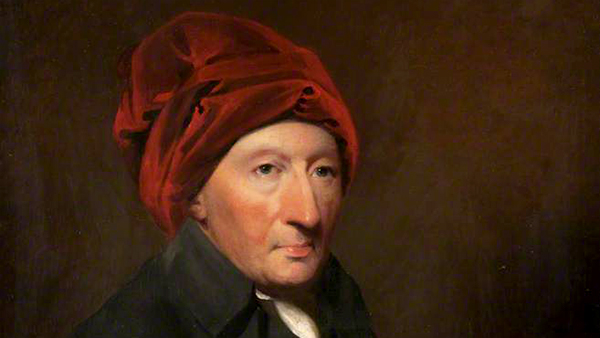
Thomas Reid // photo credit: Hunterian Art Gallery, University of Glasgow
In the 18th century, the “Scottish Common Sense” marked a period of intellectual activity around the universities in Edinburgh & Glasgow where David Hume (1711 – 1776) played a major part in developing empiricism. Thomas Reid took the issue that led Berkeley and Hume to doubt and reductionism. Instead of acknowledging Locke’s distinction, he believed that objects are perceived directly but do not perceive sensations from the object.
He argued that primary quality justified belief in physical objects, and secondary qualities are not projections of the mind but mental judgement created by objects that cause a true interaction with mental operations. Common sense was also believed to be an instinctive part of a person’s constitution which has been taken for granted although the value has been continually showcased. Thomas Reid also viewed metaphysical discourses of Berkeley and Hume as “intellectual games.” Reid embraced the human essence by accepting that objects are present in reality but ideas require a mind contained in the self. Thus, empiricism had seemed to have been saved by Reid’s common sense, which also came with more realistic logic for the physical world.
David Hume however was rather atypical of the Scottish enlightenment being seemingly more fitting to the British tradition. As generally, most philosophers and literary contributors to the Scottish enlightenment were more independent of British thought perhaps as a reflection of the traditional link between Scotland and France or British politics of the time.
In the early days of the development of empiricism, British empiricists presented psychology as one based on experience where sensory input was the main state of mind. The critical mechanism relating sensations to higher mental processes was associations. What may be defined as “learning” was a major focal point for early British psychology & the tendency to decrease such mental processes to simpler ideas was seen by Harley and Hume.
Reductionist has since proved to be a foundation in empirical research in many fields involving quantitative studies. However, such reductionism was met with scepticism by the French who thought the implications of draconian reduction eliminates the very need for psychology – simplicity? How simple could the human world be?
Although reductionism provides options to calculate statistical orientations and predictions, it seems less appropriate in application when dealing with the real human world where most problems are generally about the consequences of mismanaged emotions on perception, decision-making, expectancy and behaviour.
Furthermore, how much of a simple explanation could reductionist empiricism provide for the reason behind why one’s hairs stand up to certain symphonies judged exquisite only by a particular person? [Or] How does one even explain the source, initial spark and creative process behind an intricate work of art? Reductionism would likely falter on those more artistic and human paths where emotions [restrained & channelled appropriately] are key to the well-being, positive mental health and enjoyment of life [‘humane’ experience] for the individual & civilization [the human environment]. Reductionism, however, remains vital to the world of science; where precision and empirical measurements are required.
This may lead way for inquiries involving more humane & individualistic assessments; where psychotherapy and/or neuroscience could reveal and resolve more for individuals and researchers requiring more detail and precision with “mind” and neural processes – rather than “matter” [which is mostly obvious & may not always be related to the mind – which strict empiricists also discard].
_____________________________________
References / Sources
Bacon, F. (1978). Novum Organum. In The works of Francis Bacon (Vol. 1). Cambridge, MA: Hurd & Houghton
Berkeley, G. (1963) An essay towards a new theory of vision. In C. M. Turbayne (Ed.), Works on vision. Indianapolis: Bobbs-Merrill
Brenan, J.F. (2014). History and Systems of Psychology (6th edn., pp.79-80). Essex: Pearson
Brenan, J.F. (2014). History and Systems of Psychology (6th edn., pp.110-124). Essex: Pearson
Hume, D. (1957). An enquiry concerning the human understanding (L.A. Selby-Bigge, Ed.). Oxford: Clarendon Press.
Locke, J. (1956). An essay concerning human understanding. Chicago: Henry Regnery
Studies
Armstrong, R.L. (1969). Cambridge Platonists and Locke on innate ideas. Journal of History of Ideas, 30, 187 – 202
Bricke, J (1974). Hume’s associationistic psychology. Journal of the History of the Behavioural Sciences, 10, 397-409
Brooks, G.P (1976). The faculty psychology of Thomas Reid. Journal of History of Behavioural Sciences, 12, 65-77
Miller, E.F. (1971). Hume’s contribution to behavioural science. Journal of History of the Behavioural Sciences, 6, 241-254
Moore-Russell, M. E. (1978). The philosopher and society: John Locke and the English Revolution. Journal of the History of the Behavioural Sciences, 14, 65-73
Robinson, D.N (1989). Thomas Reid and the Aberdeen years Common sense at the wiseclub. Journal of the History of the Behavioural Sciences, 25, 154-162
Smith, C. U. (1987). David Hartley’s Newtonian neuropsychology. Journal of the History of the Behavioural Sciences, 23, 123-136
22.04.2014 | Danny J. D’Purb | DPURB.com
____________________________________________________
While the aim of the community at dpurb.com has been & will always be to focus on a modern & progressive culture, human progress, scientific research, philosophical advancement & a future in harmony with our natural environment; the tireless efforts in researching & providing our valued audience the latest & finest information in various fields unfortunately takes its toll on our very human admins, who along with the time sacrificed & the pleasure of contributing in advancing our world through sensitive discussions & progressive ideas, have to deal with the stresses that test even the toughest of minds. Your valued support would ensure our work remains at its standards and remind our admins that their efforts are appreciated while also allowing you to take pride in our journey towards an enlightened human civilization. Your support would benefit a cause that focuses on mankind, current & future generations.
Thank you once again for your time.
Please feel free to support us by considering a donation.
Sincerely,
The Team @ dpurb.com
P.S.
– If you are a group/organization or individual looking for consultancy services, email: info[AT]dpurb.com
– If you need to reach Danny J. D’Purb directly for any other queries or questions, email: danny[AT]dpurb.com [Inbox checked periodically / Responses may take up to 20 days or more depending on his schedule]
Stay connected by linking up with us on Facebook and Twitter



 dpurb . com