
Mis à jour le Samedi, 29 Janvier 2022

Riot police face a mob in Hackney, North London on August 8, 2011. Riot police faced off with youths in fresh violence in London in the third day of disorder after some of the worst rioting in the British capital in years. The riots broke out in the North London district of Tottenham on August 6, following a protest against the death of a local man in a police shooting, and the violence spread to other parts of the city on August 7. AFP PHOTO/KI PRICE
Aggression has been studied in experimental and naturalistic settings, however its definition has caused a lot of controversy in terms of precision among researchers. Some behaviours such as physically pushing, shoving and striking may be qualified as aggressive, while in other situations it may also include ostracizing individuals – which has proven to produce aggressive reactions (DeWall, Twenge, Bushman, Im and Williams, 2010; Wesselmann, Butler, Williams and Pickett, 2010; Warburton, Williams and Cairns, 2006; Williams and Warburton, 2003).
What is defined as aggressive is believed to be partly shaped by societal and cultural norms, for example, among the Amish of Pennsylvania – ostracism is considered as incredibly harsh, whereas among gang subcultures mutilation and murder may be seem as commonplace [situational].

« La Mémoire », by René Magritte, 1948
Finding the reasons behind acts of violence among humans is generally explored through three major theoretical perspectives:
-
Biological Theories
-
Biosocial Theories
-
Social Theories
The biological explanations sides with the nature debate of the nature-nurture controversy where most social psychologists tend to disagree, since some theories seem like a threat to any form of social theory. Biological researchers assume aggression to be part of every human organism as is thus an innate action tendency where modification of the behaviour is possible [but not the organism itself]; an instinct defined by Riopelle (1987) that is goal directed and terminates in a specific outcome, beneficial to the individual and its species, adapted to a normal environment, shared by most members of the species, developed in clear ways during maturation, and is unlearned on the basis of individual experience.
All major three approaches relating to the biological model have argued that aggression is an inherent part of human nature programmed at birth to manifest in a particular way.

The first biological theory proposed by Sigmund Freud in Beyond the pleasure principle (1920/1990) proposed from the model of the Psychodynamic theory that human aggression stems from Thanatos, the ‘Death Instinct’ which is the opposition to Eros, ‘Life Instinct’ – note that the death instinct is not necessarily only directed at oneself, but to others that have negative significance to the individual. Thanatos is however believed to initially be self-destructive but is later redirected towards others during development. Freud attributed the death instinct as a response to the atrocities of the First World War.
Similarly to sexual urges stemming from Eros, Thanatos releases an aggressive urge believed to be built up naturally from bodily tensions which has to be released [one factor theory]. Later neo-Freudians theorists revised the idea and defined aggression as more rational, yet innate, process whereby individuals sought a healthy release to primitive survival instincts basic to all animal species (Hartmann, Kris and Loewenstein, 1949).
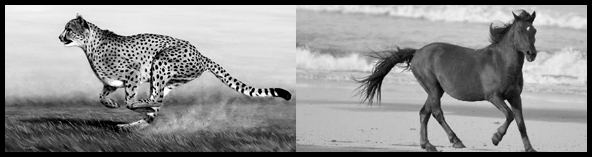
Ethology, which is a branch of biology dedicated to the study of instincts among all members of a species when living in their natural environment lead to three books [Konrad Lorenz’s On Aggression (1966), Robert Ardrey’s The Territorial Imperative (1966) and Desmond Morris’s The Naked Ape (1967)] which made the case for the instinctual basis of human aggression on the grounds of comparison with animal behaviour. Similar to neo-Freudians beliefs of aggression as an innate instinct, the behaviour itself is elicited by specific environmental stimuli known as ‘releasers’. Lorenz attributed survival value as an ethological argument to justify aggression, e.g. animals behave aggressively towards members of its species in the distribution of individuals and/or family units to make most efficient use of available resources [sexual selection, mating, food and territory]. Unsurprisingly, those aggressive behaviours have been observed in the wild among Hamadryas baboons.
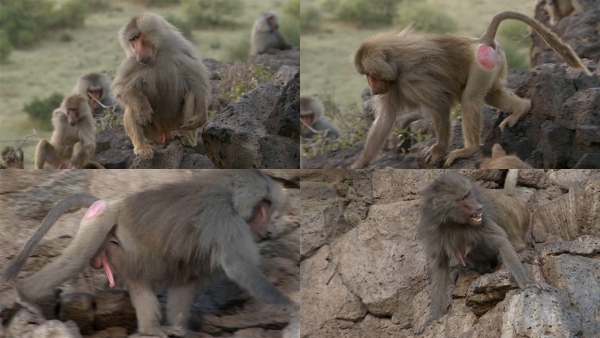
Image; Babouins Hamadryas / Hamadryas Baboons
Lorenz (1966) extended the argument to humans arguing an inherited fighting instinct. According to Lorenz (1966), aggression in humans is legitimately comparable to other non-human species and is believed to be the result of evolutionary development – he defined aggression as “… the fighting instinct in beast and man which is distinct against members of the same species.” (Gross, 2006 p420).
Another biological explanation believes that certain behaviours are linked to the functioning of particular parts of the brain. This claim was supported by a patient known as “Dawn” who started acting erratically – even worryingly macabre in thought – when her cerebral cortex (the part of the brain responsible for planning, reasoning and ‘rational’ behaviour) would start to shut down as a result of her blood-glucose level drop due to diabetes.
The final biological reason for aggression is related to chemical influences (such as alcohol, drugs, Serotonin) on the brain which can lead to aggression – Putnam et al (2000) observed how levels of serotonin are considerable low in violent criminals. Although strong claims and evidence give Biologically inclined psychologists credibility (with solid laboratory experiments), the deterministic and reductionist views it promotes raise arguable issues; as important factors such as learning and cultural influence are discarded – along with free will and the mind, which defies the essence of human freedom, an explanation many find questionable [i.e. to ignore the mind as an active entity with conscious, preconscious and unconscious proposed forces colliding to find balance – as Jacques Lacan and Sigmund Freud].
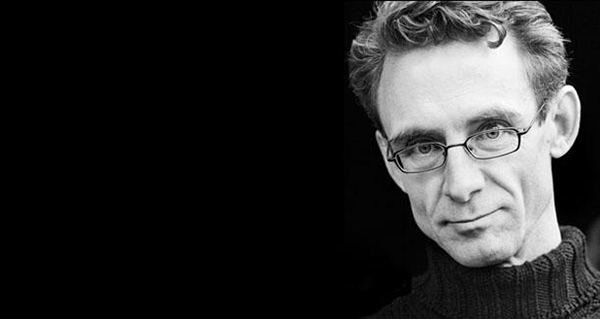
Chuck Palahniuk’s 1996 novel, Fight Club, a transgressive work of fiction, captured the gritty battle of modern men dealing with their emotions in a restrictive & often rigid industrialised civilization that hardly accommodates the “humane” side of humans
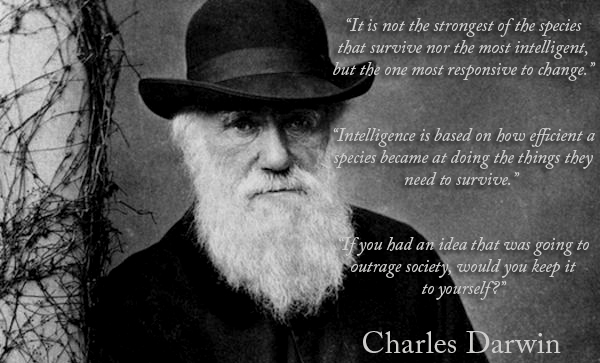
Finally, the Evolutionary Social Psychology Theory is an ambitious model that assumes an innate basis for aggression but also claim a biological basis to ALL social behaviours (Caporeal, 2007; Kenrick, Maner and Li, 2005; Neuberg, Kenrick and Schaller, 2010; Schaller, Simpson and Kenrick, 2006). Derived from rigid Darwinian logic, this theory proposes that specific behaviour evolved as it promotes survival of genes that allow an individual to live long enough to pass his/her genes to the next generation. Aggression is assumed to be adaptive and linked to living long enough to procreate, for example, the defence and protection of self and/or others [helpful to an individual and its species].
Type A personality is a pattern of behaviour that has been classified after a research by Matthews (1982) which classified individuals of the category as overactive and excessively competitive in their encounters and may be more aggressive towards others competing on an important task (Carver and Glass, 1978).
Type A individuals are more competitive and domineering (Ward & Eisler, 1987) and have “an unrealistic sense of urgency”, are masters at multi-tasking, and are under constant stress (Tirado, 2012). Contrary to their Type B counterparts, Type A people set high expectations on their performance. When performance expectations are not met stress incurs.
Under stress, Type A individuals generally prefer working alone, as such arrangements may shield them from incompetent others and prevent the Type A individuals from the added stress of having to take control the situation (Dembroski and MacDougall, 1978). The characterisation has also been linked to proneness to abuse children (Strube, Turner, Cerro, Stevens and Hinchley, 1984) and to more conflicts in managerial roles in organisational settings with peers and subordinates but not supervisors [controlled aggression].
The plethora of investigative studies about individuals classified as bearing the Type Apersonality type points to the question of whether such a trait is a defining factor, in some degree, of all successful leaders, specially in business.
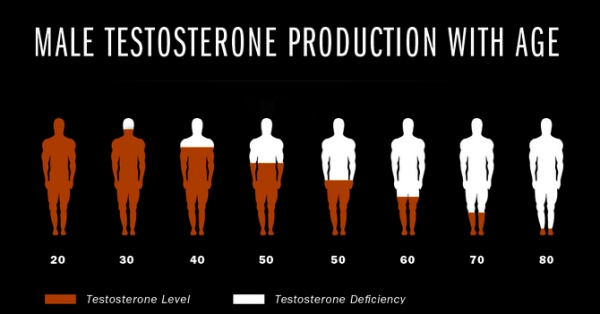
Image: SmartHormoneBalance.com / Testosterone in men
To conclude with biological theories, the last aggression trigger explored the effects of hormones. Testosterone was found to have a small correlation of 0.14 with aggression in a study conducted by Berman, Gladue and Taylor (1993) where the testosterone levels were measured and the participants divided into Type A and B personality groups. More convincing evidence came from the Netherlands from two studies (Cohen-Kettenis and Van Goozen, 1997; Van Goozen, Cohen-Kettenis, Gooren, Frijda and Van der Poll, 1995) where increased or decreased proneness to aggression was observed in sex reassignment hormonal administration in transsexuals depending on whether gender change was female to male or male to female.

Biosocial theories emphasize on both nature and nurture sides of the controversy that emphasize the role of the Social learning theory and context, in some cases incorporating a biological element. Derived from the work of Yale psychologists in the 1930s, one of the theories is the frustration-aggression hypothesis. This links aggression to an antecedent condition of frustration and was used to explain prejudice. Dollard, Doob, Miller, Mowrer and Sears (1939) proposed that aggression was always caused by some kind of frustrating event or situation, a reasoning applied to the effects of job loss on violence (Catalano, Novaco and McConnell, 1997) and the role of socio-economic deprivation in the ethnic cleansing of Kurds in Iraq and non-Serbs in Bosnia (Dutton, Boyanowsky and Bond, 2005; Staub, 1996, 2000).
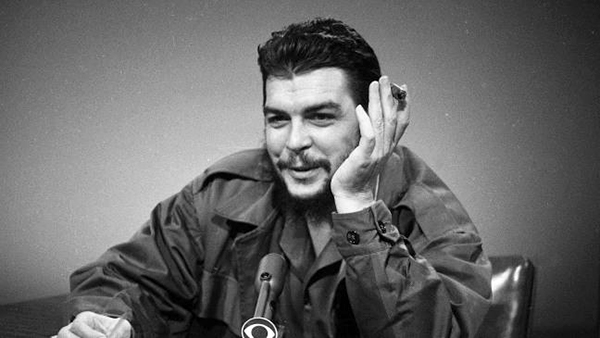
Ernesto “Che” Guevara (June 14, 1928 – October 9, 1967) // A doctor, author, diplomat, guerilla leader & military theorist who lead a revolutionary uprising against an oppressive & abusive system’s dictatorial military regime, and who became a symbol of human struggle for justice & fairness worldwide [A 2-part movie by Steven Soderbergh based on his diaries was released in 2008 (Trailer Available Here)]
The second biosocial theory invokes the concept of drive and is known as Dolf Zillman’s (1979, 1988) excitation-transfer model. This approach defines aggression as a function of a learned behaviour, an arousal or excitation from another source, and an individual’s interpretation of the arousal state such that aggressive responses seem appropriate. Residual arousal transfers are believed to be transferred from one situation to another in a way that promotes likelihood of an aggressive response.

Lastly, Social Learning Theory [SLT] assumes aggression can be learnt as observed in the gradual control of aggressive impulses in early infants (Miles and Carey, 1997). It also features processes responsible for acquisition of a behaviour (or sequence), the instigation of overt acts, and maintenance of a behaviour. It was applied to understand aggression by Bandura (1973) where it was noted that if antisocial behaviours can be learnt, so can prosocial ones. French sociologist Gabriel Tarde’s (1890) book, Les lois de l’imitation, asserted that ‘Society is imitation’.
SLT is unique in proposing that imitated behaviours must be seen as rewarding ‘in some way’ [learning can come from models: peers, parents, siblings, but also extended to media exposure].

Image: Des politiciens dans une démonstration d’agression primitive / Politicians in a display of primitive aggression
Bandura believed aggression from an individual in a particular situation depends on his/her previous experiences of others’ aggressive behaviour, how successful aggressive behaviour has been in the past, the current likelihood that aggression will be rewarded or punished, and the complexity involving cognitive, social and environmental factors in a given situation.
Researchers advocating psycho-social explanations (such as Bandura) support the nurture side of the “nature VS nurture” debate on human behaviour; and believe that a person from birth is influenced by their surrounding and upbringing – which is explanatory in the Social Learning Theory. The theory suggests that aggression is learnt in 2 ways:
[i] direct experience which based on Operant Conditioning (Reinforcement) [as mentioned in the essay, “Biological Constraints in Learning by Operant Conditioning” which is about learning in the animal organism]
OR
[ii] vicarious experience based on Observational Learning.
To support his theory, Bandura (1965) used the ‘Bobo Doll Study’ where male and female participants aged 3 to 5 years old with half of the group exposed to models behaving violently towards the life-sized Bobo doll whilst the other half were exposed to models with no aggression. This lead to the children exposed to the aggressive model reproducing most of the physical and verbal aggression whereas the children unexposed showed virtually no aggression.
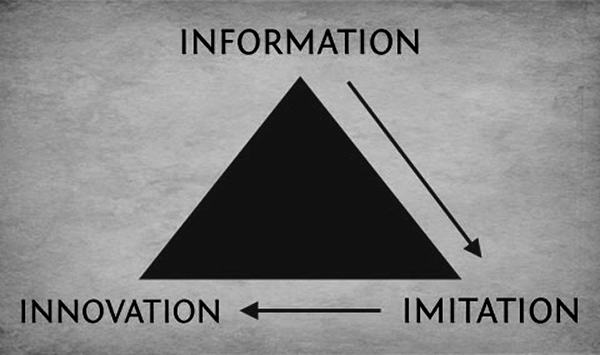
Image: Steve Bremner
Another explanation to aggression is “de-individualisation” where Dr Philip Zimbardo’s (1969) prison experiment proved how constraint on behaviour is weakened when a person loses their sense of individuality – where the group of participants [in the experiment] who were allocated the Guard-role had started acting in an extremely vile and degrading manner towards the participants allocated to “prisoners” when the former had been wearing sunglasses (which heightened their anonymity thus lowering their sense of identity). Such incidents happens in situations when (for e.g.) in crowds, or in a uniform where one can feel less likely to be held responsible for aggressive behaviour.
Other issues relating to aggression include catharsis, which refers to the process of aggression as an outlet or release for pent-up emotion [the cathartic hypothesis]. Although it is associated to Sigmund Freud, the idea can be tracked back to Aristotle and the ancient Greek tragedy: by acting out their emotions, people can purify their feelings (Scherer, Abeles and Fischer, 1975).
Alcohol has also been linked to aggression through the disinhibition hypothesis which explains how the cortical control is compromised by alcohol that leads to increased activity in the more primitive areas of the brain.

Link between alcohol and aggressive behaviour seems firmly established (Bartholow, Pearson, Gratton and Fabiani, 2003; Bushman and Cooper, 1990; Giancola, 2003) and controlled behavioural studies suggest a causal relationship (Bailey and Taylor, 1991; LaPlace, Chermack and Taylor, 1994).
To conclude, we should be focused on Ecological Validity – as the experiments mentioned may not be able to fully predict or provide sufficient explanations to real world situations when a multitude of variables not monitored are in synchronisation and combination with each other due to the controlled conditions of the laboratory-based experiments used to support the assumptions. Furthermore, if we were to completely discard biological factors it would have a negative impact on our conclusions since it is well known and accepted that the physical state/physiology of the brain is vital to fully assess behaviour/cognition based on an individual deemed “healthy & fit”.
*****
References
- Bailey, D.S. and Taylor, S.P. (1991). Effects of alcohol and aggressive disposition on human physical aggression. Journal of Research in Personality, 25, 334-342
- Bandura, A. (1973). A social learning analysis. Englewood Cliffs, NJ: Prentice Hall.
- Bartholow, B.D., Pearson, M.A., Gratton, G. and Fabiani, M. (2003). Effects of alcohol on person perception: A social cognitive neuroscience approach. Journal of Personality and Social Psychology, 85, 627-638.
- Berman, M., Gladue, B. and Taylor, S. (1993). The effects of hormones, Type A behavior pattern, and provocation on aggression in men. Motivation and Emotion, 17(2), pp.125-138.
- Boakes. R (1984) From Darwin to behaviourism: Psychology and the minds of animals. Cambridge University Press
- Bushman, B.J. and Cooper, H.M. (1990). Effects of alcohol on human aggression: An integrative research review. Psychological Bulletin, 107, 341-354
- Caporael, L. R. (2007). Evolutionary theory for social and cultural psychology. In A. W. Kruglanski and E. T. Higgins (eds), Social psychology: Handbook of basic principles (2nd edn, pp. 3-18. New York: Guilford Press.
- Carver, C. and Glass, D. (1978). Coronary-prone behavior pattern and interpersonal aggression. Journal of Personality and Social Psychology, 36(4), pp.361-366.
- Catalano, R., Novaco, R. and McConnell, W. (1997). A model of the net effect of job loss on violence. Journal of Personality and Social Psychology, 72, 1440-1447
- Cohen D. (1979) J.B Watson: The Founder of Behaviourism. London, Boston and Henley
- Cohen-Kettenis, P.T. and Van Goozen, S.H.M. (1997). Sex reassignment of adolescent transsexuals: A follow-up study. Journal of the American Academy of Child and Adolescent Psychiatry, 36, 263-71
- Dembroski, T. M., MacDougall, J. M., Shields, J. L., Petitto, J., & Lushene, R.
(1978). Components of the Type A coronary-prone behavior pattern and cardiovascular
responses to psychomotor challenge. Journal of Behavioral Medicine, 1, 159-176. - Dembroski, Theodore M.; MacDougall, James M.; Musante, Linda (1984). Desirability of control versus locus of control: Relationship to paralinguistics in the Type A interview.. Health Psychology, 3(1), 15–26.
- Dollard, J., Doob, L.W., Miller, N.E., Mowrer, O.H. and Sears, R.R. (1939). Frustration and aggression. New Haven, CT: Yale University Press
- Dutton, D.G., Boyanowksy, E.H. and Bond, M.H. (2005). Extreme mass homicide: From military massacre to genocide. Aggression and Violent Behavior, 10, 437-473
- Giancola, P.R. (2003). Individual differences and contextual factors contributing to the alcohol-aggression relation: diverse populations, diverse methodologies: An introduction to the special issue. Aggressive Behaviour, 29, 285-287
- Gross. R (2005) Psychology: the science of and behaviour. Pp 420-421 London, Hodder and Stoughton Educational
- Hartmann, H., Kris, E. and Lowenstein, R. M. (1949). Notes on a theory of aggression. Psychoanalytic Study of the Child, 3-4, 9-36
- Kenrick, D. T., Maner, J. K. and Li, N. P. (2005). Evolutionary social psychology. In D. M. Buss (ed.), Handbook of evolutionary psychology (pp 803-827. New York: Wiley.
- LaPlace, A.C., Chermack, S.T. and Taylor, S.P. (1994). Effects of alcohol and drinking experience on human physical aggression. Personality and Social Psychology Bulletin, 20, 439-444Lorenz,K. (1966). On aggression. New York: Harcourt, Brace and World.
- Matthews, K. A. (1982). Psychological perspectives on the Type A behavior pattern. Psychological Bulletin, 91, 293-323
- Neuberg, S.L., Kenrick, D.T. and Schaller, M. (2010). Evolutionary social psychology. In S.T. Fiske, D.T. Gilbert, and G. Lindzey (eds), Handbook of social psychology (5th edn, Vol. 2, pp. 761-796). New York: Holt, Rinehart and Winston
- Northouse, P.G. (2013). Leadership theory and practice. Los Angeles: Sage
- Schaller, M., Simpson, J. and Kenrick, D. (2006). Evolution and social psychology. New York, NY: Psychology Press.
- Staub, E. (1996). Cultural-societal roots of violence: The example of genocidal violence and contemporary youth violence in the United States. American Psychologist, 51, 117-132
- Staub, E. (2000). Genocide and mass killings: Origins, prevention, healing and reconciliation. Political Psychology, 21, 367-382
- Strube, M.J., Turner, C.W., Cerro, D., Stevens, J. and Hinchey,F. (1984). Interpersonal aggression and the type A coronary-prone behaviour pattern: A theoretical distinction and practical implications. Journal of Personality and Social Psychology, 47, 839-847
- Tarde, G. (1890). Les lois de l’imitation. Paris: Libraire Felix Alcan.
- Tirado, B. (2012). Working with a type a personality (blog). Retrieved from: http://www.psychology today.com/blog/digital-leaders/201201/working-type-personality
- Van Goozen, S.H.M., Cohen-Kettenis, P.T., Gooren, L.J.G., Frijda, N.H. and Van der Poll, N.E. (1995). Gender differences in behaviour: Activating effects of cross-sex hormones. Psychoneuroendocrinology, 20, 343-363
- Ward, C.H. & Eisler, R.M. (1987). Type A behavior, achievement striving, and dysfunctional self-evaluation system. Journal of Personality and Social Psychology, 53, 318-326.
- Zillmann, D. (1979). Hostility and aggression. Hillsdale, NJ: Erlbaum
- Zillmann, D. (1988). Cognition-excitation interdependencies in aggressive behaviour. Aggressive Behaviour, 14, 51-64
Danny J. D’Purb | DPURB.com
____________________________________________________
While the aim of the community at dpurb.com has been & will always be to focus on a modern & progressive culture, human progress, scientific research, philosophical advancement & a future in harmony with our natural environment; the tireless efforts in researching & providing our valued audience the latest & finest information in various fields unfortunately takes its toll on our very human admins, who along with the time sacrificed & the pleasure of contributing in advancing our world through sensitive discussions & progressive ideas, have to deal with the stresses that test even the toughest of minds. Your valued support would ensure our work remains at its standards and remind our admins that their efforts are appreciated while also allowing you to take pride in our journey towards an enlightened human civilization. Your support would benefit a cause that focuses on mankind, current & future generations.
Thank you once again for your time.
Please feel free to support us by considering a donation.
Sincerely,
The Team @ dpurb.com
P.S.
– If you are a group/organization or individual looking for consultancy services, email: info[AT]dpurb.com
– If you need to reach Danny J. D’Purb directly for any other queries or questions, email: danny[AT]dpurb.com [Inbox checked periodically / Responses may take up to 20 days or more depending on his schedule]
Stay connected by linking up with us on Facebook and Twitter

 dpurb . com